The 1936 Club

I read about the 1936 Club on Karen’s blog, BookerTalk. It’s being hosted by Karen at kaggsy’sbookishramblings and Simon at stuckinabook and is scheduled for 12-18 April. It’s been a while since I joined in one of their Club Reading Weeks, but when I looked at the books I’ve read and the books that I have waiting to be read I found that quite a lot of them were first published in 1936.

There is just one of these that I haven’t read – Murder in Piccadilly by Charles Kingston. But I would like to re-read Agatha Christie’s Murder in Mesopotamia that I first read in May 2012, because I never wrote a review post about it. And there are some short stories, first published in 1936 that I haven’t read yet, such as Problem at Sea, which is included in the short story collection, Poirot’s Early Cases.

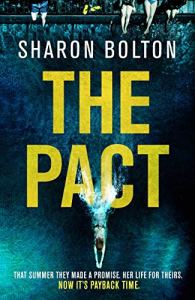
Can’t-Wait Wednesday: The Pact by Sharon Bolton

Can’t-Wait Wednesday is a weekly meme hosted by Wishful Endings, to spotlight and discuss the books we’re excited about that we have yet to read. Generally they’re books that have yet to be released.

Sharon Bolton is one of my favourite authors, so I’m delighted to see that she has a new book waiting to be published: The Pact: Release date 27 May 2021

Description

A dark and compulsive thriller about secrets, privilege and revenge.

A golden summer, and six talented friends are looking forward to the brightest of futures – until a daredevil game goes horribly wrong, and a woman and two children are killed.

18-year-old Megan takes the blame, leaving the others free to get on with their lives. In return, they each agree to a ‘favour’, payable on her release from prison.

Twenty years later Megan is free.
Let the games begin . . .

What upcoming release are you eagerly anticipating?

Two Chief Inspector Macdonald Books by E C R Lorac

E C R Lorac was a pen name of Edith Caroline Rivett (1894-1958) who was a prolific writer of crime fiction from the 1930s to the 1950s, and a member of the prestigious Detection Club. She formed her pseudonym by using her initials and for the surname, the first part of her middle name spelled backwards. She also wrote under the name of Carol Carnac.

I’ve read just a few of her Chief Inspector Robert Macdonald books., written under the name E C R Lorac – Bats in the Belfry (1937) , Fell Murder (1944), Murder by Matchlight (1945) and Fire in the Thatch (1946).

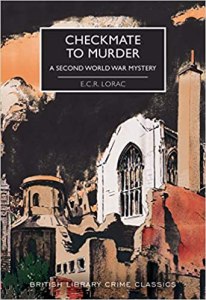
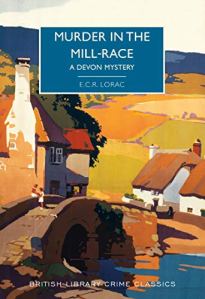
And recently I’ve read two more : Checkmate to Murder, first published in 1944 and Murder in the Mill Race, first published in 1952. These have been recently re-published by the British Library as part of the British Library Crime Classics, with introductions by Martin Edwards.

On a dismally foggy night in Hampstead, London, a curious party has gathered in an artist’s studio to weather the wartime blackout. A civil servant and a government scientist match wits in a game of chess, while Bruce Manaton paints the portrait of his characterful sitter, bedecked in Cardinal’s robes at the other end of the room. In the kitchen, Rosanne Manaton prepares tea for the charlady of Mr. Folliner, the secretive miser next door.

When the brutal murder of ‘Old Mr. F’ is discovered by his Canadian infantryman nephew, it’s not long before Inspector Macdonald of Scotland Yard is called to the scene to take the young soldier away. But even at first glance the case looks far from black-and-white. Faced with a bevy of perplexing alibis and suspicious circumstances, Macdonald and the C.I.D. set to work separating the players from the pawns to shed light on this toppling of a lonely king in the dead of night.

What I found fascinating in this book is the insight into what life was like in wartime London, complete with the London fog and the details of the blackout and although the Blitz was over there were still plenty of bangs and noise so that a gunshot wasn’t easily heard. The setting in a large studio that opens the book is a quiet scene as Bruce paints his sitter dressed as Cardinal Richelieu and two friends play a game of chess. Roseanne, Bruce’s sister is busy in the kitchen cooking their supper.Their evening is disrupted when a Special Constable bursts in with a young soldier in tow, claiming that he had killed his great-uncle in the next door building. This turns out to be more complicated than it first seemed. Even with just a limited number of suspects I couldn’t didn’t work out who the murderer was, nor how the murder had been committed. Macdonald explains it all at the end, having worked out ‘a reconstruction of the possibilities.’

~~~

When Dr Raymond Ferens moves to a practice at Milham in the Moor in North Devon, he and his wife are enchanted with the beautiful hilltop village lying so close to moor and sky. At first they see only its charm, but soon they begin to uncover its secrets – envy, hatred and malice.

Everyone says that Sister Monica, warden of a children’s home, is a saint – but is she? A few months after the Ferens’ arrival her body is found drowned in the mill race. Chief Inspector Macdonald faces one of his most difficult cases in a village determined not to betray its dark secrets to a stranger.

One of the things I think that Lorac excelled in was her settings. Each one is described so that you can easily picture the scenery and the landscape. And that is important in this book as Sister Monica drowned in the mill race, the stream leading into the water mill. She sets out through Macdonald exactly how that could have happened. She also conveys the atmosphere and the social interactions of an isolated village in Devon in the years just after the end of the Second World War. On the surface this is an idyllic village, but it is just like any other community, with a cross-section of personalities, and a mix of neighbourliness and an undercurrent of envy, hatred and malice. Sister Monica, a formidable woman, revered by some, is in charge of a children’s home, which she rules with a rod of iron and knows everything about everybody. Others regard her with caution, as the bailiff, Sanderson tells Anne Ferens, the doctor’s wife:

She is one of those people who can not only lie plausibly and with conviction, but she can tell a lie to your face without batting an eyelid, knowing that you know it’s a lie, and it’s very hard to bowl her out. (page 34)

But the village close ranks when she is found dead in the mill race and it is hard for Macdonald and Detective Inspector Reeeve to get the villagers to open up and and talk about what she was really like. It appears to be suicide, but is it?

My Friday Post: Checkmate to Murder by E C R Lorac

Every Friday Book Beginnings on Friday is hosted by Gillion at Rose City Reader where you can share the first sentence (or so) of the book you are reading. You can also share from a book you want to highlight just because it caught your fancy.

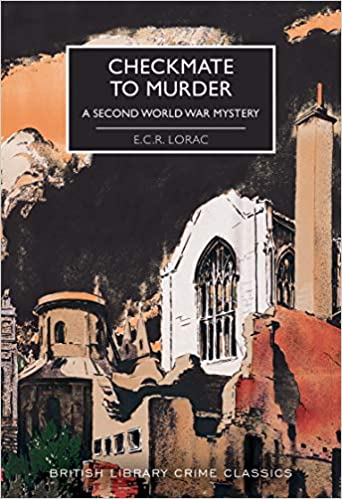
This week I’m featuring one of the books I’m currently reading, Checkmate to Murder: a Second World War Mystery by E C R Lorac, first published in 1944. One of the things I like about this book is the setting and atmosphere of wartime London, when details such as blackouts, fire-watching and air raid precautions were everyday events.

It begins:

The vast studio had two focus points of light; between two pools of radiance was a stretch of shadows, colourless, formless, empty. At one end of the long, barn-like structure, where the light was most strongly concentrated, was a model’s platform. A high-backed Spanish chair stood upon it, with a dark leather screen as background. On the chair sat a man arrayed in the superb scarlet of a Cardinal’s robe, the broad-brimmed Cardinal’s hat upon his head.

Also every Friday there is The Friday 56, hosted by Freda at Freda’s Voice. *Grab a book, any book. *Turn to Page 56 or 56% on your  ereader . If you have to improvise, that is okay. *Find a snippet, short and sweet, but no spoilers!

These are the rules:

  1. Grab a book, any book.
  2. Turn to page 56, or 56% on your eReader. If you have to improvise, that is okay.
  3. Find any sentence (or a few, just don’t spoil it) that grabs you.
  4. Post it.
  5. Add the URL to your post in the link on Freda’s most recent Friday 56 post.
  1. Grab a book, any book.
  2. Turn to page 56, or 56% on your eReader. If you have to improvise, that is okay.
  3. Find any sentence (or a few, just don’t spoil it) that grabs you.
  4. Post it.
  5. Add the URL to your post in the link on Freda’s most recent Friday 56 post.

Page 56:

“Deceased was a miser, one of the real old-fashioned storybook misers. I won’t say I haven’t met one before – I have, though they are getting less common than they used to be. D’you remember old Simple Simon, who was always getting run-in for begging on the Embankment – £525 we found under the boards in his bedroom when he died, and another fifteen pounds odd in his filthy bedding. He died of starvation at last.”

~~~

About the book:

On a dismally foggy night in Hampstead, London, a curious party has gathered in an artist’s studio to weather the wartime blackout. A civil servant and a government scientist match wits in a game of chess, while Bruce Manaton paints the portrait of his characterful sitter, bedecked in Cardinal’s robes at the other end of the room. In the kitchen, Rosanne Manaton prepares tea for the charlady of Mr. Folliner, the secretive miser next door.

When the brutal murder of ‘Old Mr. F’ is discovered by his Canadian infantryman nephew, it’s not long before Inspector Macdonald of Scotland Yard is called to the scene to take the young soldier away. But even at first glance the case looks far from black-and-white. Faced with a bevy of perplexing alibis and suspicious circumstances, Macdonald and the C.I.D. set to work separating the players from the pawns to shed light on this toppling of a lonely king in the dead of night.

What do you think – would you read this book?

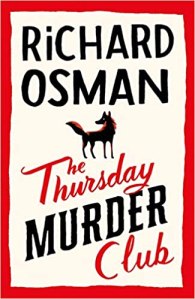
The Thursday Murder Club by Richard Osman

I hung back a while from buying The Thursday Murder Club because of all the hype it has received, but in the end I gave in to my curiosity and I listened to the audiobook (one of my Audible trial books) rather than reading an e-book or a paperback. Currently it is no.1 on the Amazon UK best sellers chart and it has been on the list for 26 weeks. When I started listening to it it had over 41,000 reviews and by the time I finished it there were 42,679 reviews – the vast majority being 5 and 4 stars reviews.Unfortunately, I don’t think it lived up to the hype and I can only give it 2 or maybe 2.5 stars.

Blurb:

In a peaceful retirement village, four unlikely friends meet up once a week to investigate unsolved killings.

But when a local property developer shows up dead, ‘The Thursday Murder Club’ finds themselves in the middle of their first live case.

The four friends, Elizabeth, Joyce, Ibrahim and Ron, might be pushing 80, but they still have a few tricks up their sleeves. Can our unorthodox but brilliant gang catch the killer before it’s too late?

My thoughts:

It’s read by Lesley Manville, who is so good at bringing the characters to life.The estimated listening time is 12 hours and 25 minutes, but I listened to it over 7 days with increasing impatience. It begins well but the labyrinth-like plot is expanded with so much unnecessary padding and digressions into the characters’ backstories that the story soon dragged. More murders follow the first and I was curious to find out who did what to whom, so I persevered. You do have to suspend your disbelief at the way the police, PC Donna De Freitas and DCI Chris Hudson, carried out their investigation and shared information with the four friends.

I did have to rewind several times to make sure I hadn’t missed anything as it’s so easy to get carried away, listening to the chatty style of narrative. There are 115 short chapters, alternating between a third person narrative and the diary of Joyce in the first person. This makes the narrative rather disjointed as it follows several storylines, with each chapter ending at the point where you want to know more, but you have to wait whilst Joyce reads from her diary or until another storyline continues, before you can back to each one. The action is far too slow for me, and the ending, when you finally get there, is a bit of an anti-climax.

I liked the characters, some more than others and in the main they are convincing and believable. But despite all the detail of their life stories I still wondered what Elizabeth’s job really was, although there are hints that she was a spy. She had travelled all over the world and had lots of useful contacts for solving a murder mystery, far too coincidentally useful I thought. She is the leader of the group, an organiser and very bossy. Elizabeth’s husband Stephen is a minor character. He is an enigma; he has dementia but plays a good game of chess.Then there are Penny, who is a retired police officer, now in a coma, and her husband, John. Penny could have explained a lot, but that’s not revealed until just before the end of the book. Joyce is quiet and unassuming, but the waffle in her diary hints that there is more to her than the obvious insignificant old lady she appears to be. She likes Bernard, another minor character, who sits on a seat overlooking the Garden of Rest. Finally, there is the enigmatic Polish builder, Bogdan, who I grew to like as the story progressed.

This is a ‘cosy’ mystery, quietly humorous in parts – not laugh out loud funny, but it did make me smile in a few places. The murder mystery element is over complicated with far too many twists and turns, suspects and false trails. I was glad to finish it. Except when you get to the end of the audiobook it hasn’t finally finished as there is chapter 116, which is a conversation between Marian Keyes, who loved the book and found it much funnier than I did, and Richard about the novel and his experience of writing his debut book.

Well, with so many reviews full of praise and glowing endorsements from numerous other authors and professional reviewers it certainly doesn’t matter much what I think. But I am left wondering just what Ian Rankin meant when he wrote: “So smart and funny. Deplorably good” – surely that’s an oxymoron? And why he is described as “Ian Rankin, New York Times bestselling author of Westwind“? What about his Rebus books ….

Sadly, this didn’t turn out to be as good as I’d hoped, but maybe a film would be better – Steven Spielberg has bought the film rights to the novel – that should be good.
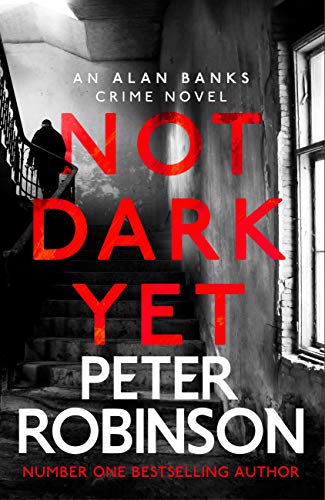
Invisible Girl by Lisa Jewell

Random House UK, Cornerstone| 6 August 2020|407 pages| Kindle review copy via NetGalley

Lisa Jewell is one of my favourite authors and yet I struggled to read Invisible Girl. I struggled to get interested in it at first and at about 25% I nearly gave up. But I can’t give up on a book by a favourite author, so I carried on.

The book description below is what made me want to read it:

It is nearly midnight, and very cold. Yet in this dark place of long grass and tall trees where cats hunt and foxes shriek, a girl is waiting…

When Saffyre Maddox was ten something terrible happened and she’s carried the pain of it around with her ever since. The man who she thought was going to heal her didn’t, and now she hides from him, invisible in the shadows, learning his secrets; secrets she could use to blow his safe, cosy world apart.

Owen Pick is invisible too. He’s thirty-three years old and he’s never had a girlfriend, he’s never even had a friend. Nobody sees him. Nobody cares about him. But when Saffyre Maddox disappears from opposite his house on Valentine’s night, suddenly the whole world is looking at him. Accusing him. Holding him responsible. Because he’s just the type, isn’t he? A bit creepy?

I struggled because it is slow-going, the narrative jumps around between Saffyre, Owen and Cate (the long suffering wife of Roan, a child psychologist) and also between the present and the past tenses. I was never really sure where the story was going.

The blurb tells you the the bare bones of the plot. It’s a mystery revolving around secrets – what was the terrible thing that happened to Saffyre, what are the characters hiding, why does everybody shun Owen and are they all unreliable narrators? I was never really sure and didn’t trust any of them. It certainly doesn’t hold back on some of the most unsavoury aspects of life – sexual harassment, abuse, self-harm, in-celibates, on-line forums and so on. It’s the slow pace that made it drag for me and lessened any sense of tension about what was going to happen. All is explained by the end – apart, that is, from one final thread that is left hanging.

Lisa Jewell’s Acknowledgements are interesting, in that she explains how she writes. Until she has finished a book she writes it is ‘just me and my (three) typing fingers and my weird imaginary world.’ She doesn’t do research because it puts her off her stride and she doesn’t like editorial input when she is writing. But when she has finished then, as she describes it, all these magical people appear and fix her imaginary world. Of course, then she thanks all those people, her editors, sales and marketing and publicity teams.

Her methods have worked enormously well in all the other books of hers that I’ve read and I’ve been enthralled, mystified and captivated by them – but just not this one, I’m sorry to say.

My thanks to the publishers and to NetGalley for my copy and I wish I could have been more engaged and enthusiastic about this book.