Every Tuesday Diane at Bibliophile by the Sea hosts First Chapter First Paragraph Tuesday Intros, where you can share the first paragraph, or a few, of a book you are reading or thinking about reading soon.
The book I’ve chosen this week is After the Fire by Jane Casey. I read this in June and have not got round to writing about it yet.
It begins:
There were 224 residents of Murchison House on the Maudling Estate in north London, and on a cold grey late November day not one of them was expecting to die. Some were hoping to die. some were waiting to die. but no one actually expected to die that day.
This is the sixth book in the Maeve Kerrigan series. It stands well on it’s own, although there are references to past events and storylines that appear in the earlier books.
The Maudling Estate and some of the minor characters featured in the 5th book, The Kill.
Blurb: After a fire rips through a North London tower block, two bodies are found locked in an 11th floor flat. But it’s the third victim that ensures the presence of detective Maeve Kerrigan and the murder squad. It appears that controversial MP Geoff Armstrong, trapped by the fire, chose to jump to his death rather than wait for rescue. But what was such a right wing politician doing in the deprived, culturally diverse Maudling Estate? As Maeve and her senior colleague, Derwent, pick through the wreckage, they uncover the secret world of the 11th floor, where everyone seems to have something to hide’¦
Would you read on? I did and thoroughly enjoyed this book.
Teaser Tuesday is a weekly bookish meme, hosted by MizB of A Daily Rhythm. Anyone can play along! Just do the following:
‘¢ Grab your current read
‘¢ Open to a random page
‘¢ Share two (2) ‘teaser’sentences from somewhere on that page
Here’s a teaser from 32% on my Kindle (rather more than 2 sentences!):
I felt the familiar rush, the moment a shape began to emerge from the darkness that surrounded the case. A pattern. A connection. A witness and a suspect.
Chief Inspector Morse is one of my favourite fictional detectives (maybe even the favourite). I first ‘met’ him years ago in the ITV series Inspector Morse and so, just as Joan Hickson is forever in my mind as Miss Marple and David Suchet is Poirot, John Thaw is Morse. The series was first broadcast in 1987, but I don’t intend to write about the books versus the TV adaptations – I’ve enjoyed both. This post is just about the last book in the series – The Remorseful Day.
I’ve delayed reading this for so long (I watched the TV version when it was first broadcast, which was 15 years ago!) because it’s the last of the Morse books and sadly the end of Morse too. So if you’ve not read any of the Morse books I suggest that you don’t start with this one.
Needless to say that I loved it. The plot is detailed, complex and as usual with Morse a puzzle type murder mystery with plenty of challenging clues. Sergeant Lewis is left to investigate the murder of nurse Yvonne Harrison that had remained unsolved for a year – Morse initially refused to work on the case, despite Chief Superintendent Strange’s wishes. Sergeant Lewis is concerned as this looks just the sort of puzzle Morse excels in solving … and Morse’s behaviour has been worrying Lewis recently. Lewis can’t believe that Morse could have a personal reason to keep out of the investigation. And when Morse phones to say he is feeling unwell Lewis is most concerned – Morse seldom mentioned his health, what is wrong with him?
The plot is complex, but the real focus of the book is on Morse and how he copes with his illness and his drinking habits and it becomes obvious just how alone he is in the world and how devastating his situation is to Lewis. The novel also reveals more about Strange’s character and also about his understanding of Morse. I found it both a most satisfying book and a very sad one.
There are only 13 Morse books. The links are to my posts on the books – I read some before I began to write this blog and I’m hoping to re-read those in due course.
As The Remorseful Day has sat unread on my shelves for so long it obviously qualifies for the Mount TBR Challenge 2015. I also included it as one of My 10 Books of Summer, which brings my total to 5.
Tomorrow night sees the start of a new six part series on BBC1 – Partners in Crime. According to the Radio Times the episodes are loosely based on The Secret Adversary, the first of the Tommy and Tuppence stories and N or M?, the third story.
But, as I have come to expect with TV/film adaptations, this is not the original story as the action has been transposed from 1922 and 1940 (the original settings of these two books) to the 1950s. Still I have great hopes for the series, with David Walliams as Tommy and Jessica Raine as Tuppence, although I’m wondering what else has been changed.
This is what I wrote about The Secret Adversary in January 2011:
The Secret Adversary was first published in 1922. It was Agatha Christie’s second book and the first featuring Tommy and Tuppence. In this book they have just met up after World War One, both in their twenties: ‘˜an essentially modern-looking couple’. They are both stony broke and decide to set up a joint venture under the name of the Young Adventurers Ltd, initially intending to hire themselves out to commit crimes.
A Mr Whittington overhears their conversation and offers Tuppence their first assignment, but when she tells him her name is ‘˜Jane Finn’ he acts very strangely and thinks she is blackmailing him. From then on Tommy and Tuppence set out to find Jane Finn, a name Tommy had overheard from a conversation in the street.
Reading it reminded somewhat of Enid Blyton’s adventure books, mixed up with P G Wodehouse’s books. It’s a spy/detective story that is fast and furious with Tommy and Tuppence landing themselves in all sorts of dangerous situations. It’s also full of red herrings and they’re never very sure who they can trust. Tommy and Tuppence advertise for information relating to Jane Finn and have two responses. One is from Mr Carter, from British Intelligence who tells them that Jane Finn, a survivor from the torpedoed Lusitania, was handed a certain document ‘“ a secret agreement, with a ‘˜new and deadly significance’. The second response is from Mr Julius P Hersheimmer, a young American, who says he is Jane’s cousin and wants to find her.
Just who is the mysterious Mr Brown, the secretive mastermind behind a plot to unite all of England’s enemies, overthrow the government and cause anarchy? There is no clue to his real identity, he remains elusive and always in the background. But it becomes clear that he is one of two people and as I read I swung from believing it to be one character to the other.
One point of interest is the brief mention of Inspector Japp, of Scotland Yard. His role in this is merely incidental.
I enjoyed this book and I liked Tommy and Tuppence, who by the end realise they are in love. Agatha Christie only wrote five books featuring this couple. Unlike Miss Marple and Hercule Poirot, Tommy and Tuppence age as the books were written (links to my posts):
Partners in Crime: a book of short stories (T&T 2)
Every Friday Book Beginnings on Friday is hosted by Gillion at Rose City Reader where you can share the first sentence (or so) of the book you are reading, along with your initial thoughts about the sentence, impressions of the book, or anything else the opener inspires.
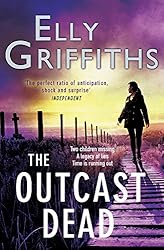
This week’s book is The Outcast Dead by Elly Griffiths, which I’m planning to read soon. It begins:
‘And we ask your abundant blessing, Lord, on these, the outcast dead.
There is a murmured response from the group gathered on the bank below the castle walls. But Ruth Galloway, standing at the back, says nothing. She is wearing the expression of polite neutrality she assumes whenever God is mentioned. This mask has stood her in good stead over the years and she sees no reason to drop it now. But she approves of the Prayers for the Outcast Dead. This brief ecumenical service is held every year for the unknown dead of Norwich: the bodies thrown into unmarked graves, the paupers, the plague victims, forgotten, unmourned, except this motley collection of archaeologists, historians and sundry hangers-on.
Find any sentence (or a few, just don’t spoil it) that grabs you.
Post it.
Add the URL to your post in the link on Freda’s most recent Friday 56 post.
Page 56:
Ruth drinks her cold cappuccino and wonders how Cathbad always manages to make her feel so guilty. It’s not her fault that his friend’s been arrested.
Blurb:
Forensic archaeologist Ruth Galloway has excavated a body from the grounds of Norwich Castle, once a prison. The body may be that of Victorian murderess Jemima Green. Called Mother Hook for her claw-like hand, Jemima was hanged for the murder of five children.
DCI Harry Nelson has no time for long-ago killers. Investigating the case of three infants found dead, one after the other, in their King’s Lynn home, he’s convinced that their mother is responsible.
Then a child goes missing. Could the abduction be linked to the long-dead Mother Hook? Ruth is pulled into the case, and back towards Nelson.
I always enjoy the Ruth Galloway books, despite the fact that they are written in the present tense, so I’m hoping this one is just as good as the earlier books. This is the sixth in the series. (I’m behind with this series ‘“ the seventh book was published earlier this year.) They are a mix of modern day murder mysteries and archaeology, with an added element of the supernatural.
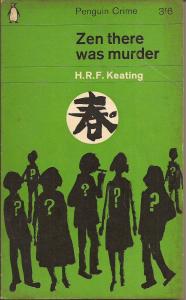
I don’t think I’ve read anything like Zen There Was Murder, a mixture of Zen Buddhism and murder. It was the second book H R F Keating wrote, first published in 1960 and then published in 1963 by Penguin Books in their green Penguin Crime series. (This cover is much more appropriate than the Bloomsbury Reader e-book cover showing guns)
It was the Zen Buddhist setting that made it difficult for me to get to grips with the murder. In fact it is practically halfway into the book before the murder actually takes place. The first half is taken up with introducing the characters, gathered together for a course on Zen Buddhism. There is a schoolteacher, Alasdair Stuart, a clergyman, the Rev. Cyprian Applecheek, Miss Olive Rohan, Miss Flaveen Mills, Honor Brentt, a jounalist and her husband, Gerry Manvers, and Jim Henderson, an Irishman from Ulster.
None of them know anything about Zen and much time is spent with them trying to understand what it is. Mr Utamaro, the lecturer comes out with various sentences, such as ‘Books about Zen are legs on a snake‘, saying you cannot understand Zen by reading a book about it and applying the principles of logic to what you read, and tweaking Alasdair’s nose saying, ‘this is Zen‘, as well as using koans, such as ‘what is the sound of one hand clapping?‘ But they fail to understand, saying it is nonsense. Mr Utamaro agrees.
Mr Utamaro shows them a sword, locked in a glass showcase. The sword, a wakizashi, is one of pair used by samurai for hari-kiri, and on the evening of the first day Mr Utamaro discovers that the sword has been taken from the case, leaving it intact and without setting off the alarm. And then Flaveen is found dead, the sword driven into her body up to the hilt.
The clue to discovering the identity of the murderer is in solving who is telling lies and why. For most of the time I was completely bamboozled and kept wondering just how the two German girls employed to make the beds and do the cooking fitted into the mystery. Their conversations regularly interrupt the narrative as they comment on the characters and the events taking place.
All in all this book has a surreal feel about it. It’s not just a puzzle type of murder mystery but as Keating explained in an interview with Dale Salwek in Mystery Voices: Interviews with British Crime Writers it is also making a point about something you believed:
And the thing I believed in, one of the things that bugged me most, was the subject of telling lies, which is fine for a detective story. And that was how I came to write my second, Zen There Was Murder, which is really more about telling lies than about Zen.
…
When writing the second book, I thought I could say something about telling lies. At that time, too, Zen Buddhism was a fad over here, and so for the background of the book, I took Zen, which does reflect very much on lies. I found I could say things about lies by giving each of the characters a different viewpoint on telling lies – ranging from one of those people who absolutely objects to lying in any way to the sort of pathological liar. And I made the whole book turn on that. (pages 64-65)
H R F Keating (1926 – 2011) was chairman of the Crime Writers’ Association (CWA) (1970’“71), chairman of the Society of Authors (1983’“84) and president of the Detection Club (1985’“2000). He was a fellow of the Royal Society of Literature. His most famous novels are the Inspector Ghote books (I have just one on my TBR shelves – Inspector Ghote’s Good Crusade, the second in the series). For more information about Keating see this article by Martin Edwards.
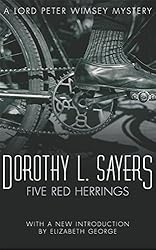
Five Red Herrings by Dorothy L Sayers was first published in 1931, the seventh Lord Peter Wimsey murder mystery. Wimsey is on holiday in Kirkcudbright and Gatehouse of Fleet in Galloway, Scotland, in a fishing and painting community where he is known and where he is
… received on friendly and even affectionate terms. He could make a respectable cast, and he did not pretend to paint, and therefore, although English and an ‘incomer’, gave no cause of offence. The Southron is tolerated in Scotland on the understanding that he does not throw his weight about, and from this peculiarly English vice Lord Peter was laudably free. True, his accent was affected and his behaviour undignified to a degree, but he had been weighed in the balance over many seasons and pronounced harmless, and when he indulged in any startling eccentricity, the matter was dismissed with a shrug and a tolerant, ‘Christ, it’s only his lordship.’ (page 2)
When Campbell, a local landscape painter and fisherman is found dead in a burn near Newton Stewart, it seems he must have slipped whilst painting near to the edge of a ravine, a steep and treacherous granite slope. At first it looks as though it was an accident, but Wimsey is convinced it was murder and an autopsy reveals that Campbell was dead before he fell into the burn. Campbell was not a popular man, described as ‘ a devil when he is drunk and a lout when he is sober.’ There are 6 possible suspects – all of whom had quarrelled with or been assaulted by Campbell, all of them artists.
What follows is an intricately plotted story as Wimsey and the police investigate the mystery. It is complicated by immense detail about train times, routes, bicycles, moving the body, alibis, and varying styles of painting – I gave up trying to understand it all and just read along enjoying the puzzle.
The five red herrings are, of course, the five innocent suspects, and Wimsey introduces another possibility that it might not be any of the six suspects, when having heard the case against each of them, he announces that all the theories are wrong, before he gives his verdict. And then he sets in motion a re-enactment of the crime from beginning to end to show how it was carried out, down to the most minute detail.
Sayers doesn’t play fair with the reader in not revealing a clue Wimsey noticed at the scene of the crime whilst he was searching through the contents of Campbell’s pockets and satchel and announced something was missing. In an added note Sayers explained that Wimsey
… told the Sergeant what he was look for and why, but as the intelligent reader will readily supply these details for himself, they are omitted from this page. (page 21)
I didn’t ‘readily supplied the details’ for myself but eventually I guessed what it was. But overall, that is just a minor complaint and I thoroughly enjoyed this mystery, the characters are striking and the setting is well grounded.
There is a map at the beginning of the book that helped me follow the action and in the Foreword Sayers explained that
All the places are real places and all the trains are real trains, and all the landscapes are correct, except that I have run up a few new houses here and there.
and goes to clarify that
… none of the people are in the least like real people, and that no Galloway artist would ever think of getting intoxicated or running away from his wife or bashing a fellow citizen over the head. All that is just for fun and to make it more exciting.
The Gateway of Fleet website has an interesting page on ‘Dorothy L Sayers in Galloway‘, which states that she and her husband Mac Fleming first visited Galloway in 1928 when they stayed at the Anwoth Hotel (mentioned in Five Red Herrings) in Gatehouse of Fleet and from 1929 they rented a studio in The High Street, Kirkcudbright next door to the well-known artist Charles Oppenheimer. They got to know Galloway well, especially the artistic community in Kirkcudbright and Gatehouse, on which her detective novel Five Red Herrings is based.http://Dorothy L Sayers in Galloway
 Every Tuesday Diane at Bibliophile by the Sea hosts First Chapter First Paragraph Tuesday Intros, where you can share the first paragraph, or a few, of a book you are reading or thinking about reading soon.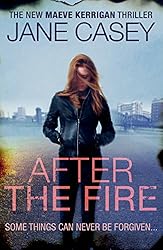
 Teaser Tuesday is a weekly bookish meme, hosted by MizB of A Daily Rhythm. Anyone can play along! Just do the following: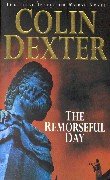

 The Secret Adversary was first published in 1922. It was Agatha Christie’s second book and the first featuring Tommy and Tuppence. In this book they have just met up after World War One, both in their twenties: ‘˜an essentially modern-looking couple’. They are both stony broke and decide to set up a joint venture under the name of the Young Adventurers Ltd, initially intending to hire themselves out to commit crimes.
 ‘And we ask your abundant blessing, Lord, on these, the outcast dead.

 BooksPlease