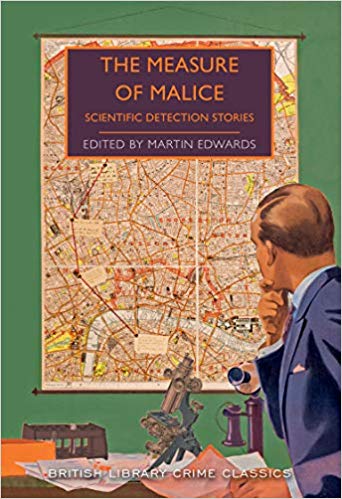
Measure of Malice: Scientific Detection Stories edited by Martin Edwards

The Measure of Malice edited by Martin Edwards is one of the more enjoyable short story collections that I’ve read. It contains 14 stories in which scientific/technological methods are used in the detection of crime. There is an excellent introduction by Martin Edwards with information about the authors, five of whom were doctors, two were engineers and one was an academic chemist.

As always with short story collections some stories are better than others. I’m highlighting a few of the better ones here:

The Boscombe Valley Mystery by A Conan Doyle was originally published in the Strand Magazine in October 1891, and is the first short story to feature Inspector Lestrade. It’s a solid story, solved by Sherlock Holmes by inspecting and analysing the footprints and signs at the scene of the crime.

The Horror of Studley Grange by L T Meade and Clifford Halifax (1894), from Stories for the Diary of a Doctor, originally published in the Strand Magazine. I enjoyed this one although it was pretty easy to predict. Ostensibly a ghost story, the solution involves the use of a laryngoscope.

After Death the Doctor by J J Connington, a Scottish professor of chemistry. This one was first published in 1934, involving a contemporary scientific gadget. The doctor in question is Doctor Shefford who together with Sergeant Longridge, investigate the murder of old Barnaby Leadburn, found dead with his throat cut.

The next two are the ones I enjoyed the most:

The Broken Toad by H C Bailey, first published in 1934, featuring the surgeon and Home Office Consultant, Reggie Fortune as he considers the death of a police constable from poisoning. I enjoyed all the detailed complications and Bailey’s literary mannered style of storytelling.

In the Teeth of the Evidence by Dorothy L Sayers, first published in 1939, about forensic dentistry, which starts as Lord Peter Wimsey is sitting in his dentist’s chair. The police had just visited the surgery, wanting to see his predecessor’s records to identify the victim of a burnt out garage. An upper right incisor crown and the filling in a molar provided the clues to his death. Gory if you actually visualise what is involved!

  • Publisher : Poisoned Pen Press (4 Feb. 2020)
  • Language: : English
  • Paperback : 336 pages
  • ISBN-10 : 1492699624
  • ISBN-13 : 978-1492699620
  • Source: The Poisoned Pen Press via NetGalley
  • My Rating: 3.5*

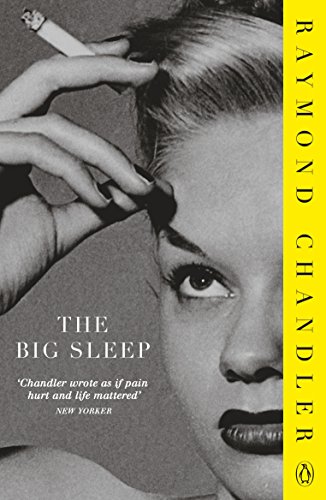
The Big Sleep by Raymond Chandler

In December I read 12 books, most of them short ones, and because I was reading them one after the other I hardly paused to write about them. Before they slip out of my memory I want to write about some of them at least. –

I particularly want to write about The Big Sleep by Raymond Chandler as it is one of those books that I’ve always heard about but have never read. It’s been on my Kindle for the last three years. It was first published in 1939 and is an excellent example of what is known as ‘hardboiled’ crime fiction, which generally featured a private eye with a whisky bottle in a filing cabinet, a femme fatale, and rich and usually corrupt clients. Female sexuality is a snare in a dangerous society where manipulative politicians and corrupt police thrive.

About the book:

Best-known as the creator of the original private eye, Philip Marlowe, Raymond Chandler was born in Chicago in 1888 and died in 1959. Many of his books have been adapted for the screen, and he is widely regarded as one of the very greatest writers of detective fiction. His books include The Big Sleep, The Little Sister, Farewell, My Lovely, The Long Good-bye, The Lady in the Lake, Playback, Killer in the Rain, The High Window and Trouble is My Business.

The Big Sleep has been adapted for film twice, in 1946 with Humphrey Bogart, Lauren Bacall, John Ridgely, Martha Vickers, and again in 1978, with Robert Mitchum, Sarah Miles, Richard Boone, Candy Clark.

My thoughts:

The novel is narrated by Philip Marlow, who describes himself as a ‘lone wolf, unmarried, getting middle-aged, and not rich.’ He’s been in jail more than once, likes liqour and women and the cops don’t like him much, although he does get on with a couple of them.

It’s not really the type of crime fiction that I like, but I did enjoy it. There are damsels in distress, gangsters, corrupt officials, and plenty of dark, violent and bloody situations. And of course there are murders – the ‘big sleep’ is death, after all. It’s fast-paced, violent, complicated and in times I found it a bit difficult to follow.

Reading the book took me back in time and place to Los Angeles in the late 1930s, a baking hot LA in which Private Investigator Marlow is hired by the paralysed millionaire General Stallwood, who is being blackmailed. His investigations are hampered by the General’s two daughters, one of whom proves to be a femme fatale, out to entrap Marlow and vindictive when her efforts fail. Chandler’s writing is sharp, snappy and richly descriptive with witty one-liners.

Back to the Classics Challenge 2021

This is the 8th year that Karen at Books and Chocolate has hosted the Back to the Classics Challenge and this is the first time I’ll be joining in. See Karen’s sign-up post on Books and Chocolate for more details about the challenge.

There are twelve categories and these are the books I’ve initially chosen – but there are others I could choose, so this list may/probably will change.

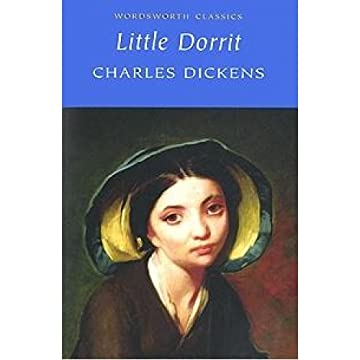
  1. A 19th century classic: any book first published from 1800 to 1899 – Little Dorrit by Charles Dickens 1857.
  2. A 20th century classic: any book first published from 1900 to 1971. All books must have been published at least 50 years ago; the only exceptions are books which were written by 1971 and posthumously published – Parade’s End by Ford Madox Ford – 1924 – 1928.
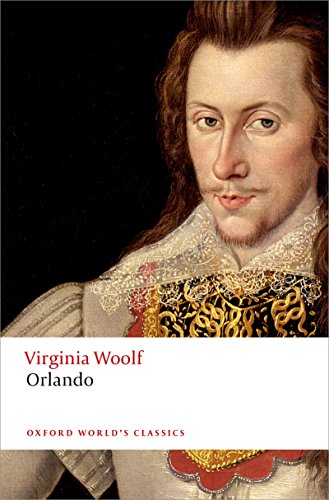
  3. A classic by a woman author – Orlando by Virginia Woolf – 1927.
  4. A classic in translation, meaning any book first published in a language that is not your primary language. You may read it in translation or in its original language, if you prefer. Love in the Time of Cholera by Gabriel Garcia Marquez.
  5. A classic by BIPOC author; that is, a non-white author. The Count of Monte Cristo by Alexandre Dumas.
  6. A classic by a new-to-you author, i.e., an author whose work you have never read. Heart of Darkness by Joseph Conrad.
  7. A new-to-you classic by a favourite author — a new book by an author whose works you have already read. Framley Parsonage by Anthony Trollope.
  8. A classic about an animal, or with an animal in the title. The animal can be real or metaphorical. (i.e., To Kill a Mockingbird). Black Beauty by Anna Sewell.
  9. A children’s classic – The Railway Children by Edith Nesbit.
  10. A humorous or satirical classic. Three Men on the Bummel by Jerome K Jerome.
  11. A travel or adventure classic (fiction or non-fiction). It can be a travelogue or a classic in which the main character travels or has an adventure. Gulliver’s Travels by Jonathan Swift.
  12. A classic play. Romeo and Juliet by William Shakespeare – I’ve seen the play and the film, but haven’t read the book.

The Classics Club Spin Result

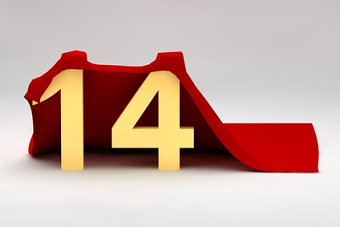
The spin number in The Classics Club Spin is number …

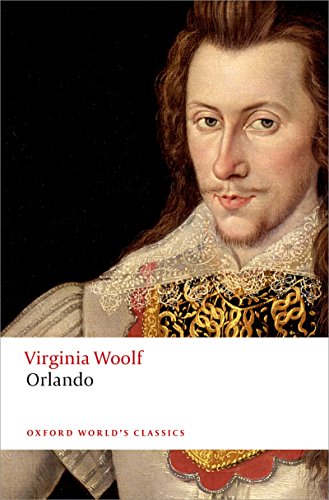
which for me is Orlando by Virginia Woolf. The rules of the Spin are that this is the book for me to read by 30 January, 2021.

Orlando tells the tale of an extraordinary individual who lives through centuries of English history, first as a man, then as a woman; of his/her encounters with queens, kings, novelists, playwrights, and poets, and of his/her struggle to find fame and immortality not through actions, but through the written word. At its heart are the life and works of Woolf’s friend and lover, Vita Sackville-West, and Knole, the historic home of the Sackvilles. But as well as being a love letter to Vita, Orlando mocks the conventions of biography and history, teases the pretensions of contemporary men of letters, and wryly examines sexual double standards.

I hope I get on better with this book than I did with my last Classics Club Spin book, which was Far From the Madding Crowd by Thomas Hardy. I did start reading it, but didn’t get very far – it wasn’t appealing to me at all!

Did you take part in the Classics Spin? What will you be reading?

The Classics Club Spin Result

Classics Club

The spin number in The Classics Club Spin was announced yesterday. It’s number …

18

which for me is Far from the Madding Crowd by Thomas Hardy. The rules of the Spin are that this is the book for me to read by 30 September, 2020.

My last Spin result was The Return of the Native, which I loved. So I am delighted this time to get another of Hardy’s books to read.

Independent and spirited Bathsheba Everdene has come to Weatherbury to take up her position as a farmer on the largest estate in the area. Her bold presence draws three very different suitors: the gentleman-farmer Boldwood, soldier-seducer Sergeant Troy and the devoted shepherd Gabriel Oak. Each, in contrasting ways, unsettles her decisions and complicates her life, and tragedy ensues, threatening the stability of the whole community. The first of his works set in the fictional county of Wessex, Hardy’s novel of swift passion and slow courtship is imbued with his evocative descriptions of rural life and landscapes, and with unflinching honesty about sexual relationships.  (Goodreads)

Did you take part in the Classics Spin? What will you be reading?

Classics Club Spin

What is the spin?

It’s easy. At your blog, before next Sunday 9th August 2020, create a post that lists twenty books of your choice that remain “to be read” on your Classics Club list.

This is your Spin List. You have to read one of these twenty books by the end of the spin period. On Sunday 9th August, the Classics Club will post a number from 1 through 20. The challenge is to read whatever book falls under that number on your Spin List by 30th September, 2020.

I have just 7 books left on my list, so I’ve repeated the list twice (minus the 7th book for second repeat).

  1. 8, 15 The Riddle of the Third Mile by Colin Dexter
  2. 9, 16 Little Dorrit by Charles Dickens
  3. 10, 17 Parade’s End by Ford Maddox Ford
  4. 11, 18 Far from the Madding Crowd by Thomas Hardy
  5. 12, 19 Love in the Time of Cholera by Gabriel Garcia Marquez
  6. 13, 20 Framley Parsonage by Anthony Trollope
  7. 14 Orlando by Virginia Woolf

I really don’t mind which book is chosen!