Book Beginnings & The Friday 56: The Count of Monte Cristo by Alexandre Dumas

Every Friday Book Beginnings on Friday is hosted by Gillion at Rose City Reader where you can share the first sentence (or so) of the book you are reading. You can also share from a book you want to highlight just because it caught your fancy.

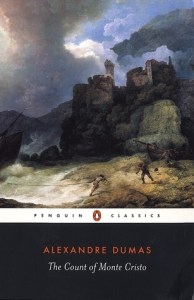
There are just two books left on my Classics Club book list and so, I’ve decided it’s time for me to read one of them, The Count of Monte Cristo by Alexandre Dumas. It is particularly daunting as it is so long, depending on which edition you read. The Penguin Classics edition is 1313 pages long.
The Book Begins:

On the 24th of February 1810, the look-out at Notre Dame de la Garde signalled the three-master, the Pharaon from Smyrna, Trieste, and Naples.

As usual, a pilot put off immediately, and rounding the Chateau d’If, got on board the vessel between Cape Morgion and Rion Island.

Also every Friday there is The Friday 56, hosted by Freda at Freda’s Voice. *Grab a book, any book. *Turn to Page 56 or 56% on your  ereader . If you have to improvise, that is okay. *Find a snippet, short and sweet, but no spoilers!
These are the rules:

  1. Grab a book, any book.
  2. Turn to page 56, or 56% on your eReader. If you have to improvise, that is okay.
  3. Find any sentence (or a few, just don’t spoil it) that grabs you.
  4. Post it.
  5. Add the URL to your post in the link on Freda’s most recent Friday 56 post.

Page 56:

‘I do not know what M. de Villefort promised you,’ said the gendarme, ‘but I know we are taking you to the Chateau d’If’.

By a rapid movement, which the gendarme’s practiced eye had perceived, Dantes sprang forward to precipitate himself into the sea; but four vigorous arms seized him as his feet quitted the bottom of the boat. He fell back cursing with rage.

Summary:

Thrown in prison for a crime he has not committed, Edmond Dantes is confined to the grim fortress of If. There he learns of a great hoard of treasure hidden on the Isle of Monte Cristo and he becomes determined not only to escape, but also to unearth the treasure and use it to plot the destruction of the three men responsible for his incarceration. Dumas’ epic tale of suffering and retribution, inspired by a real-life case of wrongful imprisonment, was a huge popular success when it was first serialized in the 1840s.

The Classics Club Spin Result

The spin number in The Classics Club Spin is number …

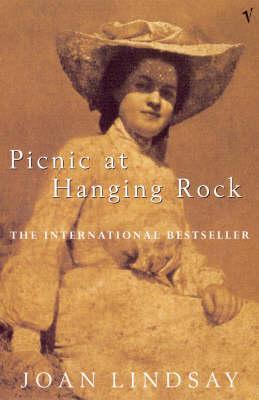
which for me is Picnic at Hanging Rock by Joan Lindsay. The rules of the Spin are that this is the book for me to read by 12 December, 2021.

I am delighted as this just the book I wanted to read next! It was one of my 20 books of Summer, but I didn’t get round to reading it then.

It was a cloudless summer day in the year nineteen hundred.

Everyone at Appleyard College for Young Ladies agreed it was just right for a picnic at Hanging Rock. After lunch, a group of three of the girls climbed into the blaze of the afternoon sun, pressing on through the scrub into the shadows of Hanging Rock. Further, higher, till at last they disappeared.

They never returned.

Whether Picnic at Hanging Rock is fact or fiction the reader must decide for themselves. (Goodreads)

Did you take part in the Classics Spin? What will you be reading?

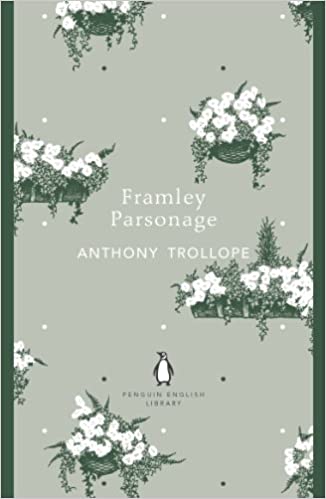
Framley Parsonage by Anthony Trollope

Framley Parsonage is my current Classics Club spin book. Although I read my previous spin book, Little Dorrit , I didn’t write a post about it. So, I decided to make an early start with Framley Parsonage to make sure I finished it before the 22nd August deadline – which I did!

Synopsis – Goodreads

A brilliant depiction of social climbing and scandal, Framley Parsonage tells the story of Mark Robarts, a young clergyman with ambitions beyond his small country parish of Framley. In a naive attempt to mix in influential circles, he makes a financial deal with the disreputable local Member of Parliament, but is instead brought to the brink of shame and ruin.

One of Trollope’s most enduringly popular novels, Framley Parsonage is an evocative portrayal of country life in nineteenth-century England, told with great compassion, humour and an acute insight into human nature. 

It is the fourth book in Anthony Trollope’s series, the Chronicles of Barsetshire, first published in serial form in the Cornhill Magazine in 1860, then in book form in 1861.

This is a long book – 688 pages in the Penguin classics edition – and begins slowly. It took me a while to settle into reading it and to sort out who all the characters are and how they relate to each other, There are several plot lines – there’s the clergyman Mark Robarts, the Vicar of Framley, and his attempts to climb up the church hierarchy. Mark through naivety, is bamboozled by Nathaniel Sowerby, a member of parliament. He guarantees a three-month bill of Sowerby’s for £400 (making Mark liable if Sowerby does not pay a £400 debt within that time) and then a further bill for £500. This does not go well for Mark!

Another plot line is that relating to Mark’s sister, Lucy and her on/off romance with Lord Lufton, much to the disapproval of his mother, Lady Lufton. Mark and Lord Lufton were childhood friends and Lady Lufton is Mark’s patroness, which causes problems all round, especially as she would much prefer her son to marry Griselda Grantley, the daughter of Doctor Theophilus Grantly, the Archdeacon of Barchester. There’s also a subplot involving Mrs Grantly and Mrs Proudie, Bishop Proudie’s wife, and their rivalry over their daughters’ marriages. There’s another marriage in the offing, that of the outspoken heiress, Martha Dunstable, to Doctor Thorne, the eponymous hero of the preceding novel in the series, Doctor Thorne.

Framley Parsonage is full of lifelike and interesting characters engaged in their everyday life and inevitable class inequalities and power struggles, described with a fair amount of wit and humour. Interspersed between the plotlines Trollope introduces several sections of political commentary on the Parliamentary shenanigans of the day, which I have to admit were less interesting to me. But it seems that not much has changed in the way the political parties carried on both in parliament and in their relationship with the press. The next book in the series is The Small House at Arlington, which I expect I’ll eventually get round to reading.

Throwback Thursday: 5 August 2021

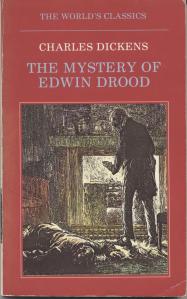
This month I’m looking back at my review of The Mystery of Edwin Drood by Charles Dickens which I first posted on 20 September 2010.

Here’s the first paragraph:

It’s been a few weeks now since I finished reading The Mystery of Edwin Drood by Charles Dickens, his last and unfinished book. I was surprised that it took so long before the mystery actually began to emerge and that it’s more the story of Edwin Drood’s uncle, John Jasper, than it is of Drood himself.   I was also surprised that much of it is written in the present tense, a style that I’m not too keen on. I haven’t read a Dickens novel for a few years and found the difference in style between this and modern mystery novels interesting. The build up to the mystery is so much more leisurely and descriptive than in modern novels, and I had to tone down my impatience for something mysterious to happen. Once I’d passed these hurdles I enjoyed the book immensely, even though I knew that the mystery is left open.

Click here to read my full review

The next Throwback Thursday post is scheduled for 2 September 2021.

The Classics Club Spin Result

The spin number in The Classics Club Spin is number …

6

which for me is Framley Parsonage by Anthony Trollope. The rules of the Spin are that this is the book for me to read by 22 August, 2021.

This book has been on my Classics Club list for a long time. It’s the fourth novel in the Chronicles of Barsetshire series, first published in 1860. I’ve read the earlier books, so I’m looking forward to reading this one.

Mark Robarts is a clergyman with ambitions beyond his small country parish of Framley. In a naive attempt to mix in influential circles, he agrees to guarantee a bill for a large sum of money for the disreputable local Member of Parliament, while being helped in his career in the Church by the same hand. But the unscrupulous politician reneges on his financial obligations, and Mark must face the consequences this debt may bring to his family.

(Description from Amazon)

Did you take part in the Classics Spin? What will you be reading?

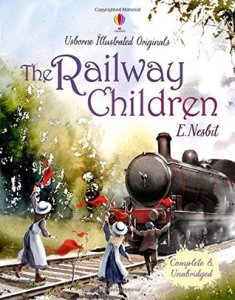
The Railway Children by E Nesbit: a Short Review

I have got behind with writing about the books I’ve read, so this is short review as I try to ‘catch up’:

The Railway Children by Edith Nesbit. It was originally serialised in The London Magazine during 1905 and first published in book form in 1906. It’s ‘a feel good’ book about a family living in a world long gone – 1905 to be precise.

Three young children, Roberta, known as ‘Bobbie’ (12), Peter (10), and Phyllis (8) move from London to ‘The Three Chimneys’, a much smaller house in the countryside near a railway line, with their mother. Their father had mysteriously left their home in the company of two men one evening. The children don’t know where he has gone or why. Their lives are drastically changed as without their father’s income, their mother is now busy writing to earn money.

The children have lots of adventures as they explore the countryside and especially the railway line and station. They make friends with the railway staff and in particular with one of the railway passengers, who they call the ‘Old Gentleman’. They prevent a train disaster, rescue a schoolboy, who has broken his leg and is stranded in a railway tunnel, and help a Russian refugee, who is trying to find his family. But the mystery surrounding their father continues to worry the children, especially Bobbie. Thankfully there is a happy ending!

I enjoyed The Railway Children but would have loved it if I’d read it when I was a child. There’s an emphasis on friendship and on helping others in the right way, that is on the importance of giving that is not perceived as charity, for instance, to avoid wounding the pride and self respect of others. Throughout I was surprised by the amount of freedom and independence the children enjoyed and the dangers they were exposed to including walking on the railway lines!