The Hanging Valley by Peter Robinson: a Book Review

There are 20 books in Peter Robinson’s Inspector Banks series (listed at Fantastic Fiction). I’ve read a few of them, completely out of order, but it doesn’t seem to matter too much as each one stands alone, although I suspect I’d get a better idea of Banks’s personal life if I had read them in order!
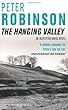
The Hanging Valley is the fourth one in the series.

Synopsis (from the back cover):

A faceless corpse is discovered in a tranquil, hidden valley below the village of Swainshead. And when Chief Inspector Alan Banks arrives, he finds that no-one is willing to talk. Banks’s frustration only grows when the identity of the body is revealed. For it seems that his latest case may be connected with an unsolved murder in the same area five years ago. Among the silent suspects are the Collier brothers, the wealthiest and most powerful family in Swainsdale. When they start use their influence to slow down the investigation, Inspector Alan Banks finds himself in a race against time…

My view:

As well as the Collier brothers, there are other suspects, including John Fletcher, a taciturn farmer, Sam Greenock and his wife Katy who own the local Bed and Breakfast guest house. There’s something not quite right about Katy, she’s obviously troubled and hiding something, and she is dominated by Sam. As I read on I thought the killer was first one character, then another and never really worked out who it was until quite near the end. I enjoyed the puzzle.

Detective Chief Inspector Alan Banks had been transferred to Eastvale from London two years earlier and is still getting to know the area. He’d moved from London because of the sheer pressure of the job and the growing confrontation between the police and citizens in the capital had got him down. Crime in Eastvale had been slack until this murder happened. And it’s complicated, the locals close ranks and Banks has to work hard to get information, first of all to discover who the victim was and why he had been killed. The trail leads him abroad to Toronto before Banks discovers the truth.

The Hanging Valley is rich in description, both of the Yorkshire Dales and of Toronto. (Peter Robinson was born in Yorkshire and now lives in Toronto.) The hanging valley sounds a beautiful spot, a small, secluded wooded valley with unusual foliage:

… the ash , alders and sycamores … seemed tinged with russet, orange and earth brown. It seemed … like a valley out of Tolkien’s ‘Lord of the Rings’.

… the valley clearly had a magical quality. It was more luxuriant than the surrounding area, its ferns and shrubs more lush and abundant, as if, Neil thought, God had blessed it with a special grace. (page 5)

All of which makes the discovery of the corpse so shocking, with its flesh literally crawling. So, I enjoyed this book on two levels – the mystery and the writing itself. I did think, though, that it could have been shorter and more concise, and some of the characters were rather indistinguishable which is why I rated it 3/5.

  • Paperback: 324 pages
  • Publisher: Pan; New edition (8 Nov 2002)
  • Language English
  • ISBN-10: 0330491644
  • ISBN-13: 978-0330491648
  • Source: I bought it

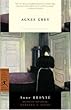
Agnes Grey by Anne Bronte: a Book Review

Agnes Grey by Anne Bronte, published in 1847, is a deeply moral novel about a young woman, a governess and her experiences working for two families in Victorian England. Agnes is the younger daughter of an impoverished clergyman. Her parents had married against her mother’s family’s wishes and when their fortune was wrecked Agnes determines to help out by working as a governess.

The first family she works for are the Bloomfields. Mrs Bloomfield tells Agnes her children are clever and very apt to learn. In fact they are terrible children, utterly spoilt and cruel. I found their brutality shocking, the more so since Anne was writing from her own experiences. One of the most vivid scenes is where Agnes kills a brood of nestlings to prevent Tom Bloomfield from torturing them.

Agnes is treated like a servant, rather than as a governess. She has no authority over the children and is not allowed to discipline them much as she would like to. Her attempts to improve their wild behaviour by quoting Bible texts and moral instruction have no effect on the children’s behaviour. As Agnes’s mother has told her that people do not like to be told of their children’s faults she kept silent about them and despite her best efforts she failed to make any impression on them:

But either the children were so incorrigible, the parents so unreasonable, or myself so mistaken in my views, or so unable to carry them out, that my best intentions and most strenuous efforts seemed productive of no better result than sport to the children, dissatisfaction to their parents, and torment to myself.

Her second post with the Murrays is little better – her charges are two teenage girls, who are just as spoilt as the younger children, wilful and determined to have their own way and two younger boys who are rough and unruly. Fortunately the boys are soon packed off to school and she only has to cope with sisters.

Both families are portrayed as wealthy, snobbish and totally lacking in any regard for Agnes. The only glimmer of hope comes through her friendship with Edward Weston, but even then Rosalie, the older daughter, is determined to make him fall in love with her. But surely Edward will not be deceived by Rosalie’s scheming ways? Agnes is gentle and self-effacing, never making her feelings known and it seems as though she is destined for a miserable life. Although she loves Edward she is totally unable to give any indication of her feelings towards him. Things seem to get even worse after her father’s death and she has to leave the Murrays – and Edward. However, Snap the dog plays his part in bringing some joy into Agnes’s life.

Agnes Grey vividly portrays the class distinctions of Victorian society, the position of women in that society from both the working and the middle classes through the first-person narrative. Above all it gives a very clear picture of the life of a governess, with all its loneliness, frustrations, insecurities and depressions. The characters, for the most part are well drawn, (the minor characters are one-dimensional) and I liked Agnes’s unspoken thoughts, eg. when told to go to the schoolroom immediately because the young ladies were waiting for her  she thinks, ‘Climax of horror! actually waiting for their governess.!!!’

Reading Agnes Grey has made me keen to re-read Charlotte Bronte’s Jane Eyre, for one thing to compare the two governesses. It’s been years since I read Jane Eyre, and my memory is that it is a much more dramatic novel (certainly it is much longer).

  • Format: Kindle Edition
  • File Size: 449 KB
  • Print Length: 155 pages
  • Page Numbers Source ISBN: 0812967135
  • Publisher: Modern Library (18 Dec 2007)
  • Sold by: Amazon Media EU S.à r.l.
  • Source: My own copy
  • My Rating: 3/5

The Murder on the Links by Agatha Christie: a Book Review

I’m taking part in the Agatha Christie Reading Challenge. I couldn’t wait until I’d got them all in the order she wrote them so I’ve been reading them as I come across them. Some of her earlier books have been hard to find, but on a recent trip to Barter Books in Alnwick I was able to fill in some of my gaps.

I’ve read 34 of her books before finding her third book,The Murder on the Links, originally published in 1923. This is the second book featuring Hercule Poirot.  There have been many editions published since then and my copy is a paperback, published in 1960 by Pan Books.
Agatha Christie had the idea for the book after reading newspaper reports of a murder in France, in which masked men had broken into a house, killed the owner and left his wife bound and gagged. From these facts she then invented her plot, setting the book in the fictional French town of Merlinville ( midway between Boulogne and Calais), at the Villa Genevieve, next to a golf course and overlooking the sea. The owner of the villa, Mr Renauld, a South American millionaire had written to Poirot asking for his help as he feared his life was in danger.

When Poirot and Hastings arrive they are too late to help him as the night before their arrival he was found dead, lying face down in an open grave, stabbed in the back. As they are in France, Inspector Japp does not appear, instead there is a young French detective, M. Giraud, who thinks very little of Poirot’s methods and disagrees with his findings. This is very much a mystery puzzle book, with many clues and several red herrings.

In her Autobiography, Agatha Christie describes how she was writing

… in the Sherlock Holmes tradition – eccentric detective, stooge assistant, with a Lestrange-type Scotland Yard detective, Inspector Japp – and I now added a ‘human foxhound’, Inspector Giraud, of the French police. Giraud despises Poirot as being old and passé. (page 290)

And it was then that she realised that she had made a mistake in starting with Poirot so old. She would have preferred to have abandoned him after her first three or four books and begun again with someone much younger, but she was stuck with him.

It is rather a melodramatic tale, but still enjoyable as Poirot unravels the mystery. An interesting subplot involves a love interest for Hastings, when he mets a young lady calling herself Cinderella. There is a hint at the end of the book that he will marry her and move to South America. Agatha Christie was stuck with Poirot, but she felt she could get rid of Hastings – she was getting rather tired of him. She didn’t write him out completely and he does reappear in later novels, visiting Poirot from his home in Argentina. I like Hastings, who in this book shares rooms with Poirot and is a ‘sort of private secretary to an MP.’

Her Autobiogaphy also reveals that Agatha Christie was not pleased with the jacket cover her publishers had designed as she felt it didn’t reflect the plot. In fact she was ‘really furious and it was agreed that in future she should see the jacket first and approve of it.’

She thought The Murder on the Links was ‘a moderately good example of its kind‘ and I liked it. My rating: 3/5.

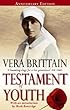
Testament of Youth by Vera Brittain

Testament of Youth by Vera Brittain is based on her diaries, telling of her life up to 1925, concentrating on the World War One years.

It is an absolutely fascinating account of the war and all its horror and sufferings, and very moving. Vera was a VAD (Voluntary Aid Detachment) during the war, nursing casualties both in Britain and France. The conditions were appalling.

During the war her fiance, Roland Leighton, her brother, Edward, and two friends, Geoffrey Thurlow and Victor Richardson, were all killed. Roland was killed the day before he was due home on leave at Christmas 1915 and Edward was killed just a few months before the Armistice – all heart-breaking. Vera’s life was irrevocably changed – as were those of so many others.

For me, her account of the war years is the most outstanding in this book, the most personal and vivid. The preceding years are about her childhood and youth and bring to life the social conditions and her struggles for education. By the outbreak of war she was an undergraduate at Somerville College, Oxford. But I found the final section after the war to be more detached. It’s about her work as a speaker on the League of Nations and International Relations, about the development of the peace ideal. The language in this section is more formal and so does not come across as fresh and immediate as in those on her childhood and war years.

 I read this book as a result of reading Climbing the Bookshelves by Shirley Williams, Vera’s daughter. It slots nicely into the War through the Generations Challenge – World War One.

  • Paperback: 640 pages
  • Publisher: Virago; New Edition with new cover edition (2004)
  • Language English
  • ISBN-10: 0860680355
  • ISBN-13: 978-0860680352
  • Source: borrowed from a friend – I’ve now bought the e-book version
  • My rating 4/5 (it would have been 5/5 apart from the change in writing in the last section)

Choosing a Classic

It’s time I began reading another classic for the Classics Challenge. I thought I’d look at the openings of some to see which takes my fancy.

Wives and Daughters by Elizabeth Gaskell:

To begin with the old rigmarole of childhood. In a country there was a shire, and in that shire there was a town, and in that town there was a house, and in that house there was a room, and in that room there was a bed, and in that bed there lay a little girl; wide awake and longing to get up, but not daring to do so for fear of the unseen power in the next room – a certain Betty, whose slumbers must not be disturbed until six o’clock struck, when she awakened herself ‘as sure as clockwork’, and left the household very little peace afterwards.

It reminds me of the children’s song Old MacDonald had a Farm with its repetitions. The little girl is Molly Gibson and Betty with the unseen powers is the family’s servant. It promises a story of a family and Molly’s place within it and this opening interests me. I don’t know anything about the book and have not seen any of the TV adaptations, so I’m coming to it with a completely open mind – no other interpretations to influence my reading of Elizabeth Gaskell’s words.

Silas Marner by George Eliot:

In the days when the spinning-wheels hummed busily in the farmhouses – and even great ladies, clothed in silk and thread-lace, had their toy spinning-wheels of polished oak – there might be seen, in districts far away from the lanes, or deep in the bosom of the hills, certain pallid undersized men, who, by the side of brawny country-folk, looked like the remnants of a disinherited race.

This one looks good too about village/rural life at the beginning of the 19th century. The only book by George Eliot that I’ve read is Middlemarch, which I loved. You have to have time and patience to read her books. Silas Marner, however, is a much shorter book with less characters than Middlemarch.

Three Men in a Boat by Jerome K Jerome:

There were four of us – George and William Samuel Harris, and myself, and Montmorency. We were sitting in my room, smoking, and talking about how bad we were – bad from a medical point of view I mean, of course.

We were all feeling seedy, and we were getting quite nervous about it.

Yet another author I know nothing about and as for the book I only know it’s reckoned to be a comedy. Again I have very few preconceptions about this book and have no ideas about the characters or what happens. I think Montmorency may be a dog as the book’s full title is Three Men in a Boat (to say nothing of the dog).

Now I just have to decide which one to read.

A Classics Challenge – February Prompt: Character

This month’s focus from Katherine of November’s Autumn for the Classics Challenge is on character. Write about a character you find interesting, it doesn’t have to be your favorite. Perhaps your least favorite or a minor one: choose any.

I’m answering a combination of her Level 1 and 2 questions. What phrases has the author used to introduce this character? Find a portrait or photograph that closely embodies how you imagine them.  Has your opinion of them altered? Do you find them believable? Would you want to meet them?

I read The Woman in White in January and wrote some thoughts about previously. The book has some very interesting characters and I’ve chosen to describe the villain – Count Fosco, a friend of Sir Percy Glyde.

We see him first through Marian Halcombe’s eyes (see my earlier post for her description). She is Laura’s half- sister and I think she is the real heroine of this book. She describes Fosco:

He looks like a man who could tame anything. If he had married a tigress, instead of a woman, he would have tamed the tigress.

The man has interested me, has attracted me, has forced me to like him.

he is immensely fat. Before this time I have always disliked corpulent humanity.

here, nevertheless, is Count Fosco, as fat as Henry the Eighth himself, established in my favour, at one day’s notice, without let or hindrance from his own odious corpulence. Marvellous indeed!

She is impressed most by his unfathomable grey eyes, which have a cold, beautiful, irresistible glitter and hold an extraordinary power, one which forces her to look at him and causes her sensations she would rather not feel. Although an Italian, he speaks excellent English. He is old (sixty!), but his movements are light and easy. He is very sensitive to noise and winced when Sir Percy Beat one of the spaniels – he cares for animals more than he cares for humans.

And his most curious peculiarity is his fondness for pet animals – a cockatoo, two canaries and a whole family of white mice, all of which are familiar with him. The birds sit on his fat fingers and the mice crawl all over him, popping in and out of his waistcoat. He kisses them and twitters to his birds.

Below is an illustration from the 1865 edition of the book, which doesn’t really portray him as I see him.

But this is more like it – Michael Crawford’s portrayal in the West End musical in 2004.

As for his character, Marian may be attracted to him, but he is is a true villain, completely domineering, sinister, clever and untrustworthy. He is powerful, a sensualist whose wife is completely besotted by him. Whilst it might seem from my description that Fosco is a caricature, he does come across as a believable character and certainly one I would not wish to meet.