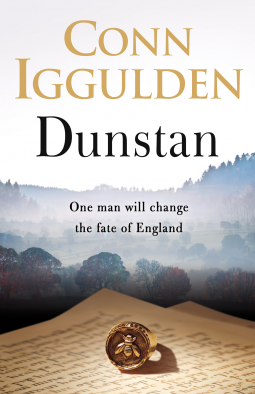
Dunstan by Conn Iggulden

History has always fascinated me, but I don’t know very much about the medieval period, so I was keen to read Dunstan: One Man Will Change the Fate of England by Conn Iggulden, to be published on 4 May 2017. It is historical fiction following the life of Dunstan who was born some time between 910 and 920. He was the Abbot of Glastonbury, then Archbishop of Canterbury and later canonised as a saint. I thoroughly enjoyed it and learned a lot about the period.

Summary (from the publishers)

The year is 937. England is a nation divided, ruled by minor kings and Viking lords. Each vies for land and power. The Wessex king Æthelstan, grandson of Alfred the Great, readies himself to throw a spear into the north.

As would-be kings line up to claim the throne, one man stands in their way.

Dunstan, a fatherless child raised by monks on the moors of Glastonbury Tor, has learned that real power comes not from God, but from discovering one’s true place on Earth. Fearless in pursuit of his own interests, his ambition will take him from the courts of princes to the fields of battle, from exile to exaltation.

For if you cannot be born a king, or made a king, you can still anoint a king.

Under Dunstan’s hand, England may come together as one country – or fall apart in anarchy . . .

From Conn Iggulden, one of our finest historical writers, Dunstan is an intimate portrait of a priest and murderer, liar and visionary, traitor and kingmaker – the man who changed the fate of England.

Conn Iggulden has brought the period to life with this book, fleshing out the historical records. It’s written in the first person, past tense, so we see events through Dunstan’s eyes. He and his younger brother Wulfric were brought up by the monks at Glastonbury Abbey. It’s a harsh, cruel life, but Dunstan has a vision that he will build a cathedral and his ambition and determination help him to make his vision a reality.

The book is set during the reigns of several kings, Æthelstan, the grandson of Alfred the Great, then of Ã†thelstan’s brother Edmund, who was king for just five years before he was killed. He was followed by another brother, Eadred, then by Edmund’s sons, Edwy and Edgar, who divided England between them. They were followed by Edmund’s grandson, Edward and finally by Ethelred the Unready, his much younger brother. I hope I have got the sequence correct.

This was a period of great unrest and conflict, as England eventually became unified under one High King, and was attacked repeatedly by the Vikings. Dunstan was manipulative, dedicated, ruthless and proud. It was these characteristics that enabled him to succeed. He was present at the Battle of Brunanburh in 937, in which Ã†thelstan defeated an alliance of Viking and Celtic warriors for control of the country and became the first king of England.

Dunstan also reformed the monasteries, imposing the rule of St Benedict, was instrumental in the building of Glastonbury Abbey, was an adviser to Eadred, exiled by Edwy, and reinstated by Edgar before being appointed Archbishop of Canterbury.

My summary of this book really does not do it justice. I was fascinated by it and the detail is impressive. It incorporates many tales about Dunstan, including the one where he is said to have pulled the devil’s nose with a pair of tongs. Conn Iggulden’s version of this tale is truly horrific. His Historical Note explains his use of the sources he has used and explanations of his use of names, notes on spelling, titles, on the Battle of Brunanburh, on Gothic Arches, and on the many miracles that Dunstan is said to have performed. Where there are gaps in the historical records Iggulden has filled them in to present his story of a man who achieved so much despite his flaws and self-doubt.

My thanks to NetGalley and the publishers for an advance proof copy of Dunstan.

Amazon UK 

  • Format: Kindle Edition
  • File Size: 2224 KB
  • Print Length: 464 pages
  • Page Numbers Source ISBN: 071818145X
  • Publisher: Penguin (4 May 2017)

My Week in Books: 26 April 2017

This Week in Books is a weekly round-up hosted by Lypsyy Lost & Found, about what I’ve been reading Now, Then & Next.

IMG_1384-0

A similar meme,  WWW Wednesday is run by Taking on a World of Words.

Now: I’m reading Wives and Daughters by Elizabeth Gaskell, which I’ve nearly finished. It is my Classics Club Spin book.

Blurb:

It’s a story of romance, scandal and intrigue within the confines of a watchful, gossiping English village during the early nineteenth century. When seventeen-year-old Molly Gibson’s widowed father remarries, her life is turned upside down by the arrival of her vain, manipulative stepfather. She also acquires an intriguing new stepsister, Cynthia, glamorous, sophisticated and irresistible to every man she meets. 

I’m also reading Caedmon’s Song by Peter Robinson, one of his stand-alone books.

Blurb:

On a balmy June night, Kirsten, a young university student, strolls home through a silent moonlit park. Suddenly her tranquil mood is shattered as she is viciously attacked.

When she awakes in hospital, she has no recollection of that brutal night. But then, slowly and painfully, details reveal themselves – dreams of two figures, one white and one black, hovering over her; wisps of a strange and haunting song; the unfamiliar texture of a rough and deadly hand . . .

In another part of England, Martha Browne arrives in Whitby, posing as an author doing research for a book. But her research is of a particularly macabre variety. Who is she hunting with such deadly determination? And why?

Then: The last book I read is Night Falls on Ardamurchan by Alasdair Maclean. My review will follow soon.

Blurb:

Since its first publication in 1984, ‘Night Falls in Ardnamurchan’ has become a classic account of the life and death of a Highland community.

The author weaves his own humorous and perceptive account of crofting with extracts from his father’s journal – a terse, factual and down to earth vision of the day-to-day tasks of crofting life.

It is an unusual and memorable story that also illuminates the shifting, often tortuous relationships between children and their parents. Alasdair Maclean reveals his own struggle to come to terms with his background and the isolated community he left so often and to which he returned again and again.

In this isolated community is seen a microcosm of something central to Scottish identity – the need to escape against the tug of home.

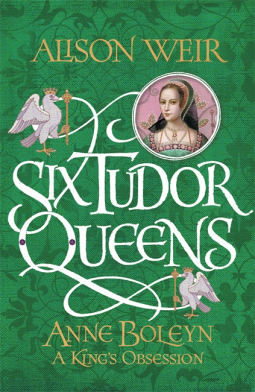
Next: I think I’ll read Six Tudor Queens: Anne Boleyn: A King’s Obsession by Alison Weir, which will be published by Headline on 18 May 2017.

Blurb:

The young woman who changed the course of history.

Fresh from the palaces of Burgundy and France, Anne draws attention at the English court, embracing the play of courtly love.

But when the King commands, nothing is ever a game.

Anne has a spirit worthy of a crown – and the crown is what she seeks. At any price.

ANNE BOLEYN. The second of Henry’s Queens. Her story.
History tells us why she died. This powerful novel shows her as she lived.

But I’m tempted to slip in a Maigret book first: The Hanged Man of Saint-Pholien by Georges Simenon.

The Hanged Man of Saint-Pholien (Maigret, #4)

Blurb:

A first ink drawing showed a hanged man swinging from a gallows on which perched an enormous crow. And there were at least twenty other etchings and pen or pencil sketches that had the same leitmotif of hanging.
On the edge of a forest: a man hanging from every branch.
A church steeple: beneath the weathercock, a human body dangling from each arm of the cross. . . Below another sketch were written four lines from François Villon’s Ballade of the Hanged Men.

On a trip to Brussels, Maigret unwittingly causes a man’s suicide, but his own remorse is overshadowed by the discovery of the sordid events that drove the desperate man to shoot himself.

Penguin is publishing the entire series of Maigret novels in new translations. This novel has been published in previous translations as Maigret and the Hundred Gibbets and The Crime of Inspector Maigret.

First Chapter, First Paragraph: Bilgewater

Every Tuesday Diane at Bibliophile by the Sea hosts First Chapter First Paragraph Tuesday Intros to share the first paragraph sometimes two, of a book that she’s reading or planning to read soon.

This week’s first paragraph is from Bilgewater by Jane Gardam, one of my TBR books that I’m planning to read soon.

BilgewaterChapter 1

My mother died when I was born which makes me sound princess-like and rather quaint. From the beginning people have said that I am old-fashioned. In Yorkshire to be old-fashioned means to be fashioned-old, not necessarily to be out of date, but I think that I am probably both. For it is rather out of date, even though I will be eighteen this February, to have had a mother who died when one was born and it is fashioned -old to have the misfortune to be and look like me.

Blurb:

Marigold Green calls herself ‘hideous, quaint and barmy’. Other people call her Bilgewater, a corruption of Bill’s daughter. Growing up in a boys’ school where her father is housemaster, she is convinced of her own plainness and peculiarity. Groomed by the wise and loving Paula, upstaged by bad, beautiful Grace and ripe for seduction by entirely the wrong sort of boy, she suffers extravagantly and comically in her pilgrimage through the turbulent, twilight world of alarming adolescence.

I’m looking forward to reading this as I’ve enjoyed other books by Jane Gardam, such as her Old Filth books.

Would you keep reading, or not?

Maigret!

I was delighted and so lucky to win these five books in Sarah’s Giveaway at Crimepieces blog! Thank you Sarah!

They are from the new Penguin translations of Georges Simenon’s Maigret novels:

Years ago I enjoyed the TV series Maigret with Rupert Davies in the title role and have recently watched the latest series with Rowan Atkinson as Maigret. I think he is excellent in the role and so is Lucy Cohu as Madame Maigret.

Last Sunday  I enjoyed watching Maigret’s Night at the Crossroads and was pleased to see the book was today’s Kindle Deal of Day.
The Night at the Crossroads (Maigret #7)I shall be reading them very soon!

My Friday Post: Night Falls on Ardnamurchan

Every Friday Book Beginnings on Friday is hosted by Gillion at Rose City
Reader
 where you can share the first sentence (or so) of the book you are reading, along with your initial thoughts about the sentence, impressions of the book, or anything else the opener inspires.

One of the books I’m currently reading is Night Falls on Ardnamurchan: The Twilight of a Crofting Family by Alasdair Maclean.

Night Falls on Ardnamurchan: The Twilight of a Crofting Family

It begins:

Introduction 1: Father and Son

We hardly conceive of our parents as human. There are innumerable actions, there are whole areas of life and thought, that we do not care to see connected with them, that we scarcely allow ourselves, far less others, to connect with them.

From the back cover:

The Scottish poet Alasdair Maclean records the rise and fall of the remote crofting hamlet in the little-known area of Ardnamurchan where his family had its roots.

Perceptive, humorous and sharp he binds his own account of the crofter’s lifestyle and extracts from his father’s journal, a terser, more factual and down-to-earth vision of the day-to-day. It is an unusual and memorable story, one that not only describes life in a dying crofting community but also illuminates the shifting, often tortuous, relationship between children and their parents.

Also every Friday there is The Friday 56, hosted by Freda at Freda’s Voice.

Friday 56

These are the rules:

  1. Grab a book, any book.
  2. Turn to page 56, or 56% on your eReader.
  3. Find any sentence (or a few, just don’t spoil it) that grabs you.
  4. Post it.
  5. Add the URL to your post in the link on Freda’s most recent Friday 56 post.

The events on page 56 are concerned with winkle gathering, which provided an additional income to many of the crofters. The winkles were gathered and then stored where they could be refreshed by sea water until they were shipped to a merchant.

The reaction of a bag of thirsty winkles to a good splash of Mother Atlantic is delightful. For a few minutes all is creaks and squeaks and bubblings, as though a buzz of winkly conversation had broken out.

I found it was slow going at first, but now I’ve read half the book I’m really enjoying Maclean’s commentary on his father’s journal.

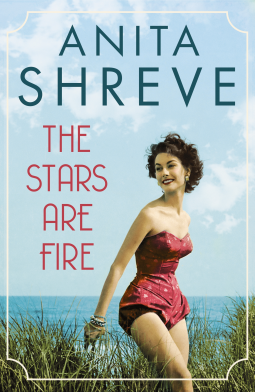
The Stars are Fire by Anita Shreve

I really wanted to like The Stars are Fire, Anita Shreve’s latest book. However, I don’t think it’s one of her best books and I’m not keen on the cover, which I think does not represent the story.

It begins well, describing the continuous wet spring when it seemed the rain would never stop and Grace Holland prays for a dry day. She’s in a difficult marriage, with her two young children, both under the age of two and pregnant with her third child. They live in a shingled bungalow two blocks in from the ocean in Hunts Beach (a fictional town) on the coast of Maine. The rain is followed by the long hot summer of 1947, then a drought sets in, followed by devastating fires. The Stars are Fire paints a convincing picture of life just after the Second World War. Grace’s daily life is difficult constrained by the social conventions and attitudes of the late 1940s.

The fires are getting closer to Hunts Beach when Gene, Grace’s husband joins the volunteers trying to bring the fires under control and she is left alone with the children. Grace’s strength and ingenuity is tested as she and her children survive the fire only to find that everything around her has gone – all the houses, her best friend and neighbour; those who have survived are leaving and her husband is missing. She has nothing.

Grace, however, is resilient and resourceful. Helped by her mother and strangers she begins to build a new life, finds work and experiences a freedom she had never known before. But then it all changes. I don’t want to write any more as I don’t want to give away any spoilers.

The Stars are Fire is easy reading and I finish it in one day. It is written from Grace’s perspective and in the present tense, which I often find irritating. But it is a page-turner and I did want to know what happened next. I didn’t enjoy the second half of the book as much as the first. And I think the ending rather trite. It’s a book about loss and grief, about how people’s lives can be changed in an instance and how they react and face up to emotional and physical challenges.

My thanks to the publishers and NetGalley for a proof copy of this book.

  • Format: Kindle Edition
  • File Size: 1042 KB
  • Print Length: 256 pages
  • Publisher: Little, Brown Book Group (18 April 2017)
  • My rating: 3*