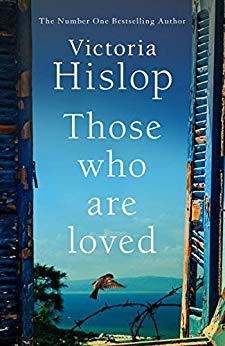
Those Who Are Loved by Victoria Hislop

Those who are loved

Headline Review|30 May 2019|496 pages|Review e-book copy|4.5*

Those Who Are Loved by Victoria Hislop is one of the most moving novels I’ve read for a long time. But it begins slowly and it was only at about the halfway stage that it really took off for me. And now I’ve come to write about it I’m finding it difficult to put into words just how exceptional I think it is. Whatever I write will not do it justice – it really is ‘an epic tale of an ordinary woman compelled to live an extraordinary life‘.

It is historical fiction ‘set against the backdrop of the German occupation of Greece, the subsequent civil war and a military dictatorship, all of which left deep scars.’

The main character is Themis Koralis/Stravidis (in Greek mythology Themis is the personification of fairness and natural law). In 2016 she is a great grandmother and realising that her grandchildren knew very little about Greek history she decided to tell them her life story, beginning from when she was a small child in the 1930s, through the German occupation of Greece during the Second World War, the civil war that followed, then the oppressive rule of the military junta and the abolition of the Greek monarchy, up to the present day.

As she grew up she and her brothers and sister had many disagreements, holding differing political opinions, which came to a head when the Germans invaded Athens in 1941.  Themis and her brother Panos joined the communist party in their fight against the Germans, whilst her other brother Thanasis and her sister Margarita opposed them, hating the communists’ views and believing that Germany was a friend of Greece, not a foe.

During the civil war Themis was imprisoned on the islands of exile, Makronisos and then Trikeri. Her experiences were horrific, but only strengthened her determination to survive. On Makronisos she met Aliki, also a member of the communist party, and when Aliki is condemned to death, Themis promises to find and raise Aliki’s son, Nikos as her own.

During the early part of the book I felt it was rather like reading a history book. But then, the book sprang to life, the pace increased, and I was totally gripped and moved as history and fiction came together dramatically in glorious technicolor, telling the story of the characters personal lives and their parts in the action.

I have only skimmed the surface of this book – there is so much more to the story than I can mention here. But after the slow start I loved it, even though it is not a book I can say I ‘enjoyed’. It is a powerful and shocking story of remarkable characters faced with brutal and traumatic events. It has a completely convincing and vivid sense of location. I knew next to nothing about this period in Greek history before and I was astounded by what I learnt. 

On a personal note, the earthquake in Athens on 7 September 1999 plays a part in the story. We were there then on holiday. We had been out at sea on that day and travelled back to our hotel through Athens, seeing some of the destruction and terror it caused. The earthquake had been felt at our hotel in Marathon – people had been thrown out of the swimming pool and later that evening we could still feel the aftershocks.

Many thanks to the publishers, Headline Review, for my review copy via NetGalley.
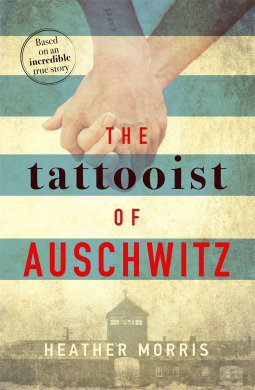
The Tattooist of Auschwitz by Heather Morris

‘a story of two ordinary people, living in an extraordinary time, deprived not only of their freedom but their dignity, their names and their identities.’

The Tattooist of Auschwitz

Zaffre|4 Oct. 2018|320 pages|Paperback|3*

Yesterday when I finished reading The Tattooist of Auschwitz, I didn’t want to write about it, but I kept thinking about it and in the end I decided I needed to record a few of my thoughts about it. It is not a book I can say that I ‘enjoyed’, because I didn’t – the subject matter is too painful, how can you enjoy a book that describes the horrors of one person’s experience of his time in the concentration camp of Auschwitz-Birkenau*!

It is ‘based on the true story of Lale Sokolov’.  He was born Ludwig Eisenberg on 28 October 1916 in Krompachy, Slovakia and transported to Auschwitz on 23 April 1942. He was given the job of tattooing the prisoners marked for survival. He met and fell in love with Gita, a fellow prisoner and he was determined that they would be survivors. The story Heather Morris tells is simply devastating and I could hardly bear to read the horrors of life in the concentration camps; it is appalling as it reveals the brutality, hatred and evil side of human nature. But is also about love, determination, compassion, and the strength of human nature. 

It is simply told in a straight forward, childlike style and in the present tense. It is certainly a most unsettling and depressing book, despite the fact that I knew that Lale and Gita would survive their horrific experience.

Heather Morris wrote the book after meeting Lale and hearing his story. In her Author’s Note she tells how she spent three years listening to him as

he told his story piecemeal, sometimes slowly, sometimes at bullet-pace and without clear connections between the many, many episodes. … Lale’s memories were on the whole, remarkably clear and precise.

The epilogue describes what happened to Lale and Gita after the end of the war. They married, moved to Bratislava, and, after travelling to Paris, eventually moved to Melbourne. There are photos at the end of the book of Lale and Gita in Australia with Gary their son and an Afterword by Gary about their family life and how their years in the camp affected them both.

But the line between fiction and fact can be blurred in a novel and there are claims that ‘the book contains numerous errors and information inconsistent with the facts, as well as exaggerations, misinterpretations and understatements‘. I have read the article pointing out the errors etc. It concludes that the book should be seen as an ‘impression devoid of documentary value on the topic of Auschwitz, only inspired by authentic events … Given the number of factual errors, therefore, this book cannot be recommended as a valuable title for persons who want to explore and understand the history of KL Auschwitz.’

It seems to me that it is a novel that clearly conveys what Lale experienced during the three years he spent in Auschwitz, as he remembered it many years later. Despite the errors that have been pointed out, I think it is a story of man’s inhumanity to man and a tribute to the strength of the human spirit for survival.

KL Auschwitz-Birkenau 

The first and oldest was the so-called “main camp,” later also known as “Auschwitz I” (the number of prisoners fluctuated around 15,000, sometimes rising above 20,000), which was established on the grounds and in the buildings of prewar Polish barracks;

The second part was the Birkenau camp (which held over 90,000 prisoners in 1944), also known as “Auschwitz II” This was the largest part of the Auschwitz complex. The Nazis began building it in 1941 on the site of the village of Brzezinka, three kilometers from Oswiecim. The Polish civilian population was evicted and their houses confiscated and demolished. The greater part of the apparatus of mass extermination was built in Birkenau and the majority of the victims were murdered here;’ (extract from the history page of the Auschwitz-Birkenau Memorial and Museum)

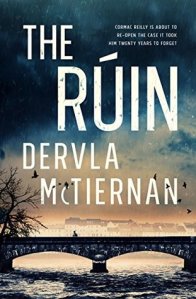
The Ruin by Dervla McTiernan

In Irish, Rúin means something hidden, a mystery, or a secret, but the word also has a long history as a term of endearment

Ruin

I liked The Rúin by Dervla McTiernan, the first in the detective Cormac Reilly series set in Ireland. It has a powerful opening in 1993 in Galway when Garda Cormac Reilly, new to the job, finds 15-year-old Maude and her little brother, Jack, who’s only five, alone in an old, decaying Georgian house, whilst their mother Hilaria Blake lies dead of an overdose.

Move forward twenty years and Cormac is now a DI. He has left an elite squad responsible for counter-terrorism and armed responses to serious incidents in Dublin and moved back to Galway, where Emma, his partner, has just started a new job. Although Galway is his home town he feels an outsider in the police department, largely shunned by the other officers, apart from Danny who had trained with him.  Despite his experience of running complex and high-profile cases he is assigned mainly to cold cases, which he thinks is an inappropriate use of his time. And he suspects the squad of corruption.

When Jack’s body is found in the River Corrib the police tell his girlfriend, Aisling Conroy, that he committed suicide. But when his sister, Maude arrives on the scene, having spent the last twenty years in Australia, she persuades Aisling to work with her to prove Jack’s death was murder. However, the police refuse to believe her and instead arrest her for the murder of her mother twenty years earlier. Meanwhile Cormac  realising there is a link between the deaths of Hilaria and Jack works to uncover the truth about both cases, despite the obstacles his fellow officers put in his way.

I found it rather confusing at first working out who was who and their relationships. There are quite a lot of minor characters who muddied the waters for me and I think the plot is over-complicated, needing the final chapters to explain the details. But I thought the main characters were convincing, in particular Cormac, and I was impressed by the description of Aisling grappling with her grief. There is also a strong sense of place. I was keen to find out the truth and once I had the characters clear in my head I just didn’t want to put it down until I finished it – it’s a real page-turner. I enjoyed it so much that I immediately reserved the next one in the series, The Scholar, at the library. I collected it on Thursday and will be reading it very soon.

  • Format: Kindle Edition
  • File Size: 1053 KB
  • Print Length: 402 pages
  • Publisher: Sphere (8 Mar. 2018)
  • Source: I bought it
  • My rating: 4*

My Friday Post: Anything You Do Say by Gillian McAllister

Book Beginnings Button

Every Friday Book Beginnings on Friday is hosted by Gillion at Rose City Reader where you can share the first sentence (or so) of the book you are reading, along with your initial thoughts about the sentence, impressions of the book, or anything else the opener inspires.

The book I’m featuring this week is Anything You Do Say by Gillian McAllister, a book I  started reading yesterday and one of the books on my 20 Books of Summer list.

Anything you do say


It starts with a selfie. He is a random; we are not even sure of his name. We are always meeting them whenever we go out. Laura says it’s because I look friendly. I think it’s because I am always daydreaming, making up lives for people as I stare at them, and they think I’m inviting them over to chat.

I’m thinking that Joanna (we learn the narrator’s name 2 pages later) should stop staring at people like she does – it’s obviously asking for trouble.

Also every Friday there is The Friday 56, hosted by Freda at Freda’s Voice.

30879-friday2b56These are the rules:

  1. Grab a book, any book.
  2. Turn to page 56, or 56% on your eReader. If you have to improvise, that is okay.
  3. Find any sentence (or a few, just don’t spoil it) that grabs you.
  4. Post it.
  5. Add the URL to your post in the link on Freda’s most recent Friday 56 post.

Page 54 and page 56:

I haven’t told him. I haven’t told him. I haven’t told him. I haven’t told him.

How could I tell him? He would stop looking at me that way. That tiny, knowing smile of his. I’m one of the only people he likes. And so how can I tell him, before anyone else?

Well, I said she should stop staring at people – something bad has happened.

What do you think? Would you keep reading?

WWW Wednesday: 5 June 2019

IMG_1384-0

WWW Wednesday is run by Taking on a World of Words.

The Three Ws are:

What are you currently reading?
What did you recently finish reading?
What do you think you’ll read next?


Currently reading: I’m still making slow progress with reading  D H Lawrence: the Life of an Outsider by John Worthen,  but I’ve almost finished Sweet Thursday by John Steinbeck. So, I’ve started to read Those Who Are Loved by Victoria Hislop, one of the books on my 20 Books of Summer list.

Those Who Are Loved is historical fiction, set against the backdrop of the German occupation of Greece, the subsequent civil war and a military dictatorship, all of which left deep scars. I know very little about Greece during the Second World War so I’m finding it very interesting, but it is very slow going. It begins as Themis remembers her life and the conflicts within her family as well as their experience of the war.

I’ve recently finished The Ruin by Dervla Mactiernan and will be writing more about it in a later post.

Ruin

Blurb:

It’s been twenty years since Cormac Reilly discovered the body of Hilaria Blake in her crumbling Georgian home. But he’s never forgotten the two children she left behind…

When Aisling Conroy’s boyfriend Jack is found in the freezing black waters of the river Corrib, the police tell her it was suicide. A surgical resident, she throws herself into study and work, trying to forget – until Jack’s sister Maude shows up. Maude suspects foul play, and she is determined to prove it.

DI Cormac Reilly is the detective assigned with the re-investigation of an ‘accidental’ overdose twenty years ago – of Jack and Maude’s drug- and alcohol-addled mother. Cormac is under increasing pressure to charge Maude for murder when his colleague Danny uncovers a piece of evidence that will change everything…

My next book could be:

I think, but I could always change my mind, it’ll be Anything You Do Say by Gillian Mcallister, another book that is on my 20 Books of Summer list.

Anything you do say

Blurb:

Joanna is an avoider. So far she has spent her adult life hiding bank statements and changing career aspirations weekly.

But then one night Joanna hears footsteps on the way home. Is she being followed? She is sure it’s him; the man from the bar who wouldn’t leave her alone. Hearing the steps speed up Joanna turns and pushes with all of her might, sending her pursuer tumbling down the steps and lying motionless on the floor.

Now Joanna has to do the thing she hates most – make a decision. Fight or flight? Truth or lie? Right or wrong?

Have you read any of these books?  Do any of them tempt you? 

Top Ten Tuesday: Books From My Favourite Genre

top-ten-tuesday-new

Top Ten Tuesday is a weekly meme created by The Broke and the Bookish and now hosted by Jana at That Artsy Reader Girl. For the rules see her blog.

This week’s topic: Books From My Favourite Genre.

The first thing is to decide which genre is my favourite! Jana says: Feel free to put a unique spin on the topic to make it work for you! So that’s what I’m going to do.

This has been a very difficult post to write and I could have spent days trying to decide which genres and books to choose. But I’ve come up with these ten books (although I could easily have picked a different ten on another day) – a combination of crime fiction, historical crime fiction and two autobiographies.

I’m starting with the easy and for me the obvious choice – Agatha Christie: An Autobiography. It took her fifteen years to write it. She stopped writing it in 1965 when she was 75 because she thought that it was the ‘right moment to stop’. As well as being a record of her life as she remembered it and wanted to relate it, it’s also full of  her thoughts on life and writing.

Her archaeological memoir, Come Tell Me How You Live is also a fascinating book writing about her life with her husband, Max Mallowan, excavating the ancient sites at Chagar Bazar, Tell Brak and other sites in the Habur and Jaghjagha region in what was then north western Syria. Sadly the places she loved are no longer the same!

Next three of my favourite crime fiction novels:

The Falls by Ian Rankin – this is the 12th Rebus book and is one of my favourites in the series.  A university student Philippa Balfour, has disappeared.  DI Rebus and his colleagues have just two leads to go on – a carved wooden doll found in a tiny coffin at The Falls, Flip’s home village, and an Internet game involving solving cryptic clues.

I’m cheating a bit with my next choice – Andrew Taylor’s trilogy, Fallen Angel (The Roth Trilogy, made up of The Four Last Things,  The Judgement of Strangers  and The Office of the Dead. It’s a chilling murder mystery about the linked histories of the Appleyards and the Byfields. The books work backwards in time, with the first book being the last chronologically, set in the 1990s, and each book works as a stand-alone, self-contained story. 

A Judgement in Stone by Ruth Rendell – a murder mystery in which you know from the start who the murderer is from the opening sentence, Eunice Parchman killed the Coverdale family because she could not read or write. And as the reasons for killing them become clear, the tension builds relentlessly.

Finally historical fiction – two of them historical crime fiction:

The Name of the Rose by Umberto Eco. William of Baskerville is a Franciscan monk in a monastery in Italy in the 14th century, where a number of his fellow monks are murdered. Not everyone likes this book but I love the way it combines so many genres – historical fiction, mystery, and theology and philosophy.

Winter in Madrid by C J Sansom. I love Sansom’s 16th century crime thrillers, but Winter in Madrid is brilliant – an action packed thrilling war/spy story and also a moving love story and historical drama all rolled into this tense and gripping novel. It’s set in 1940 when Harry Brett, traumatised by his injuries at Dunkirk is sent to Spain to spy for the British Secret Service.

And three historical fiction novels:

The Hunger by Alma Katsu is a story about the Donner Party, comprising pioneers, people who were looking for a better life in the American West. They formed a wagon train under the leadership of George Donner and James Reed making their way west to California in 1846. With hints of the supernatural and Indian myths it becomes a thrilling, spine tingling horrific tale.

The Grapes of Wrath by John Steinbeck. His writing conjures up such vivid pictures and together with his use of dialect I really felt I was there in America in the 1930s travelling with the Joad family on their epic journey from Oklahoma to California in search of a better life. It’s a tragedy – their dreams were shattered, their illusions destroyed and their hopes denied.

A Whispered Name by William Brodrick, his third Father Anselm novel about the First World War and the effects it had on those who took part, those left at home and on future generations. Father Anselm discovers the truth about the trial of a deserter, Joseph Flanagan, at the Battle of Passchendaele in 1917 and Father Herbert’s part in it. It is one of the best books I’ve read.