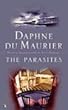
The Parasites by Daphne du Maurier: a Book Review

Daphne Du Maurier has been one of my favourite authors ever since I read Rebecca as a young teenager. I’ve read quite a lot of her books, some more than once, but this is the first time I’ve read The Parasites.

This is different from the other books by Du Maurier that I’ve read. There’s no real mystery, no dramatic suspense, no need to hold your breath and wonder what comes next. In some ways it’s a family drama and in others it’s a psychological study. The characters, for the most part, are not likeable – they’re selfish and self-centred, the ‘dreadful Delaneys‘. They’re from the theatrical, artistic world and they mix with the rich and the upper classes. They are siblings, with famous parents – Pappy, a singer who is a  larger-than life character and Mama who is a dancer. Between them they have three children – Maria, who is Pappy’s daughter; Niall, who is Mama’s son; and Celia who is their daughter.

At the beginning of this book Charles, Maria’s husband accuses her and her stepbrother, Niall and half-sister Celia of being parasites:

… that’s what you are, the three of you. Parasites. The whole bunch. You always have been and you always will be. Nothing can change you. You are doubly, triply parasitic; first, because you’ve traded ever since childhood on that seed of talent you had the luck to inherit from your fantastic forbears; secondly, because you’ve none of you done a stroke of ordinary honest work in your lives, but batten upon us, the fool public who allow you to exist; and thirdly, because you prey upon each other, the three of you, living in a world of fantasy which you have created for yourselves and which bears no relation to anything in heaven or on earth. (page 5)

The narration alternates between the past and the present and between the first person narrator and third person description, which I found rather odd at first. The narrator could be any one of the three – Maria, Niall or Celia – or is it Daphne Du Maurier herself? I read Margaret Forster’s biography of Daphne a while ago and checked what she had to say about The Parasites. I wasn’t surprised to find out that this book is semi-autobiographical. Daphne had written to a friend in 1957 explaining that these characters were her ‘three inner selves’ and Margaret Forster considers that Pappy was modelled on Gerald, Daphne’s father.

It’s the relationships between the three siblings that forms the core of The Parasites. After Charles’s outburst the three of them discuss what he meant and go back through their lives. There are poignant moments as they remember the joys and difficulties of growing up and that strange realisation that you’re no longer a child:

Grown-up people … How suddenly would it happen, the final plunge into their world? Did it really come overnight, as Pappy said, between sleeping and waking? A day would come, a day like any other day, and looking over your shoulder you would see the shadow of the child that was, receding; and there would be no going back, no possibility of recapturing the shadow. You had to go on; you had to step forward into the future, however much you dreaded the thought, however much you were afraid. (page 61)

Like all of Du Maurier’s books I could visualise the scenes, almost as though I was really there. I may not have liked the characters but they are convincing –  I wouldn’t want to have to spend much time with any of them. But it’s not all intense. There is also humour to balance the drama, such as the hilarious scene where the Delaneys visit the Wyndham family soon after Maria has married Charles.

Even though this does not rank with my favourites of Daphne’s books I did enjoy it and it spurred me on to read My Cousin Rachel, which I’ve been meaning to read for years, and Justine Picardie’s novel, Daphne – more about both books another time.

  • Paperback: 352 pages
  • Publisher: Virago Press Ltd; New edition edition (5 May 2005)
  • Language English
  • ISBN-10: 1844080722
  • ISBN-13: 978-1844080724
  • Source: I bought it
  • My Rating: 3.5/5

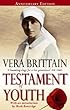
Testament of Youth by Vera Brittain

Testament of Youth by Vera Brittain is based on her diaries, telling of her life up to 1925, concentrating on the World War One years.

It is an absolutely fascinating account of the war and all its horror and sufferings, and very moving. Vera was a VAD (Voluntary Aid Detachment) during the war, nursing casualties both in Britain and France. The conditions were appalling.

During the war her fiance, Roland Leighton, her brother, Edward, and two friends, Geoffrey Thurlow and Victor Richardson, were all killed. Roland was killed the day before he was due home on leave at Christmas 1915 and Edward was killed just a few months before the Armistice – all heart-breaking. Vera’s life was irrevocably changed – as were those of so many others.

For me, her account of the war years is the most outstanding in this book, the most personal and vivid. The preceding years are about her childhood and youth and bring to life the social conditions and her struggles for education. By the outbreak of war she was an undergraduate at Somerville College, Oxford. But I found the final section after the war to be more detached. It’s about her work as a speaker on the League of Nations and International Relations, about the development of the peace ideal. The language in this section is more formal and so does not come across as fresh and immediate as in those on her childhood and war years.

 I read this book as a result of reading Climbing the Bookshelves by Shirley Williams, Vera’s daughter. It slots nicely into the War through the Generations Challenge – World War One.

  • Paperback: 640 pages
  • Publisher: Virago; New Edition with new cover edition (2004)
  • Language English
  • ISBN-10: 0860680355
  • ISBN-13: 978-0860680352
  • Source: borrowed from a friend – I’ve now bought the e-book version
  • My rating 4/5 (it would have been 5/5 apart from the change in writing in the last section)

Recent Reading

I’ve read some books recently and haven’t written about them – ‘real life’ keeps getting in the way! So here are a few brief notes on three of the books I’ve read this month:

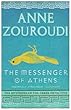
  • The Messenger of Athens by Anne Zouroudi 4/5 – the first in the Hermes Diaktoros, Greek detective series, set on a remote Greek island. Hermes investigates the death of a young woman. It’s great on location and characters, but a bit slow in parts. Each of the books in the series features one of the Seven Deadly Sins – in this one it is the sin of lust. I’ve read the third book in the series – The Doctor of Thessaly – and have the fifth one, The Whispers of Nemesis. I just need to find the second and fourth books to complete the series.
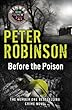
  • Before the Poison by Peter Robinson 4/5. This is a stand-alone book, about Chris Lowndes, a widower who has bought a house in the Yorkshire Dales. Sixty years earlier a man had died there and his wife Grace was convicted of his murder and hanged. Chris wants to discover whether she really was guilty. This is a convincing mystery, told alternating between the present day and the past. Another book well grounded in its locality and with great characterisation.
  • The Inspector’s Daughter by Alanna Knight 3.5/5 – the first in the Rose McQuinn Mystery series. Set in Edinburgh in 1895, Rose, recently returned from America’s Wild West, steps into the shoes of her father, DI Faro (another series of books features this detective). Her friend Alice ask her to investigate her husband’s strange behaviour as she is convinced he’s having an affair. Meanwhile there is also the mystery of the brutal murder of a servant girl to solve. Rose lives in an isolated house at the foot of Arthur’s Seat and is helped by a wild deerhound who appears just when she needs him. An interesting historical murder mystery, convincingly set in the late 19th century, when Edinburgh was developing and the Forth Railway Bridge had just been opened.

March Prompt – A Classics Challenge

The focus this month in the Classics Challenge is on Setting.

I’ve just finished re-reading (for the umpteenth time) Jane Austen’s Pride and Prejudice. Each time I read it I still enjoy it immensely. I think knowing what happens next adds to the pleasure. I read it this time looking out for information about the settings – something I haven’t done before, although Pemberley always stands out!

There are many locations, but for this post I’ve chosen Longbourn.

Pride and Prejudice is a novel based on character, plot and is a study of society in the late 18th/early 19th centuries, but above all it is a love story. The settings provide an essential backdrop but in most cases leave a lot to the reader’s imagination; dialogue takes precedence over description – place is really unimportant.

The book begins with no indication of its setting, or time of day, with a conversation between two characters – Mr and Mrs Bennet. And it is only in the third chapter that the location is revealed and then all we learn is that that the family lives in the village of Longbourn, where they are the principal inhabitants. More information about Longbourn is scattered throughout the book. It’s one mile from the village of Meryton, in Hertfordshire, where the militia are quartered for a while, and twenty four miles from London.

Longbourn House is the family home of the Bennets. There is little description of the house. It must be quite large, it has land – an estate, including a farm. The family have the use of a carriage and horses, when they are not needed for farm work. There are servants – a butler, housekeeper, cook and maids, a drawing room, dining-parlour, and dressing rooms as well as bedrooms. There are gardens, with gravel walks, a shrubbery, a hermitage, and what Lady Catherine de Burgh called  ‘a prettyish kind of little wilderness on one side of your lawn.’

Reading the book I haven’t formed a definite picture in my mind what Longbourn House looks like, although I like this one from the 1995 TV series.

Luckington Court the 1995 TV location of Longbourn House © Copyright Paul Ashwin and licensed for reuse under this Creative Commons Licence


The Alphabet in Crime Fiction

Kerrie’s community meme – The Alphabet in Crime Fiction – is back for 2012 – for full details see her blog, which includes a schedule showing the date that the week’s page will be posted and the letter of the week. It begins on May 21, with, of course, the letter A. Could that be a post about Agatha Christie, or one of her books, I wonder?

The rules are that each Friday you write a blog post about crime fiction related to the letter of the week.

Your post MUST be related to either the first letter of a book’s title, the first letter of an author’s first name, or the first letter of the author’s surname, or even maybe a crime fiction “topic”. But above all, it has to be crime fiction. It is ok to skip a week.

I’ve signed up and will be posting each week where possible – some letters are always tricky!

Happy Mother’s Day

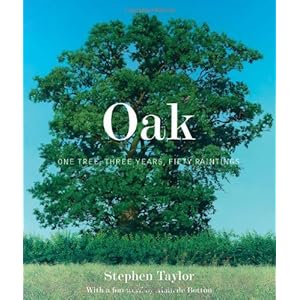
Today is Mother’s Day, or Mothering Sunday. My son knows what I like and sent me this book:

OakOak by Stephen Taylor

It’s a beautiful book telling and showing how British artist Stephen Taylor has painted the same oak tree in a field in Essex, England, dozens of times over a period of three years in extremes of weather and light, at all times of the year and hours of the day.

I’m fascinated by how artists create their pictures and this book is excellent. Not only is it full of illustrations, but Stephen also describes his methods of painting, outside and in the studio and explains what he was aiming to achieve.

I hope to write more about this book when I’ve had more time to study it. One thing that struck me immediately was this fact stated in Alain de Botton’s introduction:

The oak is estimated to be 250 years old. It was therefore already home to skylarks and starlings when Jane Austen was a baby and George III the ruler of the American colonies.

I love such connections! Thank you, Paul.