The Murder on the Links by Agatha Christie: a Book Review

I’m taking part in the Agatha Christie Reading Challenge. I couldn’t wait until I’d got them all in the order she wrote them so I’ve been reading them as I come across them. Some of her earlier books have been hard to find, but on a recent trip to Barter Books in Alnwick I was able to fill in some of my gaps.

I’ve read 34 of her books before finding her third book,The Murder on the Links, originally published in 1923. This is the second book featuring Hercule Poirot.  There have been many editions published since then and my copy is a paperback, published in 1960 by Pan Books.

Agatha Christie had the idea for the book after reading newspaper reports of a murder in France, in which masked men had broken into a house, killed the owner and left his wife bound and gagged. From these facts she then invented her plot, setting the book in the fictional French town of Merlinville ( midway between Boulogne and Calais), at the Villa Genevieve, next to a golf course and overlooking the sea. The owner of the villa, Mr Renauld, a South American millionaire had written to Poirot asking for his help as he feared his life was in danger.

When Poirot and Hastings arrive they are too late to help him as the night before their arrival he was found dead, lying face down in an open grave, stabbed in the back. As they are in France, Inspector Japp does not appear, instead there is a young French detective, M. Giraud, who thinks very little of Poirot’s methods and disagrees with his findings. This is very much a mystery puzzle book, with many clues and several red herrings.

In her Autobiography, Agatha Christie describes how she was writing

… in the Sherlock Holmes tradition – eccentric detective, stooge assistant, with a Lestrange-type Scotland Yard detective, Inspector Japp – and I now added a ‘human foxhound’, Inspector Giraud, of the French police. Giraud despises Poirot as being old and passé. (page 290)

And it was then that she realised that she had made a mistake in starting with Poirot so old. She would have preferred to have abandoned him after her first three or four books and begun again with someone much younger, but she was stuck with him.

It is rather a melodramatic tale, but still enjoyable as Poirot unravels the mystery. An interesting subplot involves a love interest for Hastings, when he mets a young lady calling herself Cinderella. There is a hint at the end of the book that he will marry her and move to South America. Agatha Christie was stuck with Poirot, but she felt she could get rid of Hastings – she was getting rather tired of him. She didn’t write him out completely and he does reappear in later novels, visiting Poirot from his home in Argentina. I like Hastings, who in this book shares rooms with Poirot and is a ‘sort of private secretary to an MP.’

Her Autobiogaphy also reveals that Agatha Christie was not pleased with the jacket cover her publishers had designed as she felt it didn’t reflect the plot. In fact she was ‘really furious and it was agreed that in future she should see the jacket first and approve of it.’

She thought The Murder on the Links was ‘a moderately good example of its kind‘ and I liked it. My rating: 3/5.

Classics Challenge – April Prompt: the Book Cover

Katherine at November’s Autumn hosts the Classics Challenge. This month’s focus is the Book Cover. The old and worn adage of never judging a book by its cover is partly true but a book cover tells the reader a lot about what’s inside you can usually tell what genre it is or what time period it takes place in.

What are your first impressions as you look at the cover? Does the book cover have an aspect that reflects the character, setting, or plot of the novel?  If you could have designed the book cover what would you have chosen?

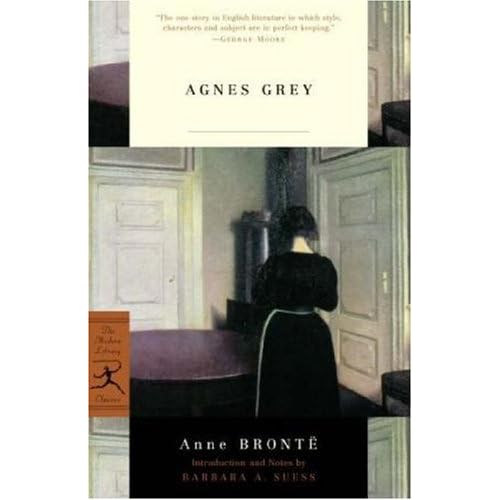
Currently I’m reading Agnes Grey by Anne Bronte on my Kindle. I knew nothing about it before I began reading. There is no information on the Kindle e-book about the cover illustration and I don’t think it gives many clues about the book.

 My first impression on looking at the cover was that the character of Agnes Grey may have been a lady’s maid in a large household. However, I soon discovered that she is the impoverished daughter of a clergyman and she is employed as a governess to the unruly and spoilt children of wealthy families.

The cover does reflect the setting of the novel in Victorian times, although not the position Agnes has in the household – she is not a servant.  But it does reflect Agnes’s character as she is demure, gentle and rather timid. I’ve not finished the book yet, but so far Agnes has been totally unable to control the awful children in her charge and is not given any authority to reprimand them from their parents. The lone figure on the cover reflects the position in which Agnes finds herself – alone and unsupported by her employers.

If I could have designed the book cover I think I would have chosen a similar scene, but would have chosen one showing a governess and the children.

Best new-to-me authors – January to March 2012

Kerrie at Mysteries in Paradise has started a new meme. The idea is to write a post about the best new-to-you crime fiction authors (or all) you’ve read so far this year, 2012. The books don’t necessarily need to be newly published. The meme will run at the end of June, September and December this year.

So far this year I’ve read 10 books by ‘new-to-me’ authors, but only 2 of those are crime fiction. They are:

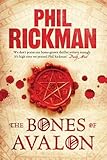
The Bones of Avalon by Phil Rickman, which I read it in January on my Kindle and didn’t have time to write about it. Phil Rickman is not a new author, of course. I had heard of him but had never read any of his books. He has written several books – 11 in the Merrily Watkins series, 6 other novels, including The Bones of Avalon, and a non-fiction book.

The Bones of Avalon set in 1560, is however, Rickman’s first historical crime fiction novel, a genre I particularly like. It has everything, mystery, murder,and witchcraft as Dr John Dee (one of my favourite historical characters – I really enjoyed Peter Ackroyd’s The House of Dr Dee) sets out to discover the whereabouts of King Arthur’s bones. His search takes him to Glastonbury and into danger. Phil Rickman writes on his websiteThis novel is actually the hardest thing I’ve ever done. I think he pulled it off very well and I hope to read some of his other books.

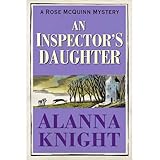
The second new-to-me crime fiction author is Alanna Knight, another well established writer whose work I haven’t come across before. There is a Kindle edition of The Inspector’s Daughter, but I found a copy in my local library.

I wrote a a Book Beginnings post about it and a short account of it earlier – see here. For more details of Alanna Knight’s many books see her website.

I rated both of these books 3.5/5 and both Alanna Knight and Phil Rickman are now on my list of authors to look out for.

The other ‘new-to-me’ authors are (with links to my posts) :

Teaser Tuesdays

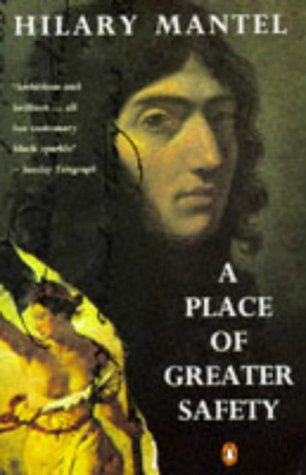
The book I’m currently reading is A Place of Greater Safety by Hilary Mantel, a huge book of 872 pages. I’m only on page 136, so it’s early days. In fact so far it’s been setting the scene of pre-Revolutionary France as seen through the key characters of Georges-Jacques Danton, Maximilien Robespierre and Camille Desmoulins. I’m liking it and it brings back to my mind history lessons at school when we listed the causes of the French Revolution.

This extract summarises, I think, the mood of the times in 1788:

Nothing changes. Nothing new. The same old dreary crisis atmosphere. The feeling that it can’t get much worse without something giving way. but nothing does. Ruin, collapse, the sinking ship of state: the point of no return, the shifting balance, the crumbling edifice and the sands of time. Only the cliche flourishes. (page 130)

Not long afterwards everything changed!

Books I read in March 2012

I read some good books in March, four of them are crime fiction, indicated below by *, and one is a memoir (Testament of Youth). The others are all fiction. (The links are to my posts on the books).

My Book of the Month has to be Pride and Prejudice and my Crime Fiction Book of the Month is a close call between the books rated 4/5, but on balance I think Peter Robinson’s Before the Poison comes out on top.


So far this month I’ve read 24 books, 22 of them fiction (12 of which are crime fiction), and  2 non-fiction. I’ve been making inroads into my TBR books, with 10 of the 24 books being books I’ve owned since before January 2012.

  1. The Labours of Hercules* by Agatha Christie 4/5
  2. Testament of Youth by Vera Brittain 4/5 (from TBR books)
  3. The Victorian Chaise-Longue by Marghanita Laski 3/5 (library book)
  4. The Messenger of Athens* by Anne Zouroudi 4/5 (Kindle from TBR bks)
  5. Before the Poison* by Peter Robinson 4/5 (library book)
  6. Pride and Prejudice by Jane Austen 5/5 (re-read)
  7. The Inspector’s Daughter* by Alanna Knight 3.5/5 (library book)
  8. The Parasites by Daphne du Maurier 3.5/5 (from TBR bks)
  9. Daphne by Justine Picardie 4/5 (from TBR bks)

Book Beginnings on Friday

This is the opening sentence of the book I’m going to read next:

The night the war ended, both Mrs Trevor and Mrs Wilson went on duty at the Red Cross post as usual.

from The Village by Marghanita Laski. As this sentence indicates the setting is at the end of World War Two – in fact, the very day it ended. It seems to me as though Mrs Trevor and Mrs Wilson don’t want to give up the routine they had during the war and I’m keen to see what effect the end of the war will have on them.

This opening reminds me a bit of One Fine Day by Mollie Panter-Downes, also set in 1946 and chronicles the changes the Marshall family encountered, a book which I loved.

Book Beginnings on Friday is now hosted by Gilion at Rose City Reader.