Mount TBR: March Checkpoint

Mount TBR 2014It’s time for the first quarterly check-in post for Mount TBR. Last year I read 34 of my TBR books and I’m determined to read more than that this year. I’ve made a good start, mainly down to taking part in the TBR Triple Dog Dare, which requires you to read only the books you’ve owned before 1 January 2014, until 31 March (I’ll do a separate post for the Triple Dog Dare.)

Bev asks participants in her Challenge to do two things:

1. Tell us how many miles you’ve made it up your mountain (# of books read).  If you’re really ambitious, you can do some intricate math and figure out how the number of books you’ve read correlates to actual miles up Pike’s Peak, Mt. Ararat, etc. And feel free to tell us about any particularly exciting adventures you’ve had along the way.

As today is the last day of March and I still have nearly 200 pages of one book and over 400 pages of another book to read before I finish them (which I won’t do today) here are my answers.

Mont Blanc (photo from Wikipedia)

I’m very nearly at the top of Mont Blanc (15, 781 ft) with just half a book to finish. I’ve climbed Pikes Peak (14, 115 ft), which means I’ve climbed 29, 896 ft, or just over 5.6 miles, or 23.5 books. This is a vast improvement on this time last year when I’d read just 4 TBRs.

and my answers to two more questions are:

C. Have any of the books you read surprised you–if so, in what way (not as good as anticipated? unexpected ending? Best thing you’ve read ever? etc.)

Cloud Atlas by David Mitchell surprised me in a good way. I’d tried to read it several times before and had given up. It was watching the movie that gave me the incentive to try it again and I’m so glad I did as I was surprised at how good it is.

D. Which book (read so far) has been on your TBR mountain the longest? Was it worth the wait? Or is it possible you should have tackled it back when you first put it on the pile? Or tossed it off the edge without reading it all?
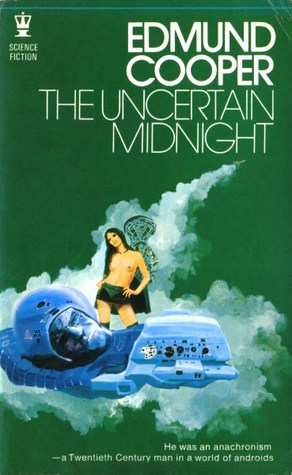
The book that has been on my TBR Mountain the longest is The Uncertain Midnight by Edmund Cooper. I’m not sure exactly how long I’ve had it but it our copy is a 1971 edition, so we’ve probably had it since the early 70s – an amazing 40+ years! It was worth the wait as I enjoyed this 1950s sci-fi book.

The Time Machine by H G Wells

This morning the clocks went forward – does that mean we lost an hour? Quite by coincidence yesterday I read The Time Machine – it seems apt!

The Time Traveller has gathered together a group of his friends, who have names such as the Psychologist, the Editor, the Provincial Mayor and so on. First of all he treats them to an explanation of time – of how it is the fourth dimension, ‘with Time as only a kind of Space.’ He then tells them that he intends to explore time in a machine he has invented that transports him back and forth in time.

And to prove it he travels to the future – specifically to the year 802,701 where humanity has evolved into the Eloi, who are pretty little childlike people, strict vegetarians who live above ground and the Morlocks, bleached, obscene nocturnal beings who live underground. Their society is divided between these two – industry being carried out underground by the Morlocks and the Eloi above pursing pleasure and comfort.

On his return he describes his adventures. He was:

 … in an amazing plight. His coat was dusty and dirty and smeared with green down the sleeves; his hair disordered, and as it seemed to me greyer – either with dust or dirt of because its colour had actually faded. His face was ghastly pale; his chin had a brown cut on it – a cut half-healed; his expression was haggard and drawn, as if by intense suffering. … He walked with just such a limp as I have seen in footsore tramps. (page 15)

Whilst describing what happened to him the Time Traveller comments on the society he encountered. At first he thought it was a social paradise, but soon he realised the truth, that the perfection of comfort and security had actually resulted in the weakening of society with no need to struggle for survival or for work. And the truth about the relationship between the Eloi and Morlocks was devastating!

In addition he had soon realised that he had gone into the future particularly ill-equipped – without anything to protect himself, without medicine and without anything to smoke, or even without enough matches! And no camera:

If only I had thought of a Kodak! I could have flashed that glimpse of the Under-world in a second, and examined it at leisure. But, as it was, I stood there with only the weapons and the powers that Nature had endowed me with – hand, feet, and teeth; these, and the four safety matches that still remained to me. (page 69)

I was struck by Wells’s descriptions of the divisions in society between the Haves and the Have-nots and the conditions of the working class as a result of industrialisation in his own time, citing the new electric railways, the Metropolitan Railway in London, the subways and underground workrooms and restaurants:

Even now, does not an East-end worker live in such artificial conditions as practically to be cut off from the natural surface of the earth?

Again, the exclusive tendency of richer people – due, no doubt, to the increasing refinement of their education, and the widening gulf between them and the rude violence of the poor – is leading to the closing, in their interest, of considerable portions of the surface of the land. About London, for instance, perhaps half of the prettier country is shut in against intrusion. (page 62)

So, The Time Machine, which was first published in 1895, is a work of imagination and an early example of science fiction, but it is also a commentary on late 19th century society and a vehicle for H G Well’s views on socialism and industrialisation.

It’s a book I’ve had for a couple of years and so qualifies for the Mount TBR Reading Challenge and after I finished it I realised that it also fits in the ‘Time’ category for the What’s In a Name? Challenge too.

Book Beginning: Sweet Thursday by John Steinbeck

Book Beginnings ButtonEvery Friday Gilion at Rose City Reader hosts Book Beginnings on Friday, where you can share the first sentence (or so) of the book you are reading, along with your initial thoughts about the sentence, impressions of the book, or anything else the opener inspires.

With just a few days left to go to the end of the TBR Triple Dog Dare I’m still reading from my TBR books and enjoying it. But I’m looking forward to next week when I’m going to start reading some of the books I’ve recently bought. One of them is Sweet Thursday by John Steinbeck, which begins with a Prologue:

One night Mack lay back on his bed in the Palace flop-house and he said, “I ain’t never been satisfied with that book Cannery Row, I would have went about it different.”

And after a while he rolled over and raised his head on his hand and he said, “I guess I’m just a critic. But if I ever come across the guy that wrote that book I could tell him a few things.”

I like this humorous opening, carrying on with the story Steinbeck began in Cannery Row, which I thoroughly enjoyed. Mack is a great character and I’m expecting to find out what happened to him and his friends after the end of the Second World War.

The Office of the Dead

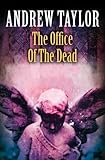
The Office of the Dead by Andrew Taylor is the third book in the Roth Trilogy. I read the first two, The Four Last Things and The Judgement of Strangers a couple of years ago and I wish I’d read this one straight afterwards, because I had to refresh my memory before I started The Office of the Dead.

It’s set in the 1950s, some twenty years earlier than The Judgement of Strangers, and completes the story of the Byfield and Appleyard families. I absolutely loved it. As it says on the back cover this is a chilling novel of crime and retribution. It works perfectly well on its own, but is even better if you’ve read the first two books. The way Andrew Taylor has constructed this trilogy, working backwards in time is just perfect.

Synopsis from Andrew Taylor’s website:

It’s 1958, and the party’s over for Wendy Appleyard: she finds herself penniless, jobless and on the brink of divorce. So she runs to her oldest friend Janet Byfield, who seems to have everything Wendy lacks: a handsome husband, a lovely little daughter, Rosie, and a beautiful home in the Cathedral Close of Rosington. David Byfield is on the verge of promotion, and Janet is the perfect wife for an ambitious young clergyman.

But perfection has always been dangerous, and gradually the idyll sours. Old sins come to haunt the present and breed new sins in their place. The shadow of death seeps through the Close, and with it comes a double mystery stretching back to turn-of-the-century Rosington, to a doomed poet-priest called Francis Youlgreave.

Only Wendy, the outsider looking in, glimpses the truth. But can she grasp its dark and twisted logic in time to prevent the coming tragedy?

My view:

The Office of the Dead answers many of the questions I had from the other two books – questions about David Byfield, the theologian who can barely control his emotions; Reverend Francis Youlgreave, the turn of the century canon librarian and poet, and most of all about Rosie, David and Janet’s daughter. In this book she is a small and very self absorbed little girl who has her 5th birthday during the course of the book. She calls herself ‘Nobody‘, because ‘Nobody’s perfect‘ and she can’t be parted from her doll, Angel.

There is also an excellent portrayal of senile dementia in Janet’s father – John Treevor. Janet says he is ‘getting a bit confused‘, but at times he was capable of acting perfectly rationally and at times not – which made it all the more difficult to know what was true and what only took place in his mind, and so all the more tense and sinister. Did John Treevor commit suicide or was he murdered and if so, was it the stranger he said was watching the house, or someone else?

Running alongside the story of the Byfields are several other inter-connecting strands, Wendy (who is the narrator) and her estranged husband, Henry; the man with the bald spot roughly the shape of a map of Africa, who is following Wendy – who is he working for and why is he interested in Canon Youlgreave. Youlgreave, a character from the past who had died in 1903? He is described by old Mrs Gotobed as a ‘good man‘, but he had been forced to resign after he had ‘lost all touch with reality ‘ and had caused a scandal.

In fact the overall mood of the book is about the difficulties in remembering, or is it twisting, the past, about mental breakdowns and about the effect the past had on the future. In that respect I think it’s best to read the books in order.

I’ve just seen that there is a new short story, The Long Sonata of the Dead, about the continuing legacy of Francis Youlgreave, due to be published on Kindle on 1 April. I’m looking forward to reading it.

And then I’d like to read the first two books in reverse order and see what it effect that has on the story. There is so much more I could write about this book – about the characters (totally convincing), about the setting and the writing (well written etc) and about the pace – the creation of tension and suspense etc (just right), but really all I need to say is that I thought it was brilliant!

Once Upon a Time VIII

Once upon a time viiiIt must be spring! Carl’s annual Once Upon a Time Challenge began yesterdayFriday, March 21st for the eighth year running, ending on June 21.

Carl writes:

‘This is a reading and viewing event that encompasses four broad categories: Fairy Tale, Folklore, Fantasy and Mythology, including the seemingly countless sub-genres and blending of genres that fall within this spectrum. The challenge continues until June 21st and allows for very minor (1 book only) participation as well as more immersion depending on your reading/viewing whims.

While this event retains the word ‘challenge’ from its earliest days, the entire goal is to read good books, watch good television shows and movies, and most importantly, visit old friends and make new ones. There are several ways to participate, and I hope you can find at least one to your liking.’

I think I’ll do The Journey, which is to read at least one book within one of the four categories . Just one book. If you choose to read more, fantastic!

The Journey Once upon a Time

I may just do that, in which case I’d take on Quest the First – to read at least 5 books that fit somewhere within the Once Upon a Time categories. They might all be fantasy, or folklore, or fairy tales, or mythology€¦or your five books might be a combination from the four genres.

Quest the first

I’ve got quite a lot of books to choose from, including:

  • The Death of King Arthur €“ this is a translation of the 13th century French version of the Camelot legend.
  • The Brief History of the Dead by Kevin Brockmeier €“ about a place between heaven and earth where everyone ends up after they die.
  • The Book of Lost Things by John Connolly – Twelve-year old David takes refuge in myths and fairytales.
  • Helen of Troy by Margaret George €“ the myth narrated from Helen’s point of view.
  • Shadowland by C M Gray –  historical fantasy set in Dark Ages Britain.
  • Dreamwalker (The Ballad of Sir Benfro) by James Oswald €“ fantasy fiction €“ Welsh mythology and folklore.
  • The first four Merrily Watkins books by Phil Rickman –  The Wine of Angels, Midwinter of the Spirit, A Crown of Lights, and The Cure of Souls –  paranormal crime thrillers with supernatural and spiritual causes.
  • The Last Enchantment by Mary Stewart €“ a tale of Merlin and King Arthur and the third book in the Merlin trilogy. I read The Crystal Cave and The Hollow Hills years ago and don’t think I’ve ever read this one.
  • A Connecticut Yankee in King Arthur’s Court by Mark Twain €“ fantasy fiction in which a Yankee engineer is accidentally transported back in time to the court of King Arthur.

New-To-Me Books

Just eleven days left to go before the end of March and the end of the TBR Triple Dog DareThe basic idea of the Triple Dog Dare is to spend the first three months of the year cleaning house by reading only books in your TBR stack as of midnight, Dec. 31 and with a few allowed exceptions I’m still on track. But I’ve downloaded books onto Kindle and got some books from Barter Books over these last three months and I’m really looking forward to reading them from April onwards. I wrote about some of them in an earlier post.

Here are some more of the ‘physical’ books I have waiting not-so-patiently to be read:

Sweet Thursday P1090384

  •  Sweet Thursday by John Steinbeck – because I loved Cannery Row and this is the follow-up story. ‘Set in Monterey, on the California Coast, Sweet Thursday is what they call the day after Lousy Wednesday, which is one of those days that’s just naturally bad.’ I was really pleased to find this on the shelves at Barter Books – it just jumped out at me.
  • The Last Girl by Jane Casey – because I’ve read good things about her books, crime fiction of the thrilling kind. It’ll probably be a while before I read this book as I haven’t read the first in the Maeve Kerrigan series and this one is the third.
  • A Medal for a Murderer by Frances Brody – because I enjoyed the first Kate Shackleton mystery, Dying in the Wool. This is the second in the series, set in the 1920s in Harrogate where the leading lady in a play at the theatre is found dead in a doorway.
  • The Day of the Lie by William Brodrick – because I’ve read two of the earlier Father Anselm books and enjoyed them. In this one Anselm investigates events in Eastern Europe in the grip of the Cold War.

The books on Kindle include these:

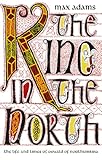
Books on Kindle P1090385The one I’m most interested in is The King in the North: the Life and Times of Oswald of Northumbria by Max Adams – because it’s history of the area where I live, set in the 7th century about Oswald, a prince of the Northumbrian royal house. He reigned briefly, from 634 – 642, but during that time he re-united and re-Christianized the North-East; forged a hybrid culture of Briton, Irish, Scot and Anglo-Saxon; and founded a monastery on Lindisfarne. He was the first British king to die a Christian martyr. Max Adams is a biographer, archaeologist,  traveller and writing coach who lives in North-east England.

I think I’ll be reading this book very soon!