Lustrum and Dictator by Robert Harris

I’d enjoyed the first book in Robert Harris’ Cicero Trilogy, Imperium. So I’d been looking forward to reading Lustrum, the second in the trilogy (published as Conspirata in the US and Italy) . It didn’t fail to live up to my expectations – it surpassed them. I think it’s historical fiction at its best. I immediately went on to read Dictator, the third book in the trilogy, which I also enjoyed very much, but I think Lustrum is the outstanding book of the three.

I had intended to write a more detailed post about Lustrum and Dictator but life and medical issues decided otherwise, so this is just a short post on both books.

Lustrum begins where Imperium finished in 63 BC with a dramatic scene, as the body of a child is pulled from the River Tiber, a child who had been killed as a human sacrifice, grotesquely mutilated. What follows is an account of the five year period (a lustrum) of Cicero’s consulship and the battle for power between him, Julius Caesar, Pompey the republic’s greatest general, Crassus its richest man, Cato a political fanatic, Catilina a psychopath, and Clodius an ambitious playboy. It ends with his exile from Rome.

Once I began reading I was immediately drawn into the world of Cicero. The story is once again narrated by his secretary, the slave Tiro, giving access to Cicero’s thoughts and feelings. Tiro is an interesting character in his own right – he is reported to be the first man to record a speech in the senate verbatim and some of the symbols in his shorthand system are still in use today, such as &, etc, ie, and eg. As in Imperium and in the third book, Dictator, Harris has used Cicero’s actual words, adding to the books’ authenticity. Harris states that he hopes it is not necessary to read the books in order but I think it adds much to the enjoyment if you do.
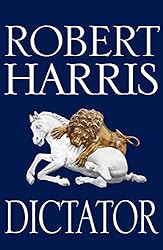
Dictator covers the last 15 years of Cicero’s life when he was no longer a dominant political figure in Rome. The book begins with Cicero in exile, separated from his wife and children and in constant danger of losing his life. Apart from the first part of the book when Cicero is working towards returning to Rome, I didn’t find it as exciting or as compelling as the first two books. This is mainly because there is so much happening such as the civil war and the downfall of the republic from which Cicero is excluded first because on his return to Rome he is sidelined, and then retired.

All three books are based on extensive research but Harris is such a good story teller that they don’t read like text books. Roman history has always fascinated me and reading this trilogy has revived my interest, so much so that I am now reading Mary Beard’s book, SPQR: a History of Ancient Rome, that goes right back to the beginning describing how Rome grew and became such a dominant power.

When I saw Catilina’s Riddle by Steven Saylor sitting in the mobile library shelves I just had to borrow it. It’s historical crime fiction in which Gordianius the Finder gets involved in the Catilina conspiracy to overthrow the republic.

And I would also like to re-read Colleen McCullough’s Masters of Rome series to compare with Harris’ trilogy, or at least some of the books involving Cicero and Caesar. Oh for more time to read!

Lustrum is one of my Mount TBR Mountain Challenge 2016 books (ie books I’ve owned before 1 January 2016) .

My Week in Books: 10 February 2016

This Week in Books is a weekly round-up hosted by Lypsyy Lost & Found, about what I’ve been reading Now, Then & Next.

IMG_1384-0

A similar meme,  WWW Wednesday is run by Taking on a World of Words.

Currently I’m reading two books:

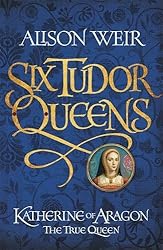
Six Tudor Queens: Katherine of Aragon, the True Queen by Alison Weir, a proof copy – expected publication 5 May 2016. This is the first novel of the Six Tudor Queens series.

Blurb:

A Spanish princess. Raised to be modest, obedient and devout. Destined to be an English Queen. Six weeks from home across treacherous seas, everything is different: the language, the food, the weather. And for her there is no comfort in any of it. At sixteen years-old, Catalina is alone among strangers. She misses her mother. She mourns her lost brother. She cannot trust even those assigned to her protection.

Acclaimed, bestselling historian Alison Weir has based her enthralling account of Henry VIII’s first wife on extensive research and new theories. She reveals a strong, spirited woman determined to fight for her rights and the rightful place of her daughter. A woman who believed that to be the wife of a King was her destiny.

History tells us how she died. This captivating novel shows us how she lived.

I’m also reading SPQR: a History of Ancient Rome by Mary Beard, the Kindle edition.

Blurb:

Ancient Rome matters. Its history of empire, conquest, cruelty and excess is something against which we still judge ourselves. Its myths and stories – from Romulus and Remus to the Rape of Lucretia – still strike a chord with us. And its debates about citizenship, security and the rights of the individual still influence our own debates on civil liberty today. 

SPQR is a new look at Roman history from one of the world’s foremost classicists. It explores not only how Rome grew from an insignificant village in central Italy to a power that controlled territory from Spain to Syria, but also how the Romans thought about themselves and their achievements, and why they are still important to us.

Covering 1,000 years of history, and casting fresh light on the basics of Roman culture from slavery to running water, as well as exploring democracy, migration, religious controversy, social mobility and exploitation in the larger context of the empire, this is a definitive history of ancient Rome.

SPQR is the Romans’ own abbreviation for their state: Senatus Populusque Romanus, ‘the Senate and People of Rome’.

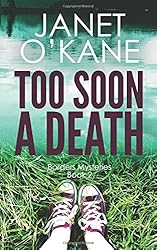
I’ve recently finished Too Soon a Death by Janet O’Kane, crime fiction set in the Scottish Borders.

You can read my thoughts on this book in my previous post.

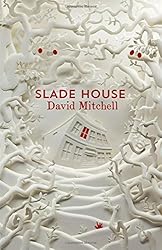
And next I’ll be reading Slade House by David Mitchell, or at least I think I’ll be reading this next. When the time comes I could fancy something completely different.

Blurb:

Born out of the short story David Mitchell published on Twitter in 2014 and inhabiting the same universe as his latest bestselling novel The Bone Clocks, this is the perfect book to curl up with on a dark and stormy night.

Turn down Slade Alley – narrow, dank and easy to miss, even when you’re looking for it. Find the small black iron door set into the right-hand wall. No handle, no keyhole, but at your touch it swings open. Enter the sunlit garden of an old house that doesn’t quite make sense; too grand for the shabby neighbourhood, too large for the space it occupies.

A stranger greets you by name and invites you inside. At first, you won’t want to leave. Later, you’ll find that you can’t.

This unnerving, taut and intricately woven tale by one of our most original and bewitching writers begins in 1979 and reaches its turbulent conclusion around Hallowe’en, 2015. Because every nine years, on the last Saturday of October, a ‘guest’ is summoned to Slade House. But why has that person been chosen, by whom and for what purpose? The answers lie waiting in the long attic, at the top of the stairs…

What have you been reading this week and what have got in mind to read next?

Too Soon a Death by Janet O’Kane

Janet O’Kane’s second book Too Soon a Death follows on from No Stranger to Death, set in a fictional village in the Scottish Borders and continues the story of Doctor Zoe Moreland, a widow and one of the doctors at the local health centre. A boy’s body is discovered on the banks of the River Tweed, near the Chain Bridge, linking Scotland and England and Zoe is asked to help identify the body because he had a note in his clothing giving the health centre’s address and phone number – but he was not one of their patients.

Zoe is not without her own problems. I think this book reads well as a stand alone book, but it certainly helps to have read the previous book, which explains her current condition. At the beginning of Too Soon a Death she is still recovering from a vicious attack (details in No Stranger to Death) and is heavily pregnant.

As the events unfold, she receives anonymous phone calls and is followed by someone in a blue car, who at one point almost runs her down. Added to that her best friend Kate Mackenzie, a deaf genealogist, is having problems both with her ex-husband and a client, with disastrous results. Can Zoe trust a new acquaintance, the vet Patrick Dunin – she wonders who it is that keeps phoning him claiming his attention? A large, vicious looking dog attacks Zoe’s own dog and is savaging sheep. Where has he come from? And that is not all – Zoe has secrets in her own past that are finally revealed in this book.

In some respects Too Soon a Murder has a Midsomer Murders atmosphere, and a general ‘cosy’ feel, but it is not without violence. Its main focus, however, is on Zoe, how she is coping with her pregnancy, her plans for Keeper’s Cottage, which she has bought from Kate’s brother and her hopes to become a partner in the health centre. The crimes are investigated by DCI Erskine Mathers and Sergeant Trent, with Zoe’s assistance, although there are things she can’t tell the police because of patient confidentiality. It has a great sense of location (this may be helped because I know the area a little bit, living a few miles away on the English side of the Border), and the characters are well grounded and believable people, even the minor characters such as Margaret Howie, the practice receptionist, comes across as a character in her own right.

My thanks to Janet O’Kane for providing me with a copy to read and review. I’m looking forward to reading her third book, which she is currently writing.

Reading challenges: My first book for the Read Scotland Challenge –  a book set in Scotland.

Bartering, Borrowing and Buying Books

This is a Stacking the Shelves post in which you can share details of the books you’ve added to your shelves, be it buying or borrowing.

STSmall

In a week that began painfully with a dentist appointment where I had to suffer water torture during my visit to the hygienist, when the weather was mostly grey and miserable and when the national and international news continued to be bad, I was cheered up by bartering, borrowing and buying books.

Bartering:

Books Feb 2016

Last Tuesday I had another visit to Barter Books in Alnwick. I always enjoy going there and never fail to find books I want to read. One of the joys of going is that you never know what you’re going to find. I like to browse the shelves, looking for books by authors I haven’t read before as well as by my favourite authors.

On Tuesday I’d gone prepared with my list of books to check out, including some of Agatha Christie’s short story collections. It’s either feast or famine at Barter Books for Christie’s books and this time there was only one book of hers, which I’ve already read.

So I decided to browse and picked up a book, which caught my eye from one of the displays at the end of a bookcase and began reading it, sitting down at one of the tables with my cup of coffee. It’s by James Naughtie, a broadcaster who used to be one of the main presenters of Radio 4’s Today programme, so not entirely unknown to me but I haven’t read any of his books before. The Madness of July is his first novel. I read a few pages whilst I sat there, finishing my coffee, and realised that although it’s not the usual sort of book I like – it’s a political/spy thriller – I was enjoying what I read and wanted to read more. So into my basket it went.

Then I went to see if any of the books on my list were on the shelves. I found two – A Place of Execution by Val McDermid and An Officer and a Gentleman by Robert Harris, both books I’d read about on other book blogs – Val McDermid’s book on Kay’s A Reading Life and the Harris book on Roberta’s Books to the Ceiling.

I’ve been meaning to read McDermid’s books for a while now and when I read the opening paragraphs and blurb of A Place of Execution on Kay’s blog, I thought it sounded a book I would like, crime fiction set in the Peak District in the early 1960s about the disappearance of children – a taut psychological suspense thriller.

I seem to be on a roll with Robert Harris’s books, having recently read the last two of his Cicero trilogy. An Officer and a Spy tells the story of the Dreyfus Affair, at the end of the 19th and beginning of the 20th centuries. Alfred Dreyfus, a French military officer convicted of spying for the Germans, was sentenced to to life imprisonment at Devil’s Island.

I continued browsing, wandering round the book cases in the different rooms and finally settled on two more crime fiction books – a W J Burley book, Wycliffe and the Quiet Virgin, set in Penzance, in which a young girl goes missing after playing the part of the Virgin Mary in the local nativity play; and The Girl in the Cellar by Patricia Wentworth, in which Miss Silver helps Anne, who has lost her memory, but who thinks she has witnessed a murder.

Borrowing:

Mitchell bks P1010863

I went to the library yesterday morning to pick up a book I’d reserved, Slade House by David Mitchell, a much shorter book than Cloud Atlas, which I eventually enjoyed very much. This one is a scary collection of novellas about Slade House between the years 1979 to 2015 in which something nasty happens every nine years at the end of October.

And then because you can’t leave the library without at least a quick look at the shelves I also borrowed Watson’s Choice by Gladys Mitchell, which I gathered from the title and the pipe and deerstalker on the cover has some connection with Sherlock Holmes. And it does because at a party given to celebrate Homes’ anniversary the Hound of the Baskervilles turns up along with the other (invited) guests.

What a coincidence that both these books are by authors named Mitchell! Gladys Mitchell (21 April 1901 ‘“ 27 July 1983) was an English author best known for her creation of Mrs. Bradley, the heroine of 66 detective novels. And David Mitchell, the author is not to be confused with David Mitchell, the comedian.

Buying:

Kindle bks P1010866


Earlier in the week I bought the e-book of The Queen’s Man by Sharon Penman, when it was on offer as one of the Kindle Daily Deals. It’s set in 1193 when rumours abounded that Richard the Lionheart was dead. And this morning I chose Winter Men by Jesper Bugge Kold as my Kindle First book for February, about two brothers who were both coerced into serving in the SS and their guilt after Germany’s defeat.

Impressionist Gardens

Then yesterday afternoon when I was at the village hall playing carpet bowls (there’s a bookcase of secondhand books in the hall) I bought Impressionist Gardens by Judith Bumpus, a beautiful book of Impressionist paintings, from artists including Monet, Renoir, Pissaro and Sisley. I’m hoping this will inspire my efforts at painting.

I hope some books have come your way too this week!


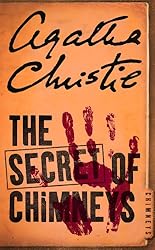
The Secret of Chimneys by Agatha Christie

In The Secret of Chimneys, Anthony Cade is drawn into a deadly conspiracy when he agrees to carry out an errand for his old friend, Jimmy McGrath. He has to deliver the manuscript memoir of Count Stylptich of Herzoslovakia to a firm of London publishers and to return a packet of letters to a blackmail victim.

It’s one of Agatha Christie’s early ‘thrillers’, first published in 1925. It is also the last full length crime novel of hers that I had left to read. I really thought I had read it but I think I was getting it mixed up with The Seven Dials Mystery, which features some of the same characters and is also set at Chimneys, a large country house, the home of Lord Caterham. The Secret of Chimneys is the first book in which Superintendent Battle of Scotland Yard appears. He is an intelligent officer, outwardly impassive and stolid, but who reaches his conclusions applying common sense. Later he appeared in four more of her novels – The Seven Dials Mystery, Cards on the Table, Murder is Easy and Towards Zero.

Agatha Christie declines to describe Chimneys, other than to say it is a ‘venerable pile‘ and that descriptions of it can be found in any guidebook. ‘It is also No. 3 in Historic Homes of England, price 21s. On Thursdays coaches come over from Middleham and view those portions of it which are open to the public. In view of all these facilities, to describe Chimneys would be superfluous.‘ (page 128)

The 1920s upper class life style is evident in the lavish breakfast that is laid on at Chimneys, set out on ‘half a score of heavy silver dishes, ingeniously kept hot by patent arrangements. Omelet, said Lord Caterham, lifting each lid in turn. Eggs and bacon, kidneys, devilled bird, haddock, cold ham, cold pheasant.’ (page 134)

I’m not going to attempt to summarise the plot of this book, other than to say that it revolves around political events in the fictitious Balkan state of Herzoslovakia, with attempts to reinstate its royal family, and also international crime concerning the theft of jewellery  by a thief known in Europe as ‘King Victor’. It reminds me of P G Wodehouse’s books, written in the same light and humorous style.  It is sheer escapism and although it is not one of my favourite of her books, it is an entertaining book.

Reading Challenges: Agatha Christie Reading Challenge, Mount TBR challenge and Golden Vintage Mystery Cover Challenge: Bloodstains

First Chapter, First Paragraph: Runaway

First chapterEvery Tuesday Diane at Bibliophile by the Sea hosts First Chapter First Paragraph Tuesday Intros, where you can share the first paragraph, or a few, of a book you are reading or thinking about reading soon.

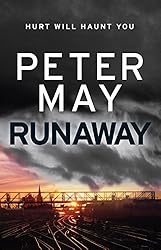
Runaway by Peter May is one of the books I’m thinking of reading this month. I’ve read some of his other books, the Lewis Trilogy and Entry Island and thoroughly enjoyed them, real page-turners. So I’m hoping that Runaway will be just as good.

It begins with a Prologue:

London

He wakes in a cold sweat from a dream pervaded by darkness and blood. And after a lifetime of being someone else in another land, he wonders who he is now. This man, who, he knows, is fading all too soon. A life squandered for a love lost. A life that seems to have passed in the blink of an eye.

and moves on to Chapter One in 2015:

Glasgow

Jack stepped down from the bus almost at the end of Battlefield Road and raised his head towards the darkening sky with a sense of foreboding. He took in the brooding silhouette of the smoke-stained Victoria Infirmary that climbed the hill above the field of battle where Mary, Queen of Scots, was once defeated by James VI, and felt as if someone had just walked over his grave.

Now, reading this, I am keen to read on. Flicking through the book I can see that it alternates between 1965 and 2015.

The back cover reveals that in 1965, five teenage friends fled Glasgow for London to pursue their dream of musical stardom. Yet before year’s end three returned, and returned damaged. In 2015, a brutal murder forces those three men, now in their sixties, to journey back to London and finally confront the dark truth they have run from for five decades.

 What do you think?

Would you keep reading?