Bookshelf Travelling for Insane Times

Judith at Reader in the Wilderness hosts this meme – Bookshelf Travelling for Insane Times.  I am enjoying this meme, looking round my actual bookshelves and re-discovering books I’ve read or am looking forward to reading. The idea is to share your bookshelves with other bloggers. Any aspect you like:

1. Home.
2. Books in the home.
3. Touring books in the home.
4. Books organized or not organized on shelves, in bookcases, in stacks, or heaped in a helter-skelter fashion on any surface, including the floor, the top of the piano, etc.
5. Talking about books and reading experiences from the past, present, or future.

Whatever you fancy as long as you have fun basically.

My post this week is about my love of word puzzles. I love doing crosswords and codewords – any sort of word puzzles too – and do a few each day, either from a newspaper or from books of puzzles, such as these.
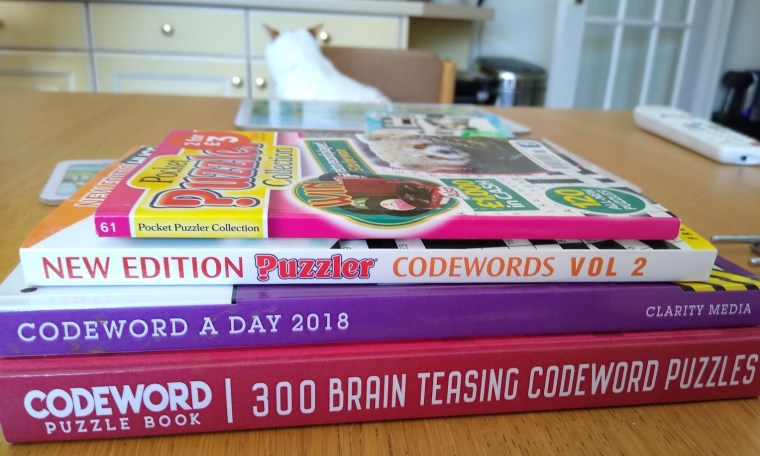
Codeword bks

I’m not very good at cryptic crosswords but I’ve got a bit better after doing an Alphapuzzles each day. This is today’s Alphapuzzle:

AlphaPuzzle April 2020

These puzzles have one clue, usually a cryptic clue, that helps enormously if you can solve it, as it gives you more letters to get started. So far today I haven’t worked out the answer to this clue – ‘Tonal switch for a hook‘.

And these books about puzzles are very helpful too:
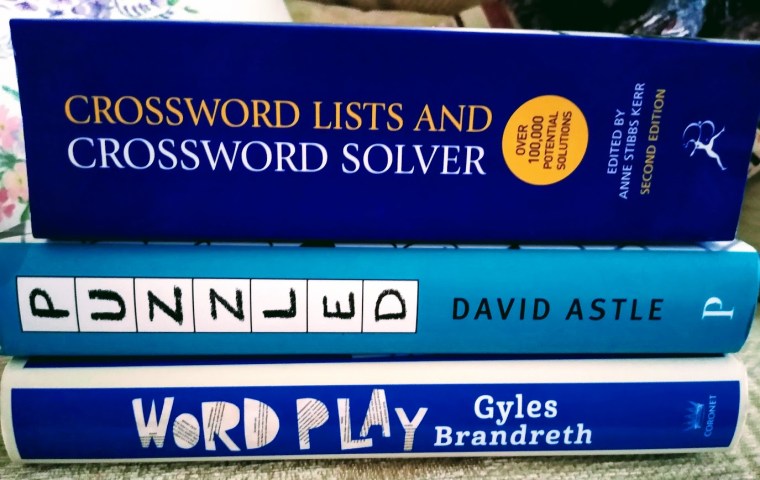
Word play bks

The Crossword Lists and Crossword Solver edited by Anne Stibbs Kerr contains lists of words and phrases listed alphabetically and by number of letters under a wide range of category headings such as Animals in Fiction, Clouds, Writers, Playwrights and Poets, and characters in Lord of the Rings, for example. The Crossword Solver part contains possible solutions, such as place names, abbreviations and euphemisms and technical terms, and so on.

Puzzled: Secrets and Clues From a Life in Words by David Astle is a fascinating book. It’s a manual of how to solve those cryptic clues that I find so baffling. Astle is a Melbourne-based writer of non-fiction, fiction and drama. He co-hosted Letters and Numbers, the Australian version of Countdown, as the dictionary expert and his crosswords appear in Australian papers The Age and Sydney Morning Herald.

He begins the book with a Master Puzzle and leads you through each of the clues, revealing the secrets of anagrams, double meanings, manipulations, spoonerisms and hybrid clues. I’ve begun to understand … I think.

Word Play: A cornucopia of puns, anagrams, euphemisms & other contortions & curiosities of the English language by Gyles Brandreth is another book full  of surprising facts and anecdotes about words – old words, new words, funny words and ridiculous words. It’s a book you just open anywhere and get lost in – ideal for wordaholics, like me.

And here is another book I regularly use, practically everyday – it sits on the floor next to me. It’s The Chambers Dictionary.
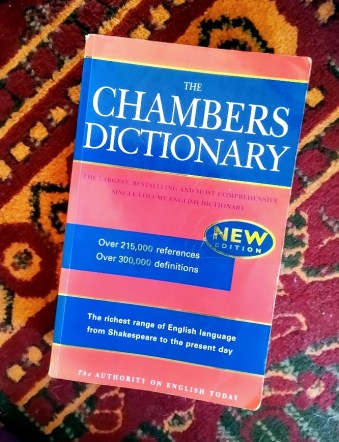
Chambers Dictionary

My Friday Post: The Mirror and the Light by Hilary Mantel

Book Beginnings Button

Every Friday Book Beginnings on Friday is hosted by Gillion at Rose City Reader where you can share the first sentence (or so) of the book you are reading, along with your initial thoughts about the sentence, impressions of the book, or anything else the opener inspires.

Mirror and Light

I began reading The Mirror and the Light by Hilary Mantel as soon as it arrived in the post on 6 March – and I’m still reading it, very slowly, as it is a very long and detailed book.

It begins:

Wreckage (1)

London, May 1536

Once the queen’s head is severed, he walks away.

He is Thomas Cromwell, Secretary to Henry VIII, and the Queen was Anne Boleyn.

Also every Friday there is The Friday 56, hosted by Freda at Freda’s Voice.

30879-friday2b56These are the rules:

  1. Grab a book, any book.
  2. Turn to page 56, or 56% on your eReader. If you have to improvise, that is okay.
  3. Find any sentence (or a few, just don’t spoil it) that grabs you.
  4. Post it.
  5. Add the URL to your post in the link on Freda’s most recent Friday 56 post.

Page 56: Chapuys, the  ambassador of the Emperor Charles V is talking to Cromwell about the dangers to Henry’s life:

A dagger thrust, it is easily done. It may be, even, it needs no human hand to strike. There is plague that kills in a day. There is the sweating sickness that kills in an hour.

How true!

Blurb

With The Mirror and the Light, Hilary Mantel brings to a triumphant close the trilogy she began with Wolf Hall and Bring Up the Bodies. She traces the final years of Thomas Cromwell, the boy from nowhere who climbs to the heights of power, offering a defining portrait of predator and prey, of a ferocious contest between present and past, between royal will and a common man’s vision: of a modern nation making itself through conflict, passion and courage.

~~~

Does this book appeal to you too? Have you read/are you reading this book

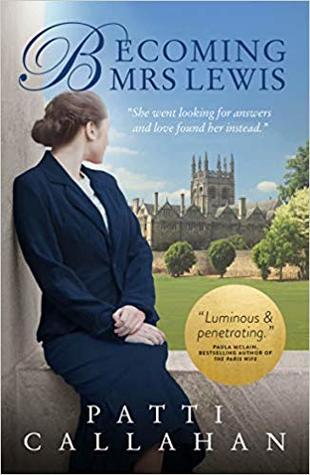
Becoming Mrs Lewis by Patti Callahan

Becoming Mrs Lewis

3*

Blurb:

Poet, atheist and communist, New Yorker Joy Davidman is an unconventional woman – and an unlikely partner for an English academic and theologian.

And when she starts a correspondence with Narnia author C. S. Lewis, she isn’t looking for love. Her own marriage crumbling, she seeks refuge in her work, and guidance from a writer she admires.

But in Joy’s letters Lewis discovers a kindred spirit, and an intellect to equal his own. Bonding over a shared love of literature and ideas, a deep connection is forged between the two.

Embarking on the adventure of a lifetime, Joy travels from America to England and back again. Facing heartbreak and poverty, discovering friendship and faith, against all the odds, the couple struggle to secure a love that will endure forever.

My thoughts:

I was keen to read Becoming Mrs Lewis by Patti Callahan as I have read many of C S Lewis’ books and was enthralled watching Anthony Hopkins, Debra Winger, and Julian Fellowes in Shadowlands (not a dry eye in the cinema) some years ago. Shadowlands is  about his meeting with Helen Joy Davidman and about the events that led to their marriage. I think the blurb (see above) summarises the events that led to Jack and Joy’s marriage very well and it was what made me want to read the book. 

When I’d read part of the book I discovered that Patti Callahan was giving an online blog tour.  It was very helpful, as I had been wondering whether the correspondence between Jack (as C S Lewis was known to his family and friends) and Joy that she quoted in the book was taken from their actual letters. She clarified that their letters had been lost – Jack had destroyed Joy’s letters to him because they were personal, whilst Joy had kept his letters to her in a trunk, but later it was vandalised and all the letters had gone. So, she had read the letters they had written to other people and used those as a basis for the letters in her book. In other words the letters in the book are imagined but inspired by those letters. She also said that the bones of her book are based on the facts – the dates and times are correct the rest is fiction.

However when I went back to the book I became disappointed. Written as though Joy herself is telling their story it is intense, passionate and very personal and I felt very uncomfortable reading it – as though I was eavesdropping on the characters. If I had been reading romantic fiction I wouldn’t have felt that way – but then I probably wouldn’t have read it at all.

Joy’s marriage was portrayed as a nightmare, her boys were in fear of their father and what he wanted from Joy was not the independent woman she was, but the little wife at home, submissive and obedient to him. He was abusive, an alcoholic and subject to rages. She found acceptance and understanding from Jack both in his letters and in person when she met him in England. What I found difficult to read is the personal thoughts and feelings ascribed to Joy and her desire for a physical relationship with Jack. I couldn’t warm to her, which is a shame as Patti Callahan’s admiration of her came over very strongly in her talk and she said that she had written the book so that people would care about her. It appeared to me from this book that she was almost stalking Jack. I was surprised that she felt able to spend so much time in England, despite missing her sons. She had left them at home with her husband and her cousin who was so obviously the kind of woman her husband desired.  

I was in two minds several times about finishing the book, but I’m glad I persevered to the end as overall I did enjoy it even though I think it went into too much detail. It has inspired me to look back at the books I have by and about C S Lewis and  to find out more about Joy Davidman.

My thanks to Harper Collins Inspire for a review copy via NetGalley.

Six Degrees of Separation: from Stasiland to A Lovely Way to Burn

It’s time again for Six Degrees of Separation, a monthly link-up hosted by Kate at Books Are My Favourite and Best. Each month a book is chosen as a starting point and linked to six other books to form a chain. A book doesn’t need to be connected to all the other books on the list, only to the one next to it in the chain.

Stasiland

This month the chain begins with Stasiland: Stories From Behind the Berlin Wall by Anna Funder – the winner of the Samuel Johnson Prize for Non-Fiction 2004. It is a book I have not read but I’m wondering whether I will. It sounds both interesting and shocking.

My first link is Black Dogs by Ian McEwan, a novel about the aftermath of the Nazi era in Europe, and how the fall of the Berlin Wall in the late 1980s affected those who once saw Communism as a way forward for society. The question of the black dogs is not really answered though – were they symbolic of evil, or an expression of Churchill’s term for depression, or real creatures?  Part set in Berlin with Bernard, when the Wall came down in 1989 and part set in 1989 at the family house at St Maurice de Navacelles in Languedoc in southern France

There’s another character called Bernard, and also set partly in the Languedoc area in Carcassonne, in The Burning Chambers by Kate Mosse. Bernard Joubert, a bookseller had been imprisoned accused of being a traitor and a heretic after he had let slip information about a secret will. It’s a complicated story of war, conspiracies, love, betrayal, forgery, torture and family secrets.

Another book about a bookseller is The Bookman’s Tale by Charlie Lovett. Peter Byerly is an antiquarian bookseller. His wife has recently died and when he opens an eighteenth-century study on Shakespeare forgeries, he is shocked to find a Victorian portrait strikingly similar to his wife tumble out of its pages. He becomes obsessed with tracking down its origins. it becomes a chase around England, similar to a cross between a Dan Brown novel, an Enid Blyton Famous Five book and a murder mystery.

And that brings me to my next link – Dan Brown’s books. For pure escapism I really like them. They’re not great literature but they are great entertainment, even though they follow the same formula – a breathtaking race against time as Robert Langdon follows  clues as in The Lost Symbol. This book is set within the hidden chambers, tunnels, and temples of Washington, DC. as Langdon searches for his friend, Peter Solomon, a Mason.

And so to the next link, using the author’s name, Dan, brings me to Daniel Defoe’s A Journal of the Plague Year a novel about one man’s experiences of the year 1665, in which the Great Plague or the bubonic plague – known as the Black Death – struck the city of London.

Thinking about Defoe’s book reminded me of A Lovely Way to Burn by Louise Welsh, an apocalyptic novel in which a  new and unidentified virus, known as ‘the sweats’ sweeps the globe and London quickly descends into chaos – supermarkets are looted, roads are gridlocked as people try to flee the infection, then society just crumbles as people look out only for themselves, rioting and eventually succumbing to the mysterious illness and dying. Let’s hope the current corona virus pandemic doesn’t descend into this!

~~~

My chain began in Berlin and moved to France, then to Britain, America and ended back in Britain. It covered a variety of genres and time periods, including contemporary fiction, historical and crime fiction. The links are through places, words in the titles and authors’ names. And there is also a link that runs through the chain with the use of the letter ‘B’ either in the book titles, in the authors’ names, or in significant words in the descriptions.

Kate writes: ‘Given the current pandemic, the obvious choice for next month (May 2, 2020) is The Road by Cormac McCarthy.’

Bookshelf Travelling for Insane Times

Judith at Reader in the Wilderness hosts this meme – Bookshelf Travelling for Insane Times. In this strange and difficult time of self isolation and sickness it is a real treat to get away from the non-stop bad news about coronovirus and to do other things – I think I’m going to write a separate post about what I’ve been doing to keep myself occupied. One of the things is, of course, is reading. Actually I haven’t been reading any more than usual, oddly enough, as the situation has affected my concentration levels and I have been doing other things too. 

I am enjoying this meme, looking round my actual bookshelves and re-discovering books I’ve read or am looking forward to reading. The idea is to share your bookshelves with other bloggers. Any aspect you like:

1. Home.
2. Books in the home.
3. Touring books in the home.
4. Books organized or not organized on shelves, in bookcases, in stacks, or heaped in a helter-skelter fashion on any surface, including the floor, the top of the piano, etc.
5. Talking about books and reading experiences from the past, present, or future.

Whatever you fancy as long as you have fun basically.

Friday Meme 3 April 2020

This week’s photo shows part of one of my book shelves that contains a mix of fiction and nonfiction books, shelved together for no reason other than they are almost all hardback books of a similar height!

You can see the whole shelf on my current header photo.

Thomas Hardy: the Time-Torn Man by Claire Tomalin. This is a biography that I began reading in 2007 and stopped when I had reached 1867 (Hardy was born in 1840) because I decided that it would be better if I had read his earlier books before reading about how he had written them. I’m sorry to say that even though I have read more of Hardy’s novels I still haven’t got back to this biography.

The Legacy of Elizabeth Pringle by Kirstie Wark is a novel that I read and enjoyed very much. It’s a story centred on the lives of two women – Elizabeth Pringle and Martha Morrison. Elizabeth has lived all her life on the Isle of Arran and knowing that she is dying and has no living relatives, leaves her house, Holmlea in Lamlash, to Anna Morrison, a woman she had seen years before, pushing her daughter’s pram down the road outside. It’s about family, relationships, especially mother/daughter/sister relationships, about happiness, love and heartbreak, old age, memories and the contrast between life in the early part of the twentieth century and the present.

The Children of Hurin by J R R Tolkien, edited by his son Christopher Tolkien. This is another book that I started and haven’t finished. During the First World War and before Tolkien wrote the tales that became the narrative of  The Hobbit and The Lord of the Rings he began writing a collection of stories he called The Book of Lost Tales. These are the tales of Middle-earth from times long before The Lord of the RingsI first read The Lord of the Rings years ago when I was at college,  and have since re-read it a few times along with The Hobbit, so this book is one I really want to read soon – my problem is that there are so many books I want to read and time is precious.

Agatha Christie’s Secret Notebooks by John Curran, subtitled Fifty Years of Mysteries in the Making. This is a fascinating book, exploring the contents of Agatha Christie’s 73 handwritten notebooks about her plots, titles and characters and two unpublished Poirot stories. The notebooks were found  at her home, Greenways, in a locked room, a long narrow room containing shelves and cupboards full of her printed books plus typescripts and manuscripts, letters and contracts, posters, playbills, photos and dust-jackets, scrapbooks and diaries.

And finally two of my husband’s books – The Second World War and Berlin: The Downfall 1945, both by Anthony Beevor. He has read both and recommends them highly. I’m not sure what to say about them, except they each weight a ton –  two enormous tomes! Fortunately I have both books on my Kindle as well as the hardbacks on the shelf, so you never know, one day I may get round to reading them.

WWW Wednesday: 1 April 2020

IMG_1384-0

WWW Wednesday is run by Taking on a World of Words.

The Three Ws are:

What are you currently reading?
What did you recently finish reading?
What do you think you’ll read next?

Currently reading:

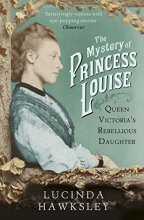
Mystery of Princess LouiseThe Mystery of Princess Louise: Queen Victoria’s Rebellious Daughter by Lucinda Hawkesley. I’m finding this a fascinating biography of Louise, Victoria’s unconventional daughter. She was a sculptor and painter, who mixed with the artists of her day much to her mother’s dislike and was involved in many campaigns for reform in education and health. It’s packed with intrigues, scandals and secrets. I’ve read about two thirds of this book I borrowed from the library.
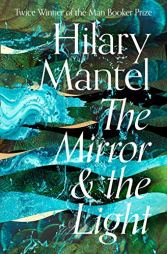
Mirror and LightThe Mirror and the Light by Hilary Mantel, the final book in Hilary Mantel’s Thomas Cromwell trilogy about the boy from Putney who climbed his way up to become Lord Cromwell, Secretary to King Henry VIII. I loved the first two books, Wolf Hall and Bring Up the Bodies, so it was an easy decision to buy the third book in hardback to complete the set. It is heavy, weighing in at 2lbs 13ozs with almost 900 pages and so I’m reading it very slowly. Just like the other two books I think it’s beautifully written, full of colour and detail. Reading it I feel as if I’m there back in 1536.

Fresh water for flowers

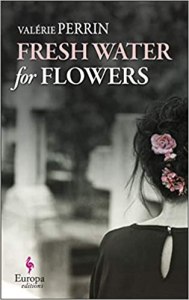
Recently Finished: Fresh Water for Flowers by Valérie Perrin, translated from the French by Hildegarde Serle. This is a complex novel, multi layered and centred on Violette, a cemetery keeper, switching between different people at different times in their lives.  I’ll write more about later on nearer its publication date in the summer.

Reading Next: This is where it gets difficult as there are so many I want to read. But it will probably be The Dutch House by Ann Patchett and  Queen Lucia by E F Benson, a book first published in 1920 for The 1920 Club hosted by Simon at Stuck in a Book and Karen at Kaggsy’s Bookish Ramblings is taking place between 13th and 19th April 2020. The idea is that you read a book published in that year and share your thoughts/review with other participants.

But then it could easily be one of these books I’ve mentioned in recent posts:

What do you think – which one would you read next?