The Songlines by Bruce Chatwin

The Songlines by [Chatwin, Bruce]

As I loved On the Black Hill by Bruce Chatwin I was keen to read The Songlines when the publishers, Open Road Integrated Media, asked if I’d like to read and review this e-book edition. It includes an illustrated biography of Bruce Chatwin including rare images and never-before-seen documents from the author’s estate. The Songlines was originally published in 1987.

It’s set in Australia exploring the ‘Songlines’, the labyrinth of invisible pathways which cross and re-cross Australia, ‘known to Europeans as ‘Dreaming-tracks’ or ‘Songlines’; to the Aboriginals as the Footprints of the Ancestors’ or the ‘Way of the Law’.

On the one hand this is a fascinating account of Chatwin’s visit to Australia to find out about the Songlines and the myths of the legendary totemic beings who sang the world into existence as they wandered over the continent in the Dreamtime. It’s an account of Chatwin’s exploration of the Songlines, in the company of a Russian, Arkady Volchek who was mapping these sacred sites for a railway company so that they could work round the Songlines rather than obliterating them with the railroad.

On the other hand it is much more than that – and this is where I found the book a bit difficult – in the middle of his account of his travels Chatwin throws in a whole hodge-podge of ideas, quotations from numerous writers and philosophers, travel notes, speculations on the origins of life and anecdotes all thrown into the mix before he gets back to writing about his travels and the people he met. I marked lots of passages in the section ‘From the Notebooks‘, particularly on the subject of walking – for example:

Above all, do not lose your desire to walk: every day I walk myself into a state of well-being and walk away from every illness; I have walked myself into my best thoughts, and I know of no thought so burdensome that one cannot walk away from it … but by sitting still, and the more one sits still, the closer one comes to feeling ill … Thus if one just keeps on walking, everything will be all right.

Søren Kierkegaarde, letter to Jette (1847)

and on nomads and the nomadic life:

Psychiatrists, politicians, tyrants are forever assuring us that the wandering life is an aberrant form of behaviour; a neurosis; a form of unfulfilled sexual longing; a sickness which, in the interests of civilisation must be suppressed. …

Yet in the East, they still preserve the once universal concept: that wandering re-establishes the original harmony which once existed between man and the universe.

The Songlines contains beautiful descriptions of the Australian landscape such as this:

A pair of rainbows hung across the valley between the two mountains. The cliffs of the escarpment, which had been a dry red were now a purplish-black and striped like a zebra, with vertical chutes of white water. The cloud seemed even denser than the earth, and beneath its lower rim, the last of the sun broke through, flooding the spinifex with shafts of pale light.

I really don’t know whether this book fits into any particular genre. Chatwin was an author, a novelist and a travel writer – a skilled storyteller. It seems to me that this book combines all these forms of writing. I enjoyed both the account of Chatwin’s experiences in Australia and the long and loosely connected middle section of the book, but would have preferred these to stand on their own rather than be combined in one book.

My thanks to Open Road Integrated Media for a review copy via NetGalley.

  • File Size: 6061 KB
  • Print Length: 281 pages
  • Publisher: Open Road Media (October 18, 2016)
  • Publication Date: October 18, 2016
  • Language: English
  • ASIN: B01K6GBLVY

Amazon US link

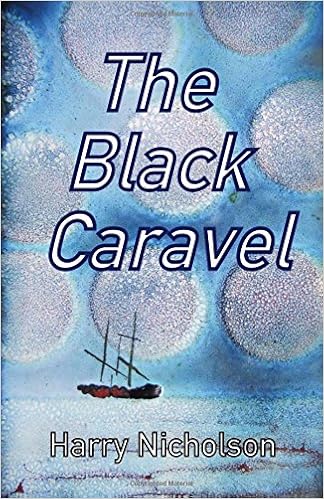
The Black Caravel by Harry Nicholson

The Black Caravel by Harry Nicholson is his second novel about Tom Fleck: a Novel of Cleveland and Flodden, which I reviewed in 2011.

Blurb:

This story follows the struggles of a farm labourer in North-East England. The series began with the novel, ‘˜Tom Fleck’, in which we followed Tom’s adventures, loves, and troubles in the year 1513, the year of the Battle of Flodden. The present book re-enters his life twenty-three years later in 1536, in the dark year of the dissolution of the monasteries and the subsequent rebellion known as ‘˜The Pilgrimage of Grace’. Tom is on a journey with his wife and blind daughter and must travel through the chaos.

My view:

Once again I was transported back to the 16th century with Tom Fleck and his family, this time it is 1536. He now has grown-up sons, Francis and Isaac, both at sea, part of the crew of the Plenty under Captain Ben Hood, a daughter of seventeen, Kate, who is blind and twins aged 15. Tom is now a farmer, living for the past twenty years at Crimond Hall on the Durham coast. As Henry VIII’s dissolution of the monasteries begins Tom and Rachel, his wife, together with their daughter Kate set out for London to visit a lawyer as Rachel has been bequeathed five hundred gold sovereigns in her father’s friend’s will.

As the blurb indicates their journey is not without danger, bringing them into contact with the rebels led by Robert Aske (a real historical character who led the Pilgrimage of Grace protest). Tom’s sons, Francis and Isaac are also in trouble as the Plenty runs aground on the Goodwin Sands in the Dover Straits, encounters a ‘plague ship’, a grounded Portuguese caravel with just one man and a dog left on on board, and engages battle with Barbary pirates from North Africa.

The Black Caravel is a fascinating story about ordinary people set against the background of national affairs and how it affects their lives, for example one character refers to ‘poor Anne Boleyn what’s got no head‘ and he thinks that Richard of York was the true King, not Henry VIII. I was immersed in the time and place – the landscape, the bird sounds, the plants and animals, the towns and the seascape are all beautifully described; for example this passage describing the scene as the fog over the Goodwins lifted:

The fog shifted. Then swirled. Driven before a freshening breeze the murk swept away to the northeast. The shore boat approached the grounded Plenty in bright noon sun. In the shallows around her, the sea was a burnished duck-egg green. Farther out, the surface glowed steel-bright and sparkled with a million ripples. The drying sandbanks threw back white light, fierce to the eyes.

An urgent shout came from the Plenty. The rowers bent harder. A hoard of dark shapes undulated across the sandbank. The seals bugled in alarm while they jostled to plunge into the sea. A flock of pied birds lifted in panic before the approach of men who ran full tilt armed with crossbows and spears. The oystercatchers flew overhead, bleating. Urgent hands reached over the side to heave the heavy captain onto the deck of the cog.(page 59)

There is so much packed in this short novel, reflecting the way of life and the attitudes of the times such as the religious fervour as England broke away from Rome, the ways of treating illness (Kate is blind as a result of a blow to her head) and the anti-semitism that prevailed. I thoroughly enjoyed reading it.

My thanks to Harry Nicholson for sending me a copy to read and review.

  • Paperback: 188 pages
  • Publisher: CreateSpace Independent Publishing Platform (30 Aug. 2016)
  • Language: English
  • ISBN-10: 1535378085
  • ISBN-13: 978-1535378086
  • Source: Review copy from the author

Favourite Books: October 2007 – 2010

Each month I’ve been looking back at some of my favourite books I read during the years 2007 ‘“ 2010. These are some of my favourite books I read in October in each of those years. October seems to have been another great month for books as I rated so many 5/5, but I’m highlighting just one for each month in this post. Revisiting these books makes me want to re-read all of them.

Click on the titles to see my original reviews.

2007

Crossing to SafetyCrossing To Safety by Wallace Stegner – was Wallace Stegner’s last novel published when he was 78 years old. It’s a beautiful, and thought provoking novel and I loved it. It’s a story about love, marriage, friendship, relationships, ambition, illness and death; in other words it’s about life and death. In essence, the novel recounts the lives of two couples who first met during the Depression in 1930s America and the joys and difficulties they encounter throughout their lives.

The painful honesty of this book in portraying life’s happiness, joy, pathos and sorrow is what touched me the most and makes it a book to remember and treasure.

2008

Behavior Of MothsThe Behaviour of Moths by Poppy Adams, a brilliant book! It’s the story of two sisters, Ginny and Vivi. Vivi, the younger sister left the family mansion 47 years earlier and returns unexpectedly one weekend. Ginny, a reclusive moth expert has rarely left the house in all that time. What happens when they meet again is shocking to both of them. It’s a story full of mystery and suspense as it is revealed that the two have very different memories of their childhood and the events of the past.

Two events in particular affected their lives. The first is when Vivi aged 8 fell from the bell tower and nearly died. She was impaled on an iron stake and as a result lost her ability to have children; the second when Maud, their mother died having tripped down the cellar steps changing their lives for ever.

And I loved all the detail about moths. They are not an aside but are integral to the story.

2009

The ComplaintsI thought The Complaints by Ian Rankin was one of the best books I read in 2009.

It’s the first book featuring Inspector Malcolm Fox of the PSU, or Professional Standards Unit, part of the Complaints and Conducts office.  The PSU is sometimes called  ‘˜the Dark Side’. He is asked to investigate DS Jamie Breck, a likeable young cop who is allegedly involved in a paedophile site run by an Aussie cop in Melbourne. Then Jude’s partner, Vince is murdered and Breck is the investigating officer. As Fox gets to know him it becomes increasingly difficult for him to know just who he can trust. Just who is the good guy?

I grew to really like Fox, yet another divorced cop with a drink problem. He is a good guy, he plays by the rules and looks after his family. He’s bit of a philosopher, an outsider mistrusted and hated by other cops.

2010

Quite Ugly One Morning (Jack Parlabane, #1)Quite Ugly One Morning by Christopher Brookmyre begins with a graphic description of a particularly nasty murder scene, which is normally guaranteed to make me stop reading. But it would have been a great shame if I’d let it put me off this book, because I thoroughly enjoyed it. It was  first published in 1998 when it won the First Blood Award for best crime novel of that year.

The dead man is Dr Ponsonby, a well- respected doctor working for the Midlothian NHS Trust in Edinburgh. Investigative journalist, Jack Parlabane gets involved as he lives in the flat above Ponsonby and the terrible smell coming up from below leads him into the murder scene. It soon becomes apparent to the reader who did the murder and it is the motive behind it that needs to be ferreted out.  It’s fast, full of action, and surprisingly funny.

Accidents Happen by Louise Millar

Accidents Happen is one of my TBR e-books that I’ve had for a couple of years. It’s described as a ‘gripping psychological thriller where one woman’s streak of bad luck may be something far more sinister’, so I thought it would be just the right sort of book to read for this year’s R.eaders I.mbibing P.eril XI.

It begins well with a strange, scary episode about a child waking up to the sight of something slithering, full of threat, not sure what it was but terrified as it was angry with a gaping mouth revealing a tiny white spot, where the poison came from.

Episodes like this are interspersed between the chapters of the story, each one more terrifying than the rest. These are actually much more scary than the main story, which is about Kate, a widow and her young son Jack.

Blurb:

Kate Parker has had so much bad luck in her life, she’s convinced she’s cursed. But when she tries to do her best to keep herself and her son safe, people tell her she’s being anxious and obsessive.

Just when her life starts to spin completely out of control, an Oxford professor she meets offers to help. But his methods are not conventional. If she wants to live her life again, he will expect her to take risks.

When a mysterious neighbour starts to take more than a passing interest in her, Kate tries to stay rational and ignore it.

Maybe this, however, is the one time Kate should be worried.

My thoughts:

Kate’s husband had died 5 years before the book starts and Kate is obsessed with statistics, so much so that they are now ruling her life – statistics about all the things that go wrong, or could go wrong. And this is preventing her from living a normal life – the lengths she goes to are extreme and they are affecting her Jack, her son. As readers we know that some of Kate’s fears are real, but she doesn’t focus on those, although they do bother her. I began to feel something was wrong. And when she met Jago, an Oxford professor my feelings intensified – there was definitely something suspicious going on. Why was he getting her to take such risks and putting herself into such strange situations?

At first I was enjoying this book – it’s very readable, although the concentration on Kate’s fears got a bit repetitive – but increasingly as I read on I just couldn’t believe what was happening. For me the tension that had been building up just disappeared. I didn’t think it was plausible and I couldn’t suspend my disbelief.

I think I’m in the minority about this book as it has more favourable reviews on both Amazon and Goodreads.

Reading Challenges: Mount TBR Reading Challenge and R.eaders I.mbibing P.eril XI.

First Chapter, First Paragraph

First chapterEvery Tuesday Diane at Bibliophile by the Sea hosts First Chapter First Paragraph Tuesday Intros to share the first paragraph sometimes two, of a book that she’s reading or planning to read soon.

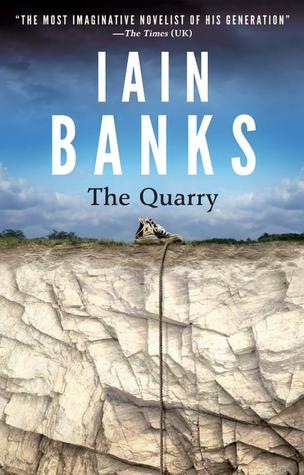
My opener this week is a book I’ve borrowed from the library, The Quarry by Iain Banks:17909006

Most people are insecure, and with good reason. Not me.

This is probably because I’ve had to think about who I am and who I am not, which is something your average person generally doesn’t have to do. Your average person has a pair of parents, or at least a mother, or at least knows roughly where they fit into all that family business in a way that I, for better or worse, don’t. Usually I think it’s for the better, though sometimes not.

These first two paragraphs certainly make me want to read on – where does this person fit into the picture?

Blurb:

Kit doesn’t know who his mother is. What he does know, however, is that his father, Guy, is dying of cancer. Feeling his death is imminent, Guy gathers around him his oldest friends – or at least the friends with the most to lose by his death. Paul – the rising star in the Labour party who dreads the day a tape they all made at university might come to light; Alison and Robbie, corporate bunnies whose relationship is daily more fractious; Pris and Haze, once an item, now estranged, and finally Hol – friend, mentor, former lover and the only one who seemed to care.

But what will happen to Kit when Guy is gone? And why isn’t Kit’s mother in the picture? As the friends reunite for Guy’s last days, old jealousies, affairs and lies come to light as Kit watches on.

Would you read on?

Joyland by Stephen King

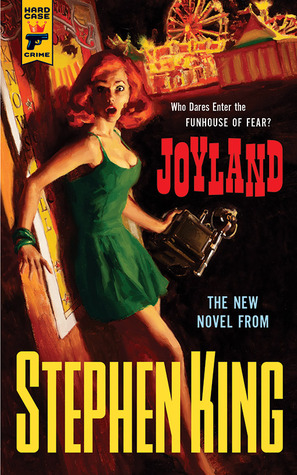
I’m so glad I read Joyland by Stephen King – it’s so good.

13596166

I nearly didn’t buy it, put off by the cover (you should never judge a book by its cover!) and by the publishers, Hard Case Crime – it was the word ‘hard‘ that really made me pause, especially when I looked at their site and saw they publish ‘the best in hardboiled crime fiction‘. Not being quite sure just what ‘hard boiled crime fiction‘ is, I looked it up. This is Encyclopedia Britannica’s definition:

Hard-boiled fiction, a tough, unsentimental style of American crime writing that brought a new tone of earthy realism or naturalism to the field of detective fiction. Hard-boiled fiction used graphic sex and violence, vivid but often sordid urban backgrounds, and fast-paced, slangy dialogue.

Not my sort of book, at all! But it’s by Stephen King and I like his books, so I did buy it. It’s not ‘hard boiled fiction‘ as defined above. The only way it fits that definition is that there is a lot of slang in it – ‘carny’ slang, which King explains in his Author’s Note is what he calls in this book ‘the Talk‘. It is ‘carnival lingo, an argot both rich and humorous’. So not ‘hard boiled’ at all!

Joyland is a ghost story, a love story, a story of loss and heartbreak. It’s also a murder mystery and utterly compelling to read.

It’s narrated by Devin Jones, looking back forty years at the time he was a student, suffering from a broken heart, as his girlfriend had just rejected him and he spent a summer working at Joyland, in North Carolina, an amusement park with ‘a little of the old-time carny flavor‘.

Along with various rides, ‘Happy Hounds’, and a palm-reader, there is the Horror House, a ‘spook’ house which is said to be haunted by the ghost of Linda Gray, whose boyfriend cut her throat in the Horror House. The boyfriend had not been found and it appears he may be a serial killer as there had been four other similar murders in Georgia and the Carolinas.

It’s also a story of friendship, of Tom and Erin, of children with the ‘sight’, a young boy in a wheelchair and his mother, and Dev’s search for the killer.

I loved the setting of the funfair, Dev’s nostalgia for his youth, his sensitivity, and the images the story evokes – it’s not just the story but the way King tells his tale, with just a touch of horror and the supernatural.

Who knows – maybe I should read some more of Hard Case Crime’s publications!

Reading ChallengesReaders.Imbibing.Peril XI.