Fair of Face by Christina James

Tina Brackenbury and her baby daughter Bluebell are dead …

Fair of Face

Fair of Face is the sixth novel in the DI Yates series and  I think it stands well on its own. It is not a book you can read quickly as there are plenty of characters and several plot threads that need to be kept in mind. It is an intricately plotted mystery, re-assessing a crime from the past whilst investigating a present day murder, set in Spalding in Lincolnshire. I  didn’t find it an easy book to review.

The book begins with Tristram Arkwright, a prisoner in HMP Wakefield. He works in the prison library and is secretly in correspondence with Jennifer Dove, a bookseller who regularly supplies the prison. Jennifer is bored and finds Tristram a welcome diversion. He, meanwhile, is planning an appeal against his sentence insisting he is innocent.

Tina’s 10 year old foster daughter, Grace Winter was staying with a friend, Chloe and arrives home as DI Tim Yates and DS Juliet Armstrong are beginning their investigations into the deaths of Tina and Bluebelle. Grace acts strangely and doesn’t seem very upset by the murders and asks to see the bodies. But Grace has had a difficult life as this isn’t the first murder that she has encountered. Four years earlier her mother, sister and grandparents had been killed at their farmhouse and Grace had escaped by hiding in a cupboard. Grace was then adopted by Amy Winter, and only later sent to live with Tina. Her friend, Chloe, also has a troubled background, with brothers who are regularly in trouble with the police. She is noticeably intimated by them and by Grace. As both girls are only 10 years old the police work with Social Services in order to question them

I struggled for a while to sort out the relationships between all the characters and the relationship between the opening chapters and Tina and Bluebell’s murders. The narrative switches between the first person present tense (Juliet) and the third person past tense, which I found a bit awkward until I got used to it. And I was confused by characters with similar names – Tom and Tim for example – regularly having to check who was who. I also failed to see relevance of Jennifer Dove’s character in the opening chapters. But despite these drawbacks I enjoyed the book and was eager to solve the mysteries.

My thanks to the publishers for a review copy of the book.

  • Paperback: 320 pages
  • Publisher: Salt Publishing (15 Oct. 2017)
  • Language: English
  • ISBN-10: 1784631086
  • ISBN-13: 978-1784631086
  • My rating: 3*

Days Without End by Sebastian Barry

Days Without End

Hardcover, 259 pages, published October 20th 2016 by Faber & Faber
 
Source: Library Book
 
My Rating: 5*


Blurb:

After signing up for the US army in the 1850s, aged barely seventeen, Thomas McNulty and his brother-in-arms, John Cole, fight in the Indian Wars and the Civil War. Having both fled terrible hardships, their days are now vivid and filled with wonder, despite the horrors they both see and are complicit in. Then when a young Indian girl crosses their path, the possibility of lasting happiness seems within reach, if only they can survive.

My thoughts:

This is without doubt one of the best books I’ve read this year. I was spellbound, the storytelling is superb, the characters are unforgettable, and the setting comes across so vividly that I had no difficulty in imagining the locations. Add to that the narration written in Thomas McNulty’s own uneducated voice, fluent and richly descriptive and so easy to read, despite the mix of Irish and American slang.

Thomas is writing, looking back on their lives, to a time when it seemed that years of their lives were endless:

Time was not something then we thought of as an item that possessed an ending, but something that would go on for ever, all rested and stopped in that moment. Hard to say what I mean by that. You look back at all the endless years when you never had that thought. I am doing that now as I write these words in Tennessee. I am thinking of the days without end of my life. (page 39)

He is a young Irish immigrant, 17 years old when he and his friend John Cole volunteered to join the US army. Thomas, had left Sligo, starved and destitute, for Canada and then made his way to America where he had met John under a hedge in a downpour and they became friends and secretly lovers for life. He describes John Cole as ‘my love, all my love.‘  They began their life together working in a saloon in Daggesville, dancing and dressed as girls, until they were seventeen and they could no longer pass as girls:

But nature will have his way and bit by bit the bloom wore off us, and we was more like boys than girls, and more like men than women. John Cole anyhow in particular  saw big changes in them two years. He was beginning to give giraffes a run for their money, height-wise. Mr Noone couldn’t find dresses to fit him and Mrs Carmody couldn’t stitch fast enough. It was the end of an era, God knowed. One of the happiest works I ever had. (Page 12)

The fact of their love underlies the whole book. But the next stage of their lives was so different, fighting in the Indian wars against the Native Americans as the settlers moved west and then in the Civil War. I’m not keen on reading about wars, battles or fights of any kind but I found the descriptions in this novel were exceptional, truly heart-rending, although I would have preferred fewer scenes of war and massacre. Barry doesn’t spare the details and clearly depicts the horror and waste of war, commenting in Thomas’s voice: Killing hurts the heart and soils the soil (page 225).

After the wars have come to an end they leave the army and the rest of the book follows their lives together with Winona, a young Indian girl, who they come to regard as their daughter. But danger is never far away …

In a way I thought it was odd how this book held my attention. I was surprised by a number of things – the very long paragraphs, sometimes extending to several pages  – the strange grammatical errors and figures of speech, and at times passages written in the present tense. And yet, Barry’s prose is so lyrical and poetic that I think this is what made the book so compelling to read. Each time I picked it up to read I became lost in its pages. It is not perfect, but then I often find that that doesn’t matter when I’m so totally captivated by the writing, which is why I’ve given this book 5 stars.

Amazon UK link

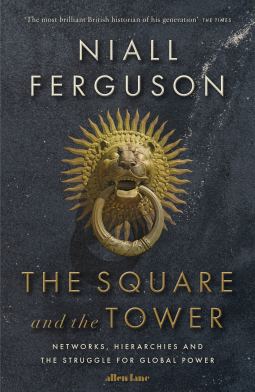
The Square and the Tower by Niall Ferguson

Published: Penguin Books (UK), 5 October 2017, 535 pages

Source: review copy from the publishers via NetGalley

My Rating: 2*

Blurb:

What if everything we thought we knew about history was wrong? From Niall Ferguson, the global bestselling author of Empire, The Ascent of Money and Civilization, this is a whole new way of imagining the world.

Most history is hierarchical: it’s about popes, presidents, and prime ministers. But what if that’s simply because they create the historical archives? What if we are missing equally powerful but less visible networks – leaving them to the conspiracy theorists, with their dreams of all-powerful Illuminati?

The twenty-first century has been hailed as the Networked Age. But in The Square and the Tower Niall Ferguson argues that social networks are nothing new. From the printers and preachers who made the Reformation to the freemasons who led the American Revolution, it was the networkers who disrupted the old order of popes and kings. Far from being novel, our era is the Second Networked Age, with the computer in the role of the printing press. Once we understand this, both the past, and the future, start to look very different indeed.

My thoughts:

Subtitled ‘Networks, Hierarchies and the Struggle for Global Power‘, this is described as ‘a whole new way of imagining the world’ as it’s possible that we’re missing information about networks because it’s not recorded in historical archives. But what I found in this book is rather different, being a run through history in what seemed to me a disjointed way, albeit very detailed, with network diagrams and many footnotes. I found parts of it quite tedious, especially the early section detailing the research on the history of networking. If I hadn’t requested the book from NetGalley I would have not bothered reading any more. Fortunately I found some sections were more interesting (such as on such varied topics as social media, the Illuminati, the Reformation, European Royal families, the Cambridge spies, Al Qaeda, ISIS and Trump to name but a few) and I did finish the book.

Ferguson states that his book seeks to learn about the future mainly by studying the past, in particular by looking at the importance of networks in the past that had been at times very powerful. But by the end of the book I didn’t feel too enlightened in that respect as often the distinction between hierarchies and networks is blurred – there are networks that are hierarchical and hierarchies that are parts of wider networks. As Ferguson acknowledges, the dichotomy between hierarchy and network is an over-simplification.

I requested this book when I saw it on NetGalley because history is a subject that I find fascinating, and the blurb interested me. However, although there are sections that I did find interesting, mainly those written as conventional narrative history, overall I was disappointed. I think it is disjointed with sections that don’t seem to me to have much connection with the main theme, overstretching the analogy. To summarise – I don’t think such theoretical historical analysis is for me.

My thanks to the publishers and NetGalley for a review copy.

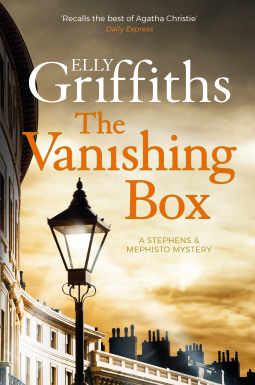
The Vanishing Box by Elly Griffiths

Publication date: 2 November, 2017, Quercus Books

Source: review copy via NetGalley

My rating: 3*

Blurb:

Christmas 1953. Max Mephisto and his daughter Ruby are headlining Brighton Hippodrome, an achievement only slightly marred by the less-than-savoury support act: a tableau show of naked ‘living statues’. This might appear to have nothing in common with DI Edgar Stephens’ investigation into the death of a quiet flowerseller, but if there’s one thing the old comrades have learned it’s that, in Brighton, the line between art and life – and death – is all too easily blurred…

My thoughts:

This is the fourth book in the DI Stephens and Max Mephisto series. Known as the ‘Magic Men’ they had been part of a top-secret espionage unit during the War.

It is set in 1953 at Christmas just a few months after the previous book in the series, The Blood Card and magician Max Mephisto is still sceptical about performing magic on TV with his daughter Ruby in a show called Magician and Daughter. Meanwhile his old friend, DI Edgar Stephens and his team are faced with solving the murder of Lily Burtenshaw, who had been strangled and found in her room tied to a chair, leaning forward and pointing to an empty crate with ‘King Edward Potatoes’ written on the side.

Max and Ruby are performing at the Brighton Hippodrome using a human sized version of the Vanishing Box in their act. The variety show also includes an act called the Living Tableaux, showing scenes from famous paintings or classical statutory, posed by a troupe of showgirls, naked apart from skimpy flesh coloured pants. Two of the showgirls, Betty and Janette, have become friends with Lily and are lodging at the same boarding house, but Edgar wonders if there is another connection between Lily and the Living Tableau? There is something so theatrical about the way the body was posed. Edgar and his two sergeants, Emma Homes and Bob Willis, begin their search for the killer, looking for motives and suspects. Then more murders are discovered and it becomes a desperate hunt to find the killer before he/she strikes again.

I enjoyed this book but for me there is too much focus on the main characters and their relationships. Edgar is engaged to Ruby, although Max is still not too happy about it.  However, his work means he isn’t able to spend much time with her. Meanwhile Emma’s feelings for him are getting stronger and their relationship deepens as she is drawn into deadly danger. Max’s relationship with Mrs M, his landlady in Brighton, is winding down and he is attracted to Florence, another one of the showgirls.

I liked the insight into the 1950s, particularly the theatre life. Illusion and misdirection play a large part – from the acts in the variety show to the murders, and all is not what it seems. The misdirection in the form of several twists and turns threw me off course.The clues are there, if you can but see them, yet I still had little idea who the killer could be until very near the end.

My thanks to Quercus Books and Netgalley for an advance review copy of this book ahead of publication on 2nd November.

Katharina: Deliverance by Margaret Skea

‘It is very shameful that children, especially defenceless young girls, are pushed into the nunneries. Shame on the unmerciful parents who treat their own so cruelly.’ Martin Luther

Katharina: Deliverance (Katharina #1)

Publication: Sanderling Books, 18 October 2017

Source: review copy from the author

My rating: 4*

Summary from Goodreads:

Germany 1505

Following the death of her mother and her father’s remarriage, five-year-old Katharina is placed in the convent at Brehna. She will never see her father again. 
Sixty-five miles away, at Erfurt in Thuringia, Martin Luder, a promising young law student, turns his back on a lucrative career in order to become a monk. 

The consequences of their meeting in Wittenberg, on Easter Sunday 1523, will reverberate down the centuries and throughout the Christian world.

A compelling portrayal of Katharina von Bora, set against the turmoil of the Peasant’s War and the German Reformation … and the controversial priest at its heart.

My thoughts:

I love historical fiction and Margaret Skea’s books about the Munro family, Turn of the Tide and A House Divided set in 16th century Scotland are two of the best I’ve read over the last few years. Her latest novel, Katharina: Deliverance is just as fascinating, also set in the 16th century, but this time in Germany. Katharina was the wife of Martin Luther and the book is written in the present tense from Katharina’s viewpoint and from two time periods. I like the dual aspect time line giving a glimpse of what is to come.

2017 marks the 500th anniversary of the start of the Reformation, which was set in motion when Martin Luther, a doctor of theology at the University of Wittenberg published his 95 theses, attacking papal abuses and the sale of indulgences. I remembered this from school history but it was only reading Katharina: Deliverance that the period and both Katharina and Martin really came to life for me.

It’s a most moving story that transported me back in time to the 16th century and I felt as though I was inside Katharina’s mind and could feel what she was feeling.  It covers the early years of her life from 1505 up to her wedding to Martin Luther in 1525 and includes, at intervals, scenes from the end of Katharina’s life in 1552. I was fascinated and so anxious for her right from the start when as a small child, she was taken from her home and unwillingly enters the convent at Brehna. Four years later, at the age of ten, she was transferred to the Marienthron convent at  Nimbschen where her aunt was the abbess. It was a difficult change for Katherina – to a silent order where communication was by sign language. She was consecrated as a nun in 1515.

Although isolated from the outside world news of Martin Luther’s teaching reached the nuns as the abbess says:

The wind of change is blowing in the outside world and will buffet us in due time. And perhaps sooner than we think, for it is our own provincial vicar, the Reverend Dr Martin Luther, who makes the challenge, and I find myself tempted to agree with his sentiment, if not his rhetoric.

Although the Church denounced Luther and his writings and ordered his books to be burnt some of the nuns, including Katharina, were inspired by his ideas and beliefs. They escaped from the convent at Easter 1523 and arrived at Wittenburg where several families helped them settle into life outside the convent. It was here that Katharina met Luther and the next phase of her life began.

Although written in the present tense, which can often be a stumbling block for me, I love Margaret Skea’s beautifully descriptive writing in passages such as this:

The year turns, the darkness of December giving way to the brilliance of a landscape cloaked in snow. The hollows on the hill behind us are smoothed out, the river below sluggish, swollen with slush. Wind blows through the valley, piling the snow in drifts, obliterating the track, neither workers nor visitors able to reach us. Within our walls, ice hangs in long fingers from roofs and windowsills, and crusts the tops of fences. Paths turn to glass and stray stems of plants snap like kindling when trodden on. In the orchard, branches bow under the weight of snow, sweeping the ground, so that we fear for their survival, and the root vegetables we would normally harvest as we needed them are set into ground so hard they are impossible to shift. Outside, the water in the troughs freezes solid, so that fresh supplies from the well must be drawn daily for the animals, and indoors, standing water forms a thick skin overnight.

In her Author’s Note Margaret Skea states that her ‘book is a work of fiction, and though based on extensive research, the Katharina depicted here is my own interpretation’. I think it works very well weaving the historical facts into this dramatic and emotional story.  I loved it and am looking forward to the next book, Katharina: Fortitude which will be published in 2018!

  • Format: Kindle Edition
  • File Size: 529 KB
  • Print Length: 384 pages
  • Publisher: Sanderling Books (18 Oct. 2017)

Conclave by Robert Harris


Conclave

I really didn’t expect to enjoy Conclave as much as I did, but then I’ve enjoyed all of his books that I’ve read, so I shouldn’t have been surprised. Conclave is about an election of a Pope and I found it absolutely fascinating as the process of the election unfolded. Harris describes the procedure as Cardinal Lomeli, the Dean of the College of Cardinals leads the 118 Cardinals through the voting stages. I felt as though I was a fly on the wall watching it throughout as the Cardinals are locked inside the Sistine Chapel, isolated from contact with the outside world.

There are quite a lot of characters involved, which at first was a bit confusing but soon their personalities became clearer and I began to have my favourites and hope that one of them would be elected. It’s all seen from Lomeli’s point of view, so my thoughts were coloured by what he reveals about each of the main candidates. As they progress through the stages of the election, whittling down the candidates to just a few, lots of secrets, scandals and disagreements are revealed. It becomes increasingly tense with each stage and Lomeli, who had been wanting to retire before the last Pope had died, finds that he too is one of the contenders – most reluctantly:

All he had ever desired in this contest was to be neutral. Neutrality had been the leitmotif of his career. (page 98)

And he realised that, whoever was elected Pope would never be able to wander around the city at will, could never browse in a bookstore or sit outside a café, but would remain a prisoner here! (page 142)

It’s also dramatic as events in the outside world impact on the Conclave.  I was completely engrossed and hoping that my favourite would be elected. Harris has thoroughly researched the subject and seamlessly woven the facts into the novel. He visited the locations used during a Conclave that are permanently closed to the public and interviewed a number of prominent Catholics including a cardinal who had taken part in a Conclave, as well as consulting many reports and books.

There is one point that I found hard to accept (I think that to say any more would spoil the book), although it is something I’d thought might happen but I’d dismissed as rather fanciful. Nevertheless I still think this is a 5* book as I enjoyed it so much – one of the best books I’ve read this year.

  • Format: Kindle Edition
  • File Size: 3282 KB
  • Print Length: 287 pages
  • Page Numbers Source ISBN: 0091959179
  • Publisher: Cornerstone Digital; 01 edition (22 Sept. 2016)
  • Source: I bought it
  • My rating: 5*