Furious Hours by Casey Cep

The stunning story of an Alabama serial killer and the true-crime book that Harper Lee worked on obsessively in the years after To Kill a Mockingbird
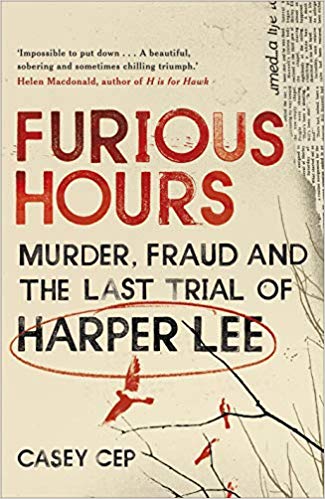
Furious hours

Cornerstone|May 2019|311 pages|e-book via NetGalley|Review copy|4*

In the first half of the book Casey Cep tells the story of the Reverend Willie Maxwell, who murdered members of his own family in the 1970s and held his rural community in Alabama, in fear and dread as they believed he was practising voodoo. He was shot dead at the funeral of his step-daughter by a relative, Robert Burns. Maxwell’s lawyer, Tom Radney, who had successfully defended Maxwell for years, then defended Burns, who confessed to the shooting, on the grounds of temporary insanity.

The second half is about the author, Harper Lee, who decided to write a book about all three men. In doing so Cep has written a remarkable biography of Harper Lee, her friendship with Truman Capote, her part in writing his book, In Cold Blood and her attempts to follow up the success of her book, To Kill a Mockingbird.

My favourite part of the book is without doubt the part about Harper Lee. All I knew about her before is that she wrote To Kill a Mockingbird, thought to be her only book until Go Set a Watchman was published in 2015. Cep explains that Watchman was an early version of Mockingbird, that Lee hadn’t edited or revised, and although it appears to be a sequel it isn’t  – it is the story she wrote first.

The section on Lee’s work in helping Capote  research his ‘nonfiction novel’ set in Kansas, In Cold Blood is equally as fascinating. They had lived next door to each other in Monroeville and as Cep phrased it ‘before Nelle was out of toddlerhood, she and Truman had become partners in crime and just about everything else.‘ (‘Nelle’ is her first name, the name she was known by for the first thirty-four years of her life, pronounced Nell, not Nellie.) Once they ran out of stories to read they started writing them. Cep goes into detail about the development of crime writing, and how Capote applied the techniques of fiction to nonfiction. Not everyone was happy with this novelisation of crime, not did they believe that Capote’s book was strictly factual, accusing him of  producing a sensational novel. Harper Lee minded very much about his fabrications, although she never objected publicly and this caused a rift between them.

So, this presented her with a challenge when it came to writing her book about Maxwell and his crimes, determined it would be based strictly on facts and she spent many years researching and writing her book, provisionally called The Reverend, but never finished it.

The sheer detail of Furious Hours made it quite a difficult book to read in some parts, digressing from the bare bones of the story into details such as the history of insurance, for example. But I was impressed by that detail and by Cep’s meticulous research. The book has an extensive Acknowledgements section, Notes and Bibliography, citing numerous books, journal articles and documentary films. And it has made me keen to read Go Set a Watchman, which although I bought a copy I have not read yet fearing it would spoil my love of To Kill a Mockingbird. I also must get round to reading Capote’s In Cold Blood, which I bought earlier this year, without knowing of Harper Lee’s involvement in the book.

My thanks to Cornerstone for an e-book review copy via NetGalley
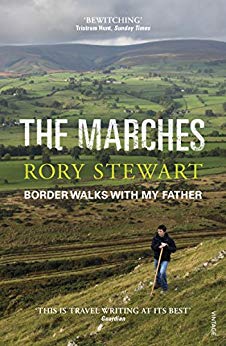
The Marches by Rory Stewart

Marches

Vintage|September 2017|368 pages|Paperback|4*

I enjoyed reading The Marches: Border Walks With My Father by Rory Stewart. He’s been in the news here recently, having stood for leadership of the Conservative Party, and has now formally stood down from Parliament to run as an independent candidate for Mayor of London.

But none of that has anything to do with why I wanted to read his book. It’s because of the subject – walking in the borderlands between England and Scotland, in the place where I live. And it’s not just about walking – he also muses on history, memory and landscape, all topics that interest me immensely.

Blurb:

His father Brian taught Rory Stewart how to walk, and walked with him on journeys from Iran to Malaysia. Now they have chosen to do their final walk together along ‘the Marches’ – the frontier that divides their two countries, Scotland and England.

On their six-hundred-mile, thirty-day journey – with Rory on foot, and his father ‘ambushing’ him by car – the pair relive Scottish dances, reflect on Burmese honey-bears, and on the loss of human presence in the British landscape.
Travelling across mountain ridges and through housing estates they uncover a forgotten country crushed between England and Scotland: the Middleland. They discover unsettling modern lives, lodged in an ancient place, as their odyssey develops into a history of the British nationhood, a chronicle of contemporary Britain and an exuberant encounter between a father and a son.

And as the journey deepens, and the end approaches, Brian and Rory fight to match, step by step, modern voices, nationalisms and contemporary settlements to the natural beauty of the Marches, and a fierce absorption in tradition in their own unconventional lives.

My thoughts:

This is a book of three parts – Book One: The Wall about Rory Stewart’s walk along Hadrian’s Wall in 2011, with his father, then aged 89 – his father walking for the first hour or so each day. They had intended to walk the full length of the Wall, from east to west, but after they reached the fort at Bewcastle they decided to abandon their plan (his father having reached his limits) and drive back to his father’s house, Broich, near Crieff in Perthshire. He writes about the Wall, the Roman occupation of the area, his father’s career, about nationality and clans, and reminisces about his childhood and his time in Afghanistan.

Book Two: Middleland, in which he describes his walk from coast to coast, a distance of about 400 miles, taking him 26 days, walking alone from his cottage in Cumbria to the Solway Firth, then crossing and re-crossing the modern border (established in the 13th century) to Berwick-upon-Tweed and then back to Broich.

I got a bit lost in his descriptions of the route, not knowing some the places along the way. But there are maps of his route that helped me follow where he went. He describes the landscape, the geology, sheep farming and land use, the people he met, their history  and language and much, much more.

Book Three: The General Danced on the Lawn about his father, who died at the age of 93, before this book was finished. The whole book is permeated with his love and respect for his father, but this last section is all about Brian Stewart.

At the end of the Marches is a Chronology which I found very interesting, defining The Middleland before AD100 up to the present days. The Middleland is a term invented by Brian Stewart:

The geographical centre of the island of Britain. An upland landscape, whose core is the Lake District, the Peninnes, the Cheviots and the Scottish Borders, but whose fringes extend to the Humber in the south and the firths of Forth and Clyde in the north. A land naturally unified by geography and culture for two thousand years, but repeatedly divided by political frontiers. (page 339)

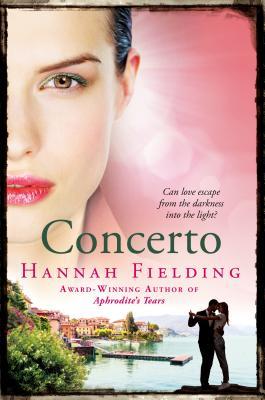
Concerto by Hannah Fielding

Concerto

London Wall Publishing|6 June 2019|560 pages|e-book via NetGalley|Review copy|2*

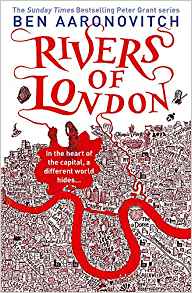
Rivers of London by Ben Aaronovitch

Rivers of London

Gollanz|January 2011|396 pages|e-book |5*

Blurb:

My name is Peter Grant and until January I was just probationary constable in that mighty army for justice known to all right-thinking people as the Metropolitan Police Service (and as the Filth to everybody else). My only concerns in life were how to avoid a transfer to the Case Progression Unit – we do paperwork so real coppers don’t have to – and finding a way to climb into the panties of the outrageously perky WPC Leslie May. Then one night, in pursuance of a murder inquiry, I tried to take a witness statement from someone who was dead but disturbingly voluble, and that brought me to the attention of Inspector Nightingale, the last wizard in England.

Now I’m a Detective Constable and a trainee wizard, the first apprentice in fifty years, and my world has become somewhat more complicated: nests of vampires in Purley, negotiating a truce between the warring god and goddess of the Thames, and digging up graves in Covent Garden … and there’s something festering at the heart of the city I love, a malicious vengeful spirit that takes ordinary Londoners and twists them into grotesque mannequins to act out its drama of violence and despair.

The spirit of riot and rebellion has awakened in the city, and it’s falling to me to bring order out of chaos – or die trying.

My thoughts:

I wish I had read Rivers of London when was first published in 2011, or in 2016 when I bought it because, when I finally began reading it I found I just didn’t want to put it down. 

I really didn’t expect to enjoy it so much, but I was completely engrossed in this book right from the beginning. It is a magical reading experience, and a fast-paced police procedural of a very different kind. It’s fantastical in the literal meaning of the word; an urban fantasy set in the real world of London. It’s a mix of reality and the supernatural, as Peter explains ‘Police work is all about systems and procedures and planning – even when you’re hunting a supernatural entity.

When a headless corpse is found in front of the West Portico of St Paul’s at Convent Garden, Peter interviews a witness, Nicholas Wallpenny, who tells him he has been dead for at least a hundred and twenty years – he is a ghost. From that point on nothing is straight forward as Peter is assigned to work with Detective Chief Inspector Thomas Nightingale (who is the last wizard in England) as part of a special and secret branch of the Met, dealing with all things magical and supernatural. And there are more murders

But interwoven with the murders is the feud between the Rivers of London, or rather between Mother Thames, whose territory is downstream and Father Thames who owns upstream. They both believe they rule the Thames and its tributaries. The dividing line is at Teddington Lock, two miles downstream from Eel Pie Island. Nicholas wants Peter to speak to Mother Thames to find out what the problem is and to find an amicable solution. And so he meets Beverley Brook and the other river goddesses.

Ben Aaronovitch knows London like he back of his hand and it shows in this book. It’s complex, the characters are great, the London setting is wonderfully detailed, and the writing is humorous and very entertaining. I loved it! It’s the first book in the Rivers of London series. The 8th book, False Value, will be published next year. So I have lots more Peter Grant novels to read, beginning with the next one, Moon Over Soho.

About the author:

Born and raised in London, Ben worked as a scriptwriter for Doctor Who and Casualty before the inspiration for his own series of books struck him whilst working as a bookseller in Waterstones Covent Garden. His unique novels are the culmination of his experience of writing about the emergency services and the supernatural.

See more about him and his work on his website.

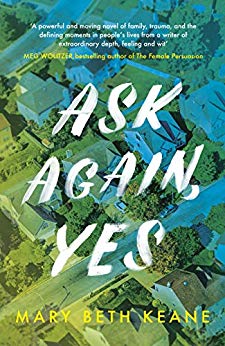
Ask Again, Yes by Mary Beth Keane

Ask Again Yes

Penguin Michael Joseph|3 October 2019|384 pages|e-book |Review copy|2*

A Single Thread by Tracy Chevalier

 I’ve enjoyed all of Tracy Chevalier‘s books that I’ve read so far, so it was no surprise to me. to find that I loved her latest book, A Single Thread

A single thread

This is historical fiction, a mix of fact and fiction, set mainly in Winchester in the 1930s. It is a a simple straightforward story, beautifully written, with the emphasis on everyday life. The main character is Violet Speedwell, a single woman of 38, regarded by society as a ‘surplus woman’ unlikely to marry  because her fiancé, Laurence was killed in the First World War. The 1921 census revealed that there were 1.75 million more women than men in the UK.  Surplus women were patronised and were expected to stay at home looking after their elderly relatives, but at the age of 38 in 1932 Violet decides to leave her overbearing mother and move on her own to Winchester. There is a lot of information about embroidering cushions and kneelers for the the Choir stalls and Presbytery seats in the Cathedral and about bell-ringing, both of which formed integral parts of the book.

Violet knew nobody in Winchester, but whilst looking round the Cathedral she came across a group of women, calling themselves the Winchester Cathedral Broderers, dedicated to embroidering hassocks and cushions for the seats and benches. She joins the group, led by Miss Louisa Pesel (a real person) and the stern Mrs Biggins and as well as learning to embroider, she makes new friends. One of these friends is Gilda, who introduces her to two of the bell-ringers, Arthur, a older married man and a younger, unmarried man, called Keith.

She is determined to be independent, not relying on her mother or her brother to support her. So she finds a job as a typist and takes a room in house shared with two other women and her landlady, Mrs Harvey, who discourages male visitors other than family. The difficulties of being independent are brought home to Violet as she struggles on her wages to pay for her lodgings, laundry and coal, let alone feed herself. And then her mother is admitted to hospital and she has to decide whether to return home to look after her.

The characters are drawn with fine detail and the descriptions of the settings, particularly in the Cathedral are so clear that I could easily visualise both the building and its interior. I particularly liked the details about the embroidery and the stitches used. As the Nazi Party and Hitler rise to power in Germany, the use of fylfots in the embroidery designs are mistaken for swastikas which are ancient symbols of light and life and good fortune.

The book gives an detailed look at life between the two World Wars. It has a slow gentle pace following Violet’s new life, but there is a sense of change on the horizon as her relationship with Arthur develops.  It gives a lively picture of the difficulties of life for unmarried women, including Gilda and Dorothy’s unconventional relationship that they have to keep secret to avoid the prejudice this would attract. And there is an indication of the sense of unease in society as the threat of another war loomed. 

It is obvious throughout the book that Tracy Chevalier has meticulously carried out her research and in the acknowledgements she lists a number of the many resources she has used, including details of Louisa Pesel’s embroidery work as well as the history of Winchester Cathedral, bell-ringing, 1930s women and life in Britain in the 1930s .

My thanks to the publishers and NetGalley for my copy of this book for review.

  • Format: Kindle Edition
  • File Size: 1382 KB
  • Print Length: 353 pages
  • Page Numbers Source ISBN: 0008153817
  • Publisher: The Borough Press (5 Sept. 2019)
  • Source: Review copy from the publishers via NetGalley
  • My Rating: 4*