The Labours of Hercules by Agatha Christie: a Book Review

The Labours of Hercules is a collection of 12 short stories featuring Hercule Poirot, first published in 1947. Poirot is thinking of retiring, but before he does he wants to solve 12 more cases and not just any cases. These have to correspond to the Twelve Labours of Hercules, specially selected problems that personally appeal to him.

Most of the stories are quite easy to work out, but that doesn’t detract from the pleasure of reading them. And so that he can complete his twelve cases, Poirot does some uncharacteristic travelling around the world – he can’t rely solely on his ‘little grey cells.’

The labours of Hercules were set for the classical Greek hero by King Eurystheus of Tiryns as a penance. On completing them he was rewarded with immortality. On the face of it, Poirot and Hercules are vastly different, both in character and appearance and after immersing himself in classical lore, Poirot decides he is definitely superior, as he looks at himself in the mirror he thinks:

Here, then, was a modern Hercules – very distinct from that unpleasant sketch of a naked figure with bulging muscles, brandishing a club. Instead a small compact figure attired in correct urban wear with a moustache – such a moustache as Hercules never dreamed of cultivating – a moustache magnificent yet sophisticated.

Yet there was between this Hercule Poirot and the Hercules of Classical lore one point of resemblance. Both of them, undoubtedly, had been instrumental in ridding the world of certain pests … Each of them could be described as a benefactor to the Society he lived in … (page 14)

  •  The first case is my favourite of the twelve. It corresponds to killing the Nemean lion a frightful beast. It’s a mystery concerning the kidnapping of a Pekinese dog. At first Poirot is reluctant to take on the case, disapproving of such dogs – ‘bulging-eyed, overpampered pets of a rich woman.’ But there is one small detail that is unusual and he is curious. And as one of the characters tells him. ‘according to the legend, Pekinese were lions once. And they still have the hearts of lions.’
  • The Lernean Hydra was a monstrous snake with many heads. In the second case Poirot’s modern equivalent is malicious gossip, spreading rumours of murder, which he ‘kills’ by discovering who the real culprit was.
  • The Arcadian Deer – Poirot helps a young mechanic, who is ‘a simple young man with the outward appearance of a Greek god’  reminding him of a ‘shepherd in Arcady’ to find a beautiful young woman who has disappeared – the Arcadian deer.
  • Poirot’s equivalent of the fourth labour of Hercules in the Erymanthian Boar is to capture a violent murderer. Set high in the Swiss Alps, Poirot is in great danger as he contends with an infamous gang leader and in doing so he is uncharacteristically physically active!
  • In the Augean Stables Poirot gets involved in politics, averting a scandal using a force of nature, as Hercules used a torrential river to cleanse the stables belonging to King Augeas. Poirot’s equivalent is a sex scandal to divert attention from political chicanery.
  • The Stymphalean Birds – man-eating birds. In this case Poirot is in Herzoslovakia where Harold Waring is having a restful holiday when he meets a delightful English couple – an elderly woman and her pretty daughter. Also staying at the hotel are two other  women – who are not English and who seem to him to be ‘birds of ill omen’. Harold soon finds himself a victim and it is up to Poirot to chase away the ‘birds’ from their hiding place.
  • The Cretan Bull – in the legend Hercules captures the bull, which was possibly the father of the Minotaur. Diana Maberley appeals to Poirot for help after her fiancé breaks off their engagement as he fears he is going mad. The connection with the legendary story is very slight.
  • The Horses of Diomedes – the eighth labour of Hercules was to capture the wild horses that were fed on human flesh. Poirot’s equivalent are human beasts who supply drugs – ‘the person who deliberately profits from the degradation and misery of other people is a vampire preying on flesh and blood.’
  • The Girdle of Hyppolita was captured by Hercules after he had defeated the Amazons and either killed their Queen or had captured one of her generals. Poirot’s ‘Girdle’ is a Rubens masterpiece, stolen in broad daylight. Initially it doesn’t interest him very much, but it brought the case of the Missing Schoolgirl to his attention – and that interested him much more. She had apparently disappeared off a train, leaving a pair of shoes on the railway track.
  • The Flock of Geryon – in the legend Hercules kills the monster, Geryon, to gain control of the flock. Poirot, of course, doesn’t kill anyone. He meets Miss Carnaby (who is also in the first story, the Nemean Lion) who tells him how worried she is about her friend who she believes is being victimised by Dr Andersen, the leader of a religious sect, The Flock of the Shepherd.
  • The Apples of the Hesperides. There are several versions of this. The apples grew on a tree guarded by a dragon – Hercules either killed the dragon, or sent Atlas for the apples, in the meanwhile holding up the world on his own shoulders. Poirot’s apples are emeralds on a tree around which a dragon is coiled, on a missing Italian renaissance goblet. It seems that Poirot may have to go on a world tour to retrieve the goblet – to investigate locations in five different parts of the globe.
  • The Capture of Cerberus – a three-headed dog guarding the gates of Hades, or Hell. In Poirot’s final case Hell is a nightclub run by the Countess Vera Rossakoff, an old friend of Poirot’s. This nightclub is guarded by the ‘largest and ugliest and blackest dog’  Poirot has ever seen. Entrance to the club is only after throwing a ‘sop’ to Cerberus from a basket of dog biscuits. The police believe it’s the headquarters of a drug racket involving the fencing of stolen jewellery. Poirot can’t believe that Vera, for whom he has a soft spot, can be involved. I liked the ending of this story when Miss Lemon queries a bill for roses sent to the Countess. He responds:

‘There are moments,’ he said, ‘when one does not economise.’

Humming a little tune, he went out of the door. His step was light, almost sprightly. Miss Lemon stared after him. Her filing system was forgotten. All her feminine instincts were aroused.

‘Good gracious,’ she murmured. ‘I wonder … Really – at his age! … Surely not…’

I enjoyed this book both for the linking of Poirot’s cases with the Labours of Hercules and for the personal snippets of information about Poirot, scattered throughout the text.
The Victorian Chaise-Longue by Marghanita Laski: Book Review

After I finished reading Little Boy Lost by Marghanita Laski I wanted to read more by her and borrowed The Victorian Chaise-Longue from my local library. It’s very different from Little Boy Lost and although it’s described as ‘a little jewel of horror’, I didn’t find it very horrifying, or even the slightest bit frightening. It’s about Melanie, a young woman who falls asleep on a Victorian chaise-longue in 1953 and wakes up in a different body, that of Millie, in 1864. No one believes that she is anyone other than Millie, a very sick young woman.

Melanie is a  spoilt, pampered young woman, who is recovering from tuberculosis and the birth of a baby. She is indulged by her husband and although she affects a silly, giggly manner she is not stupid. Her doctor observes to himself after hearing a conversation between Melanie and her husband, Guy:

But Melanie isn’t the fool he thinks her, not by a long chalk, she’s simply the purely feminine creature who makes herself into anything her man wants her to be. Not that I’d call her clever, rather cunning – his thoughts checked, a little shocked at the word he had chosen, but he continued resolutely – yes, cunning as a cartload of monkeys if ever she needed to be. (page 5)

It is Melanie’s cunning that helps her in the nightmare situation in which she finds herself, trapped and powerless inside Millie’s body. The book is not really about the paranormal, or time-travel, but more a study of morals, of identity and the changing attitudes towards women, illness and death.

The Victorian Chaise-Longue is an extraordinary little book, but for me it was nowhere nearly as good or as satisfying as Little Boy Lost. The characters are somewhat shallow and insubstantial, although there is a feeling of claustrophobia and suspense as the end drew near and Melanie’s fate is in doubt – would she too die? I go along with P D James, who writes in the Preface of how Marghanita Laski went alone to a remote house to induce the fear she needed to write the book, but thinks:

What precisely she was trying to tell us is unclear; there may be a clue in the lines of T S Eliot which she reprinted at the beginning of the novel: ‘I am dying in my own death and the deaths of those after me.’

The Victorian Chaise-Longue Endpapers (click to enlarge)
  • Paperback: 99 pages
  • Publisher: Persephone Books Ltd; New edition edition (22 Jun 1999)
  • Language English
  • ISBN-10: 0953478041
  • ISBN-13: 978-0953478040
  • Source: library book
  • My Rating: 3/5

Standing Water by Terri Armstrong

Standing Water

Last week (28 February 2012) Terri Armstrong’s debut novel Standing Water was published. Pre-publication it won the 2010 Yeovil Literary Prize and I can understand why. I thoroughly enjoyed it. It’s a fascinating story set in and near the fictional town of Marrup in the Western Australia Wheatbelt, an area suffering from drought – there’s been no rain for a couple of years. This is the scene that greets Dom Connor on his return home for his mother’s funeral after eight years away:

Boards blanked out the doors and windows of the old stone post office. Abandoned shops, charming wooden structures with wide windows and tin roofs, gaped out into the road, their facia lettering bleached to vague outlines by the sun. Wheat-coloured grasses grew out of cracks in the footpath in front of what used to be the bakery, a seventies building of pale brick, where his mum had bought creamy vanilla slices on Saturday mornings. (page 22)

Dom is returning to the family farm which his older brother, Neal has been running ever since their father died. Dom and Neal don’t get on and despite Dom’s attempts to improve their relationship, the tension between them is on a short fuse. Neal can’t express his emotions and thoughts until they are forced out him uncontrollably. His relationship with his wife, Hester, is also on a knife edge, although he loves her.

The book is narrated in the third person mode, through three of the characters’ perspectives – Dom, Hester and Andy, a boyhood friend of Dom’s. We never get Neal’s point of view, but each of the other characters cast light on his personality. Hester, has never met Dom before his return, but Andy, a recovering drug addict, has links with her past as well as with Neal’s and Dom’s. When Andy turns up, looking for reconciliation with his parents, secrets of both the past and the present are gradually revealed and the tension inexorably mounts.

I was completely engrossed in this book, which is about friendships, sibling rivalry, parent/child relationships, and love and betrayal. The characters are convincing and the setting is superb. I could feel the heat, see the landscape, the farms, the plants, birds and the Dog Rock, a huge rock overlooking a panorama of flat land below its sixty foot height, with tiny caves at its base.

It’s not surprising that the location is so convincing as Terri Armstrong is an Australian, now living in Norwich, having moved to the UK in the late 1980s. For more information visit Terri’s website. She is currently working on her second novel, which is based in London. I’ll be looking out for it.

  • Paperback: 320 pages
  • Publisher: Pewter Rose Press (28 Feb 2012)
  • Language English
  • ISBN-10: 1908136006
  • ISBN-13: 978-1908136008
  • Source: supplied by the publishers

My Rating 4.5/5

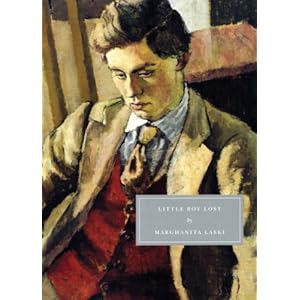
February’s Books: Little Boy Lost

February was a good reading month. I read 9 books. The full list is on my Books Read in 2012 page (see the tab above).

My Book of the Month is Little Boy Lost by Marghanita Laski. It is a beautiful book. Once I started reading I didn’t want to put it down; I just had to know what happened. It’s the story of Hilary Wainwright, who is searching for his son, lost five years earlier in the Second World War. Hilary had left France just after his wife, Lisa, had given birth to John. Lisa, unable to leave France, worked for the Resistance, but was killed by the Gestapo and her son disappeared.

After the war ended Hilary is contacted by Pierre, a friend of Lisa’s, who told him he may have found the boy, living in an orphanage in rural France and Hilary sets out to discover if the boy is really his son.

It’s written in such clear, straightforward language and yet at the same time it is emotional, heart-wrenching and nerve-wracking, full of tension, but never sentimental. The depiction of post-war France is chilling conveying the deprivations, suspicion and bitterness of the times. Hilary is a solitary person, a poet and an intellectual, who has difficulty with relationships. This makes it difficult for him to accept that the little boy is his without an instinctive feeling or conclusive evidence – looks, mannerisms or the child’s own recollections. Whilst he is longing to find his son, after he Lisa had died and he had lost the boy, he had closed himself off from feelings:

I couldn’t endure being hurt again: I’d sooner feel nothing. I don’t like children as such; they bore me. I used to think that a child of my own would make me happy, but I know that isn’t true any more. I’ve got nothing to offer a child … I just want to be left alone so that I can’t be hurt again. (page 75)

It’s not only the little boy who is lost, it is also his father.

He goes through mental agonies once he meets the child, unsure that he is his son, and in several minds about what he should do. The boy is adorable and by the end of the book I began to think it didn’t matter whether he was his son or not, I just wanted them to be happy together.

My rating: 5/5

  • Paperback: 240 pages
  • Publisher: Persephone Books Ltd (23 Oct 2008)
  • Language English
  • ISBN-10: 1906462054
  • ISBN-13: 978-1906462055
  • Source: I bought my copy

Kerrie at Mysteries in Paradise is collecting crime fiction ‘picks of the month’. During February I read 4 crime fiction and my Crime Fiction Pick of the Month is Sleeping Murder by Agatha Christie – Miss Marple’s last case.

After the Armistice Ball by Catriona McPherson

After the Armistice Ball is the first book in the Dandy Gilver series. I’ve read a couple of the later books in the series and had to read this one in order to find out how Dandy (short for Dandelion) first became an amateur detective, or Society Sleuth, as she is called on the book cover.

It all began when there is an alleged theft of Lena Duffy’s jewels at Daisy Esslemont’s annual Armistice Ball in 1922 and Daisy asks Dandy to find out what really happened. Dandy is a bored wife, whose husband, Hugh is the ‘hunting, shooting and fishing’ type. The theft of the jewels is rapidly pushed to the sidelines after the death of Lena’s daughter, Cara in a lonely beach cottage in Galloway. Accompanied by Cara’s jilted fiancé, Alec Osborne, Dandy is faced with the puzzle of Cara’s death. Was she killed, or did she commit suicide? She had died in a fire, whilst on her own in the cottage – why was the cottage always kept so hot, so hot that the coal that was supposed to last all winter had been finished in one week?

The setting in the 1920s is convincing, the sense of dislocation after the First World War, the class divide and the contrast between the idle rich and the poor. The locations are beautifully described, and the characters are lively and come to life, particularly Dandy, although Hugh does seem to be a cardboard cut-out, but the book dragged in the middle as Dandy and Alec went over and over, and over the events and theorised about what had happened and why.

I too puzzled over the mystery and I did find the ending rather confusing, so much so that I had to re-read parts of the book to sort out what I thought had happened. I’m still not sure, but I think I know. Having said all that, I did enjoy the book, and apart from the middle section I raced through it and that’s probably where I missed some salient points.

My Rating: 3/5

I borrowed the book from my local library

Death Comes To Pemberley by P D James

I read Death Comes to Pemberley over the weekend and although I thought it was OK I was disappointed. I love Jane Austen’s Pride and Prejudice and I like PD James’s books, so this book should have been just right for me. But maybe it was just the wrong book for me because I have yet to read a sequel/spin-off by a different author that I have enjoyed. They never live up to the original and if this had been written by anyone except P D James I probably wouldn’t even have looked at it.

The book is set in 1803, when Elizabeth and Darcy have been married for six years. It begins with a rather lengthy Prologue in which P D James summarises the events told in Pride and Prejudice and tells what has happened in the intervening years. Eventually the mystery is revealed when Lydia arrives at Pemberley and shrieking hysterically tells how Wickham and Captain Denny had disappeared into the Pemberley woods, shots were fired and she is sure Wickham is dead. In fact it is Denny who is dead and a drunk, and distraught Wickham babbles that he has killed him.

It should have been good, but the characters were flat. Six years of marriage had changed Elizabeth beyond recognition, Darcy was a pale, ineffectual figure and Colonel Fitzwilliam was no longer the likeable character he is in Pride and Prejudice. It’s plodding and repetitive. P D James has done her research into the early 19th century murder investigations but it’s clumsily written as exchanges of conversation between the characters – for example would Darcy, a magistrate really need to be told how the system worked? As for the murder mystery, it just fizzled out with a less than convincing result.

On the plus side there are some good descriptive passages, mainly of the Pemberley Estate and a vignette where Mr Bennet is found by Darcy in his library reading the Edinburgh Review.

My rating: 2/5

I borrowed the book from my local library.

As a result of reading this I’ve now started a re-read of Pride and Prejudice and the first chapter convinces me that my recollection of Jane Austen’s sparkling writing is accurate. I shall never read another spin-off again. It was worth reading Death comes to Pemberley to be reminded of Jane Austen’s brilliance.