A Place of Greater Safety by Hilary Mantel: a Book Review

Given a choice of reading one long book or several shorter books, in the past I’ve always gone for the long book, as I like to got lost in a book, but more recently I’ve preferred shorter books. So this is the reason that Hilary Mantel’s A Place of Greater Safety has sat on my bookshelves unread for a few years. It took me over a month to read it and I did pause for a while to read other shorter books in between. And this book is certainly a book that takes you to another time and place.

It is a remarkable book about the French Revolution concentrating on three of the revolutionaries – Georges-Jacques Danton, Camille Desmoulins and Maximilian Robespierre, from their childhoods to their deaths. Along with these three main characters there is a whole host of characters and without the cast list at the beginning of the book I would have struggled to keep track of them. In fact, some of the lesser characters were just names to me and I never saw them clearly, but that didn’t surprise or deter me, given the enormity of the task of chronicling the events of the French Revolution.

But the main characters stand out and there are also vivid portraits of such people as Mirabeau (a renegade aristocrat), Lafayette (a general in the American Revolutionary War and a Commander of the French National Guard), Louis XVI and Marie Antoinette. I was also fascinated to read about Jean-Paul Marat  (he who was murdered in his bath), the Marquis de Sade and Pierre de Laclos (Les Liaisons Dangereuse) – I didn’t know anything about de Sade’s and de Laclos’s involvement in the Revolution.

My European History at school stopped at 1789, so although I remembered listing the causes of the Revolution and the events that led up to it, my knowledge of the main event, as it were, is patchy and incomplete, mainly gathered from books such as A Tale of Two Cities and TV programmes over the years. I found the first part of A Place of Greater Safety covered much of the ground that I was familiar with, but seen through the eyes of the three main characters as they grew up.

Despite Mantel’s insight into the personal lives and characters of the three main protagonists I never really sympathised with any of them – after all they were responsible for the deaths of many people, including their own friends and played a major part in the Reign of Terror. But at times I was drawn into hoping that they would escape their fate – they were all guillotined. They were all lawyers who grew up in the provinces, knew each from their youth and moved to Paris.

Camille Desmoulins is perhaps the star of the book. It was he who instigated the storming of the Bastille. He was by all accounts a charismatic character, despite his stutter. He and Danton lived close to each other, and Danton, a large, loud and ugly man who had the power of captivating his audiences, had a liaison with Lucille, Camille’s wife. Robespierre was a much cooler character and his involvement in the Terror (in which many people lost their heads) was chilling. But even he came over under Mantel’s pen as almost a likeable human being, revealing his weaknesses as well as his power. As long as he could he shielded Danton and Camille as opposition to them grew.

Unlike Wolf Hall, this book isn’t written in the first person, but it moves between the first and third person points of view, giving an almost panoramic view of the characters and their attitudes to the Revolution. It really is written in a most diverse style, moving between locations, characters and even tense. There are also passages written as script-style dialogue, passages from recorded speeches and pamphlets, ‘woven’ into Mantel’s own dialogue. She writes in her Author’s Note that this is not an impartial account and she has tried to see the world as her characters saw it, so where she could she used their own words.

The events of this book are complicated, so the need to dramatize and the need to explain must be set against each other. …

I am very conscious that a novel is a co-operative effort, a joint venture between writer and reader. I purvey my own version of events, but facts change according to your viewpoint. …

I have tried to write a novel that gives the reader scope to change opinions, change sympathies: a book that one can think and live inside. The reader may ask how to tell fact from fiction. A rough guide: anything that seems particularly unlikely is probably true. (pages ix-x)

I think, for me, that Hilary Mantel succeeded with this book. I have struggled reading other books written in the present tense, but either I’m getting more used to it, or Hilary Mantel’s style has won me over. Either way, reading this book and Wolf Hall has been a pleasure – ‘real journeys’ into other times and places.

  • Paperback: 880 pages
  • Publisher: Fourth Estate; (Reissue) edition (4 Mar 2010)
  • Language English
  • ISBN-10: 000725055X
  • ISBN-13: 978-0007250554
  • Source: my own copy
  • My Rating: 4/5

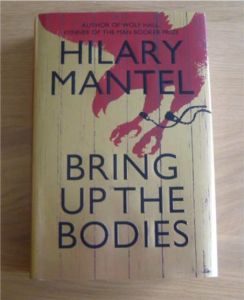
Today I’m eagerly waiting for the follow up to Wolf Hall to be delivered to my letter box: Bring Up the Bodies is published today and I’ve had an email saying it’s on its way to me.

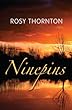
Ninepins by Rosy Thornton

I finished read Rosy Thornton’s book Ninepins a few days ago.  It’s a remarkable book about mothers and daughters, about growing up and relationships. It’s quite difficult to describe – it’s not exactly a thriller, although there is a mystery element to it and the tension  and suspense gradually build throughout the book. And it’s not exactly a romance, although there is a love story in there too. It’s about people, but there is a satisfying plot and beautiful descriptions of the locations – I learnt a lot about the Cambridgeshire Fens.

It rings true to life, with all the anguish and angst of bringing up children as Laura, a divorced single mum struggles to cope as her daughter Beth turns twelve. They live in an old tollhouse, called Ninepins – there used to be a bridge across the lode and the toll was 9d (nine pence), which over time morphed into ‘Ninepins’. To help out with her finances she rents out the self-contained pumphouse, converted from a fen drainage station, to students. Her new lodger is Willow, a 17-year-old student, with a troubled past. She has been in a care home and still needs Vince, her social worker for support. Laura is not sure what influence Willow will have on Beth, who is having difficulties making friends at her new school. When Beth gets into trouble at school, Laura becomes even more anxious and she doesn’t seem able to do right for doing wrong. Then there is Willow’s mother whose appearance on the scene brings about devastation.

This is a darker book than Rosy’s other books that I’ve read and it captures perfectly the precarious relationships between parents and children as they begin to grow up and feel independent. Just how much leeway should Laura give Beth, how much should she intervene in her life, how much should she monitor what Beth is doing are questions that Laura is trying to resolve. Willow’s and Vince’s appearance in their lives bring changes that Laura had just not considered.She knows a little about Willow’s background and what she does know bothers her immensely. It’s the relationships in this book that are the focal point as Laura, Beth and Willow come to terms with their situations. A gripping story that held my interest throughout.

  • Paperback: 320 pages
  • Publisher: Sandstone Press Ltd (16 April 2012)
  • Language English
  • ISBN-10: 1905207859
  • ISBN-13: 978-1905207855
  • Source: Author review copy
  • My Rating: 4.5/5

The Hanging Valley by Peter Robinson: a Book Review

There are 20 books in Peter Robinson’s Inspector Banks series (listed at Fantastic Fiction). I’ve read a few of them, completely out of order, but it doesn’t seem to matter too much as each one stands alone, although I suspect I’d get a better idea of Banks’s personal life if I had read them in order!

The Hanging Valley is the fourth one in the series.

Synopsis (from the back cover):

A faceless corpse is discovered in a tranquil, hidden valley below the village of Swainshead. And when Chief Inspector Alan Banks arrives, he finds that no-one is willing to talk. Banks’s frustration only grows when the identity of the body is revealed. For it seems that his latest case may be connected with an unsolved murder in the same area five years ago. Among the silent suspects are the Collier brothers, the wealthiest and most powerful family in Swainsdale. When they start use their influence to slow down the investigation, Inspector Alan Banks finds himself in a race against time…

My view:

As well as the Collier brothers, there are other suspects, including John Fletcher, a taciturn farmer, Sam Greenock and his wife Katy who own the local Bed and Breakfast guest house. There’s something not quite right about Katy, she’s obviously troubled and hiding something, and she is dominated by Sam. As I read on I thought the killer was first one character, then another and never really worked out who it was until quite near the end. I enjoyed the puzzle.

Detective Chief Inspector Alan Banks had been transferred to Eastvale from London two years earlier and is still getting to know the area. He’d moved from London because of the sheer pressure of the job and the growing confrontation between the police and citizens in the capital had got him down. Crime in Eastvale had been slack until this murder happened. And it’s complicated, the locals close ranks and Banks has to work hard to get information, first of all to discover who the victim was and why he had been killed. The trail leads him abroad to Toronto before Banks discovers the truth.

The Hanging Valley is rich in description, both of the Yorkshire Dales and of Toronto. (Peter Robinson was born in Yorkshire and now lives in Toronto.) The hanging valley sounds a beautiful spot, a small, secluded wooded valley with unusual foliage:

… the ash , alders and sycamores … seemed tinged with russet, orange and earth brown. It seemed … like a valley out of Tolkien’s ‘Lord of the Rings’.

… the valley clearly had a magical quality. It was more luxuriant than the surrounding area, its ferns and shrubs more lush and abundant, as if, Neil thought, God had blessed it with a special grace. (page 5)

All of which makes the discovery of the corpse so shocking, with its flesh literally crawling. So, I enjoyed this book on two levels – the mystery and the writing itself. I did think, though, that it could have been shorter and more concise, and some of the characters were rather indistinguishable which is why I rated it 3/5.

  • Paperback: 324 pages
  • Publisher: Pan; New edition (8 Nov 2002)
  • Language English
  • ISBN-10: 0330491644
  • ISBN-13: 978-0330491648
  • Source: I bought it

The Village by Marghanita Laski: A Book Review


Persephone edition endpapers

The Village was first published in 1952 and chronicles life in an English village immediately after the end of the Second World War. It begins with two women meeting to go on duty at the Red Cross post as they had done throughout the war. They are from different ends of the village, Wendy Trevor from up the hill where  the gentry live and Edith Wilson from Station Road where the working-class live.  Both knew that the breaking down of social barriers had just been one of those things that happened during a war. Mrs Wilson acknowledged that she would miss the camaraderie:

‘There’s a lot of us will miss it’, Edith said. ‘We’ve all of us felt at times, you know, how nice it was, like you and me being able to be together and friendly, just as if we were the same sort, if you know what I mean.’ (page19)

But the war had changed much and the social barriers were rising, but when Wendy’s daughter, Margaret, falls in love with Edith’s son, Roy, the Trevors are horrified and refuse to give their permission for the couple to marry. Margaret does not have the same attitude as her parents:

‘The trouble with you, Miss Margaret, is that you’ve got no sense of class.’ (page 113)

I thought at first that this book was not as good as Laski’s Little Boy Lost, which I loved, but as I read on I realised the simple direct style of writing contained depth and complexity and  by the end I was convinced I was living in the village, amongst these people at the end of the war. It’s not as heart-rending as Little Boy Lost, but it is absorbing reading.

The Village is not only a love story, it’s a novel exploring the issues of class and social mobility, family relationships, parental control and the position of women. Although the Trevors and the Wilsons are the main characters, it’s a novel about the whole community,with a list of all the characters at the beginning of the book, including their station in life.

Included in the mix are the Wetheralls, Ralph and his American wife, Martha. They provide an interesting perspective on the complex British class system, comparing it with the American attitudes to different groups of people. Ralph, a business man, explains to Martha because they’re in ‘trade’, the Trevors who are gentry but hard up, still look down on them – and class is still most important. Martha wants to help Margaret and can’t understand that class doesn’t go by money, until Ralph points out that it was the same in America – ‘Plenty of your old Boston families are nearly as poor as the Trevors, but they still look down their noses at everyone else.’ (page 166)

He goes even further comparing the position of the working-classes in Britain to that of negroes in the United States, not the southern states but in the ‘enlightened North‘:

‘Many’s the time I’ve sat in your mother’s apartment in New York and heard you all talking in a broadminded way about treating the negro properly, but I’ve never come in and found a black man dropped in casually for cocktails, and I wouldn’t expect it, any more that I’d expect to find the Trevors  accepting Roy Wilson as a son-in-law.

Honestly now, you wouldn’t have married a negro, would you? You’d do your best to stop your daughter from marrying a negro. Well, you take my word for it, the Trevors will feel just the same way about Margaret marrying Roy Wilson, if there’s any question of it, which I very much doubt.’ (pages 231-2)

It ‘s certainly a book I’d like to re-read.

  • Paperback: 312 pages
  • Publisher: Persephone Books Ltd; First Edition edition (22 Sep 2004)
  • Language English
  • ISBN-10: 1903155428
  • ISBN-13: 978-1903155424
  • Source: I borrowed the book from a friend, and now want my own copy!
  • My Rating: 5/5

I wrote about the beginning of The Village here.

Agnes Grey by Anne Bronte: a Book Review

Agnes Grey by Anne Bronte, published in 1847, is a deeply moral novel about a young woman, a governess and her experiences working for two families in Victorian England. Agnes is the younger daughter of an impoverished clergyman. Her parents had married against her mother’s family’s wishes and when their fortune was wrecked Agnes determines to help out by working as a governess.

The first family she works for are the Bloomfields. Mrs Bloomfield tells Agnes her children are clever and very apt to learn. In fact they are terrible children, utterly spoilt and cruel. I found their brutality shocking, the more so since Anne was writing from her own experiences. One of the most vivid scenes is where Agnes kills a brood of nestlings to prevent Tom Bloomfield from torturing them.

Agnes is treated like a servant, rather than as a governess. She has no authority over the children and is not allowed to discipline them much as she would like to. Her attempts to improve their wild behaviour by quoting Bible texts and moral instruction have no effect on the children’s behaviour. As Agnes’s mother has told her that people do not like to be told of their children’s faults she kept silent about them and despite her best efforts she failed to make any impression on them:

But either the children were so incorrigible, the parents so unreasonable, or myself so mistaken in my views, or so unable to carry them out, that my best intentions and most strenuous efforts seemed productive of no better result than sport to the children, dissatisfaction to their parents, and torment to myself.

Her second post with the Murrays is little better – her charges are two teenage girls, who are just as spoilt as the younger children, wilful and determined to have their own way and two younger boys who are rough and unruly. Fortunately the boys are soon packed off to school and she only has to cope with sisters.

Both families are portrayed as wealthy, snobbish and totally lacking in any regard for Agnes. The only glimmer of hope comes through her friendship with Edward Weston, but even then Rosalie, the older daughter, is determined to make him fall in love with her. But surely Edward will not be deceived by Rosalie’s scheming ways? Agnes is gentle and self-effacing, never making her feelings known and it seems as though she is destined for a miserable life. Although she loves Edward she is totally unable to give any indication of her feelings towards him. Things seem to get even worse after her father’s death and she has to leave the Murrays – and Edward. However, Snap the dog plays his part in bringing some joy into Agnes’s life.

Agnes Grey vividly portrays the class distinctions of Victorian society, the position of women in that society from both the working and the middle classes through the first-person narrative. Above all it gives a very clear picture of the life of a governess, with all its loneliness, frustrations, insecurities and depressions. The characters, for the most part are well drawn, (the minor characters are one-dimensional) and I liked Agnes’s unspoken thoughts, eg. when told to go to the schoolroom immediately because the young ladies were waiting for her  she thinks, ‘Climax of horror! actually waiting for their governess.!!!’

Reading Agnes Grey has made me keen to re-read Charlotte Bronte’s Jane Eyre, for one thing to compare the two governesses. It’s been years since I read Jane Eyre, and my memory is that it is a much more dramatic novel (certainly it is much longer).

  • Format: Kindle Edition
  • File Size: 449 KB
  • Print Length: 155 pages
  • Page Numbers Source ISBN: 0812967135
  • Publisher: Modern Library (18 Dec 2007)
  • Sold by: Amazon Media EU S.à r.l.
  • Source: My own copy
  • My Rating: 3/5

The Murder on the Links by Agatha Christie: a Book Review

I’m taking part in the Agatha Christie Reading Challenge. I couldn’t wait until I’d got them all in the order she wrote them so I’ve been reading them as I come across them. Some of her earlier books have been hard to find, but on a recent trip to Barter Books in Alnwick I was able to fill in some of my gaps.

I’ve read 34 of her books before finding her third book,The Murder on the Links, originally published in 1923. This is the second book featuring Hercule Poirot.  There have been many editions published since then and my copy is a paperback, published in 1960 by Pan Books.

Agatha Christie had the idea for the book after reading newspaper reports of a murder in France, in which masked men had broken into a house, killed the owner and left his wife bound and gagged. From these facts she then invented her plot, setting the book in the fictional French town of Merlinville ( midway between Boulogne and Calais), at the Villa Genevieve, next to a golf course and overlooking the sea. The owner of the villa, Mr Renauld, a South American millionaire had written to Poirot asking for his help as he feared his life was in danger.

When Poirot and Hastings arrive they are too late to help him as the night before their arrival he was found dead, lying face down in an open grave, stabbed in the back. As they are in France, Inspector Japp does not appear, instead there is a young French detective, M. Giraud, who thinks very little of Poirot’s methods and disagrees with his findings. This is very much a mystery puzzle book, with many clues and several red herrings.

In her Autobiography, Agatha Christie describes how she was writing

… in the Sherlock Holmes tradition – eccentric detective, stooge assistant, with a Lestrange-type Scotland Yard detective, Inspector Japp – and I now added a ‘human foxhound’, Inspector Giraud, of the French police. Giraud despises Poirot as being old and passé. (page 290)

And it was then that she realised that she had made a mistake in starting with Poirot so old. She would have preferred to have abandoned him after her first three or four books and begun again with someone much younger, but she was stuck with him.

It is rather a melodramatic tale, but still enjoyable as Poirot unravels the mystery. An interesting subplot involves a love interest for Hastings, when he mets a young lady calling herself Cinderella. There is a hint at the end of the book that he will marry her and move to South America. Agatha Christie was stuck with Poirot, but she felt she could get rid of Hastings – she was getting rather tired of him. She didn’t write him out completely and he does reappear in later novels, visiting Poirot from his home in Argentina. I like Hastings, who in this book shares rooms with Poirot and is a ‘sort of private secretary to an MP.’

Her Autobiogaphy also reveals that Agatha Christie was not pleased with the jacket cover her publishers had designed as she felt it didn’t reflect the plot. In fact she was ‘really furious and it was agreed that in future she should see the jacket first and approve of it.’

She thought The Murder on the Links was ‘a moderately good example of its kind‘ and I liked it. My rating: 3/5.