WWW Wednesday: 1 April 2020

IMG_1384-0

WWW Wednesday is run by Taking on a World of Words.

The Three Ws are:

What are you currently reading?
What did you recently finish reading?
What do you think you’ll read next?

Currently reading:
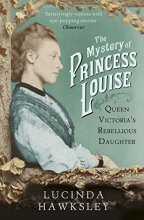
Mystery of Princess LouiseThe Mystery of Princess Louise: Queen Victoria’s Rebellious Daughter by Lucinda Hawkesley. I’m finding this a fascinating biography of Louise, Victoria’s unconventional daughter. She was a sculptor and painter, who mixed with the artists of her day much to her mother’s dislike and was involved in many campaigns for reform in education and health. It’s packed with intrigues, scandals and secrets. I’ve read about two thirds of this book I borrowed from the library.
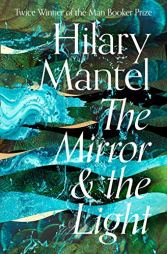
Mirror and LightThe Mirror and the Light by Hilary Mantel, the final book in Hilary Mantel’s Thomas Cromwell trilogy about the boy from Putney who climbed his way up to become Lord Cromwell, Secretary to King Henry VIII. I loved the first two books, Wolf Hall and Bring Up the Bodies, so it was an easy decision to buy the third book in hardback to complete the set. It is heavy, weighing in at 2lbs 13ozs with almost 900 pages and so I’m reading it very slowly. Just like the other two books I think it’s beautifully written, full of colour and detail. Reading it I feel as if I’m there back in 1536.
Fresh water for flowers

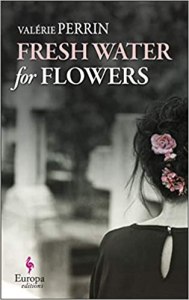
Recently Finished: Fresh Water for Flowers by Valérie Perrin, translated from the French by Hildegarde Serle. This is a complex novel, multi layered and centred on Violette, a cemetery keeper, switching between different people at different times in their lives.  I’ll write more about later on nearer its publication date in the summer.

Reading Next: This is where it gets difficult as there are so many I want to read. But it will probably be The Dutch House by Ann Patchett and  Queen Lucia by E F Benson, a book first published in 1920 for The 1920 Club hosted by Simon at Stuck in a Book and Karen at Kaggsy’s Bookish Ramblings is taking place between 13th and 19th April 2020. The idea is that you read a book published in that year and share your thoughts/review with other participants.

But then it could easily be one of these books I’ve mentioned in recent posts:

What do you think – which one would you read next?
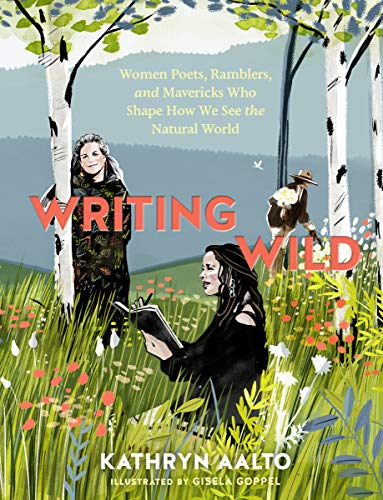
Writing Wild by Kathryn Aalto

Writing Wild

3.5*

‘An exciting, expert, and invaluable group portrait of seminal women writers enriching a genre crucial to our future.’ —Booklist

Blurb:

In Writing Wild, Kathryn Aalto celebrates 25 women, both historical and current, whose influential writing helps deepen our connection to and understanding of the natural world. These inspiring wordsmiths are scholars, spiritual seekers, conservationists, scientists, novelists, and explorers. They defy easy categorization, yet they all share a bold authenticity that makes their work both distinct and universal.

Part travel essay, literary biography, and cultural history, Writing Wild ventures into the landscapes and lives of extraordinary writers and encourages a new generation of women to pick up their pens, head outdoors, and start writing wild.

My thoughts:

Writing Wild: Women Poets, Ramblers and Mavericks Who Shape How We See The Natural World is by Kathryn Aalto and illustrated by Gisela Goppel. Published by Timber Press it will be released in paperback on 1 April, with a Kindle edition to follow on 14 April 2020.

I don’t read a lot of nonfiction, but I do enjoy reading books about nature, so Writing Wild appealed to me. Kathryn Aalto’s reason for writing her book was to highlight what these 25 women writers have written, their historical significance and the barriers, biases and bullying they overcame to write. It covers two hundred years of women’s history through nature writing, including natural history, environmental philosophy, country life, scientific writing, garden arts, memoirs and meditations and does not aim to dismiss men’s contributions. Gisela Goppel’s portraits of each writer head each chapter. Aalto writes an introduction to each writer and includes excerpts of prose, poems and essays with added recommendations for further reading, plus a list of sources and an index.

Predominantly American and British, some of these women writers are familiar to me, such as Dorothy Wordsworth, Vita Sackville West, Nan Shepherd, Rachel Carson, Mary Oliver, Annie Dillard and Helen Macdonald. Others are new to me, but I would like to read several of their works, such as Andrea Wulf’s book The  Brother Gardeners in which  she explores how England became a nation of gardeners. Wulf, a design historian, writes horticultural and historical history through narrative nonfiction, borrowing techniques from fiction to make nonfiction come alive. Elena Passarello’s Animals Strike Curious Poses essay collection, which Aalto describes as written with  laugh-out-loud humour and depth of empathy, also particularly appeals to me.

One of the things I learned reading this book is the name ‘Cli-fi’. I hadn’t come across it before but of course, it is not a new genre. As Aalto points out it goes back at least to Jules Verne’s 1889 The Purchase of the North Pole. Contemporary examples including Oryx and Crake by Margaret Atwood and Barbara Kingsolver’s Flight Behaviour. The writer she chooses to illustrate this genre is Saci Lloyd, an acclaimed writer of cli-fi, whose vivid and action packed books include The Carbon Diaries, about the effects of carbon reduction policies. They are gritty eco-thrillers featuring Laura Brown a 16 year old trying to manage life with a carbon deficit card.

Kathryn Aalto is a writer, designer, historian and lecturer. For the past twenty-five years, her focus has been on places where nature and culture intersect: teaching literature of nature and place, designing gardens, and writing about the natural world. Her work explores historic and horticultural themes with a contemporary twist. She is the author of The Natural World of Winnie-the-Pooh: A Walk Through the Forest that Inspired the Hundred Acre Wood (2015) and Nature and Human Intervention (2011). Her website is kathrynaalto.com.

My thanks to Timber Press for a review copy via NetGalley.

WWW Wednesday: 29 January 2020

IMG_1384-0

WWW Wednesday is run by Taking on a World of Words.

The Three Ws are:

What are you currently reading?
What did you recently finish reading?
What do you think you’ll read next?

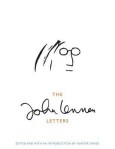
Currently reading: I’m still reading, very slowly, The John Lennon Letters edited by Hunter Davies and The Windsor Story by J Bryan III and Charles V Murphy.

 And I’m also enjoying Hunter Davies’ memoir Happy Old Me: How to Live a Long Life and Really Enjoy It. This is an account of one year in his life after his wife, Margaret Forster died – poignant, moving and very interesting.

Recently Finished: Death Has Deep Roots: a Second World War Mystery by Michael Gilbert. Set in 1950 it’s a mix of courtroom drama, spy novel and an adventure thriller. Victoria Lamartine, a hotel worker, and an ex-French Resistance fighter is on trial for the murder of Major Eric Thoseby, her supposed lover, and alleged father of her dead child. My full review is in this post.

Silence between breathsReading Next: This is a movable feast, as I rarely decide until the time comes.

Yesterday I picked up several books in Barter Books, and am itching to read The Silence Between Breaths by Cath Staincliffe – Passengers boarding the 10.35 train from Manchester Piccadilly to London Euston are bound for work, assignations, reunions, holidays or new starts, with no idea that their journey is about to be brutally curtailed.

I did begin reading it whilst having a cup of coffee in Barter Books and the opening chapters make me want to read more.

Or it could be one of my TBRs – I simply don’t know yet.

Have you read any of these books?  Do any of them tempt you? 

WWW Wednesday: 15 January 2020

IMG_1384-0

WWW Wednesday is run by Taking on a World of Words.

The Three Ws are:

What are you currently reading?
What did you recently finish reading?
What do you think you’ll read next?

Currently I’m reading three books:

Charles Dickens oliver twist etcOliver Twist by Charles Dickens, my Classics Club Spin book. It’s one of those books that I think I know the story from watching TV adaptations, but I have never read it. I’ve discovered that I only ‘know’ the beginning of the book up to the part where Oliver is rescued by Mr Brownlow from Fagin’s clutches, only to be snatched back by Nancy. After that the story is totally new to me.

John Lennon LettersI’m also reading The John Lennon Letters edited by Hunter Davies. It includes a brief biography and using almost three hundred of Lennon’s letters and postcards, to relations, friends, fans, strangers, and lovers follows his life more or less chronologically. It’s a large, heavy hardback book, illustrated with photos and reproductions of the letters etc. This is going to be a long-term read for me.

The Windsor StoryThe third book is one I’ve only just started – I’ve been struck by some of the parallels between Edward VIII’s abdication in 1936 in order to marry Wallis Simpson and the current situation of Prince Harry and Meghan in wanting to step back as senior royals, and I remembered I have The Windsor Story by J Bryan III and Charles V Murphy. It looks remarkably comprehensive and is another book that I think will take me a long time to read.

Lady of the ravensThe last book I finished reading is  The Lady of the Ravens by Joanna Hickson, historical fiction about about the early years of Henry’s reign as seen through the eyes of Joan Vaux, a lady in waiting to Elizabeth of York, whose marriage in 1486 to Henry united the Houses of Lancaster and York after the end of the Wars of the Roses.  I found this a fascinating book and posted my review a few days ago.

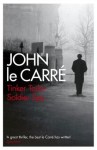
Tinker tailorI have several books lined up to read next including Tinker, Tailor, Soldier, Spy by John Le Carré because over the Christmas period I watched the film starring Gary Oldman as George Smiley, along with Colin FirthTom HardyJohn Hurt and others. I began reading the book years ago and have a bookmark at page 88, but I’ll have to go back to the beginning now.
A killing kindnessBut I’d also like to start A Killing Kindness, the next Dalziel and Pascoe novel, the 6th one in Reginald Hill’s series. It looks good – about Mary Dinwoodie whose body is found choked in a ditch following a night out with her boyfriend, and a mysterious caller phones the local paper with a quotation from Hamlet.

But knowing how long it could be until I start the next book, it could be something completely different!

Have you read any of these books?  Do any of them tempt you? 

Six Degrees of Separation: from Daisy Jones and The Six to Thirteen

I love doing Six Degrees of Separation, a monthly link-up hosted by Kate at Books Are My Favourite and Best. Each month a book is chosen as a starting point and linked to six other books to form a chain. A book doesn’t need to be connected to all the other books on the list, only to the one next to it in the chain.

Daisy Jones

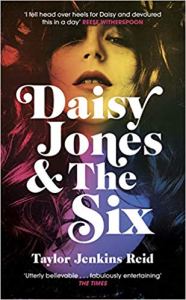
This month the chain begins with Daisy Jones and The Six by Taylor Jenkins Reid,  a novel about the rise and fall of a fictional 70s rock band inspired by Fleetwood Mac.

There are always several ways to go when compiling these Six Degree chains and at first my mind went blank  but looking at the books we got for Christmas I decided that Face It: a Memoir by Debbie Harry was just the right book for my first link, a book about a real rock band. Debbie Harry is the best known face of Blondie; she and the band forged a new sound that brought together the worlds of rock, punk, disco, reggae and hip-hop to create some of the most beloved pop songs of all time.

The Ballad of Jethro Tull: The official illustrated oral history is another book we got for Christmas. It’s Jethro Tull’s story told by Ian Anderson, band members past and present and the people who helped Tull become one of the most successful bands in rock history.

And then I thought my chain needed a change of genre, but sticking with the word ‘ballad’ I thought of Dreamwalker: The Ballad of Sir Benfro: Book 1 by James Oswald, a magical tale of the young dragon, Benfro, inspired by the language and folklore of Wales. It follows the adventures of a young dragon, Sir Benfro, in a land where his kind have been hunted near to extinction by men.

For the next link I turned to crime fiction and to one of James Oswald’s Inspector McLean novels, set in Edinburgh – The Hangman’s Song. It’s a dark, tense novel with elements of the supernatural  and parapsychology thrown in. It’s not a book for the faint-hearted or the squeamish as there are details of some gruesome deaths, murders and beatings that the characters go through. 

James Oswald is a Scottish author and so my last link is to another Scottish author – Chris Brookmyre, who has written The Way of all Flesh, under the pseudonym of Ambrose Parry with his wife, Dr Marisa Haetzman a consultant anaesthetist. It is set in Edinburgh in 1847 as Dr James Young Simpson, a professor of midwifery, discovered the anaesthetic properties of chloroform. It combines fact and fiction most successfully, the social scene, historical and medical facts slotting perfectly into the plot. It was on the Longlist for the 2019 Theakston Old Peculier Crime Novel of the Year.

But the winner was Thirteen by Steve Cavannagh, an Irish author. It’s the fifth book in the Eddie Flynn series of crime thrillers, ‘serving up a delicious twist to the traditional courtroom thriller, where in this instance the real killer is not the one on trial, but a member of the jury!’ I have a copy but haven’t read it yet. And quite by chance I see that it also links back to Daisy Jones and the Six as it has a number in the title.

From a fictional rock band to two real rock bands my chain also links up books of ballads and three crime fiction novels.

Next month (1 February 2020), we’ll begin with Fleishman is in Trouble by Taffy Brodesser-Akner.

Six Degrees of Separation: from Sanditon to The Lambs of London

I love doing Six Degrees of Separation, a monthly link-up hosted by Kate at Books Are My Favourite and Best. Each month a book is chosen as a starting point and linked to six other books to form a chain. A book doesn’t need to be connected to all the other books on the list, only to the one next to it in the chain.

Sanditon

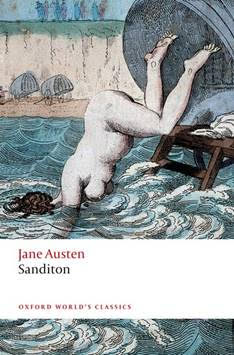
This month the chain begins with December 7, 2019), we’ll begin with Jane Austen’s unfinished manuscript, Sanditon. I read this a few years ago and enjoyed it very much.  It’s the last fiction that Jane Austen wrote, beginning it in January 1817, the year she died. She was ill and the subject of health is one of its themes, but not in a serious or gloomy way. It has a lively, bright and humorous tone, with three of the characters being hypochondriacs, wonderfully satirised by Jane Austen.

My first thought was to link to The Mystery of Edwin Drood, Charles Dickens’ unfinished novel. But I’ve already used it in an earlier Six Degrees post and I don’t like to use the same book twice in these posts, so my first link is to Castle Dor, which Sir Arthur Quiller-Couch had started to write  but had set aside unfinished before his death. His daughter asked Daphne du Maurier to finish it. It retells of the legend of the tragic lovers, Tristan and Isolde, transplanted in time and place to the early 1840s in Cornwall. 

The Last Enchantment by Mary Stewart also retells a legend, that of King Arthur and Merlin. It’s the third book of the Arthurian Saga, a book of myth and legend and about the conflict between good and evil.

My third link is King Arthur in King Arthur’s Bones by the Medieval Murderers, a group of five authors, all members of the Crime Writers’ Association. The book consists of five stories with a prologue and an epilogue tracing the mystery of Arthur’s remains. The legend is that King Arthur is not dead, but sleeping with his knights ready to return to defend his country in a time of great danger. One of the stories is set in the 17th century involving William Shakespeare’s brother Edmund who discovered a long thigh bone and a murder in the Tower of London in one of the compartments of the Lion Tower where the king kept lions and tigers. 

Another of Shakespeare’s brothers, Richard, appears in Fools and Mortals by Bernard Cornwell. It’s 1595 and the players are rehearsing a new play, A Midsummer Night’s Dream. Richard is longing to play a male role, but so far has only been given female roles. There is little brotherly love between the brothers and Richard is tempted to leave the Lord Chamberlain’s Men when Langley, the producer at the Swan in Southwark offers him a job, providing he will steal two of William’s new plays.

This brings me to Peter Ackroyd’s Biography of Shakespeare.  It is full of detail about the theatrical world, how the actors worked, about their patrons and managers, how Shakespeare interacted with other writers, and how his work was received by the public and the monarchy.

And so to my final link, another book by Peter Ackroyd, The Lambs of London, historical fiction based loosely on the lives of Mary and Charles Lamb. It also is a link to Shakespeare as Mary buys  a book from William Ireland, an antiquarian, a book that it is said once belonged to Shakespeare.

My chain is linked by unfinished books, books about legends, Tristan and Isolde and King Arthur, about Shakespeare and his brothers and books by Peter Ackroyd. It includes both crime and historical fiction and a biography.

Next month ( 4 January 2020), we’ll begin with Daisy Jones and The Six by Taylor Jenkins Reid, a book I’ve never heard of before.