Sisters of Sinai by Janet Soskice

Sisters of Sinai

The full title of this book is Sisters of Sinai: How Two Lady Adventurers Found the Hidden Gospels. This is biography so well written that it almost reads like a novel. In fact, if this was a novel I would think it was a most unlikely story of twin sisters in the latter half of the nineteenth century, travelling to St Catherine’s Monastery at Mount Sinai where they discover one of the earliest copies of the Gospels written in ancient Syriac.

Janet Soskice has written a compelling account of two Scottish sisters – Agnes and Margaret Smith born in 1843 in Irvine, a town south-west of Glasgow. Their mother died two weeks after they were born and they were brought up by their father, John Smith. He was unusual in that he gave his daughters an unconventional education for that period. He approved of independence of mind and foreign travel. The girls had an aptitude for languages and mastered French, German, Spanish and Italian whilst they were still quite young – helped by visits to each country. Their taste for learning, travels and adventure was set for life with long hours of study and plenty of exercise. Add to this intensely-held Presbyterian beliefs and Bible study.

John Smith inherited a huge sum of money (today’s equivalent would be around £7 million) from a relative. He died when the twins were 23 leaving his fortune to them (which had built up considerably by then); they were very rich indeed. They decided to have a trip down the Nile. And that was just the beginning; their lives were transformed.

They learnt Greek, Arabic, Hebrew and Syriac and they returned to Egypt and Sinai many times, befriending the monks of St Catherine, despite their religious differences, and getting embroiled in disputes with Cambridge academics who were initially very reluctant to accept that these two middle-aged (by then) women with no university qualifications (women were not permitted to receive degrees from the university at that time), could possibly have found anything of value or interest to them.

What they discovered in a ‘dimly lit little room  below the prior’s quarters’ in the monastery was a dirty volume, its leaves nearly all stuck together, written in Syriac. It was a collection of lives of women saints, but written underneath that was something else that was clearly an earlier text – of the Gospels. This was a palimpsest – the earliest writing having been scraped off and overwritten at a later date, the old ink becoming visible at a later date through the effects of the atmosphere. This eventually proved that the Gospels had been written much earlier than had previously been thought, moving the date back to the late second century.

Not only is that remarkable in itself, but it is astonishing to me that these two middle-aged women travelled to Egypt, Sinai, Jerusalem and beyond at the latter half of the nineteenth century across the desert on camel or walking miles on foot. Their courage and resolve overcame all the difficulties they encountered, coping with physical discomfort and  dishonest dragomen abroad and the hostility and scepticism at home.

I would never have known of this enthralling book if it hadn’t been for Cath’s review of it on Read-Warbler. I was intrigued and looked for it in my library straight away and was delighted to find that there was a copy in another branch.  Biographies and historical books are probably my most favourite of non-fiction books and accounts of  the Bible and how it came to be compiled have long been of interest to me, but I hadn’t come across these two sisters before. Janet Soskine has thoroughly researched her subject and the book is complemented by a ‘select’ bibliography that runs to nearly 5 pages and an extensive index.

This is an excellent non-fiction book, just right for Peggy Ann’s Read Scotland 2014 Challenge.

First Chapter: Shakespeare the Biography by Peter Ackroyd

First chapterEvery Tuesday Diane at Bibliophile by the Sea hosts First Chapter First Paragraph Tuesday Intros, where you can share the first paragraph or (a few) of a book you are reading or thinking about reading soon.

In my last post I mentioned Peter Ackroyd’s biography of William Shakespeare when deciding which book to read next. As soon as I began the first chapter I knew that this is the next non fiction book I’ll be reading.
The first paragraph is:

William Shakespeare is popularly supposed to have been born on 23 April 1564, or St George’s Day. The date may in fact have been 21 April or 22 April, but the coincidence of the national festival is at least appropriate.

But it is the second paragraph that caught my attention, after all Shakespeare’s birthday or supposed birthday was not a surprise to me. The second paragraph, however, gives me information I hadn’t known before:

When he emerged from the womb into the world of time, with the assistance of a midwife, an infant of the sixteenth century was washed and then ‘swaddled’ by being wrapped tightly in soft cloth. Then he was carried downstairs in order to be presented to the father. After this ritual greeting, he was taken back to the birth-chamber, still warm and dark where he was lain beside the mother. She was meant to ‘draw to her all the diseases from the child’, before her infant was put in a cradle. A small portion of butter and honey was usually placed in the baby’s mouth. It was the custom in Warwickshire to give the suckling child hare’s brains reduced to jelly. ( page 3)

Ackroyd is not of course saying that this is what happened when Shakespeare was born, merely that this was the ritual at the time and he refers to David Cressy’s book, Birth, Marriage, and Death: Ritual, Religion, and the Life Cycle in Tudor and Stuart England as the source of his information. But it is fascinating, nonetheless to think of the infant William wrapped in swaddling clothes and sucking hare’s brain jelly! Butter and honey sounds far more delectable. And how different from birth today.

Sunday Selection: Choosing the next book to read

Yesterday I finished reading both Instructions for a Heatwave by Maggie O’Farrell and Julius by Daphne Du Maurier, leaving me with no books on the go. This morning I started to read The Midwich Cuckoos by John Wyndham, but I like to read more than one book at a time of different genres so that I don’t get them mixed up in my mind, preferably with one non-fiction book.

I think I’ll read a biography or an autobiography.

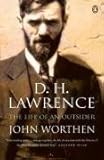
There was a programme on TV last night about D H Lawrence, a Culture Show Special, which reminded me that I haven’t read his biography yet which I bought a few years ago when we visited the house in Eastwood where he was born. It’s D H Lawrence: the Life of an Outsider by John Worthen who was one of the contributors to the programme. I got the book off the shelf and immediately saw why I haven’t read it yet – it’s in such a small font, with quotations in an even smaller font – not good for my eyes. It’s a pity I don’t have it on Kindle but maybe I’ll give it a go, definitely a book to read in daylight. And as I have just one of D H Lawrence’s books that I haven’t read yet – St Mawr – I may read that. It’s a novella, so it won’t take me long.
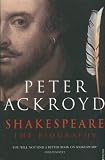
Anther book I’ve been meaning to read before now is Peter Ackroyd’s Shakespeare:the Biography. The Classics Club is running a new project next year Twelve Months of Classic Literature with different topics for each month and January’s topic is William Shakespeare.  I think Ackroyd’s book would be a good choice for this project. It’s described on the book jacket as
 … neither an academic description, nor a didactic analysis. Written with intuition and imagination unique to Peter Ackroyd, a book by a writer about a writer, brilliant and straightforward, it vividly presents the reader with the circumstances of Shakespeare’s life and art.

It sounds just right. I think I’ll begin with this book.

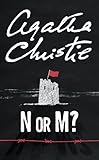
That leaves me with choosing a crime fiction book and I have quite a lot of those to choose from. I haven’t read an Agatha Christie this month so I’m going to choose one of hers or some of her short stories (I have several collections still unread). I think I’ll read the oldest I have, which is N or M? a Tommy and Tuppence war time mystery, first published in 1941. I have a feeling this will be better than the last Tommy and Tuppence book I read, Postern of Fate, which was Agatha Christie’s last novel and not one of her best.

Agatha Christie at Home by Hilary Macaskill

One of the things that struck me when I was reading Agatha Christie’s An Autobiography was her love of houses. It stemmed from her childhood dolls’ house. She enjoyed buying all the things to put in it – not just furniture, but all the household implements such as brushes and dustpans, and food, cutlery and glasses. She also liked playing at moving house, using a cardboard box as a furniture van.

Writing about her life with her husband, Max Mallowan she wrote:

We were always choosing sites for houses. This was mainly owing to me, houses having always been my passion – there was indeed a moment in my life, not long before the outbreak of the second war, when I was the proud owner of eight houses. (page 440 of An Autobiography)

Agatha Christie at Home Macaskill

So when I saw that Hilary Macaskill had written this book – Agatha Christie at Home – I knew immediately that I wanted to read it. It’s a beautiful book, with many photographs – more than 100 colour photos – illustrating Agatha’s life and homes. I took my time reading it, first of all looking at the photos, before reading the text.

There is a Foreword by Mathew Prichard, her grandson, explaining the love his grandmother had for Devon, in particular for Torquay, where she was born and Greenway, the house that had a special place in her heart.  He expressed his hope that this book will ‘transmit some of the magic that my whole family felt when they were there.’  And this book does indeed do that!

There is an overview of Agatha Christie’s life followed by descriptions of the houses and countryside she loved – from Ashfield in Torquay her first home, where she was born and brought up to Greenway, a Georgian mansion above the River Dart, now owned by the National Trust.

There are no spoilers in this book but Hilary Macaskill has identified the settings Agatha Christie used in her books and how some of the place names have been altered, but are still recognizable from her descriptions. I hadn’t realised that the names of some of her characters are taken from the names of streets or villages, such as Luscombe Road in Paignton which she adopted for Colonel Luscombe in At Bertram’s Hotel.

It’s a useful book too if you want to find out more about visiting Devon with tourist information and website addresses. The final chapter is about Agatha Christie’s legacy and her continuing popularity both nationally and internationally. As well as being able to visit Greenway, which has been restored to the way it was when Agatha lived there, there are events to celebrate her life and works, such as the annual Agatha Christie week that takes place in Torquay each September around her birthday.

I haven’t been to Greenway, although I have stayed in Torquay, but that was before Greenway was open to the public. It is enormously popular – on the first day it was opened over 400 visitors came to see the house. But Agatha Christie was a very private person and I can’t imagine what she would have thought about that. After all she had refused permission for an ‘authorized life’ to be written, stating:

‘I write books to be sold and I hope people will enjoy them but I think people should be interested in books and not their authors.’ (page 129)

Knowing that I think I’d feel I was invading her privacy if I did go to Greenway!

Sunday Selection: Sisters

One of my aims this year is to reduce my massive backlog of unread books, hence the reason for joining the Mount TBR Reading Challenge.  I’m not doing too badly as so far I’ve read 19, but it’s still only a drop in the ocean. In June I wrote about some of the books I’ve owned for more than a year and today I’m looking at some more the books on the list – in some cases I’ve had these books for several years! It’s about time I read at least one of these sometime soon. I don’t like to plan too far ahead what I’m going to read but I like to have some titles in mind.

When I looked through my books I realised that I was picking out books about SISTERS:

First up for consideration are two non fiction books (the blurbs are extracts from Amazon/Goodreads):

The Sisters Who Would Be Queen: The tragedy of Mary, Katherine and Lady Jane Grey by Leanda de Lisle – this is the story of the tumultuous lives of Lady Jane Grey, known as the ‘Nine-Day Queen’ and her sisters. I’ve had this book for 3 years. I was full of enthusiasm when I first bought it because I’d been reading novels about the Tudor period and thought I’d balance them with non fiction.

Lady Jane Grey is an iconic figure in English history. Misremembered as the ‘Nine Days Queen’, she has been mythologized as a child-woman destroyed on the altar of political expediency. Exploding the many myths of Lady Jane’s life and casting fresh light onto Elizabeth’s reign, acclaimed historian Leanda de Lisle brings the tumultuous world of the Grey sisters to life, at a time when a royal marriage could gain you a kingdom or cost you everything.

The Mitfords: Letters Between Six Sisters by Charlotte Mosley – a selection of unpublished letters between the Mitford sisters – Nancy, Pamela, Diana, Unity, Jessica and Deborah. I’ve had this book for 5 years! I think two of the reasons I’ve not read it before now is that it is so long – over 800 pages and it’s in a very small font.

Carefree, revelatory and intimate, this selection of unpublished letters between the six legendary Mitford sisters, compiled by Diana Mitford’s daughter-in-law, is alive with wit, passion and heartbreak. The letters chronicle the social quirks and political upheavals of the twentieth century but also chart the stormy, enduring relationships between the uniquely gifted ‘and collectively notorious Mitford sisters’. 

And then some novels featuring sisters:

Bunner Sisters by Edith Wharton. I’ve not had this one for that long – just since last November. I down loaded it on my Kindle because it’s a free book and I thought maybe I should try another book by Edith Wharton, having failed to finish The House of Mirth. At the time I was not in the mood for it.
In the days when New York’s traffic moved at the pace of the drooping horse-car, when society applauded Christine Nilsson at the Academy of Music and basked in the sunsets of the Hudson River School on the walls of the National Academy of Design, an inconspicuous shop with a single show-window was intimately and favourably known to the feminine population of the quarter bordering on Stuyvesant Square. It was a very small shop, in a shabby basement, in a side-street already doomed to decline; its fame was so purely local that the customers on whom its existence depended were almost congenitally aware of the exact range of “goods” to be found at Bunner Sisters’.

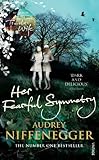
Her Fearful Symmetry by Audrey Niffeneger – I’m not sure how long I’ve had this book, but it’s about three years. I’m not sure I’ll like it as I wasn’t keen on The Time Traveler’s Wife, but it was the time travelling aspect that irritated me with that book – the constant switching backwards and forwards in time. This one looks a bit different.

Set in and around Highgate Cemetery in London. Julia and Valentina are semi-normal American teenagers with an abnormally intense attachment to one another. The girls move to their aunt’s flat, which borders Highgate Cemetery in London and as the girls become embroiled in the fraying lives of their aunt’s neighbors, they also discover that much is still alive in Highgate, including–perhaps–their aunt, who can’t seem to leave her old apartment and life behind.

Rise and Shine by Anna Quindlen, a book I’ve had for six years! I bought it because I’d enjoyed Blessings a satisfying but sad novel about an abandoned baby. 

A novel about two sisters, the true meaning of success, and the qualities in life that matter most. It’s an otherwise ordinary Monday when Meghan Fitzmaurice’s perfect life hits a wall. A household name as the host of Rise and Shine, the country’s highest-rated morning talk show, Meghan cuts to a commercial break but not before she mutters two forbidden words into her open mike. 

In an instant, it’s the end of an era, not only for Meghan, who is unaccustomed to dealing with adversity, but also for her younger sister, Bridget, a social worker in the Bronx who has always lived in Meghan’s long shadow.

I’ve nearly finished reading Third Girl by Agatha Christie, also one of my to-be-read books, so now all I have to do is decide which book to read next. At the moment I’m leaning towards Her Fearful Symmetry, despite my misgivings about The Time Traveler’s Wife.

Agatha Christie: An English Mystery by Laura Thompson

It took me weeks to read Laura Thompson’s book Agatha Christie: An English Mystery. It has taken me several days to write and re-write this post because I’ve found it difficult to put down my thoughts about it without going into too much detail (and this is still a long post). My overall impression of the book is that I felt as though I was intruding into Agatha Christie’s private life that she had not wanted to be made known. I also think that Laura Thompson had found it difficult to separate the woman from her writing, because throughout the book facts are interspersed with suppositions drawn from Agatha Christie’s novels and in particular from Unfinished Portrait, a novel Agatha wrote under the pseudonym, Mary Westmacott.

Agatha Christie: An English Mystery is described as a ‘perceptive and stylish biography‘ on the jacket sleeve, but it is not just a biography; it is also a study of Agatha Christie’s novels, drawing conclusions from her writing about her thoughts, feelings and emotions and a fictionalised version of Agatha’s disappearance in 1926. Laura Thompson’s sources are unpublished letters, papers and notebooks.

First of all, concerning the study of the novels I was dismayed as I was reading this book at the amount of information she reveals about the crime fiction novels, including giving away who the murderers are in a number of cases. Charles Osborne’s book The Life and Crimes of Agatha Christie is much better, outlining the books, not just her crime novels but also her non-fiction, stories for children, poetry and plays in chronological order and nowhere does he reveal the identity of any of the murderers.

Then the fictionalised version of Agatha’s disappearance is in a chapter called ‘The Quarry‘, which begins ‘Time for a new story‘, words which did not immediately alert me that Laura Thompson was no longer writing strictly from the sources at her disposal but also from her imagination, putting words into Agatha Christie’s mouth that she could not have known, and describing her reactions to the people she met and the newspaper reports of her disappearance. Later in this chapter she wrote:

All biography is story-telling. No life is a code to be deciphered: there will always be gaps and inconsistencies, and it is stories that make the missing connections. Omniscience is for Hercule Poirot. Real life knows less; it has the beauty of mystery; and this, despite the books she wrote, was something that Agatha understood very well. She must have known she had created a puzzle of a different order, with all the geometric complexity of ‘Roger Ackroyd’ – and how to work it out? Turn it this way? That way? – and yet the twist in the tale: it was true, and therefore it could never be solved. It was perfect in fact. The perfect metaphor for human mystery. What could be more impenetrable than the woman who moved through Harrogate like a smiling ghost, reading newspaper reports about her own vanished self? (page 219)

I just wish she had not gone so far down the story-telling line in this book and had left this episode of Agatha Christie’s life as an impenetrable mystery, or at least had made it clear straight away when she was writing imaginatively. I have absolutely no objections to fictionalised versions of a life (for example I really liked Justine Picardie’s book Daphne: a novel, which merges fact and fiction) but I do think it should be obvious that it is fictionalised. Nor do I object to different interpretations of

Laura Thompson quotes from Unfinished Portrait, using this as evidence of Agatha’s thoughts, beliefs, and emotions. In Osborne’s book he also states that Unfinished Portrait, which was published in 1934, is based on events in Agatha’s life:

The story of Celia is remarkably similar to the story of Agatha as readers were eventually to be offered it in ‘An Autobiography’ more than forty years later. Several incidents are common to ‘An Autobiography’  and ‘Unfinished Portrait’, and the novel is quite clearly a fictionalised, more detailed, and emotionally more forthcoming version of the first third of the biography. The portraits of Celia’s mother and her grandmother are really of young Agatha Miller’s mother and the grandmother with who she stayed in Ealing. The men in Celia’s life are the men in Agatha’s life, and Dermot, whom Celia marries, is Archie Christie. (page 105)

but he also quotes from Max Mallowan’s writings about the book, pointing out it is a blend of fact and fiction:

The book is not one of her best because, exceptionally, it is a blend of real people and events with imagination. Only the initiated can know how much actual history is contained therein, but in Celia we have more nearly than anywhere else a portrait of Agatha. (page 106 of ‘The Life and Crimes of Agatha Christie’)

It is evident that Agatha Christie wrote about things she knew – the use of poisons from her work in a pharmacy during the First World War and her journey on the Orient Express are just two examples. Laura Thompson later in the book acknowledges that it is impossible to know what Agatha really thought – this is in the chapter called ‘The Second Husband‘, (page 298) writing about Agatha’s reaction to the Woolleys’ interference with her honeymoon with Max Mallowan. And she acknowledges that it would not have occurred to Agatha Christie that conclusions about her character would be drawn from her remarks in the novels about Jews, ‘blacks’ and servants, so I think it is difficult to decide what inferences can be drawn about Agatha from her fiction!

The last sections of Thompson’s book deal in detail with Agatha Christie’s tax problems and there is a rather ‘gossipy’ section about whether or not Max was having affairs. Overall, I think that the book as a biography is unbalanced, concentrating on the events surrounding Agatha’s disappearance and there is much speculation and supposition. I prefer Agatha’s own version of her life: An Autobiography, in which she merely referred to the events of 1926 thus:

The next year of my life is one I hate recalling. As so often in life, when one thing goes wrong, everything goes wrong. (page 356)

Finally, if biography is ‘story-telling’, about making connections to fill in the missing gaps with stories, then I’m not sure I want to read it and there have been several times when reading this book that I’ve thought about abandoning it. I’m uncomfortable with the feelings it can provoke – disliking gossip, distrusting witnesses who may have a private agenda, and squeamishness about reading private correspondence. I felt all of this whilst reading this book.

I went back to a book I read a few years ago – Hermione Lee’s book Body Parts: Essays on Life-Writing.This is about writing biography and the relationship of biography to fiction and history. Lee writes that biographies must give a ‘quasi-fictional, story-like shape to their material (or no none will read them)’, but against this there is the ‘responsibility for likeness and the need for accuracy’.Gaps and silences give rise to interpretations ‘through a process of conjecture, invention, intuition and manipulation of the evidence.’  Biography may seem as if it is factual because it is constructed from sources such as letters, diaries and other people’s accounts, etc but it is inevitably an interpretation and quasi-fictional. I have to remember that – it’s a reading between the lines! And as Lee says:

Whether we think of biography as more like history or more like fiction, what we want is a vivid sense of the person.

What makes biography so curious and endlessly absorbing is that through all the documents and letters, the context and the witnesses, the conflicting opinions and the evidence of work, we keep catching sight of a real body, a physical life: the young Dickens coming quickly out of a room, sprightly, long-haired, bright-eyed, dandyish, in crimson velvet waistcoat or tartan trousers …

As I read Laura Thompson’s book I did catch glimpses of Agatha Christie, but they were rather swamped by inferences drawn from her books, by the fictionalised version of her disappearance and by the descriptions of her tax problems towards the end of her life. I felt closer to the real Agatha Christie whilst reading her Autobiography. As well as being a record of her life as she remembered it and wanted to relate it, it’s also full of her thoughts on life and writing and in particular about her love of life and the joy of being alive.

But I will carry on reading biographies!