One Life: My Mother’s Story by Kate Grenville

One Life: My Mother’s Story

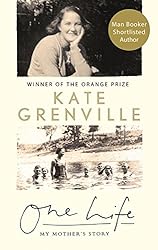
Australian author, Kate Grenville has written a beautiful biography of her mother Nance Russell. A book that casts light not only on Nance’s life but also on life in Australia for most of the 20th century. Nance was born in 1912 and died in 2002, so she lived through two World Wars, an economic depression and a period of great social change. Nance wasn’t famous, the daughter of a rural working-class couple who became pub-keepers, but she was a remarkable woman.

Kate’s mother had wanted to write her own story and had left fragments of stories about her ancestors, stories her mother had told her, about her childhood, but most about her adult life up to her mid-forties. (Kate Grenville has used some of the stories of her ancestors in her own novels – such as The Secret River, a wonderful historical novel).

So this biography reads like a novel, but is based on Nance Russell’s memories, making it much more than a factual account of a person’s life. It’s is a vivid portrait of a real woman, a woman of great strength and determination, who had had a difficult childhood, who persevered, went to University, became a pharmacist, opened her own pharmacy, brought up her children, and helped build the family home. She faced sex discrimination and had to sell her pharmacy in order to look after her children at home.

Nance had wanted to be a teacher, but when she said this to her mother she ‘exploded. Over her dead body Nance was going to be a teacher!‘  But her parents thought that pharmacy was ‘good for a girl‘. It was 40  years later, after her own children were grown up, that Nance took an arts degree, then a teaching diploma and a diploma in teaching English as a foreign language. ‘She taught French in schools, taught English to newly arrived migrant children, and ran her own business teaching English to the wives of Japanese business men.

My bare account of Nance’s life doesn’t do justice to this book, in which Kate Grenville brings to life both the good times and the bad times, writing about her mother’s heartache, worries, joys and sorrows, of the hard times during the economic depression, all of it as a whole making a rich and fulfilled life. Very near to the end of the book Kate Grenville writes:

One of her last trips [to Europe] was to Florence, where she stood in front of the frescoes that Dante had seen. A line came into her mind from somewhere in all her reading: Suffering pierces the shield of habit. It was a thought that made sense of the unhappiness she’d known, and also the happiness. She knew that ultimately it didn’t matter what happened to you. In the light of eternity, in the light of all those dead writers in whose work she’d recognised the great truths, only one thing mattered. What other people did was up to them. Your job was to live – as richly and honestly as you could – your one life. (page 246)

Reading Challenges: Non Fiction Reading Challenge 2015 and What’s in a Name? 2015 in the category of a book with a familial relation in the title.
The Golden Age of Murder by Martin Edwards

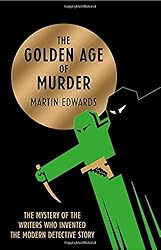
Although I read a lot of crime fiction my knowledge of the authors and their books written during the ‘Golden Age’ so far has been limited to Agatha Christie, Dorothy L Sayers, Margery Allingham, and Michael Innes so when I saw that Martin Edwards had written The Golden Age of Murder: The Mystery of the Writers Who Invented the Modern Detective Story I thought it would be the ideal book to find out more. And I was absolutely right and the works of a whole host of authors has been opened up to me.

This is the story of the writers who formed the Detection Club between the two World Wars. Edwards sets the authors and their works in context – that period when Britain was recovering from the horrors of the First World War, living through an age of austerity as unemployment grew, the cost of living soared leading to the General Strike whilst the rich partied and saw the beginnings of the end of the British Empire. But the writers and the works although well grounded in their own time and culture have a lasting appeal and influence on current story telling and film and television.

The Club grew out of the dinners Anthony Berkeley and his wife Peggy hosted at their home in the late 1920s, attended by people including Agatha Christie, Dorothy L Sayers, Douglas and Margaret Cole, Ronald Knox, Henry Wade, H C Bailey and John Rhode. Eventually the Club was formed, with Rules and a Constitution and a Committee. The members benefited in various ways, meeting fellow detective novelists, discussing ideas, supporting each other and even working together on collaborative writing projects – such as The Floating Admiral, in which a dozen writers each wrote one chapter. The main aim of the Club was to encourage and maintain a high standard of work in writing detective novels.

I was fascinated by the number of real crimes that influenced the writers, both current at the time and crimes from the past. Their interest as they discussed these cases, such as Dr Crippen’s poisoning of his wife, in turn inspired them not only to write but also to play the detective themselves. Indeed, Edwards shows that the image of the Golden Age as ‘cosy’ murder mysteries is false:

Their novels are often sneered at as ‘cosy’, and the claim that their characters were made from cardboard has become a lazy critical cliché. The very idea that detective fiction between the wars represented a ‘Golden Age’ seems like a misty-eyed nostalgia of an aged romantic hankering after a past that never existed.

The best detective novels of the Thirties

were exhilarating, innovative and unforgettable. They explored miscarriages of justice, forensic pathology and serial killings long before these topics became fashionable (and before the term’serial killer’ was invented). …

The climax of one of Berkeley’s novels was so shocking that when Alfred Hitchcock came to film it, even the legendary master of suspense, the man who would direct Psycho, lost his nerve. He substituted a final scene that was a feeble cop-out in comparison to Berkeley’s dark and horrific vision. (page 9)

There is no way I can do justice to this book in a short post; it is simply a tour de force, comprehensive, crammed full of fascinating information about the period and the authors.

Martin Edwards’ love of Golden Age fiction shines throughout the book, (skilfully writing about books without giving away any spoilers) and has spurred me on to read more books from this period.

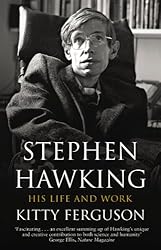
Stephen Hawking: His Life and Work by Kitty Ferguson

Blurb:

Stephen Hawking is one of the most remarkable figures of our time, a Cambridge genius who has earned international celebrity as a brilliant theoretical physicist and become an inspiration and revelation to those who have witnessed his courageous triumph over disability. This is Hawking’s life story by Kitty Ferguson, who has had special help from Hawking himself and his close associates and who has a gift for translating the language of theoretical physics for non-scientists.

Twenty years ago, Kitty Ferguson’s Stephen Hawking: Quest for a Theory of Everything became a Sunday Times bestseller and took the world by storm. She now returns to the subject to transform that short book into a hugely expanded, carefully researched, up-to-the-minute biography.

Recently I watched The Theory of Everything, with Eddie Redmayne playing the part of Stephen Hawking. I think it’s a brilliant film and it made me want to know more about Stephen Hawking. Stephen Hawking: His Life and Work by Kitty Ferguson, subtitled The Story and Science of One of the Most Extraordinary, Celebrated and Courageous Figures of Our Time, has certainly expanded my knowledge, even if some of the science is beyond me.

At first I read the scientific explanations carefully and felt I understood them until about half way into the book, when I struggled and ended up skim reading passages. I could cope on an elementary level with quantum mechanics, the uncertainty principle is not new to me, nor the theory of black holes, and singularity. I learnt about the ‘event horizon’, which is the ‘radius-of-no-return where velocity becomes greater than the speed of light’, and about Hawking Radiation, the radiation produced by a black hole. But when I got up to ‘brane’ theory and p-branes, I was lost – it’s too mathematical for my pea-brain! But I still think I learned a lot. It helps that there is not only an index, but also a glossary that explains many of the scientific terms (not p-branes, unfortunately).

The book moves between biography and Hawking’s work, painting a picture of a warm, likeable, humorous, and courageous man with an exuberance for life. There’s a lot about his health, his career, his trips abroad and his relationships with colleagues. But not much about his marriages or divorces; I expect that was Hawking’s preference. I hadn’t known that he liked Marilyn Monroe, having a life-size picture of her on the door of his office, or that he has co-written children’s books with his daughter Lucy. They look very good!

Details from Fantastic Fiction:
1. George’s Secret Key to the Universe (2007)
2. George’s Cosmic Treasure Hunt (2009)
3. George and the Big Bang (2011)
4. George and the Unbreakable Code (2014)
5. George and the Blue Planets (2016)


I was fascinated, as I was when watching the film, with how he lives with Amyotrophic Lateral Sclerosis (ALS) a form of motor neurone disease and the remarkable fact that he has lived so long with this condition and yet can say, ‘ Although I cannot move, and I have to speak through a computer, in my mind I am free.‘ (page 434)

Kitty Ferguson writes:

Hawking’s life and his science continue to be full of paradoxes. Things are often not what they seem. Pieces that fit together refuse to do so. Beginnings may be endings; cruel circumstances can lead to happiness, although fame and success may not; two brilliant and highly successful scientific theories taken together yield nonsense; empty space isn’t empty; black holes aren’t black; the effort to unite everything in a simple explanation reveals, instead a fragmented picture; and a man whose appearance inspires shock and pity takes us joyfully to where the boundaries of time and space ought to be – and are not. (page 17)

  • Paperback: 528 pages
  • Publisher: Bantam (5 July 2012)
  • Language: English
  • ISBN-10: 0857500740
  • ISBN-13: 978-0857500748
  • Source: library book

I have an e-book of Jane Hawking’s book, Travelling to Infinity; My Life with Stephen, which I’ll be reading sometime soon.

Stacking the Shelves

STSmall

Stacking The Shelves is all about sharing the books you are adding to your shelves. This means you can include ‘real’ and ‘virtual’ books (ie physical and ebooks) you’ve bought, books you’ve borrowed from friends or the library, review books, and gifts.

This is my first entry in Stacking the Shelves. These are last week’s new arrivals:

In the heart of the sea

First ‘real’ books. It was Mother’s Day last Sunday and my son bought me this book, In the Heart of the Sea: the Epic True Story that Inspired Moby Dick by Nathaniel Philbrick – wonderful!

From the back cover:

The sinking of the Nantucket whaleship Essex by an enraged spermwhale far out in the Pacific in November 1820 set in train one of the most dramatic sea stories of all time. Accounts of the unprecedented whale attack inspired Herman Melville’s mighty novel Moby Dick, but In the Heart of the Sea goes beyond these events to describe what happened when the twenty mixed-race crewmen took to three small boats and what, three months later, the whaleship Dauphin, cruising off the coast of South America, discovered when it spotted a tiny boat sailing erratically across an open ocean.

The other books in the photo above are library books:

  • Collins Artist’s Little Book of Inspiration by Hazel Soan – a lovely little book looking at the basics elements of a painting using watercolours, oils and acrylics, with demonstrations and projects to try. I like just looking at the paintings!
  • The Reckoning by Jane Casey, the second in her Maeve Kerrigan series. I reserved this because I’d enjoyed the first one, The Burning and wanted to read more. This one begins with the murders of two paedophiles.
  • Conan Doyle: the Man who Created Sherlock Holmes by Andrew Lycett. This book was on a display stand and even though it’s a huge, heavy book I fancied reading it. It was probably on display following the  recent TV drama Arthur and George, which I enjoyed. I read Julian Barnes’ book of the same name some years ago, which pre-dates this biography.

When Lovereading offered a review copy of Dacre’s War by Rosemary Goring I didn’t hesitate because I’d loved Rosemary Goring’s earlier novel, After Flodden.

Dacres War

Dacre’s War is set 10 years after the battle of Flodden in the Scottish and English borders, a story of ‘personal and political vengeance’ as Adam Crozier sets out to take revenge on Lord Thomas Dacre, who had ordered the death of his father. It’s due to be published on 14 May 2015.

Lastly, the latest ebook I’ve downloaded is today’s Kindle Daily Deal, Last Man in Tower by Aravind Adiga. A. N. Wilson ‘was absolutely mesmerized by this novel’ and thinks ‘that Aravind Adiga is already, with this, his second book, the most exciting novelist writing in English today.’ 

Last Man in Tower

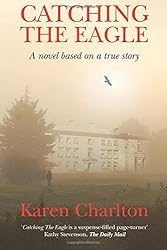
Catching the Eagle by Karen Charlton

I wanted to read a novel by a local author so I checked the library website for North East writers, where I found Catching the Eagle by Karen Charlton.
Summary from the book cover:

Easter Monday, 1809: Kirkley Hall manor house is mysteriously burgled. When suspicion falls on Jamie Charlton, he and his family face a desperate battle to save him from the gallows.

When 1,157 rent money is stolen from Kirkley Hall, it is the biggest robbery Northumberland has ever known. The owner sends for Stephen Lavender, a principal officer with the Bow Street magistrate’s court in London, to investigate the crime. Suspicion soon falls on impoverished farm labourer, Jamie Charlton, and the unpopular steward, Michael Aynsley.

Jamie Charlton is a loving family man but he is hot-tempered and careless. As the case grows against him, it seems that only his young brother, William, can save him from an impending miscarriage of justice.

But William is struggling with demons of his own–he is falling in love with Jamie’s wife.’Catching the Eagle’, the first novel in the Regency Reivers series, is a fictionalized account of a trial that devastated a family and divided a community.

This is not just by a local author, and set in Northumberland, it is also based on a true story –  that of Karen Charlton’s husband’s ancestors.

I liked the opening of Catching the Eagle beginning with a Prologue, setting the scene as an eagle soared over the Northumberland landscape:

… its huge shadow caressed the ruined walls of crumbling castles and the creaking rotting stumps of ancient gibbets.The eagle plucked unsuspecting prey from the bleak, snow-covered fells and drank from remote rocky waterfalls dripping with golden daggers.

It landed in a tree above a labourer’s cottage where Jamie Charlton lived with his wife Priscilla and their children. I like Karen Charlton’s leisurely descriptive style of writing and found the whole book to be fascinating.  She has written an even-handed account of the robbery and the subsequent trials, so much so that I began to wonder whether Jamie Charlton was innocent or guilty, although you know from the outset that he was transported as a convicted felon to New South Wales. Did he or did he not steal the money? And what will happen to the eagle?

This is the type of historical fiction that I like. The characters come across as real people, with real problems in a real time and place (Northumberland 1809 – 1811). It highlights the social and cultural setting. Jamie was without influence or money behind him up against a judicial system run by people with power who needed to find a culprit. His family suffered along with him as he languished in goal in squalor, where he was caged as he awaited trial – not once, but twice.

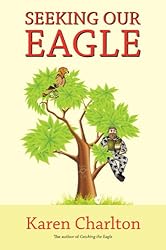
I wondered whether Stephen Lavender, the detective employed by  Nathaniel Ogle, the owner of Kirkley Hall was also a real historical figure. Karen Charlton has also written Seeking Our Eagle, another fascinating book, an account of how she came to write Catching the Eagle whilst researching her husband’s family history.  And yes, Stephen Lavender did exist and he was a detective. He later became the Deputy Chief Constable of Manchester after the formation of the police force by Sir Robert Peel.

Indeed reading Catching the Eagle reminded me of The Suspicions of Samuel Whicher by Kate Summerscale, featuring Detective Inspector Jonathan Whicher of Scotland Yard, the book that won the Samuel Johnson Prize for Non-Fiction in 2008.

Karen Charlton has done her research very well and has written a novel full of intrigue, tension and realism that kept me captivated from start to finish. See her website, Karen Charlton, to read more about Karen and her books.

She has also written The Heiress of Linn Hagh, a spin-off novel from Catching the Eagle, which features Detective Stephen Lavender and his sidekick, Constable Woods. And there are more Detective Lavender Series books on the way!

Catching the Eagle:

  • Paperback: 280 pages
  • Publisher: Famelton Publishing; 1 edition (19 July 2014)
  • ISBN-10: 0992803640
  • ISBN-13: 978-0992803643
  • Product Dimensions: 15.2 x 1.8 x 22.9 cm
  • Source: Library book

Seeking the Eagle:

  • Format: Kindle Edition
  • File Size: 1969 KB
  • Print Length: 166 pages
  • Publisher: Famelton Publishing; 1st edition (7 Aug. 2012)
  • Sold by: Amazon Media EU S.à r.l.
  • Language: English
  • ASIN: B008UZYOR2
  • Source: I bought it

As always I didn’t read either book just for any Reading Challenges, but Catching the Eagle does fit very well into a couple – the 2015  Historical Fiction Reading Challenge and the What’s in a Name Challenge, in the book with an animal in the title category and Seeking Our Eagle into the Nonfiction Reading Challenge.

Wilkie Collins by Peter Ackroyd

Wilkie CollinsOn Thursday I finished reading Wilkie Collins by Peter Ackroyd and it was also the anniversary of his birth – he was born in Marylebone at a house in New Cavendish Street on 8 January 1824.

I’ve read just two of Wilkie Collins’ books – The Moonstone and The Woman in White, and this year I hope to read more. I knew that he was a friend of Charles Dickens, but that was about all I knew of him. Peter Ackroyd’s biography looked as though it could be a good book to start with. And it is – it’s short, just over 200 pages, very readable and a clear and concise account of Collins’ life and work.

Wilkie’s father was William Collins, an English painter, a member of the Royal Academy, who specialised in landscapes and seascapes. He was christened William Wilkie – Wilkie after his godfather, the painter Sir David Wilkie.

Ackroyd’s account may be brief but he gives details of Wilkie’s childhood, his schooldays – the books he liked as a child – The Arabian Nights, Robin Hood and Don Quixote, books by Sir Walter Scott and he admired Byron. He moves on through Wilkie’s struggle to become a writer, his friendship with Charles Dickens, his travels abroad, his unconventional life style, never marrying but living with Caroline Graves for thirty years whilst having a liaison with Martha Rudd, his ill health and reliance on laudanum, his tour of America, his relationships with and views about women and their place in society, as well as discussing his short stories, articles, novels and plays.

Wilkie Collins died on 23 September 1889 after a year in which he had suffered from neuralgic attacks, a stroke that paralysed his life side and affected his brain, and a bout of bronchitis, but he  had still carried on writing.

I marked several passages as I was reading. Here are just a few of them:

He was essentially liberal in his social and political views, averse to coercion and conflict; he showed some sympathy with the principles of socialism as it was then understood, and was instinctively on the side of the oppressed. (page 46)

He might best be described as a Christian humanist who accepted Christ as his Saviour but detested all formal and outward shows of religion. He preserved his particular wrath for evangelicals. … he was not an atheist. He rarely entered a church, and his actual beliefs are hard, if not impossible, to unravel. (page 47)

He may have believed with Charles II that God would not punish him for a few sins of pleasure. (page 47)

He lived through a period in which the audience for fiction was rapidly widening, and the novels themselves were increasing in importance. … Novels had become the repository of dreams and ideals, the fantasies and the speculations, of the nation. (page 81)

One of the characters in ‘The Diary of Anne Rodway’ said -‘what I want is something that seizes hold of my interest, and makes me forget when it is time to dress for dinner – something that keeps me reading, reading, reading, in a breathless state to find out the end.’ That is precisely the excitement Collins conveys to his readers. (page 88)

Collins was writing about mysteries ‘deep under the surface’ three decades before Freud began his own enquiries. He was concerned with doubles and double identity, with monomania and delusion. He traced the paths of unconscious associations and occluded memories. (page 93)

It was believed that the ‘detective element’ disqualified the novel as a work of art, when in fact it opened up the way for an entirely new direction in English literature. There had been earlier exercises in the genre, but all of them are inconsiderable besides the over-whelming power and authority of ‘The Moonstone’. Collins’s novel, since its publication in 1868, has never been out of print. (page 132)

There is an awful lot packed into this short biography! And it’s an excellent stepping stone into Wilkie Collins’s novels.

  • Hardcover: 208 pages
  • Publisher: Chatto & Windus (23 Feb. 2012)
  • Language: English
  • ISBN-10: 0701169907
  • ISBN-13: 978-0701169909
  • Source: a Christmas present