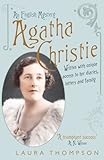
Agatha Christie: An English Mystery by Laura Thompson

It took me weeks to read Laura Thompson’s book Agatha Christie: An English Mystery. It has taken me several days to write and re-write this post because I’ve found it difficult to put down my thoughts about it without going into too much detail (and this is still a long post). My overall impression of the book is that I felt as though I was intruding into Agatha Christie’s private life that she had not wanted to be made known. I also think that Laura Thompson had found it difficult to separate the woman from her writing, because throughout the book facts are interspersed with suppositions drawn from Agatha Christie’s novels and in particular from Unfinished Portrait, a novel Agatha wrote under the pseudonym, Mary Westmacott.

Agatha Christie: An English Mystery is described as a ‘perceptive and stylish biography‘ on the jacket sleeve, but it is not just a biography; it is also a study of Agatha Christie’s novels, drawing conclusions from her writing about her thoughts, feelings and emotions and a fictionalised version of Agatha’s disappearance in 1926. Laura Thompson’s sources are unpublished letters, papers and notebooks.

First of all, concerning the study of the novels I was dismayed as I was reading this book at the amount of information she reveals about the crime fiction novels, including giving away who the murderers are in a number of cases. Charles Osborne’s book The Life and Crimes of Agatha Christie is much better, outlining the books, not just her crime novels but also her non-fiction, stories for children, poetry and plays in chronological order and nowhere does he reveal the identity of any of the murderers.

Then the fictionalised version of Agatha’s disappearance is in a chapter called ‘The Quarry‘, which begins ‘Time for a new story‘, words which did not immediately alert me that Laura Thompson was no longer writing strictly from the sources at her disposal but also from her imagination, putting words into Agatha Christie’s mouth that she could not have known, and describing her reactions to the people she met and the newspaper reports of her disappearance. Later in this chapter she wrote:

All biography is story-telling. No life is a code to be deciphered: there will always be gaps and inconsistencies, and it is stories that make the missing connections. Omniscience is for Hercule Poirot. Real life knows less; it has the beauty of mystery; and this, despite the books she wrote, was something that Agatha understood very well. She must have known she had created a puzzle of a different order, with all the geometric complexity of ‘Roger Ackroyd’ – and how to work it out? Turn it this way? That way? – and yet the twist in the tale: it was true, and therefore it could never be solved. It was perfect in fact. The perfect metaphor for human mystery. What could be more impenetrable than the woman who moved through Harrogate like a smiling ghost, reading newspaper reports about her own vanished self? (page 219)

I just wish she had not gone so far down the story-telling line in this book and had left this episode of Agatha Christie’s life as an impenetrable mystery, or at least had made it clear straight away when she was writing imaginatively. I have absolutely no objections to fictionalised versions of a life (for example I really liked Justine Picardie’s book Daphne: a novel, which merges fact and fiction) but I do think it should be obvious that it is fictionalised. Nor do I object to different interpretations of

Laura Thompson quotes from Unfinished Portrait, using this as evidence of Agatha’s thoughts, beliefs, and emotions. In Osborne’s book he also states that Unfinished Portrait, which was published in 1934, is based on events in Agatha’s life:

The story of Celia is remarkably similar to the story of Agatha as readers were eventually to be offered it in ‘An Autobiography’ more than forty years later. Several incidents are common to ‘An Autobiography’  and ‘Unfinished Portrait’, and the novel is quite clearly a fictionalised, more detailed, and emotionally more forthcoming version of the first third of the biography. The portraits of Celia’s mother and her grandmother are really of young Agatha Miller’s mother and the grandmother with who she stayed in Ealing. The men in Celia’s life are the men in Agatha’s life, and Dermot, whom Celia marries, is Archie Christie. (page 105)

but he also quotes from Max Mallowan’s writings about the book, pointing out it is a blend of fact and fiction:

The book is not one of her best because, exceptionally, it is a blend of real people and events with imagination. Only the initiated can know how much actual history is contained therein, but in Celia we have more nearly than anywhere else a portrait of Agatha. (page 106 of ‘The Life and Crimes of Agatha Christie’)

It is evident that Agatha Christie wrote about things she knew – the use of poisons from her work in a pharmacy during the First World War and her journey on the Orient Express are just two examples. Laura Thompson later in the book acknowledges that it is impossible to know what Agatha really thought – this is in the chapter called ‘The Second Husband‘, (page 298) writing about Agatha’s reaction to the Woolleys’ interference with her honeymoon with Max Mallowan. And she acknowledges that it would not have occurred to Agatha Christie that conclusions about her character would be drawn from her remarks in the novels about Jews, ‘blacks’ and servants, so I think it is difficult to decide what inferences can be drawn about Agatha from her fiction!

The last sections of Thompson’s book deal in detail with Agatha Christie’s tax problems and there is a rather ‘gossipy’ section about whether or not Max was having affairs. Overall, I think that the book as a biography is unbalanced, concentrating on the events surrounding Agatha’s disappearance and there is much speculation and supposition. I prefer Agatha’s own version of her life: An Autobiography, in which she merely referred to the events of 1926 thus:

The next year of my life is one I hate recalling. As so often in life, when one thing goes wrong, everything goes wrong. (page 356)

Finally, if biography is ‘story-telling’, about making connections to fill in the missing gaps with stories, then I’m not sure I want to read it and there have been several times when reading this book that I’ve thought about abandoning it. I’m uncomfortable with the feelings it can provoke – disliking gossip, distrusting witnesses who may have a private agenda, and squeamishness about reading private correspondence. I felt all of this whilst reading this book.

I went back to a book I read a few years ago – Hermione Lee’s book Body Parts: Essays on Life-Writing.This is about writing biography and the relationship of biography to fiction and history. Lee writes that biographies must give a ‘quasi-fictional, story-like shape to their material (or no none will read them)’, but against this there is the ‘responsibility for likeness and the need for accuracy’.Gaps and silences give rise to interpretations ‘through a process of conjecture, invention, intuition and manipulation of the evidence.’  Biography may seem as if it is factual because it is constructed from sources such as letters, diaries and other people’s accounts, etc but it is inevitably an interpretation and quasi-fictional. I have to remember that – it’s a reading between the lines! And as Lee says:

Whether we think of biography as more like history or more like fiction, what we want is a vivid sense of the person.

What makes biography so curious and endlessly absorbing is that through all the documents and letters, the context and the witnesses, the conflicting opinions and the evidence of work, we keep catching sight of a real body, a physical life: the young Dickens coming quickly out of a room, sprightly, long-haired, bright-eyed, dandyish, in crimson velvet waistcoat or tartan trousers …

As I read Laura Thompson’s book I did catch glimpses of Agatha Christie, but they were rather swamped by inferences drawn from her books, by the fictionalised version of her disappearance and by the descriptions of her tax problems towards the end of her life. I felt closer to the real Agatha Christie whilst reading her Autobiography. As well as being a record of her life as she remembered it and wanted to relate it, it’s also full of her thoughts on life and writing and in particular about her love of life and the joy of being alive.

But I will carry on reading biographies!
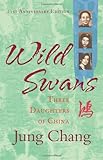
Wild Swans by Jung Chang

It’s taken me a couple of months to read Wild Swans: Three Daughters of China (first published in 1991), Jung Chang’s book about her grandmother, her mother and herself, telling of their lives in China up to and during the years of the violent Cultural Revolution. Her family suffered atrociously, her father and grandmother both dying painful deaths and both her mother and father were imprisoned and tortured.

Needless to say that this is a harrowing book to read, but it’s also an eye-opener (for me at any rate) about what happened in China under Mao.

Jung Chang was born in Yibin, Sichuan Province, China, in 1952. She was briefly a Red Guard at the age of fourteen, and then a peasant, a ‘barefoot doctor’, a steelworker and an electrician. She came to Britain in 1978, and in 1982 became the first person from the People’s Republic of China to receive a doctorate from a British university. Wild Swans  won the 1992 NCR Book Award and the 1993 British Book of the Year. She lives in London.

In Wild Swans she casts light on why and how Mao was able to exercise such paralysing control over the Chinese people. His magnetism and power was so strong and coupled with his immense skill at manipulation and his ability to inspire fear, it proved enough to subdue the spirit of most of the population; not to mention the absolute cruelty, torture and hardships they had to endure.

I wondered how she knew so much about what happened to her mother and grandmother (I don’t know nearly as much about mine) but in the Introduction she explains that when her mother came to visit her in London they talked every day for months. She talked about their eventful lives – her grandmother had been a concubine of a warlord general and her mother had joined the Communist underground at the age of 15. She also recorded sixty hours of her memories.

I wrote a bit about the book in a Book Beginnings post at the end of last November, when I’d just started to read it. It’s a personal story, reflecting the twentieth century history of China. A remarkable book, full of courage and spirit.

  • Paperback: 720 pages
  • Publisher: HarperPress; New edition edition (1 Mar 2012)
  • Language: English
  • ISBN-10: 0007463405
  • ISBN-13: 978-0007463404
  • Source: borrowed from a friend

Book Beginnings: Wild Swans by Jung Chang

I’m currently reading Wild Swans by Jung Chang.

It begins:

At the age of fifteen my grandmother became the concubine of a warlord general, the police chief of a tenuous national government of China. The year was 1924 and China was in chaos. Much of it, including Manchuria, where my grandmother lived, was ruled by warlords. the liaison was arranged by her father, a police official in the provincial town of Xixian in southwest Manchuria, about a hundred miles north of the Great Wall and 250 miles northeast of Peking.

Wild Swans is a family memoir – the story of three generations of woman in Jung Chang’s family – her grandmother, mother and herself. This is the 2003 edition with an introduction by Jung Chang explaining how she came to write the book. She had always dreamed of being a writer, but growing up in Mao’s China it seemed out of the question, with most writers suffering in endless police persecutions. It was only after she had been allowed to come to Britain in 1978 to study that she had the freedom to write and to write what she wanted.

So far, I’m finding it fascinating, reading about her grandmother, who was one of the last generation of Chinese woman to suffer the practice of binding feet. I knew of this practice, but hadn’t realised just how much the little girls suffered and continued to suffer throughout their lives.

As this book is so long (over 600 pages in a small font) it’s going to take me quite a while to read it. I’l probably write a few posts on my progress.

First Chapter, First Paragraph is hosted by Diane at Bibliophile by the Sea.

From the Archives: Biographies

This is a second post in which I’m following Simon’s example at Stuck in a Book of posts in which he revisits his old reviews. I’ve been looking back into my archives at biographies ‘“ triggered by Katrina’s post on Daphne du Maurier’s Rebecca Notebook, which I’ve also read and written about in 2010.

So here’s a list of some of my posts on biographies of authors – with links to the posts, a short summary and a quotation from my review.

First of all two from 2007:

  • Daphne by Margaret Forster – a biography of Daphne Du Maurier, the author of Rebecca etc

From my post: There is too much I could say about ‘Daphne’, not least that it is a candid account of her relationships, eg her troubled married life; wartime love affair; and friendships with Gertrude Lawrence and Ellen Doubleday, as well as an excellent source of information on Du Maurier’s method of writing and views on life.

  • Lewis Carroll by Morton N Cohen – a biography of Charles Dodgson (Lewis Carroll) a long post  which has a somewhat controversial interpretation of some aspects of Dodgson’s life.

From my post: his account of Charles Dodgson’s life is basically chronological, but because he also looks at different aspects of Charles’s life it is a bit repetitive. As biographies go this is not one of the most straightforward or readable. It’s extremely detailed and at nearly 600 pages it is not a quick read.

One from 2008:

  • Dear Dodie by Valerie Grove – biography of Dodie Smith, the author of I Capture the Castle etc.

From my post: It is very readable and gives a very full picture of Dodie’s life, and it has an excellent index (always a plus for me). 

And two from 2009:

  • Wild Mary by Patrick Marnham – biography of Mary Wesley, the author of Camomile Lawn and other books.

From my post:  … I certainly wouldn’t like to have met Mary. She seems to have been a difficult and determined woman who aroused strong passions in those who knew and loved her.

From my post: My outstanding impression of the book is how amazingly detailed it is given the fact that few records of her life have survived.

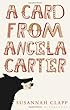
A Card From Angela Carter by Susannah Clapp: Book Notes

I liked the look of A Card from Angela Carter when I saw it in the library. It’s a small book that slots easily into a pocket or handbag and is very short – just 103 pages. I thought it would be a nice change after some of the very long books I’ve been reading recently.

I also liked the concept – a study of Angela Carter using the postcards she had sent to Susannah Clapp, who is the literary executor of Angela Carter as well as being a publisher’s reader, editor and critic. She and Angela had been friends for a number of years.

Now, Angela Carter is one of those writers whose books I’ve been meaning to read and have never got round to them, so I thought this book, which forms a sort of biography would give me at least an elementary picture  of her life and work. And that’s just what it did. Now I really do want to read some of her books – Angela Carter’s Book of Fairy Tales and Nights at the Circus, for example. I really find it hard to realise that it is twenty years ago now since she died at the age of 51 from lung cancer.  The fact that she had never made the shortlists of the Booker Prize led to the foundation of the Orange Prize, but this book, slight as it is, is the only biographical work to have been published.

Susannah Clapp uses the postcards Angela had sent to her ‘form a paper trail through her life.’ Sent from various places around the world some have a full message, some only a few words, which Susannah uses to paint a picture of what Angela was like, a ‘great curser’, capable of the sharpest of remarks, clever, unpredictable, quirky, and funny. She laughed and talked a lot. Using the postcards as a trigger, the book is mainly Susannah’s recollections of Angela, full of stories of her family life, her political views and what the critics made of her work. There’s also a considerable amount, considering the length of the book, about her physical appearance.

As for the postcards, I was disappointed at the black and white reproductions. I was also disappointed that as she was a cat lover, Angela had not sent her any cards featuring felines, although she did send them to her friend and publisher Carmen Callil. Angela herself loved cats and her first book written at the age of six was called ‘Tom Cat Goes to Market’, which her mother eventually threw away!

Susannah Clapp, whilst allowing that Angela’s fiction and prose did not go unacknowledged while she was alive, considers that her work did not receive the acclamation it deserved because:

She was ten years too old and entirely too female to be mentioned routinely alongside Martin Amis,  Julian Barnes and Ian McEwan as being a young pillar of British fiction. She was twenty years too young to belong to what she considered the ‘alternate pantheon’ of Iris Murdoch, Doris Lessing and Muriel Spark in the forties, when ‘in a curious way, women formed the ascendancy.’ (page 3)

This is an entertaining and vivid account in miniature which left me wanting to know more and to read Angela Carter’s books for myself.

Daphne du Maurier: Fact and Fiction

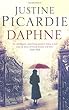
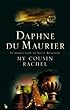
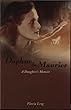
Recently I’ve had a bit of a run on books by and about Daphne du Maurier. First of all I read The Parasites, which reminded me that I’d had Justine Picardie’s novel, Daphne sitting on my bookshelves unread, so I immediately got it down. Then I just had to read My Cousin Rachel, a book I’ve had for years and never got round to reading before now. After that I read Daphne du Maurier: a Daughter’s Memoir by Flavia Leng, just because it was one of the books Justine Picardie consulted in writing her novel. I’ve previously read Margaret Forster’s biography Daphne du Maurier and Daphne du Maurier’s The ‘Rebecca’ Notebook and Other Memories, which is mainly autobiographical.

Daphne by Justine Picardie (2008) – synopsis (from the back cover):

It is 1957. As Daphne du Maurier wanders alone through her remote mansion on the Cornish coast, she is haunted by thoughts of her failing marriage and the legendary heroine of her most famous novel, Rebecca, who now seems close at hand. Seeking distraction, she becomes fascinated by Branwell, the reprobate brother of the Bronte sisters, and begins a correspondence with the enigmatic scholar Alex Symington in which truth and fiction combine. Meanwhile, in present day London, a lonely young woman struggles with her thesis on du Maurier and the Brontes and finds herself retreating from her distant husband into a fifty-year-old literary mystery.

My view: 4/5

This book merges fact and fiction so well that it’s hard to differentiate between the two. I much preferred the story of Daphne herself and her search for information about Branwell. I had to go back to Forster’s biography of Daphne to compare the accounts of her life, which matched up pretty well. I was less keen on the modern day story of a young woman, the second wife of an older man. It had too many obvious parallels with Rebecca for my liking. And if you haven’t read Rebecca, this book gives away the plot. There are also references to My Cousin Rachel, which I glossed over in case there were any spoilers there too (I don’t think there were). All in all, a very satisfying mystery about Daphne and the missing Bronte documents.

My Cousin Rachel by Daphne du Maurier (1951) – synopsis (Amazon):

Orphaned at an early age, Philip Ashley is raised by his benevolent older cousin, Ambrose. Resolutely single, Ambrose delights in Philip as his heir, a man who will love his grand home as much as he does himself. But the cosy world the two construct is shattered when Ambrose sets off on a trip to Florence. There he falls in love and marries – and there he dies suddenly. In almost no time at all, the new widow – Philip’s cousin Rachel – turns up in England. Despite himself, Philip is drawn to this beautiful, sophisticated, mysterious woman like a moth to the flame. And yet …might she have had a hand in Ambrose’s death?

My view: 4/5

I thoroughly enjoyed this book, completely taken in by the characters and loving the setting in an old mansion in Cornwall. The story is narrated by Philip, so the other characters are seen through his eyes. The tension mounts as Philip becomes obsessed with Rachel and I was never quite sure what was real and what to believe. He is not a stable character and as Rachel’s own thoughts are not revealed it’s not clear if she can be believed either, whether she is sincere or evil and manipulative.

Daphne du Maurier: a Daughter’s Memoir (1994) – synopsis (from the back cover):

In this moving and revealing memoir, Flavia Leng paints a powerful portrait of her mother, Daphne du Maurier. She presents an account of an unusual and often lonely childhood spent in London and especially Cornwall, at her mother’s beloved home, Menabilly. Family friends included Nelson and Ellen Doubleday, Gertrude Lawrence and Noel Coward. However, at the centre of this story is Daphne du Maurier herself. The book reveals a writer with a deep attachment to Cornwall, where she put down her roots and found inspiration for her novels, and who spent much of her life as a recluse, withdrawn not only from the outside world but also from members of her own family. A picture emerges of a woman who lived in a world of her own creation that was beyond the comprehension of those around her.

My view: 3.5/5

In the epilogue Flavia Leng, Daphne du Maurier younger daughter, explained that she began to write this memoir of her childhood two years before her mother died in 1989 and it was never meant for publication – it was just for the family. And that to me epitomises this memoir – it’s an account of her childhood and of her family as seen through a child’s eyes. It seems a lonely childhood, despite being the middle child. As children Flavia and her older sister Tessa didn’t get on and both she and Tessa saw that their mother lavished more affection on her beloved son, Christopher who they called Kits. But a picture emerges of Daphne, who they called Bing, as a solitary person, closeted away with her typewriter or lost in her world of ‘never, never land’, peopled by the characters she invented, with little time for her children, who were looked after by Nanny and then ‘Tod’, their governess.

Like her mother Flavia has a great love of Cornwall which shines through the book – she was never happier than when alone in Menabilly and the surrounding woodlands. It’s a sad memoir ending with Flavia feeling she had no roots left after her parents died:

I have heard it said that a person only really grows up when both parents have gone; what I do know is that life will never be quite the same again. Cornwall no longer holds the enchantment it once did. Gone is the excitement of driving down those leafy, winding roads to the lovely old houses, my beloved Menabilly, and then later Kilmarth where Bing lived out her years.