Victim of the Aurora by Thomas Keneally. In the waning years of the Edwardian era, a group of gentlemen wait out a raging blizzard in the perpetual darkness of the Antarctic winter, poised for a strike at the South Pole.
Voices of the Dead (A Raven and Fisher Mystery Book 4) by Ambrose Parry.
The Ghost Ship (The Joubert Family Chronicles Book 3) by Kate Moss, a swashbuckling tale of adventure and buccaneering, love and revenge, stolen fortunes and hidden secrets on the high seas.
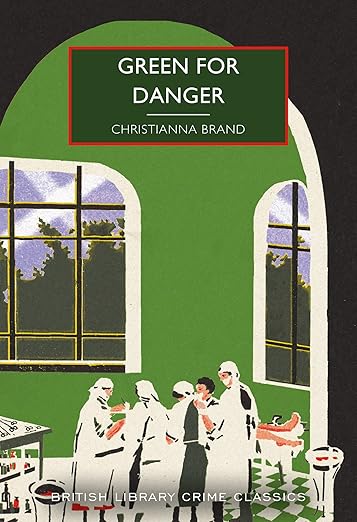
Green for Danger by Christianna Brand, book 7 of the Inspector Cockerill Mysteries.
Unfinished Portrait by Agatha Christie writing as Mary Westmacott. Agatha Christie also wrote about crimes of the heart, six bittersweet and very personal novels, as compelling and memorable as the best of her work.
Top Ten Tuesday is a weekly meme created by The Broke and the Bookish and now hosted by Jana at That Artsy Reader Girl. For the rules see her blog.
The topic today is Books On My Winter 2025-2026 to-Read List. The first three are books on my NetGalley shelf and will be published early in the New Year. The rest are books from my TBR lists. I do enjoy making lists and sometimes I stick to them!
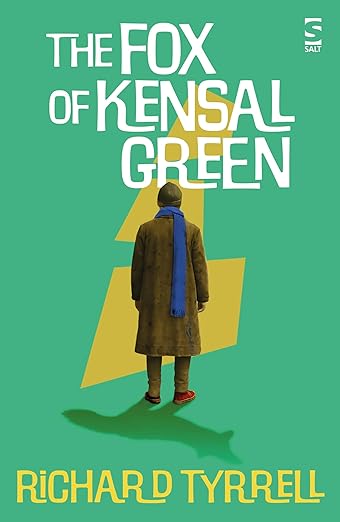
The Fox of Kensal Green by Richard Tyrrell – a quiet neighbourhood of London is about to be shattered.
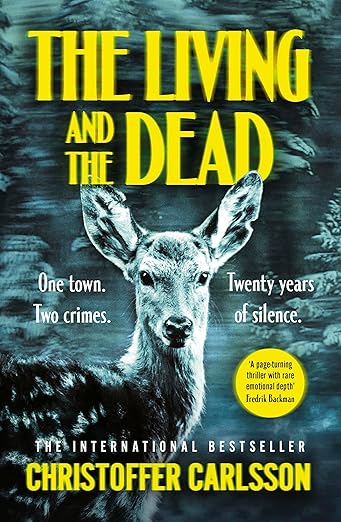
The Living and the Dead by Christoffer Carlsson – a haunting murder mystery, set in a rural Swedish town, where one community’s secrets will be laid bare over the next twenty years
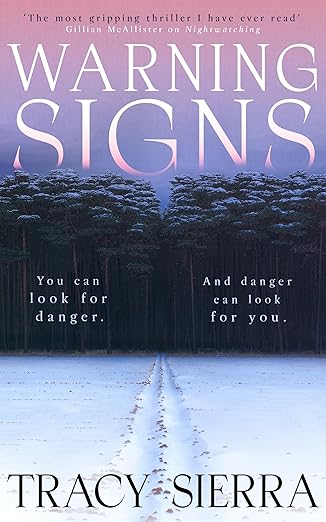
Warning Signs by Tracy Sierra – a thriller set in the Colorado mountains during a ski-weekend.
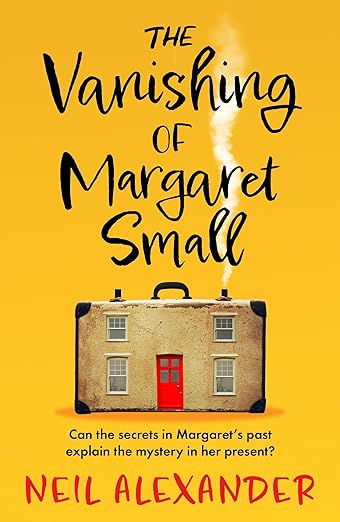
The Vanishing of Margaret Small by Neil Alexander – a mystery that takes readers into a fascinating past, and introduces an unforgettable literary heroine.
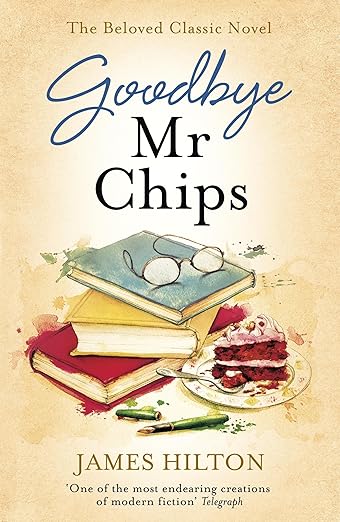
Goodbye Mr Chips by James Hilton – the classic story of a quiet, unassuming man and the many lives he touches.
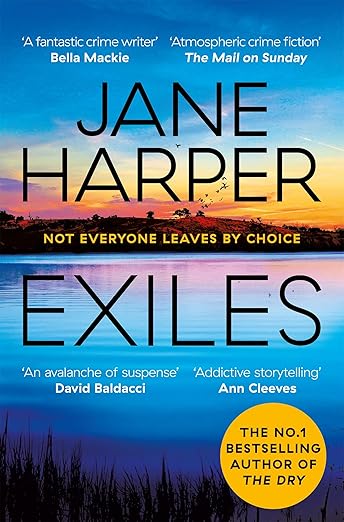
Exiles by Jane Harper – Investigator Aaron Falk finds himself drawn into a complex web of tightly held secrets in South Australia’s wine country.
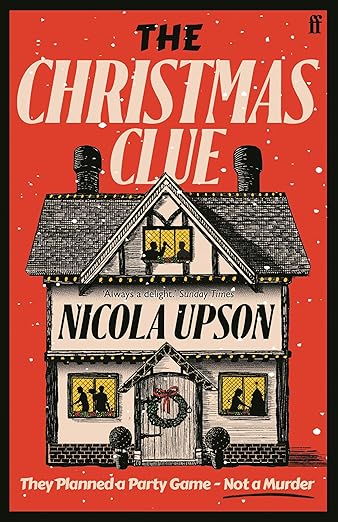
The Christmas Clue by Nicola Upson – a Christmas murder mystery featuring the real-life couple who invented Cluedo.
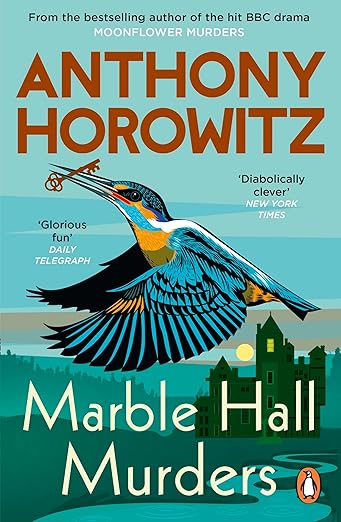
Marble Hall Murders by Anthony Horowitz – Susan Ryeland has had enough of murder.
Spell the Month in Books is a linkup hosted by Jana on Reviews From the Stackson the first Saturday of each month. The goal is to spell the current month with the first letter of book titles, excluding articles such as ‘the’ and ‘a’ as needed. That’s all there is to it! Some months there are optional theme challenges, such as “books with an orange cover” or books of a particular genre, but for the most part, any book you want to use is fair game!
This month’s Spell the Month in Books theme is Books that you found or currently see at the library. For this theme I’ve used books I’ve previously borrowed from the library for the letters J, U, and E and a book I’ve seen on the library’s website for the letter N.
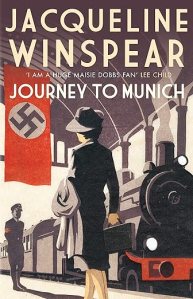
Journey to Munich by Jacqueline Winspear – Travelling into the heart of Nazi Germany, Maisie encounters unexpected dangers – and finds herself questioning whether it’s time to return to the work she loved. But the Secret Service may have other ideas!
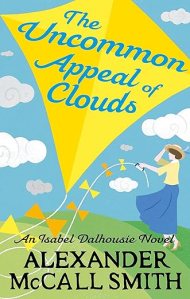
Uncommon Appeal of Clouds by Alexander McCall Smith – an Isabel Dalhousie book – An unexpected appeal for help from a collector who has been the victim of an art theft threatens to take Isabel Dalhousie far outside her comfort zone.
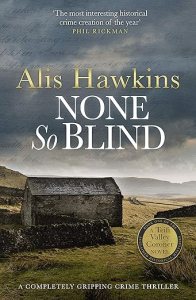
None So Blind by Alis Hawkins – West Wales, 1850. When an old tree root is dug up, the remains of a young woman are found. Harry Probert-Lloyd, a young barrister forced home from London by encroaching blindness, has been dreading this discovery. He knows exactly whose bones they are. Working with his clerk, John Davies, Harry is determined to expose the guilty. But the investigation turns up more questions than answers and raises long-buried secrets. The search for the truth will prove costly.
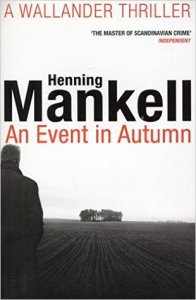
An Event in Autumn by Henning Mankell a Wallender thriller – Kurt Wallander’s life looks like it has taken a turn for the better when his offer on a new house is accepted, only for him to uncover something unexpected in the garden – the skeleton of a middle-aged woman. As police officers comb the property, Wallander attempts to get his new life back on course by finding the woman’s killer with the aid of his.
The next link up will be on July 5, 2025 when the optional theme will be: Set in a fantasy world or fictional place.
It’s time again for Six Degrees of Separation, a monthly link-up hosted by Kate atBooks Are My Favourite and Best. Each month a book is chosen as a starting point and linked to six other books to form a chain. A book doesn’t need to be connected to all the other books on the list, only to the one next to it in the chain.
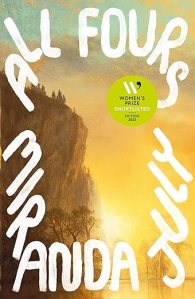
This month we start with All Fours by Miranda July, shortlisted for the Women’s Prize for Fiction 2025 and several other awards. I haven’t read it and probably won’t. This is Amazon’s description:
A semi-famous artist turns forty-five and gives herself a gift – a cross-country road trip from LA to New York, without her husband and child. But thirty minutes after setting off, she spontaneously exits the freeway, beds down in a nondescript motel – and embarks on the journey of a lifetime.
Miranda July’s second novel confirms the brilliance of her unique approach to fiction. With July’s wry voice, perfect comic timing, unabashed curiosity about human intimacy, and palpable delight in pushing boundaries, All Fours tells the story of one woman’s quest for a new kind of freedom. Part absurd entertainment, part tender reinvention of the sexual, romantic, and domestic life of a forty-five-year-old female artist, All Fours transcends expectation while excavating our beliefs about life lived as a woman. Once again, July hijacks the familiar and turns it into something new and thrillingly, profoundly alive.
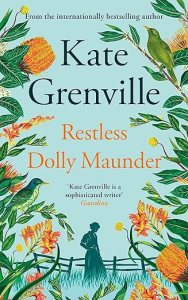
First link: I have read another book that was shortlisted for the previous year’s Women’s Prize for Fiction – Restless Dolly Maunder by Kate Grenville.
Dolly Maunder is born at the end of the 19th century, when society’s long-locked doors are just starting to creak ajar for determined women. Growing up in a poor farming family in rural New South Wales, Dolly spends her life doggedly pushing at those doors. A husband and two children do not deter her from searching for love and independence.
This is the fictionalised life story of Kate Grenville’s maternal grandmother, Sarah Catherine Maunder, known as Dolly. She was not only restless but also clever and determined – she knew what she wanted and she did her best to achieve it.
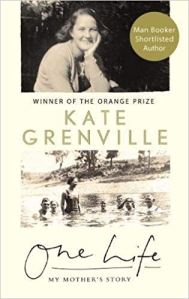
Second link: One of my favourite books by Kate Grenville is One Life: My Mother’s Story, her biography of Nance Russell, based on Nance’s memories, making it much more than a factual account of a person’s life. It’s a book that casts light not only on Nance’s life but also on life in Australia for most of the 20th century. Nance was born in 1912 and died in 2002, so she lived through two World Wars, an economic depression and a period of great social change. Nance wasn’t famous, the daughter of a rural working-class couple who became pub-keepers, but she was a remarkable woman.
It’s a vivid portrait of a real woman, a woman of great strength and determination, who had had a difficult childhood, who persevered, went to University, became a pharmacist, opened her own pharmacy, brought up her children, and helped build the family home. She faced sex discrimination and had to sell her pharmacy in order to look after her children at home.
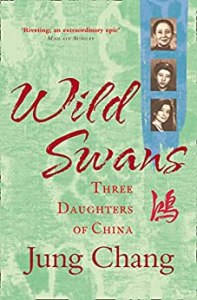
Third link: Wild Swans: Three Daughters of China by Jung Chang, a family memoir – the story of three generations of women in Jung Chang’s family – her grandmother, mother and herself, telling of their lives in China up to and during the years of the violent Cultural Revolution. Her family suffered atrociously, her father and grandmother both dying painful deaths and both her mother and father were imprisoned and tortured. She casts light on why and how Mao was able to exercise such paralysing control over the Chinese people. His magnetism and power was so strong and coupled with his immense skill at manipulation and his ability to inspire fear, it proved enough to subdue the spirit of most of the population; not to mention the absolute cruelty, torture and hardships they had to endure.
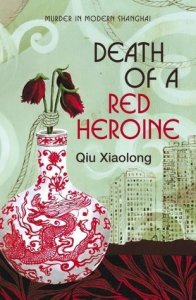
My fourth link moves from a memoir to crime fiction in Death of a Red Heroine by Qiu Xiaolong, the first book featuring Chief Inspector Chen. Chen is a reluctant policeman, he has a degree in English literature and is a published poet and translator. This is as much historical fiction as it is crime fiction. There is so much in it about China, its culture and its history before 1990 – the Communist regime and then the Cultural Revolution in the 1960s – as well as the changes brought about in the 1990s after the massacre of Tiananmen Square. This does interfere with the progress of the murder investigation as Chen has to cope with the political ramifications and consequently there are several digressions and the pace is slow and lacking tension. As Chen is a poet as well as a policeman there are also references to Chinese literature.
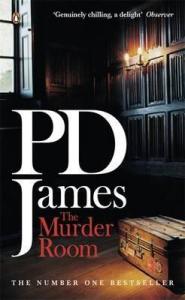
Fifth link: Another fictional Chief Inspector who writes poetry is Adam Dalgleish in The Murder Room by P D James. The Murder Room itself is in the Dupayne Museum, displaying the most notorious murder cases of the 1920s and 30s, with contemporary newspaper reports of the crimes and trials, photographs and actual exhibits from the scenes of the murders. These were actual crimes and not fictional cases made up by P D James.
The novel begins, as Adam Dalgleish visits the Dupayne in the company of his friend Conrad Ackroyd who is writing a series of articles on murder as a symbol of its age. A week later the first body is discovered at the Museum and Adam and his colleagues in Scotland Yard’s Special Investigation Squad are called in to investigate the killing, which appears to be a copycat murder of one of the 1930s’ crimes.
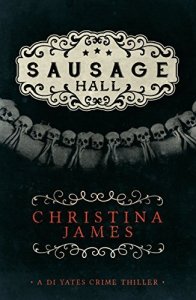
Another crime fiction writer with the surname James is my sixth link: Sausage Hall by Christina James, the third novel in the DI Yates series. It has a sinister undercurrent exploring the murky world of illegal immigrants, and a well researched historical element. It’s set in the South Lincolnshire Fens and is an intricately plotted crime mystery, uncovering a crime from the past whilst investigating a modern day murder. Sausage Hall is home to millionaire Kevan de Vries, grandson of a Dutch immigrant farmer. I liked the historical elements of the plot and the way Christina James connects the modern and historical crimes, interwoven with the history of Kevan’s home, Laurieston House, known to the locals as ‘Sausage Hall’ and the secrets of its cellar.
My chain is made up of novels shortlisted for the Women’s Prize for Fiction, a biography, a memoir and three murder mysteries. It travels from New York to the UK via Australia and China.
Where does your chain end up, I wonder?
Next month (July 5, 2025), we’ll start with the 2025 Stella Prize winner, Michelle de Kretser’s work of autofiction, Theory & Practice.
It’s Saturday and time for Stacking the Shelves, hosted by Marlene at Reading Realityand the details are on her blog, as well as a huge amount of book reviews. Why not visit her blog if you haven’t already found it? The gorgeous graphic is also used courtesy of the site.
The idea is to share the books you are adding to your shelves, may they be physical or virtual. This means you can include books you buy in physical stores or online, books you borrow from friends or the library, review books, gifts and of course e-books!
These are e-books I’ve either bought or acquired for free this month:
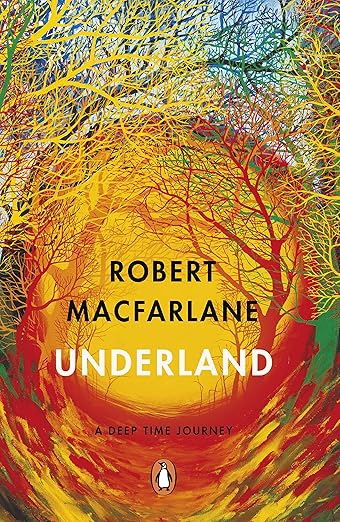
In Underland, Robert Macfarlane takes us on a journey into the worlds beneath our feet. From the ice-blue depths of Greenland’s glaciers, to the underground networks by which trees communicate, from Bronze Age burial chambers to the rock art of remote Arctic sea-caves, this is a deep-time voyage into the planet’s past and future. Global in its geography, gripping in its voice and haunting in its implications, Underland is a work of huge range and power, and a remarkable new chapter in Macfarlane’s long-term exploration of landscape and the human heart.
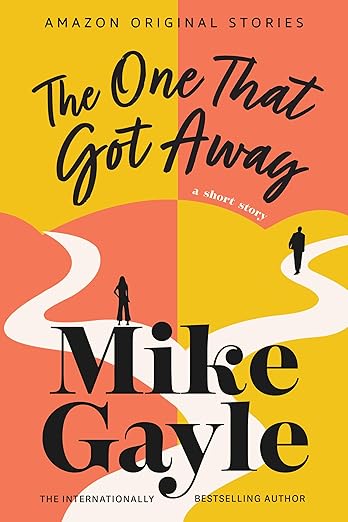
The One That Got Away by Mike Gayle.This was free – a bonus short story from Amazon Prime this month.
Reuben thought he’d spend the rest of his life with Beth, until she broke his heart six months ago. He’s not even remotely over her, so he’s devastated to hear she’s getting married—this weekend. Now he’s faced with the ultimate question: what should he do on the day of the wedding? Grieve? Disrupt the ceremony? Or do everything in his power to pretend it’s not happening? Enlisting the help of his friends, Reuben is all set to mark the occasion with distraction on a grand scale: Ferraris, champagne, and a VIP box at the races. But on the morning of the Big Day, Reuben gets a phone call that not only derails his elaborate itinerary: it may well change his life completely…
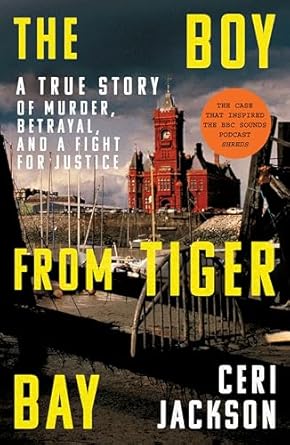
A brutal murder. A blighted investigation. The true story of five men damned by a crime they didn’t commit.
On Valentine’s Day 1988, twenty-year-old Lynette White was brutally murdered in a dark corner of Cardiff’s world-famous, and infamous, Tiger Bay. Stigmatised by a bad reputation, the area was on the brink of major redevelopment which would change the historic community forever.
South Wales Police launched its biggest murder hunt to date, and within weeks detectives released a photofit of a prime suspect seen outside the murder scene, his hands covered in blood. A white man. But as the months passed by and no arrest was made, the police came under inevitable pressure.
Everyone knew John Actie. But he didn’t know Lynette White. Yet, almost a year after her death, he and four other innocent men were charged with killing her. None matched the description, and none were white. But they became the scapegoats in what some saw as a desperate attempt to close the case.
Told predominantly through John Actie’s eyes, The Boy from Tiger Bay is an explosive true-crime narrative that exposes one of the UK’s most infamous murder investigations—a story of racial injustice and the enduring fight to bring the truth to light.
I’ve received one ARC this week from NetGalley
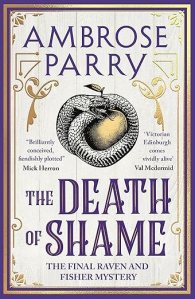
The Death of Shame (A Raven and Fisher Mystery Book 5) by Ambrose Parry, publication date, 5 June 2025.
Apprentice Sarah Fisher is helping to fund Dr Will Raven’s emerging medical practice in exchange for being secretly trained as a medic, should the rules barring women ever change. Sarah needs no instruction in the inequalities that beset her gender, but even she has her eyes opened to a darker reality when a relative seeks her help in searching for her missing daughter. Annabel Banks was promised a situation in a prestigious household, but there has been no word from her since she left home, and the agency that arranged her position says she never appeared.
Sarah’s inquiries lead her to reforming campaigners trying to publicise the plight of the hundreds of girls ensnared in Edinburgh’s houses of assignation. Sarah learns how young women are lured, deceived, trafficked and raped, leaving them ruined in the eyes of a society obsessed with moral purity, and where virginity is prized as a lucrative commodity.
Drawing upon real historical events, The Death of Shame takes Raven and Sarah into a treacherous labyrinth of exploitation, corruption, and immorality.
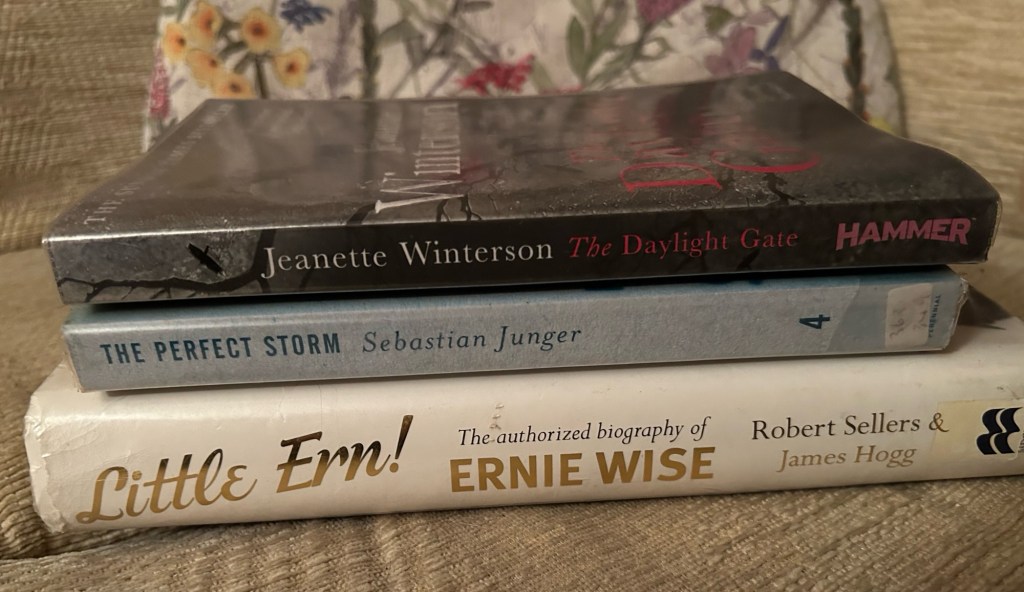
It’s been a while since I posted about the books I’ve borrowed from the mobile library van. It’s one of three mobiles in the County Library service that comes round once a month, visiting villages and remote rural areas. It parks near our house. This week I borrowed three books.
The Daylight Gate by Jeanette Winterson. I thought this looks promising. The Trial of the Lancashire Witches in 1612 was the first witch trial to be documented. Thomas Potts, a lawyer, wrote his account: The Wonderfull Discoverie of Witches in the County of Lancashire. It’s supposedly an eyewitness verbatim account and Winterson follows the historical account and the religious background in telling her story. The places are real places and the characters were real people, although she has taken liberties with their motives and means. She states that the story of Alice Nutter (not the Alice Nutter of history) and Elizabeth Southern is her own creation and has no basis in fact. And she was pleased that there might have been a connection with Dr John Dee, and with Manchester, London as well as with Shakespeare himself. And she says: ‘Pendle Hill is still the enigma it ever was though the Malkin Tower is long gone.’
The Forest of Pendle used to be a hunting ground, but some say that the hill is the hunter – alive in its black-and-green coat cropped like an animal pelt.
Good Friday, 1612. Two notorious witches await trial and certain death in Lancaster Castle, whilst a small group gathers in secret protest. Into this group the self-made Alice Nutter stakes her claim and swears to fight against the rule of fear. But what is Alice’s connection to these witches? What is magic if not power, and what will happen to the women who possess it? (Amazon UK)
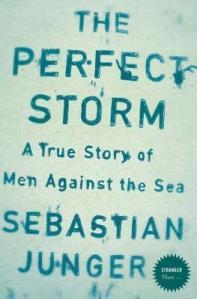
The Perfect Storm: A True Story of Men Against the Sea by Sebastian Junger I took this off the shelf and flicked through the pages, wondering what to expect from this book, described as creative nonfiction. It recounts a storm in October 1991 that resulted in the fishing boat AndreaGail going down off the coast of Nova Scotia with the loss of all six crew members.
In 2000, the book was adapted by Warner Brothers as a film of the same name, starring George Clooney and Mark Wahlberg.
It was the storm of the century, boasting waves over one hundred feet high—a tempest created by so rare a combination of factors that meteorologists deemed it “the perfect storm.” In a book that has become a classic, Sebastian Junger explores the history of the fishing industry, the science of storms, and the candid accounts of the people whose lives the storm touched. The Perfect Storm is a real-life thriller that makes us feel like we’ve been caught, helpless, in the grip of a force of nature beyond our understanding or control. (Amazon UK)
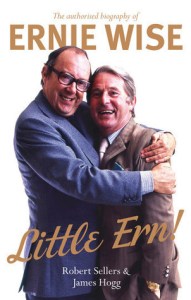
Little Ern! the Authorized Biography of Ernie Wise by Robert Sellers and James Hogg. For years I loved watching comedians Morecambe and Wise, also known as Eric and Ernie, on TV. Their partnership lasted from 1941 until Morecambe’s sudden death in 1984. And watching their shows years later they still make me laugh.
Even though they are the most famous comedy double act Britain has ever seen, until now there has never been a biography of Ernie Wise. Seen by some as just the straight man in the partnership, in fact ‘Little Ern’ was regarded by his peers as a great comedian in his own right. It took no ordinary talent to be the perfect foil for the genius of Eric Morecambe, and to be his friend, business partner and co-performer for nearly forty years. Morecambe’s personality flared with ego and insecurity, and theirs was a personal relationship that had to be nurtured as carefully as were their on-screen personas.
Nearly thirty years after their last appearances, the pair still dominate the landscape of British comedy, and are loved and revered as ever. With the cooperation of Ernie’s widow Doreen, and drawing on unpublished material from the family archive as well as interviews with friends, Robert Sellers and James Hogg have shifted the spotlight sideways to examine for the first time the true and patient genius of one of the greatest entertainers of his generation. (Goodreads)







 BooksPlease