The Tree of Hands by Ruth Rendell

Rating: 5 out of 5.

Description from Amazon UK

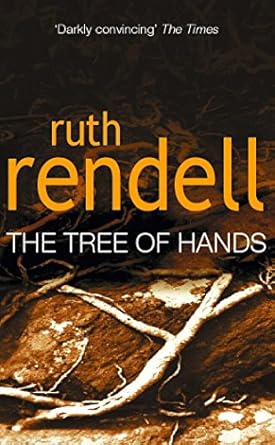
When Benet was about fourteen, she and her mother had been alone in a train carriage – and Mopsa had tried to stab her with a carving knife. It has been some time since Benet had seen her psychologically disturbed mother. So when Mopsa arrives at the airport looking drab and colourless in a dowdy grey suit, Benet tries not to hate her. But when the tragic death of a child begins a chain of deception, kidnap and murder in which three women are pushed to psychological extremes, family ties are strained to the absolute limit…

The Tree of Hands by Ruth Rendell is one of my TBRs. It’s a book I bought nine years ago from Barter Books in Alnwick. I don’t know why I haven’t read it before now as it is really good – one of the best books I’ve read this year, and one of her best standalone books. I read it this year as one of my 20 Books of Summer.

Why I enjoyed it so much is that it thoroughly gripped me and made me want to read on and on. It’s a psychological thriller, full of suspense, with several twists and turns that made me unsure how it would end. I was delighted by the final twist!

Benet’s son, James aged four dies from croup whilst in hospital soon after Mopsa, her mother with a history of mental illness, comes to visit. Meanwhile Carol, a young widow with three kids, two of them in care, is living nearby with Barry, her younger boyfriend. He adores her but she doesn’t want to marry him, content for him to do all the housework and look after Jason her two year old son when he is not being looked after by babysitters. The trouble starts when Mopsa kidnaps Jason and brings him back to Benet as a replacement for James.

The tree of hands in the title is taken from the collage on the hospital playroom wall:

On the white paper base sheet had been drawn a tree with a straight brown trunk and branches and twigs, and all over the tree, on the branches, nestling among the twigs, protruding like fungus from the trunk, were paper hands. All were exactly the same shape, presumably cut out by individual children using a template of an open hand with the fingers spread slightly apart. (page 46)

Benet found them horrible, as though the hands were begging for relief, or freedom, or oblivion. She thought there was a mad quality about them, ‘all the hands upraised, supplicating, praying.’ And she fell forward in a faint when the doctor told her James had died.

This is a dark and disturbing book about what happens to Jason, Benet, Carol and Barry. It’s well written and I could easily visualise the characters and the setting. It’s emotionally challenging and it both fascinated and horrified me in equal measure. It won the CWA Silver Dagger Award in 1984, an award given annually by the Crime Writers’ Association of the United Kingdom since 1960 for the best crime novel of the year. 

NB I’m currently reading Rendell’s The Girl Next Door because I enjoyed The Tree of Hands so much.

The 20 Books of Summer Challenge 2024

The 20 Books of Summer challenge, hosted by Cathy over at 746Books, came to an end today. You could choose to read 20, 15 or 10 books from your TBR shelves and this year I went for the 20 book challenge. I nearly made it, reading 19 books and currently reading book 20.

The books listed below shown in italics are books I’ve read but not reviewed, those shown in bold link to my reviews:

The Best = 5 stars

  • Great Meadow by Dirk Bogarde
  • The Innocent by Matthew Hall
  • The Silence Between Breaths by Cath Staincliffe
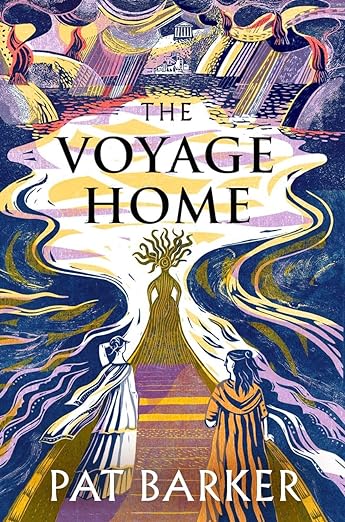
  • The Silence of the Girls by Pat Barker
  • The Women of Troy by Pat Barker
  • The Voyage Home by Pat Barker
  • The Tree of Hands by Ruth Rendell

Very good = 4 stars

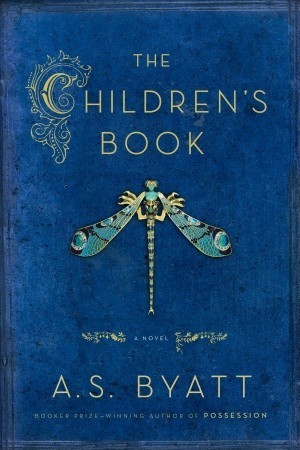
  • The Children’s Book by A S Byatt
  • The Black Tulip by Alexander Dumas
  • Hemlock Bay by Martin Edwards
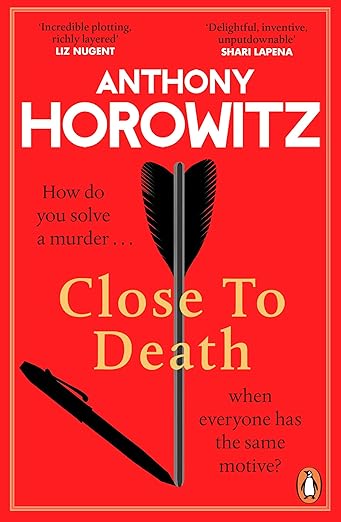
  • Close to Death by Anthony Horowitz
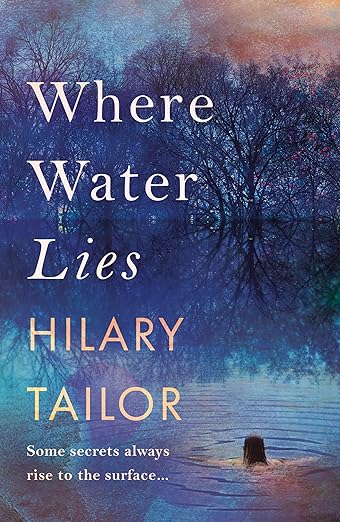
  • Where Water Lies by Hilary Tailor
  • A Murder of Crows by Sarah Yarwood-Lovett
  • Black Roses by James Thynne

Enjoyable = 3 stars

OK = 2 stars

Very disappointing = 1 star

Currently Reading:

The one I haven’t finished is Strangers on a Train by Patricia Highsmith, but I have started it and I will finish it.

My thanks to Cathy at 746 Books for hosting this event once more this year!

The Bunner Sisters by Edith Wharton, a Novella

Rating: 3 out of 5.

This has been on my TBR list for several years, so I thought it was about time I read it. It was written in 1898, but not published until 1916, one of the short stories in Xingu and Other Stories, set in a working class neighbourhood in New York.

In the days when New York’s traffic moved at the pace of the drooping horse-car, when society applauded Christine Nilsson at the Academy of music and basked in the sunsets of the Hudson River School on the walls of the National Academy of Design, an inconspicuous shop with a single show-window was intimately and favourably known to the feminine population of the quarter bordering on Stuyvesant Square.

It was a very small shop in a shabby basement, in a side-street already doomed to decline; and from the miscellaneous display behind the window-pane and the brevity of the sign surmounting it (merely ‘Bunner Sisters’ in blotchy gold on a black background) it would have been difficult for the uninitiated to guess the precise nature of the business carried on within. (page 1)

As the title indicates it’s about two sisters, Ann Eliza the elder, and Evelina the younger, who have a small shop selling artificial flowers and small handsewn articles. The sisters, both unmarried, have fallen on hard times.They meet Herbert Ramy, a German immigrant who also has a small shop, when Ann Eliza buys a clock from him as a birthday present for Evalina.

This is a sad tale, very readable and very descriptive. The characters are memorable, well drawn and are clearly distinguishable. Their lives are mainly filled with daily routine. But there’s a growing sense of foreboding and mystery, especially surrounding Ramy. As he gradually becomes an important part of their lives, the sadness becomes overwhelming, eventually turning into tragedy.

Death at the Sign of the Rook by Kate Atkinson

Random House UK| 22 August 2024 | 335 pages|e-book |Review copy| 2*

Description:

Ex-detective Jackson Brodie is staving off a bad case of midlife malaise when he is called to a sleepy Yorkshire town, and the seemingly tedious matter of a stolen painting. But one theft leads to another, including the disappearance of a valuable Turner from Burton Makepeace, home to Lady Milton and her family. Once a magnificent country house, Burton Makepeace has now partially been converted into a hotel, hosting Murder Mystery weekends.
As paying guests, a vicar, an ex-army officer, impecunious aristocrats, and old friends converge, we are treated a fiendishly clever mystery; one that pays homage to the masters of the genre―from Agatha Christie to Dorothy Sayers.

My thoughts:

Death at the Sign of the Rook by Kate Atkinson begins so well I thought that I was in for a treat. But sadly, as I read on I was disappointed. I was looking forward to reading more about Jackson Brodie, but he only has a minor role. It is amusing in parts. But there are so many other characters, and the story became far too long winded, the narrative jumping around from one set of characters to another, and then another, which made it confusing. The ending was just pure farce, which I’ve never liked, pushing it into the absurd.

Looking back at some of Kate Atkinson’s other books I’ve read I see I had the same reaction to her previous book, Shrines of Gaiety. My favourite books by her are Life After Life and A God in Ruins, both of which I loved.

My thanks to NetGalley and the publishers for my review copy.

The Classics Club Spin Result

The spin number in The Classics Club Spin is number …

17

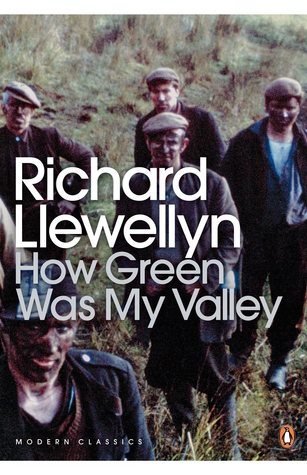
which for me is How Green Was My Valley by Richard Llewellyn. The rules of the Spin are that this is the book for me to read by 22 September 2024.

Synopsis from Goodreads

A poignant coming-of-age novel set in a Welsh mining town, Richard Llewellyn’s How Green Was My Valley is a paean to a more innocent age, published in Penguin Modern Classics

Growing up in a mining community in rural South Wales, Huw Morgan is taught many harsh lessons – at the kitchen table, at Chapel and around the pit-head. Looking back on the hardships of his early life, where difficult days are faced with courage but the valleys swell with the sound of Welsh voices, it becomes clear that there is nowhere so green as the landscape of his own memory. An immediate bestseller on publication in 1939, How Green Was My Valley quickly became one of the best-loved novels of the twentieth century. Poetic and nostalgic, it is an elegy to a lost world.


This is good as How Green Was My Valley is also on my 20 Books of Summer list. I’m looking forward to reading it. It’s been on my To Be Read list for so long!

Did you take part in the Classics Spin? What will you be reading?

Daisy Darker by Alice Feeney

I’ve read Alice Feeney’s debut novel, Sometimes I Lie and His and Hers and loved them. So I had high hopes for Daisy Darker, her fifth book.  Sadly, I was disappointed and I have to say that I didn’t enjoy it. I’ll even go as far as admitting, which I really don’t want to say because I don’t like being negative about a book, I think it is dire. But there are plenty of other readers who enjoyed it, even loved it, so I’m in the minority here. Don’t let me put you off reading it, if it appeals to you. This is just my opinion.

Description (Goodreads)

After years of avoiding each other, Daisy Darker’s entire family is assembling for Nana’s 80th birthday party in Nana’s crumbling gothic house on a tiny tidal island. Finally back together one last time, when the tide comes in, they will be cut off from the rest of the world for eight hours.
The family arrives, each of them harboring secrets. Then at the stroke of midnight, as a storm rages, Nana is found dead. And an hour later, the next family member follows… Trapped on an island where someone is killing them one by one, the Darkers must reckon with their present mystery as well as their past secrets, before the tide comes in and all is revealed.

With a wicked wink to Agatha Christie’s And Then There Were NoneDaisy Darker’s unforgettable twists will leave readers reeling.

My thoughts:

I’m going to be brief. The beginning, was promising and made me interested enough to read on as the Darker family reunited for their Nana’s 80th birthday party at Halloween. They all arrive, Daisy, her father Frank, her mother Nancy, her siblings Rose and Lily and her niece, Trixie. Nana lives on a tidal island, which means that when the tide was in they couldn’t leave, making this a variation on the ‘locked room murder’ mystery, which I generally like. So, I read on, as hour by hour, one by one they’re all found dead. There’s a poem written in chalk on the back wall of the kitchen about the Darker family. As each death occurs the lines about each person are struck through. The poem is pure doggerel and painful to read.

The story quickly began to drag for me and I got fed up with the repetition of how many hours were left until low tide. I got tired of the unlikable characters in this dysfunctional family, the platitudes scattered throughout the book and the increasingly stupid plot, culminating in a surreal supernatural conclusion. I was glad to get to the end.