Saturday Snapshot

This is the Flodden Visitor Centre. It’s in a former telephone box in the village of Branxton in Northumberland. Flodden Visitor Centre P1080503It claims to be the smallest visitor centre in the world:

Flodden Visitor Centre P1080499

It’s part of the commemoration of the Battle of Flodden which took place 500 years ago in September between the English and Scottish armies in the fields near Branxton.

Flodden Visitor Centre P1080501Inside there is a map showing the routes of the two armies and indicating several sites related to the battle. There are leaflets and even a button to press the hear about the battle.

If you are in London on 14 May you can get tickets for a lunchtime lecture on the Battle of Flodden 1513 by historian Clive Hallam Baker at the Tower of London. He is the author of The Battle of Flodden: Why and How.

Other books about Flodden, with links to my reviews:

Fiction:

Non fiction:

  •  Flodden: the Scottish Invasion of Henry VIII’s England by Nigel Barr
  • New Light on Floddon (sic) by Gerard F T Leather – I have not written about this short book published in 1938, which Leather, a member of the Berwickshire Naturalists’ Club had written after studying the battle for a talk. As he explained there were actually four distinct fights going on a more or less the same time and the old name of the battle was that of Branxton Moor, a more correct title, in his opinion, as the battle scene was a mile and a half from Flodden.

For more Saturday Snapshots see Alyce’s blog At Home With Books.
April's Books

I read 8 books in April.

The book I enjoyed the most is After Flodden by Rosemary Goring, which is to be published in June (I read an Advanced Proof Copy supplied by Love Reading).

The full list is (with links to my posts on the books):

  1. The Distant Hours by Kate Morton (TBR book) – historical fiction
  2. After Flodden by Rosemary Goring – historical fiction
  3. The Winter Garden Mystery by Carola Dunn (Daisy Dalrymple 2) (Kindle) – historical crime fiction
  4. Daughters of Fire by Barbara Erskine (TBR book) – historical fiction
  5. Balthazar Jones and the Tower of London Zoo by Julia Stuart (TBR book) (review to follow)
  6. Short Sentence: A crime short story collection from Bloomsbury: 10 stories of dastardly deeds (Kindle) – crime fiction
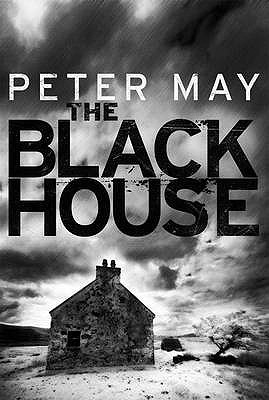
  7. The Blackhouse by Peter May (library book) – crime fiction
  8. The Lewis Man by Peter May (Kindle) – crime fiction

My Crime Fiction Books of the Month:

Blackhouse& Lewis Man

CF Pick of the monthOf the 8 books, 4 are crime fiction. It’s a tie this month for Crime Fiction Book of the Month between The Blackhouse  and The Lewis Man both by Peter May. I really couldn’t decide between them. I’ll post my thoughts about The Lewis Man soon. For more Crime Fiction Books of the Month go to Kerrie’s blog Mysteries in Paradise.


Notes on the books without reviews:

  • The Winter Garden Mystery* by Carola Dunn (Daisy Dalrymple 2). A quick, easy and enjoyable read. Set in 1923, Daisy is visiting Occles Hall in Cheshire, the home of her school friend Bobbie, to write an article for the Town and Country magazine and discovers a corpse buried in the Winter Garden. It’s the body of Grace Moss, the blacksmith’s daughter and parlour maid at the Hall. She had gone missing three months earlier.The under-gardener is arrested and Daisy convinced of his innocence. Enter Detective Inspector Fletcher of Scotland Yard.
  • Short Sentence: A crime short story collection from Bloomsbury: 10 stories of dastardly deeds*.  This is a free Kindle edition of short stories from Parker Bilal, Alex Cooper, Sarah Evans, Conor Fitzgerald, Calum Macleod, Jan Snook, Mary Waters, Anne Zouroudi, Thomas Mogford and James Runcie. Very quick reads – each just 1000 words or less on the themes of Deception, Bad Judgement, Payback, Secrets and Lies and Obsession. I prefer a more complicated plot and character development, but these are OK for their length. My favourite was Secrets and Lies by Jan Snook (a new-to-me author).

The Blackhouse by Peter May

I first became aware of Peter May’s books when I saw The Lewis Man in a bookshop when we were on holiday in Glencoe last September. I was drawn to it because of its title and its historical reference – a man found buried in a peat bog on the Isle of Lewis. But when I realised that it was the second in a trilogy I decided to read the first book first and it’s only been in these last few weeks that I’ve borrowed The Blackhouse from the library and read it.

The Blackhouse (Lewis Trilogy, #1)

As I was reading The Blackhouse I wasn’t sure how to categorise it. There’s a murder and a mystery, an investigation by the police, but most of the book is not really a detective story, or a police procedural. It’s very slow reading and I had to lower my expectations of getting to grips with solving the murder mystery, because that is not the main element of this book and actually it’s not too difficult to work out who the murderer is.

I liked it very much, although I nearly stopped reading when I got to the description of the post mortem – I don’t like gruesome! It was a particularly brutal killing. But I’m glad I carried on and settled into the rhythm of the book. I loved the dramatic setting on the Isle of Lewis in the Outer Hebrides and wished this book had a map as the geography of the island plays an important part in the story (I see the last book in the trilogy, The Chessmen, does have a map!). But Peter May’s descriptions convey the atmosphere and bring the scenes to life beautifully and vividly.

Detective Fin Macleod is seconded from the Edinburgh police force to help with the investigation into the murder in the village of Crobost on Lewis because it bears a resemblance to a similar murder in Edinburgh and Fin was born and brought up on Lewis, so he knows the people and speaks Gaelic. As the story unfolds, the narrative splits in two – one, set in the present day, follows the murder investigation (told in the third person) and the other, (told in the first person) as Fin recalls the events of his childhood and remembers his friends – some of whom are still living on Lewis. These include his best friend, Artair, his first girlfriend, Marsaili and the school bully (and murder victim) Angus Macritichie, known as Angel.

Fin’s memories are not all happy ones and include the time he took part in the traditional annual two week trip to An Sgeir, the rock fifty miles north-north-east of Lewis to harvest the guga, or young gannets. Twelve men from Crobost still carried on the four hundred year tradition, living rough on the rock, clambering over the cliffs to snare and kill the young birds. It’s in passages like these, that are vital to the plot and yet seemingly buried in Fin’s mind, that May excels.

The book gathers pace as it reaches its conclusion, in comparison to the almost leisurely story-telling of the earlier sections, as the drama and tension increase. Fin not only uncovers the identity of the murderer but also discovers things about himself either that he hadn’t known before or had buried deep within his mind. Things that turn his world upside down for ever.

I liked it so much that almost immediately I began The Lewis Man, which so far is equally as good.

After Flodden by Rosemary Goring

This year is the 500th anniversary of the Battle of Flodden between the forces of James IV of Scotland and Henry VIII of England. After Flodden by Rosemary Goring is the dramatic story of what happened after the battle on 9 September 1513. Well written, well researched this is a compelling and powerful book, bringing the characters and the Edinburgh and Borders of 1513 vividly to life. Once I started reading the book I didn’t want to stop. I read it quickly, devouring the pages, completely involved in this dramatic story.

I was swept away with the action, re-living the scenes through Rosemary Goring’s vivid descriptions €“ the court at Edinburgh, the wild Borderlands, the violence of the battle scenes and the interaction between the characters. It’s a brilliant book.

Louise Brenier is determined to find out what happened to her missing brother Benoit, was he killed in action, or was he captured? Interspersed with the story of Louise’s search for Benoit Brenier, her brother, are flashbacks to the Battle as the two sides gathered together and engaged in warfare, the political intrigue and danger always present.

There is Patrick Paniter, James’s secretary and right-hand man – full of remorse at the death of his king, and tormented by memories he would rather keep buried. Louise appeals to him for help, and when he tells her that Benoit must either be dead or a prisoner she sets off to search for him. Soon Gabriel, Viscount Torrance, a courtier and advisor to Paniter, joins her in her search, which takes them deep into the Border country, the stronghold of the Crozier clan and the retribution that Thomas Dacre, the Lord-Warden of the English Marches has vowed to impose.

After Flodden is due out in June 2013. I read an Advance Proof Copy supplied by Lovereading.co.uk.

FF monumentI’ve written about Flodden Field before, after our first visit to the Flodden Monument. The monument was erected in 1910 at the place where it was then thought that James IV fell in battle. However, more recent opinion is that this happened further south of the village, in the shallow valley close to the road at the foot of Branxton Hill.

There is a programme of events to commemorate this battle that led to the death of 15,000 Scots and English soldiers, 100 noblemen and the Scottish King, James IV. For more information about the battle and the Ecomuseum go to Flodden 1513. As the website explains the Ecomuseum links ‘together 12 sites from across north Northumberland, the Scottish Borders and Edinburgh, which have an intimate connection with the story of Flodden. These sites are all existing attractions, where access and interpretation are already available. They include churches, bridges, castles, museums and of course the battlefield itself.

Also have a look at Remembering Flodden 1513 – 2013, where the Stop Press News is that the One Show on BBC1 is featuring Flodden on Tuesday 30th May at 7pm – showing presenter and historian Dan Snow’s visit to the battlefield and castles of the borderlands.

Weekend Cooking: Ultimate Chocolate Brownies

Slender Frenchwomen often told the co-founder of Green & Black’s chocolate that ‘they kept a bar of Green & Black’s in their desk drawer, to have a square at 4 pm which would keep them going till dinner …’ Could I be so disciplined and just eat one square?

Well, I can restrict myself to eating just one Ultimate Chocolate Brownie and whilst that can never really be thought to help keep anyone slender, eating one at 4 pm will certainly keep anyone going until dinner time!

Chocolate Brownie

I made a batch recently using the recipe from Green & Black’s Organic Ultimate Chocolate Recipes: the New Collection. This is a book mainly about baking, and it makes my mouth water just looking at it, full of recipes for cakes, cookies, cupcakes, cheesecakes, tarts  soufflés, puddings, pies, and sweets such as truffles and chocolate marshmallows. They are all decadently chocolatey and scrumptious.

To make 24 chocolate brownies you need:

  • 300g unsalted butter
  • 300g dark (70% cocoa solids) chocolate broken into pieces
  • 5 large free-range eggs
  • 450g granulated sugar
  • 1 tablespoon vanilla extract
  • 200g plain flour
  • 1 teaspoon salt
  • Preheat oven to 180°C/gas mark 4
  • Melt butter and sugar together in a bowl over a pan of barely simmering water
  • Beat eggs, sugar and vanilla extract together until the mixture is thick and creamy and when chocolate and sugar have melted together beat in the egg mixture
  • Add flour and salted (sifted together first) and beat until smooth
  • Bake in a tin 30x24x6cm, lined with greaseproof or baking parchment for about 20-25 minutes until the top has formed a crust just starting to crack.
  • The brownie will not wobble but will be gooey inside
  • Leave in the tin for 20 minutes and then cut into 24 squares and remove from the tin

Eat and enjoy!

N.B. I wrote about Green & Black’s first cookbook in an earlier Weekend Cooking post where I described making chocolate mousse – Dark with Coffee.

weekend cookingWeekend Cooking is hosted by Beth Fish ReadsIt’s open to anyone who has any kind of food-related post to share: Book (novel, nonfiction) reviews, cookbook reviews, movie reviews, recipes, random thoughts, gadgets, fabulous quotations, photographs.  For more information, see the welcome post.

The Classics Club

The Classics ClubThe Classics Club is a club created to inspire people to read and blog about classic books. There’s no time limit to join.You simply sign up to read and write on your blog about at least 50 classic books in at most five years.

I’ve dithered about joining The Classics Club for over a year now and have finally decided to take the plunge. I’m good at listing books, even if after that I don’t read them all, or write about them.

The 50 books on this list are all books I own, either physical books on the bookshelves or e-books on Kindle  They do say that you shouldn’t plan too far into the future, and going off what’s happened in the last five years that’s a good thing, but I would like to think that I’ll read them within the next five years (that is by April 2018!!). I like the fact that this doesn’t have to be a fixed list – this is my initial list, which I’ve already changed since I started compiling it!

I’ve listed them in a-z author order.

  1. Lady Susan, The Watsons, Sanditon by Jane Austen
  2. Mansfield Park by Jane Austen (re-read)
  3. The Old Wives Tale by Arnold Bennett
  4. Lorna Doone: A Romance of Exmoor by R D Blackmore
  5. Lady Audley’s Secret by M E Braddon
  6. The Thirty Nine Steps by John Buchan
  7. The Making of a Marchioness by Frances Hodgson Burnett
  8. My Antonia by Willa Cather
  9. Don Quixote by Miguel de Cervantes Saavedra
  10. No Name by Wilkie Collins
  11. Lord Jim by Joseph Conrad
  12. A Journal of the Plague Year by Daniel Defoe
  13. Moll Flanders by Daniel Defoe
  14. Barnaby Rudge by Charles Dickens
  15. Nicholas Nickleby by Charles Dickens
  16. Little Dorrit by Charles Dickens
  17. Martin Chuzzlewit by Charles Dickens
  18. The Old Curiosity Shop by Charles Dickens
  19. Oliver Twist by Charles Dickens
  20. Pickwick Papers by Charles Dickens
  21. Out of Africa – Isak Dinesen
  22. The Adventures of Sherlock Holmes by Arthur Conan Doyle
  23. The Count of Monte Cristo by Alexandre Dumas
  24. Adam Bede by George Eliot
  25. The Mill on the Floss by George Eliot
  26. Silas Marner by George Eliot
  27. Parade’s End by Ford Maddox Ford
  28. The Women’s Room by Marilyn French
  29. The Forsyte Saga (1-3) by John Galsworthy
  30. Mary Barton by Elizabeth Gaskell
  31. North and South by Elizabeth Gaskell
  32. Wives and Daughters by Elizabeth Gaskell
  33. Notre-Dame of Paris by Victor Hugo
  34. To Kill a Mockingbird by Harper Lee
  35. Three Men in a Boat by Jerome K Jerome
  36. The Man Who Would Be King by Rudyard Kipling
  37. Love in the Time of Cholera by Gabriel Garcia Marquez
  38. One Hundred Years of Solitude by Gabriel Garcia Marquez
  39. Of Human Bondage by W. Somerset Maugham
  40. Moby Dick by Herman Melville
  41. Gone with the Wind by Margaret Mitchell
  42. Of Human Bondage by W Somerset Maugham
  43. Black Beauty by Anna Sewell
  44. Travels with a Donkey in the Cevennes by Robert Louis Stevenson
  45. Gulliver’s Travels by Jonathan Swift
  46. Barchester Towers (Barsetshire Chronicles, #2) by Anthony Trollope
  47. The Color Purple by Alice Walker
  48. The Age of Innocence by Edith Wharton
  49. Ethan Frome by Edith Wharton
  50. The Voyage Out by Virginia Woolf