Book Beginnings

Book Beginnings ButtonGilion at Rose City Reader hosts Book Beginnings on Friday in which you share the first sentence (or so) of the book you are reading, along with your initial thoughts about the sentence, impressions of the book, or anything else the opener inspires.

I was looking at some of my books that I’ve had for a long time and wondering which one to read next and I came across Cloud Atlas by David Mitchell. This was immensely popular when it first came out in 2004 and so I bought a copy and began to read it. Although the opening pages intrigued me after a few more pages I put it down; I just couldn’t get into it. After a while I tried it again, and again and still found it not very interesting and when I looked forward in the book I found it looked very disjointed and I gave up. There were plenty of books to read without struggling to read one that wasn’t interesting me.

Then they made a film and people started enthusing about it again. So, how many times do I try to read this book? It begins:

Thursday, 7th November –

Beyond the Indian hamlet, on a forlorn strand, I happened upon on trail of recent footprints. Through rotting kelp, sea cocoanuts & bamboo, the tracks led me to their maker, a white man, his trowsers & Pea-jacket rolled up, sporting a kempt board & an outsized Beaver, shovelling & sifting the cindery sand with a tea-spoon so intently that he noticed me only after I hailed him from ten yards away. Thus it was, I made the acquaintance of Dr Henry Goose, surgeon to the London nobility. His nationality was no surprise. If there be any eyrie so desolate, or isle so remote that one may resort unchallenged by an Englishman, ’tis not down on any map I ever saw.

From the back cover:

Six interlocking lives – one amazing adventure. In a narrative that circles the globe and reaches from the 19th century to a post-apocalyptic future, David Mitchell erases the boundaries of time, genre and language to offer an enthralling vision of humanity’s will to power, and where it will lead us.

It knits together science fiction, political thriller and historical pastiche with musical virtuosity and linguistic exuberance …

It sounds amazing and extraordinary, but I’m still not sure because when I actually start reading it, the first chapter ends in the middle of a sentence. Is that really meant to make me want to read on when the next chapter seems totally unconnected? It reminds me of Italo Calvino’s If on a Winter’s Night a Traveller, a book I didn’t finish reading, although I loved the beginning of that book.

Is Cloud Atlas really so good! If you have read it, what do you think? Please let me know.
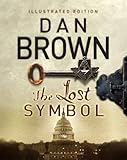
The Lost Symbol by Dan Brown: Book Notes

I read Dan Brown’s The Lost Symbol back in July and never got round to writing about it at the time, so I’ve forgotten much of the detail. For pure escapism I really like Dan Brown’s books. I know lots of people criticise his writing but I find his books hard to put down once I’ve started reading them – I’ve read The Da Vinci Code and Angels and Demons as well as this one. They’re not great literature but they are great entertainment, even though this one follows the same formula – it’s a breathtaking race over 24 hours as Robert Langdon follows the clues, to rescue the his friend, Peter Solomon, a Mason. Because it’s so formulaic I knew what to expect (although not the detail), it’s full of cliff-hangers and the characters are stereotypes.

It’s long and complicated, full of coincidences and improbable situations, all of which I had no trouble accepting, and a terrifying and crazy villain, Mal’ahk. It’s also packed with detail about the Freemasons,the art and architecture of Washington D.C., and Noetic Science – ‘a fusion of modern particle physics and ancient mysticism’,  all of which was new to me and I found it fascinating. It helped that I read the Illustrated Edition on Kindle which has many photographs and illustrations and I kept checking facts on the computer too.

I don’t think it’s as good as either The Da Vinci Code or Angels and Demons, but that may because the first had the novelty factor and the second is set in Rome, a place I’ve visited and know more about than Washington D.C. It did make me want to visit Washington D.C. though. And I do intend to read his next book Inferno. I’ve read some of Dante’s Inferno and I’ve visited Florence so I’m keen to find out where Robert Langdon’s race against time takes him and how Brown incorporates the details of the Circles of Hell.

Although I didn’t read this to take part in the What’s in a Name Challenge I’ve realised that it does fit into the category of book with the word ‘lost‘ in the title, making this the last book for me to complete the Challenge.

Mount TBR Challenge: September Checkpoint

Mount TBRIt’s time to check in for Bev’s Mount TBR Reading Challenge 2013.

This is a very simple challenge – to read books from your own shelves.  All the books I own are ones I want to read so why is it so difficult to reduce my TBR mountain of books?I think it’s because of the temptation to read newly acquired books, those recently published and also older books that I come across either on the internet, or in the library or bookshops.

I suppose the only way not to keep adding to the TBR mountain is to stop going to the library, bookshops or read the internet – and I really don’t want to do that and I could miss out on some good books. So, the TBR piles never get smaller, even though I’ve been reading quite a lot this year – 26 so far, which is one more than I read in the whole of last year.

This quarter I’ve read 13 of my TBR books (linked to my posts on the books):

  1. Falling Angels by Tracy Chevalier
  2. Tamburlaine Must Die by Louise Welsh
  3. The Sense of an Ending by Julian Barnes
  4. The Case of the Howling Dog by Erle Stanley Gardner
  5. The Red Coffin by Sam Eastland
  6. To Kill a Mockingbird by Harper Lee
  7. Third Girl (Poirot) by Agatha Christie
  8. Agatha Christie at Home by Hilary Macaskill
  9. The Birthday Boys by Beryl Bainbridge
  10. The Pillars of the Earth by Ken Follett
  11. The Death Maze by Ariana Franklin
  12. Relics of the Dead by Ariana Franklin
  13. Not the End of the World by Christopher Brookmyre

There are a couple of outstanding books in the ones I’ve read this quarter – To Kill a Mockingbird, and The Birthday Boys. 

Here are my answers to some of Bev’s questions:

1. Tell us how many miles you’ve made it up your mountain (# of books read).  If you’re really ambitious, you can do some intricate math and figure out how the number of books you’ve read correlates to actual miles up Pike’s Peak, Mt. Ararat, etc. 

This means in terms of mountains climbed (according to the Challenge criteria) that I’ve scaled Mont Blanc (24 books) and am now in the foothills of Mt Vancouver (36 books) – quite a way to go until my target of Mt Ararat (48 books).

2. Which book (read so far) has been on your TBR mountain the longest? Was it worth the wait? Or is it possible you should have tackled it back when you first put it on the pile? Or tossed it off the edge without reading it all?

Of the books read this quarter I think Falling Angels has been on the list the longest and it was well worth the wait. I always wonder why I haven’t read such a book earlier when I’ve enjoyed reading it so much, but really it doesn’t matter when I read it, so long as I do sometime!

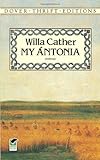
My Antonia by Willa Cather

I’d included My Antonia on my Classics Club list of books to read because I’d enjoyed reading A Lost Lady a few years ago (my post on that book is here). So when it popped up in the Classics Club Spin as the book to read in August/September I was pleased.

I liked it, but not as much as A Lost Lady. I think it’s because it’s a bit fragmented, made up of  a series of short stories. But it’s beautifully written with vivid descriptions of people and places. Published in 1918 it’s set in America at the beginning of the 20th century – the story of immigrant settlers and in particular that of Antonia Shimerda and her family as told by Jim Burden. Jim and Antonia meet as children, when he had come to live with his grandparents on their farm in Nebraska. Antonia’s family is from Bohemia, speaking very little English and living in a sort of shed, little more than a cave. They spend a lot of time together as Jim teaches Antonia to speak English.

Jim recounts various episodes as they grow up together. Gradually they drift apart and lose contact, as Jim left for college eventually becoming a lawyer, whilst Antonia stayed in Nebraska. They meet again years later. It’s a story of hardship and suffering, of poverty, people struggling to make a living from the land, and of the attitudes towards immigrants, women and children. It’s also about being an outsider and the importance of belonging, which makes it most poignant that to her father Antonia is ‘My Antonia’.

But the thing that stands out for me is the beauty of Cather’s descriptions of the countryside and as I read I highlighted many passages – this for example:

Presently we saw a curious thing: there were no clouds, the sun was going down in a limpid gold-washed sky. Just as the lower edge of the red disk rested on the high fields against the horizon, a great black figure suddenly appeared on the face of the sun. We sprang to our feet, straining our eyes toward it. In a moment we realized what it was. On some upland farm, a plough had been left standing in the field. The sun was sinking just behind it. Magnified across the distance by the horizontal light, it stood out against the sun, was exactly contained within the circle of the disk; the handles the tongue, the share black against the molten red. There it was, heroic in size, a picture writing on the sun.

Even while we whispered about it, our vision disappeared; the ball dropped and dropped until the red tip went beneath the earth. The fields below us were dark, the sky was growing pale, and that forgotten plough had sunk back to its own littleness somewhere on the prairie. (page 186)

But it’s not just descriptive, it conveys the timelessness of human nature, of how people interact and think, their prejudices, unreliability and of their love for each other. I was struck by this definition of happiness:

I was entirely happy. Perhaps we feel like that when we die and become part of something entire, whether it is sun and air, or goodness and knowledge. At any rate, that is happiness: to be dissolved into something complete and great. When it comes to one, it comes as naturally as sleep. (page 11)

Yet this is a sad book, full of nostalgia and poignancy. There’s such a contrast between the hardness of the life of the settlers and the loving gentle family life that Jim’s grandparents provide for him and their generosity towards their neighbours. Overall, though it is the character of Antonia that caught my attention and in the episodes that weren’t about her I lost interest somewhat. So, a mixed reaction – there are parts that I thought were outstanding and parts that left me rather unsatisfied.

The Attack of the Sparrows

For a few days now little white feathers have been appearing on the lawn at the front of the house – and in the back garden too. We were a bit worried that our cat had been catching birds, but mice are her preferred option. We were wrong – it wasn’t down to Heidi.

This year our house has been home to four lots of house martins, with four families in four nests, one at each of the gable ends and a fourth on the front wall of the house built over the cover of an extractor. These birds have been dazzling us with their spectacular aerobatics as they’ve been swooping and sailing above us high in the sky most of the summer, catching the insects that love to bite me. Needless to say I love house martins.

I don’t know how many broods they’ve had but there are still fledglings in the nest at the front. According the RSPB they can have up to three broods and I suspect each of the families have done that this year. They’ve made quite a mess on the walls and window sills with their droppings.

The puzzle of the feathers on the lawn was solved the other day when we saw two sparrows attacking the nest, pulling out feathers and poking around inside the nest – and the fledglings were still inside. I never knew what aggressive little beggars house sparrows are! The RSPB site tells that they often damage house martins’ nests and even attack adults, eggs and young birds. This attack was rebuffed by the house martins and the sparrows flew off – but there are more white feathers around this morning, the war continues.

Sparrow on HM nest

Saturday Snapshot – Flodden

It’s the 500th anniversary of the Battle of Flodden this year – it was on 9th September 1513 that the armies of England and Scotland met at Flodden Field, near Branxton in Northumberland. There have been events this year to commemorate the battle and the men from both nations who died in this last medieval battle between England and Scotland.

Living not far from the site of the battle this week we went to see what had changed as a result of the anniversary. There’s now a surfaced path leading up to the Monument.

(Click on the photos to see them enlarged)

500th anniversary P1010826

There are some more information boards and signs to guide you round the Battlefield Trail:

Battlefield trail signpost P1010837The monument isn’t actually on the site of the battle but stands on Piper’s Hill.

Flodden MonumentFrom the monument you can look towards the north down on the village of Branxton:

Branxton P1010831The two armies lined up south of the monument with a marshy dip between them. The Scots advanced first, unaware of the of the ground conditions below them. Now it’s a ditch but in 1513 there was a brook surrounded by a reeded quagmire downhill – where the Scots were bogged down, the rear ranks pushing forward into the front ranks, crushing the fallen bodies and causing chaos. They were then easy prey for the deadly English billhooks.

It looks like this now – the ditch between the hedge and fence is now nearly dry, after weeks of rain in 1513 it was a quagmire:

Boggy Ground P1010835

 and the two armies came face to face:

Tthe Killing Fields P1010858

Flodden 1513: Scotland’s Greatest Defeat by John Sadler is an excellent account of the strategies and tactics of both armies, with maps and plans showing how the battle began and a time timeline of the various conflicts giving a detailed account of events.

Having read this book and the information boards around the trail I was able to visualise the battle, even on a peaceful weekday afternoon 500 years later. The Scottish troops had moved from their original position on Flodden Edge as the English approached the battlefield, putting them at a disadvantage. The outcome could have been different if they had seen the dip below them as they charged down the hill – or even if the English had attacked first.

But then, the battle needn’t have taken place at all if James IV of Scotland had not invaded England in an attempt to divert English troops from their fight against the French. Indeed he had entered into a Treaty of Perpetual Peace with England in 1502. But in 1512 he had also renewed the Auld Alliance with the French, putting him in the position of either declaring for France against Henry VIII (James’s brother-in-law) or remaining neutral, which would make him vulnerable to any further English expansion, as Henry had revived his claim to the Scottish throne.

Despite pressure from senior members of his council to avoid an outright breach with England, when Henry arrived in Calais preparing to wage war against the French, James decided to go to war against the English. Prior to the battle at Flodden he had crossed the River Tweed into England where he then attacked and captured Norham Castle, and then destroyed both Etal and Ford Castles whilst the English were still mustering their troops. But the outcome was a disaster for Scotland and James was killed on Flodden Field:

The king’s was but one of many hundreds of bodies, sprawled and piled on the bloodied turf. The whole hillside from the brook northwards was a killing ground, the dead, maimed and horribly injured competing for space, severed limbs and streaming entrails spilling fresh gore. The din would have been terrific, with hoarse shouts and the screams of the dying men, the crash of spears, a crescendo rising and spilling like breakers against the shore. (page 82, Flodden 1513 by John Sadler)

Each time I go to Branxton, or see the monument as we drive south along the A697, I think about the battle and all those who died there in 1513.

For more Saturday Snapshots see Melinda’s blog West Metro Mommy Reads.