The Monocled Mutineer by John Fairley & William Allison

When I was asked if I would read and review a revised edition of The Monocled Mutineer by John Fairley and William Allison, the book on which the 1986 BBC TV series was based I was immediately interested as I had watched the TV series.

Description from the Press Release:

In 1917 British, New Zealand and Australian troops stationed at the Étaples Training Camp in northern France protested against the inhuman conditions and the protest erupted into mutiny. Private Percy Toplis was named by the authorities as a leader of this mutiny. While several of the mutineers were executed in its aftermath, Toplis escaped and remained at large for three years. The Army immediately covered up the mutiny, thousands of the participants died shortly afterwards in the Passchendaele offensive while the survivors remained silent for over fifty years. After three years as Britain’s most wanted man Percy Toplis was killed in 1920 by a policeman.

My thoughts:

This is the 2nd and updated edition of The Monocled Mutineer, which  includes a new introduction and epilogue that expand on newly discovered information about the events of the mutiny and the government’s response to it. It is primarily based on interviews and correspondence with survivors of the First World War nearly sixty years after the events they describe. In 1976 the authors advertised in newspapers asking whether any veterans from the First World War had recollections of the events in Étaples in September 1917. They received many replies containing:

  … sharp, bitter accounts of events long ago, but far from forgotten. Inevitably they were careful handwritten stories in old men’s script, teased out without any other prompting than the brief enquiry in their local paper. (page 2)

In addition to the anecdotal evidence the authors have used other sources including the published personal reminiscences of Edwin Woodhall,  Detective and Service Days and Lady Angela Forbes. Memories and Base Details; journalists’ accounts in various periodicals; and have drawn background material from records about the First World War in the  Imperial War Museum, The Public Record Office and the British Newspaper Library.

Not many contemporary records have survived that relate to the mutiny. One of the surviving records is the war diary of the Commandant at the Étaples Camp,  Brigadier-General Andrew Graham Thomson. Thompson describes what happened as a ‘disturbance’ and as ‘riots’ and ‘breakouts’:

Disturbance in Reinforcement Camp between military police and troops, Corporal Wood, 4th Gordons being accidentally shot … a crowd of about 1,000 gathered at Ã‰taples town, and about 7.30 pm tried to break into the Sevigne cafe where two policemen were hiding. (page 1)

But in 1978, after the publication of the 1st edition and the BBC dramatisation, the British government admitted that the events that took place at Ã‰taples had been a mutiny and also that  it was probable that the records relating to the board of inquiry into the events had been destroyed many years ago. The files on the mutiny and Percy Toplis’ military records are closed until 2017.

Historical accuracy is never easy to obtain, especially where records have been lost and where there is a limited number of sources to compare one against the other. In this case the main sources of information are the personal accounts from the veterans as they remembered them many years later.

And the picture they paint is a most remarkable and shocking one of the brutal and inhuman conditions which were in operation at the camp. As for Toplis’ part in the mutiny, the letters from the veterans occasionally mentioned him and whilst some thought he was the main ringleader, few thought he was the only one, but that there were a number of soldiers involved. One remembered Toplis’ name on a wanted poster and wrote:

If he was a villain then he was not the only one around Étaples. Maybe he too was tired of being humiliated, deprived, brutalized and treated like a dog. We had all got tired of being treated with less consideration than that given to horses. (page 91)

Another reported that Toplis, heading a mob of about 1,000 deserters confronted Thompson, surrounding his car. Toplis climbed on the running board and dictated the terms for ending the mutiny (page 93). After the mutiny ended, whilst some of the ringleaders were executed, Toplis escaped. Others were killed in the battle for Passchendale which began on 20th September.

Maybe more information will be available in 2017 when the files are opened and a fuller picture of what happened will emerge.

The Monocled Mutineer also goes into detail about Percy Toplis’ life before and after the war. Coming from a working-class background, by the age of eleven he was already a con artist and a thief. He must have been a charismatic character, able to both charm and deceive people, successfully impersonating officers, able to melt into the background deserting and then rejoining the army seemingly at will, not sentenced to execution by the firing squad (the penalty for desertion). But after the war ended in 1920 his luck ran out as he was accused of murdering a taxi-driver. The inquest held that he was guilty in his absence. Toplis fled, evading capture for six weeks and he was eventually shot down in a police ambush near Plumpton in Cumberland.

  • Paperback: 208 pages
  • Publisher: Souvenir Press Ltd; 2nd Revised edition edition (7 Sept. 2015)
  • Language: English
  • ISBN-10: 028564310X
  • ISBN-13: 978-0285643109
  • Source: review copy from the publisher
Five of the Best October 2011 – 2015

This was originally Cleo’s idea (Cleopatra Loves Books). It’s to look back over your reviews of the past five years and pick out your favourite books for each month from 2011 ‘“ 2015. I like it so much it inspired me to do the same.

I really enjoy looking back over the books I’ve loved reading. These are some of my favourite books for each October from 2011 to 2015 (click on the titles/covers to see my original reviews).

2011

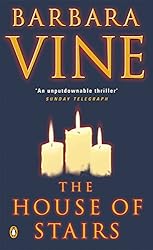
The House of Stairs by Barbara Vine – It is a most remarkable book, in that it turns a murder mystery upside down, as it were. It is clear from the start that there has been a murder and the murderer is known ‘“ she has just been released from prison. But who did she murder? Why, where, when and how? The other characters all know ‘“ but not the reader. The House of Stairs is so called because it’s a big house on five floors with a staircase of 106 stairs.

The crime is only revealed very gradually, building up the suspense and tension in a series of flashbacks, as you realise the how, the where and the when, but only by inference. As for the identity of the victim, I kept changing my mind, only finally deciding it must be this person, just a few pages before the dénouement.

2012

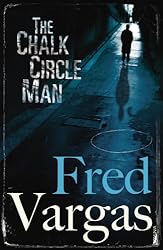
The Chalk Circle Man by Fred Vargas – this is a very cleverly constructed and quirky mystery with a twist at the end which took me totally by surprise. Strange blue chalk circles start appearing on the pavements of Paris and then the body of a woman with her throat savagely cut is found in one of them.

This is the first of her Commissaire Jean-Baptiste Adamsberg novels. Adamsberg just doesn’t fit the usual detective profile ‘“ well, he is a loner, so that’s pretty standard, but apart from that he stands out  ‘“ an outsider from the Pyrenees, newly appointed to Paris as Commissaire of police headquarters in the 5th arrondissement. His colleagues don’t understand him, especially Inspector Danglard, who likes a drink and isn’t too reliable after about four in the afternoon. A most enjoyable read!

2013

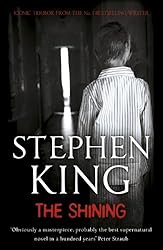
The Shining by Stephen King tells the story of Jack Torrance and his family as they move into the Overlook Hotel in the Colorada Rockies. The Overlook is closed for the winter and Jack, a recovering alcoholic is the caretaker. Just what impels him towards murder is horrifyingly revealed as the winter weather closes in on the hotel and they are cut off from the rest of the world.

The characters are so well-drawn and so distinct. Their vulnerability, coupled with the way King gets inside each person’s head, increases the element of fear. There’s the horror of the father who has monsters inside his head, who still loves his son, but demands he should ‘˜take his medicine‘; the evil is palpable. It’s an excellent choice to read at Halloween.

2014

I read so many brilliant books in October 2014! I’ve picked just one for this post – the others are listed in this post.

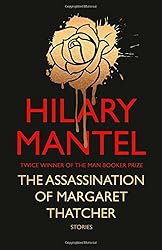
The Assassination of Margaret Thatcher by Hilary Mantel. I enjoyed this collection of stories,  which are brooding, somewhat melancholic, dark, disturbing and full of sharp and penetrating observations. One of my favourite stories was Sorry to Disturb, which describes the dilemma of a British woman living in Jeddah in Saudi Arabia when she finds herself befriended by a young Pakistani businessman ‘“ a situation that was ‘˜ripe for misunderstanding‘˜. It has a claustrophobic atmosphere.

Overall this is a compelling book, brilliantly written, keenly observed, with the power to chill and shock me.

2015

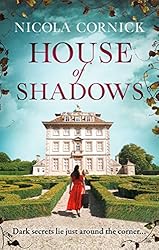
House of Shadows by Nicola Cornick – a time-slip novel with each strand of the story clearly defined, each set firmly in its historical context. It’s a fascinating mix of factual history combined with historical interpretation/imagination to fill in the gaps in the records.

There is so much I loved in this book ‘“ the history, all the storylines,  the characters, and the settings against the backdrop of years from the 16th to the 21st centuries. It has mystery, elements of the supernatural as well as being a love story. Once I started reading the House of Shadows I didn’t want to stop as the history of the crystal mirror and the Sistrin pearl, a jewel of rare beauty and price unfolds.

October’s Books

After a bumper reading month in September, when I read 12 books, it was back to normal in October with a total of 8 books read and 1 still in progress. It has been a mixed month, some books were disappointing for a variety of reasons, whilst others surprised me by how much I enjoyed them when I wasn’t sure I would.

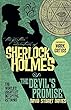
The month began slowly and the first book,The Devil’s Promise by David Stuart Davies, a Sherlock Holmes sequel, was a bit disappointing as it began well  but later became repetitive as the dead body disappeared and reappeared. It was a bit too predictable.

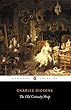
The Old Curiosity Shop by Charles Dickens was my next book – a Classics Club Spin choice and one off my to-be-read shelves. This was much better than I thought it would be and was very entertaining, full of fantastic characters and wonderful scenes.

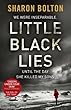
Little Black Lies by Sharon Bolton, didn’t quite match up to her earlier books for me. It was a combination of the use of the present tense and the way the plot descended into more of a farce by the end that meant it didn’t really appeal to me.
But the next book was a complete change and I loved House of Shadows by Nicola Cornick. It has three storylines set in three different time periods. There is so much I loved in this book ‘“ the history, all the storylines,  the characters, and the settings against the backdrop of years from the 16th to the 21st centuries. It has mystery, elements of the supernatural as well as being a love story.
With Blue Mercy by Orna Ross I was back to being disappointed, despite its lovely setting in Ireland and California. It’s a book about family relationships, the plot being secondary to the characters and the various themes running through the book.  I enjoyed some of it, thought some parts were OK and didn’t like other parts, but I didn’t find it compelling or enthralling reading.

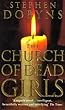
And my disappointment continued with the next book I read –The Church of Dead Girls by Stephen Dobyns about the disappearance and murders of three young teenage girls. It’s far too detailed and drawn out. I had trouble with the narrator, wondering how he  could possibly know all the detail of what other characters were thinking and doing.
The final two books were much more to my liking and I shall write separate posts about them. They are:

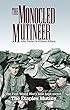
The Monocled Mutineer by John Fairley & William Allison, a revised edition of the 1978 book that was the basis of the TV series of the same name, broadcast in 1986, starring Paul McGann as Percy Topliss.

and

The Queen of the Tambourine by Jane Gardam, which I thoroughly enjoyed, narrated by Eliza Peabody writing letters to her neighbour, Joan who it seems has disappeared from her home. It’s an intriguing novel, at times funny and at others tragic.

My book of the month is House of Shadows by Nicola Cornick

R.I.P.X – Completed

This year (the 10th anniversary) the annual R.I.P event was hosted by Andi and Heather of The Estella Society. It ran from September 1st to October 31st.

It involved reading books that fitted into one or more of the following categories:

Mystery
Suspense
Thriller
Dark Fantasy
Gothic
Horror
Supernatural

There are several levels, depending on how many books you read. I initially thought I’d aim low with just one book. But I actually read eight, more than enough for –

Peril the First – to read four books.

ripnineperilfirst

This is what I read:

  1. Dead Scared by Sharon Bolton
  2. Like This, For Ever by Sharon Bolton
  3. The Buried Giant by Kazuo Ishiguro
  4. The Ghosts of Altona by Craig Russell
  5. The Moth Catcher by Ann Cleeves
  6. A Dark and Twisted Tide by Sharon Bolton
  7. The Devil’s Promise by David Stuart Davies
  8. Little Black Lies by Sharon Bolton

Just two were from my initial list and the others just turned up, as it were! I still have these books I want to read/reread:

  • The Wasp Factory by Iain Banks
  • A Song of Stone by Iain Banks
  • Poirot Investigates by Agatha Christie
  • Northanger Abbey by Jane Austen ‘“ I read this so many years ago that it will be like reading it for the first time. It was one of the set books at school and I don’t think I appreciated it then.
  • Talking to the Dead by Harry Bingham
  • The Rottweiler by Ruth Rendell

House of Shadows by Nicola Cornick

Nicola Cornick is a new-to-me author, but she is by no means a new author. She has written many books – see her website for more details. Not having read any of her books I wasn’t sure I’d like House of Shadows, her latest book due to be published on 5 November,  but the publishers’ press release persuaded me to read and review an uncorrected proof copy. I’m glad I did as I thoroughly enjoyed House of Shadows.

Press Release synopsis:

One House, Three Women. And a lie that will change history.

February 1662

On the eve of her death Elizabeth Stuart hands her faithful cavalier William Craven an ancient pearl with magical properties to be kept safe for her rightful heir. Craven, distraught with grief, builds Ashdown Estate in Elizabeth’s memory and places the pearl at the centre.

February 1801

Notorious Regency courtesan Lavinia Flyte is brought to Ashdown House with her protector, Lord Evershot, who is intent on uncovering the Winter Queen’s treasures. Evershot’s greedy pillage of the ancient house will unleash a dark power which has lain dormant for a hundred and fifty years.

February 2014

Holly Ansell’s brother has gone missing. As Holly retraces his footsteps, she discovers that her brother was researching the mystery of Elizabeth Stuart and her alleged affair with William Craven. A battered mirror and the diary of a Regency courtesan are the only clues she has, but Holly is determined to discover the truth: Where is the fabled pearl that Elizabeth gave to William Craven? What happened to Lavinia Flyte? And who is the Winter Queen’s rightful heir?

My thoughts:

This is a successful time-slip novel as I had no difficulty in following each strand of the story. And each is set firmly in its historical context. It’s a fascinating mix of factual history combined with historical interpretation/imagination to fill in the gaps in the records. Elizabeth Stuart, known as the Winter Queen, the daughter of James I of England and VI of Scotland was married to Frederick V, briefly the King of Bohemia, before his lands were taken from him after the Battle of White Mountain in 1620. There are rumours from 1660 onwards, but no proof, that Elizabeth either had an affair or secretly married William, the first Earl of Craven.

Once I started reading the House of Shadows I didn’t want to stop as the history of crystal mirror and the Sistrin pearl, a jewel of rare beauty and price unfolds. Both were inherited by Elizabeth from her godmother Elizabeth I. They had previously belonged to Mary Queen of Scots, Elizabeth Stuart’s grandmother. They were said to hold great magic – the mirror was said to have the power to destroy its enemies by fire, whilst the ring was supposedly a talisman for good. It was reported that Frederick was involved with the Knights of the Rosy Cross and the legend is that the Knights used the mirror and the pearl together in their necromancy to create firewater in which they could both see and transform the future.

There is so much I loved in this book ‘“ the history, all the storylines,  the characters, and the settings against the backdrop of years from the 16th to the 21st centuries. It has mystery, elements of the supernatural as well as being a love story, not just the story of Elizabeth and William in the 17th century, but also of Lavinia in the early 19th century and Holly in the 21st. I loved the details of each period and in particular of Ashdown House, a real house in Oxfordshire that was built by William Craven for Elizabeth. It’s now owned by the National Trust, where Nicola Cornick has been a volunteer guide and historian for the last fourteen years. She has certainly done her research very well and incorporated it seamlessly into her book. The house shown on the front cover is Ashdown House

I also loved the details of Holly’s family history which her brother Ben had been researching before he went missing and how it all linked in to each time line. It’s the sort of thing you hope you be able to would find if you did your own family history.

It is a fascinating book. There is so much packed into its pages, a real page turner in each timeline, making me eager to find out what happened next. If this is representative of Nicola Cornick’s books there are plenty of others that I’m going to enjoy.

  • Paperback: 448 pages
  • Publisher: MIRA; First edition edition (5 Nov. 2015)
  • Language: English
  • ISBN-10: 1848454163
  • ISBN-13: 978-1848454163
  • Source: Uncorrected Proof Copy

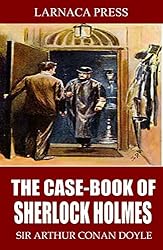
The Case-Book of Sherlock Holmes by Sir Arthur Conan Doyle

The Case-Book of Sherlock Holmes contains twelve short stories first published between 1921 and 1927. In the Preface Conan Doyle  wrote that he hoped his Sherlock Holmes stories had provided

that distraction from the worries of life and stimulating change of thought that can only be found in the fairy kingdom of romance.

In this post I’m only writing about three of them for The 1924 Club; stories that were first published in 1924 (for more details about The I924 Club click on this link). They do indeed, provide both a distraction and a stimulating change of thought. The narrator in these three stories is Dr Watson.

The Adventure of the Sussex Vampire – this was first published in the January 1924 issues of The Strand Magazine in London and Hearst’s International Magazine in New York.

As Sherlock Holmes says when he first heard about a case concerning vampires,‘we seem to have been switched on to a Grimm’s fairy tale.‘ He tells Watson they cannot take it seriously:

Rubbish Watson, rubbish! What have we to do with walking corpses who can only be held in their grave by stakes driven through their hearts? It’s pure lunacy!

But he takes on the case for two reasons – one, he’s interested in the house in Essex belonging to Mr Ferguson where his wife is suspected of being a vampire, and two, Ferguson had known Watson when they played rugby together for Blackheath. His Peruvian wife had been seen attacking his son from a previous marriage and also leaning over her own baby and biting his neck. She refused to explain herself. Holmes solves the mystery, indeed he had reached his conclusion even before arrived in at the house, based on his conviction that the idea of a vampire was absurd. I enjoyed this tale, mainly because Holmes used logic and deduction in coming to his conclusion, overriding the supernatural.

The Adventure of the Three Garridebs – first published in October 1924 in Collier’s Weekly and then in The Strand Magazine in January 1925.

I think this is a rather strange and artificial story, Dr Watson says it may have been a comedy or a tragedy. It led to him being shot in the leg and yet there was certainly an element of comedy. It’s about a man with the unusual name of Garridebs, ostensibly looking for two other men with the same name  to inherit five  million dollars each. Of course, that is not his real reason and the man is none other than a  known murderer.  It shows, however, the depth of Holmes’ feeling for Watson, as he says:

It was worth a wound – it was worth many wounds – to know the depth of loyalty and love which lay behind that cold mask. The clear, hard eyes were dimmed for a moment, and the firm lips were shaken. For the one and only time I caught a glimpse of a great heart as well as of a great brain. All my years of service culminated in that moment of revelation.

It’s in this story too that Watson reveals that Holmes had refused a knighthood.

The Adventure of the Illustrious Client – first published in Collier’s Weekly in November 1924.

At the request of an unnamed but illustrious client, Holmes and Watson investigate the case concerning Violet de Merville, young, rich and beautiful who has fallen under the spell of the notorious Baron Gruner. Her father, General de Merville wants to prevent them from marrying.  Gruner is known as a violent murderer and Holmes is keen to meet a man who may be more dangerous even than the late Professor Moriarty. But he has to enlist the help of one of Gruner’s past mistresses to open Violet’s eyes to the true nature of the man she thought she loved.

I like the personal touches in this story, the opening scene for example shows Holmes and Watson in the drying-room of a Turkish Bath, lying in an isolated corner on two couches, side by side, smoking in a state of lassitude. Watson says that it is where he finds Holmes less reticent and more human than anywhere else. Watson knows that although he was nearer to Holmes than anyone else he was always conscious of the gap between them – Holmes leaves his closest friend guessing what his exact plans may be.

These three stories all illustrate Holmes’ deductive powers and seemingly cold nature but also reveal the depth of feeling between him and Watson. Bur I’m not sure that they reflect anything in particular about what was being published in 1924.

I shall write about the remaining stories in the Case-Book at a later date.