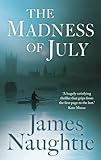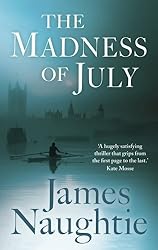
The Madness of July by James Naughtie

When I began reading The Madness of July I was immediately drawn into the story. I used many markers as I read it because it has such a complicated plot. It’s a political thriller set in London in the mid 1970s one sweltering July as Will Flemyng the foreign office minister and former spy finds himself drawn back into the world of espionage, a world of deception, manipulation and diplomacy. It’s the Cold War period and Will discovers politics can be just as dangerous as espionage.

I really wasn’t sure what was going on at first, not sure what was relevant for me to remember and understand, not even sure who was who as the narrative switched between London, New York, Washington and the Highlands of Scotland. So there were times when I had to backtrack when I came across a character or an event, that turned out to be important to the story, which I hadn’t realised earlier on. The characters know what has gone before, know each other, know what they are talking about – but we don’t.

In a different book this would be a major drawback – in this book it is necessary. It’s as though we’re peering through the fog, until gradually the fog lifts and things become clearer. Or it’s like beginning a cryptic crossword where you have all the clues and no idea about the answers. Anyway, I loved it. If the content isn’t too clear at first the writing is, Naughtie uses beautiful imagery and the characters are vividly drawn, in particular the part set in Scotland at Altnabuie, the Flemyngs Highland estate:

At Altnabuie, they woke to a trembling dawn. Flemyng had raised his bedroom window before turning in, and when he opened his eyes, very early, he could smell the highlands. There was a edge to the warmth and the damp, and the tang of tree and field lured him on. He looked towards the loch and saw swirls of mist rising up in thin pillars, like the guilty secrets of hidden smokers, leaving a thin topping of white cotton on the water that crept over the surface and was beginning to disperse here and there with the coming of a soft breeze. It would be gone within the hour. The herons were on their favourite stone, prim and still like a pair of disapproving clerks. The crows cawed in the woods beyond, and behind him, on the eastern side of the house where the sun was already giving life to the place, he could hear the cockerel at work. Everything was crisp and clean, the stifling urban fog a world away. (page 173)

The events that July take place over just 6 days. An American, Joe Manson dies, apparently of an overdose and is found in a store cupboard (it was a large one full of boxes and all sorts of spare objects) in the House of Commons – except that as the House is technically a royal palace deaths are not allowed and bodies have to be discreetly removed and ‘expire’ elsewhere. And thus begins a political crisis – who was Manson, how did he die, what did he know, what had he said – and to whom? And there is a letter on House of Commons notepaper that Will found on the photocopier – an anonymous letter that is puzzling him, a letter from someone who is desperate and who feels he/she is being driven insane.

A secondary plot, but to my mind just as interesting, maybe even more so, concerns Will and his family. He has two brothers, an older on, Mungo who lives at Altnabuie, and a younger one, Abel, who goes by the name of Grauber, their mother’s maiden name, and lives in New York. Mungo has been researching their family history and has discovered a secret about their mother that he finds disconcerting, even frightening.

And the madness? At one point Flemyng, talking about politics says that the rules of the game mean that you have to behave irrationally. A point is reached where you invited destruction, he’d said, as if it were inevitable. ‘Maybe madness isn’t an aberration, but the natural end to our game.’ Everyone aspired to it in politics, even if they didn’t recognise it for what it was. (page 110)

Madness has been haunting Flemyng: Because in these corridors – balance and rational though we believe ourselves to be – there’s madness on the loose. (page 326)

If you like a quick easy read, then The Madness of July is not the book for you. It, however, like me, you like a book that makes you think, that keeps you on your toes as you read, that both puzzles and entertains you, then you’ll probably enjoy it as much as I did.

James Naughtie (pronounced Nochtee, or ‘“ /ˈnɔːxti/ as it is given in Wikipedia, which doesn’t mean anything to me) is a British radio and news presenter for the BBC. From 1994 until 2015 he was one of the main presenters of Radio 4’s Today programme. He is now a ‘Special Correspondent’ with ‘responsibility for charting the course of the constitutional changes at the heart of the UK political debate’, as well as the BBC News’s Books Editor, contributing a book review to the Saturday morning editions of Today. The Madness of July is his first novel. He has also written books on politics and music. He was born in Aberdeenshire and lives in Edinburgh and London.

His second novel, Paris Spring, also featuring Will Flemyng, is due to be published in April this year.

…………………….

Reading Challenge: Read Scotland 2016 and What’s in  Name? 2016 – in the category of a book with a month of the year in the title.
My Week in Books: 16 March 2016

This Week in Books is a weekly round-up hosted by Lypsyy Lost & Found, about what I’ve been reading Now, Then & Next.

IMG_1384-0

A similar meme,  WWW Wednesday is run by Taking on a World of Words.

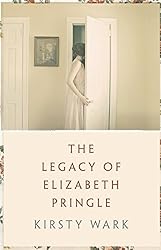
Now: I’m currently reading, and loving so far, The Legacy of Elizabeth Pringle by Kirsty Wark, a book I bought a couple of years ago. My copy is the hardback version, which is a joy to hold and read.

Blurb:

Born just before the First World War, Elizabeth Pringle has been a familiar yet solitary figure on the Scottish island of Arran. A dutiful daughter, an inspirational teacher, a gardener. But did anyone really know her? When Elizabeth dies, her will contains a surprise. She has left her home and her belongings to someone who is all but a stranger, a young mother she watched pushing a pram down the road more than thirty years ago.
Now it falls to Martha, the baby in that pram, to find out how her mother inherited the house in such strange circumstances, and in doing so, perhaps leave her own past behind. But first she has to find the answer to the question: who was Elizabeth Pringle?
A captivating and haunting story of the richness beneath so-called ordinary lives and the secrets and threads that hold women together.

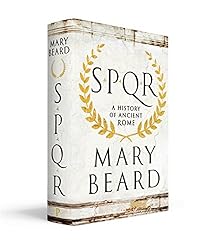
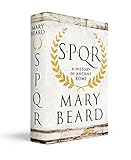
I’m still reading SPQR by Mary Beard, a fascinating history of Ancient Rome – see last week’s post for a synopsis. I’m reading the ebook and am currently at 46%. My Kindle estimates it will take me 8 hours and 1 minute to read to the end.

Then: Last week I was undecided about what to read next and had started reading three books, but suddenly it all became clear and I carried on reading Miss Pym Disposes by Josephine Tey, followed up by The Madness of July by James Naughtie. (See last week’s post for the synopses). Two very different books and I enjoyed both of them. I wrote about Tey’s book in this post. I have yet to write one about Naughtie’s book.

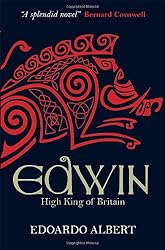
Next: As always I’m unsure which book I’ll pick up next. At the moment I’m leaning towards Edwin: High King of Britain: the Northumbrian Thrones 1 by Edoardo Albert, a present from my son for Mother’s Day.

Blurb:

Edwin, the deposed king of Northumbria, seeks refuge at the court of King Raedwald of East Anglia. But Raedwald is urged to kill his guest by Aethelfrith, Edwin’s usurper. As Edwin walks by the shore, alone and at bay, he is confronted by a mysterious figure ‘“ the missionary Paulinus ‘“ who prophesies that he will become High King of Britain.

It is a turning point. Through battles and astute political alliances Edwin rises to great power, in the process marrying the Kentish princess Aethelburh. As part of the marriage contract the princess is allowed to retain her Christian faith. But, in these times, to be a king is not a recipe for a long life . . . This turbulent and tormented period in British history sees the conversion of the Anglo-Saxon settlers who have forced their way on to British shores over previous centuries, arriving first to pillage, then to farm and trade ‘“ and to come to terms with the world view of the Celtic tribes they have driven out.

What are you reading this week ‘“ and have you read any of these books? Do let me know.

Jigsaws

I’ve been spending some of my reading time doing jigsaws. I began in January whilst I was reading The Pattern in the Carpet: A Personal History With Jigsaws by Margaret Drabble. Jigsaws are good for you – doing them renews the brain cells, and because they have no verbal content they exercise a different part of the brain, bringing different neurons and dendrites into play.

I began with a Thomas Kinkade jigsaw: Sunday Evening Sleigh Ride (1,000 pieces):

Sleigh Ride Finished P1010859

Then a Ravensburger puzzle of 500 pieces – much easier to do – of a thatched cottage:

Thatched Cottage P1010869Finally, A Bird’s Eye View, a House of Puzzles jigsaw, 1000 pieces, some are varied shapes, making it a bit different from the other jigsaws – this jigsaw has a piece missing!

A Birds Eye ViewYou can see the different shapes (and the space for the missing piece) in the photo below:

a birds eye view P1010871

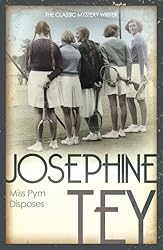
Miss Pym Disposes by Josephine Tey

Josephine Tey was a pseudonym for Elizabeth Mackintosh(1896 ‘“ 1952). She was a Scottish author who wrote mainly mystery novels (see the list at the end of this post). I read The Daughter of Time some years ago and thought it was an excellent book, a mix of historical research and detective work. Inspector Alan Grant is in hospital and to keep his mind occupied he decides to discover whether Richard III really did murder his nephews ‘“ the Princes in the Tower. I’ve also read The Franchise Affair, which I thought was also an excellent book.

I bought Miss Pym Disposes at the local village hall when I went to vote  in the European Election in June 2014. There was a table full of books for sale ‘“ nothing to do with the election, but a bonus for me! Based on the other two books I’d read by Tey I thought it would be a good buy. And it was. It is set in the 1940s and was first published in 1946.

I knew from the synopsis that Miss Pym was pleased and flattered to be invited to Leys Physical Training College to give a lecture on psychology. But then there was a’nasty accident‘.

So I was wondering about that ‘nasty accident’ as I began reading the book – who has the accident and is it really an accident, and if so who was responsible for the accident? It all seemed to be plain sailing until something happened that nobody expected and it was that that triggered the ‘accident’. It was intriguing and very cleverly written.

There is a long build up to the accident.  Miss Pym had been a French teacher at a girls’ High School until she inherited some money, left teaching and wrote a best-selling psychology book. She was invited to Leys by her old school friend, Henrietta Hodge, the college Principal and stayed on there for a few days, that extended into two weeks as she got to know and like the students and the staff. However, she realises that all is not as perfect at the college as she had thought, alerted to that fact that when one of the students, Teresa Desterro, tells her that everyone is just a little bit insane in this last week of term – ‘It is not a normal life they lead. You cannot expect them to be normal.‘ Miss Pym observes how strenuous their studies are and the stress and anxiety the senior students go through in their final exams and learn where Henrietta has found jobs for them, or if she has found jobs for them.

This is not a conventional crime fiction novel. It’s a psychological study focussing on the characters, their motivation and analysis of facial characteristics. It looks at the consequences of what people do and say and, as Miss Pym discovers who she thinks is responsible, it also looks at how much a person should intervene, or as one of the characters tells her, ‘Do the obvious right thing, and let God dispose.’ Miss Pym agonises over her decision, was she really going to condemn someone to death?

I thoroughly enjoyed this book, such a delight to read, a book that is beautifully written. I thought the slow build up to the ‘accident’ was perfect and I kept changing my mind about who would be involved – and it has such a good twist at the end.

It is the ideal book for these challenges: Bev’s Mount TBR Reading Challenge, her Vintage Mystery Cover Scavenger Hunt in the category ‘More Than Two people’, and Peggy Ann’s Read Scotland Challenge.

Josephine Tey’s books:

Alan Grant
The Man in the Queue (1929) aka Killer in the Crowd
A Shilling for Candles (1936) (the basis of Hitchcock’s 1937 movie Young and Innocent)
The Franchise Affair (1948) (my review)
To Love and Be Wise (1950)
The Daughter of Time (1951)
The Singing Sands (1952)

Novels
Kif: an Unvarnished History (1929) (writing as Gordon Daviot)
The Expensive Halo (1931)
Miss Pym Disposes (1946)
Brat Farrar (1949) aka Come and Kill Me
The Privateer (1952)
Non-Fiction

Claverhouse (1937) (writing as Gordon Daviot) A biography of John Graham of Claverhouse, 1st Viscount Dundee (1648 – 1689), known as “Bonnie Dundee” after leading the Jacobites to victory at the Battle of Killiecrankie in 1689, in which he lost his life.

My Week in Books: 9 March 2016

This Week in Books is a weekly round-up hosted by Lypsyy Lost & Found, about what I’ve been reading Now, Then & Next.

IMG_1384-0

A similar meme,  WWW Wednesday is run by Taking on a World of Words.

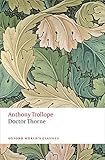
Then – I’m  beginning this post with the book I’ve recently finished reading – Doctor Thorne (see this post for my review). Julian Fellowes’ adaptation of this book is currently on ITV and I was in two minds about watching it, but I thought I’d at least watch the first episode. However, as I expected, there are too many changes from the book for me to enjoy watching it. It is so condensed, and too much is revealed too early, so I have decided not to watch the next two parts.

Now and Next – After finishing Doctor Thorne I couldn’t decide what to read next and began reading three books. This happens to me sometimes and I expect I’ll soon concentrate on just one of these books and go back to the others later.

Blurb: Leys Physical Training College was famous for its excellent discipline and Miss Lucy Pym was pleased and flattered to be invited to give a psychology lecture there. But she had to admit that the health and vibrant beauty of the students made her feel just a little inadequate.

Then there was a nasty accident – and suddenly Miss Pym was forced to apply her agile intellect to the unpleasant fact that among all those impressively healthy bodies someone had a very sick mind…

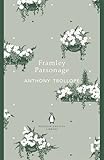
Blurb: ‘He was sickened also with all these lies. His very soul was dismayed by the dirt through which he was forced to wade. He had become unconsciously connected with the lowest dregs of mankind, and would have to see his name mingled with theirs in the daily newspapers’

Mark Robarts is a clergyman with ambitions beyond his small country parish of Framley. In a naive attempt to mix in influential circles, he agrees to guarantee a bill for a large sum of money for the disreputable local Member of Parliament, while being helped in his career in the Church by the same hand. But the unscrupulous politician reneges on his financial obligations, and Mark must face the consequences this debt may bring to his family.

Blurb: From Radio 4’s James Naughtie, a sophisticated thriller about loyalty, survival and family rivalry deep in the Cold War, drawing on decades of experience as a political insider in Westminster and Washington.

It is a sweltering July in the mid-1970s, and for Will Flemyng, foreign office minister, the temperature is rising with each passing hour. A mysterious death has exposed secret passions in government, bringing on a political crisis that will draw him back into a familiar world of danger and deceit.

For Flemyng has a past. He was trained as a spy for a life behind enemy lines and now he’s compelled to go back. In the course of one long weekend he must question all his loyalties: to his friends, his enemies, and to his own two brothers. Only then can he expose the truth in London and Washington. When he has walked through the fire.

And I’m still slowly making progress with SPQR by Mary Beard, the Kindle edition (I read some of this every day).

Blurb: Its history of empire, conquest, cruelty and excess is something against which we still judge ourselves. Its myths and stories – from Romulus and Remus to the Rape of Lucretia – still strike a chord with us. And its debates about citizenship, security and the rights of the individual still influence our own debates on civil liberty today.

SPQR is a new look at Roman history from one of the world’s foremost classicists. It explores not only how Rome grew from an insignificant village in central Italy to a power that controlled territory from Spain to Syria, but also how the Romans thought about themselves and their achievements, and why they are still important to us.

What are you reading this week – and have you read any of these books? Do let me know.

Classics Club Spin: Result

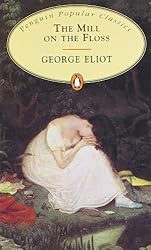
The Spin number is 8, which for me is The Mill on the Floss by George Eliot ‘“ to be read by 2 May 2016.

I’ve had this book for years, keen to read it after I’d enjoyed Middlemarch, and it has sat unread ever since. I was hoping for Framley Parsonage and have started to read it, so I probably won’t finish The Mill on the Floss by 2 May especially as it is quite long (535 pages in a small font – I think I’ll get a copy to read on my Kindle).