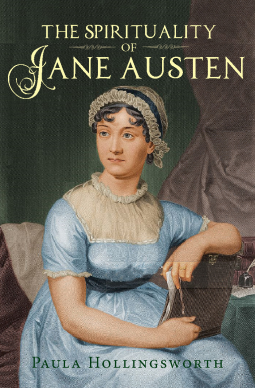
Northanger Abbey

July marks the 200th anniversary of Jane Austen’s death and I’m planning to write more about her other books in later posts. I regularly re-read Pride and Prejudice, but it’s been years since I last read Emma – so that is on my list for later this year. I first read Jane Austen’s Northanger Abbey when I was at school and reading it again now was like reading it for the first time.

I really wasn’t going to read any of the Austen Project books (a series of books by contemporary authors give their take on Jane Austen’s novels). I’m not at all keen on adaptations, sequels, or prequels, but I’ve been meaning to read Val McDermid’s books for ages and when I saw her version of Northanger Abbey on the mobile library’s shelves I borrowed it. Although now I’ve read it I think it’s probably not the best of her books to start with. I can’t imagine that it’s representative of her books!

Northanger Abbey (The Austen Project, #2)

As it’s been so many years since I’d first read the original by Jane Austen I thought I should refresh my memory and re-read it before tackling Val McDermid’s version.

Northanger Abbey

Jane Austen originally wrote the book in 1789-99, then revised it in 1803 and in 1817. Originally called Memorandum, Susan, then Catherine it was first published posthumously along with Persuasion, also previously unpublished, in December 1817, with the title Northanger Abbey, although 1818 is the date on the title page.

Northanger Abbey is a love story about Catherine Morland, a naive and impressionable 17 year-old, whose imagination has been filled with visions of diabolical villains and swooning heroines from the Gothic novels of her day. Childless neighbours, the Allens, take her with them for a six week stay in Bath. Here her eyes are opened to the social complexities of real life. Bath at that time was a thriving spa resort, popular with fashionable society. The place where rich and fashionable people went to take the waters and enjoy the social life, dancing, going to the theatre and concerts, shopping and also to find a husband or wife.

Here, too, Catherine meets the Thorpe family, the insufferable John Thorpe, who she immediately dislikes and his sister, Isabella who she instantly finds to be a kindred spirit – or so she thinks. She also meets and falls in love with clergyman Henry Tilney, whose father, General Tilney owns Northanger Abbey. She is thrilled when Henry and his sister, Eleanor invite her to stay with them at the Abbey, a place she fantasises about, imagining it as one of the romantic buildings full of dark corridors, with remote rooms where females are imprisoned that feature in the Gothic novels she loves.

Even though the Abbey doesn’t live up to her expectations, because although it is part of an ancient building it has been modernised and made comfortable. But that is not enough to prevent Catherine’s imagination running riot, viewing the details of Henry’s mother’s death with great suspicion. The General is a most unlikeable and unpleasant character and she suspects that he could have played a part in his wife’s death – he never talks about her, and shuns her favourite walk in the garden. She imagines all sorts of Gothic horrors.

Northanger Abbey parodies both the Gothic novel and intense female friendships, such as that between Catherine and Isabella as they enthuse obsessively over the horror and romance of the Gothic novel. It’s a book of melodramas and misunderstandings, exposing ambition, greed and the love of power and pleasure mixed with self-interest. Catherine only gradually learns to tell reality from fantasy.

At first I read the two books side by side, a chapter from each. That worked well for a while and it made it easy to see that Val McDermid had followed Jane Austen’s book closely, changing locations and things, such as Edinburgh instead of Bath, the Scottish Borders instead of the Gloucestershire countryside, cars instead of carriages and so on. It’s the style of writing and language that is so very different. I liked the way Val McDermid substituted the Edinburgh Book Festival for Bath – that worked well and also used modern names for the characters – Cat for Catherine, Bella for Isabella and Ellie for Eleanor. And setting  Northanger Abbey in the Scottish Borders is a stroke of genius.

But by the time  I got to the second half of the book where Catherine goes to stay at Northanger Abbey I realised it was Jane Austen’s original that was  appealing more to me, so I finished that first.

I’m not going to go into detail about Val McDermid’s version as she has stuck in the main to the original, that is, until she got to the end. I got tired of the use of modern expressions, tweets, texts and Facebook, and also the silliness of Cat and Bella, and all the vampire nonsense that replaces Catherine’s love of ‘horrid mysteries’. Yes, I could see that it was just as much a spoof on the modern obsession with vampires as Jane Austen’s parody is of the Gothic literature of her day, but I didn’t like it has much as Jane Austen’s version. However, despite that criticism, overall I did enjoy it – it’s light and easy to read.

I was interested in Jane Austen’s list of Gothic novels, which in contrast to the books in Val McDemid’s version, are real books. These are the books that girls and young women were reading in the 1790s and early 1800s (all available today as e-books on Amazon):

  • The Mysteries of Udolpho by Ann Ward Radcliffe
  • Castle of Wolfenbach by Eliza Parsons
  • Clermont by Regina Maria Roche
  • The Mysterious Warning by Eliza Parsons
  • Necromancer of the Black Forest by Karl Friedrich Kahlert
  • The Orphan of the Rhine by Eleanor Sleath
  • Horrid Mysteries by Carl Grosse

Northanger Abbey fulfils the category of ‘a book with a building in the title’ in Charlie’s What’s in a Name Challenge.
First Chapter, First Paragraph: The Snow Child

First chapterEvery Tuesday Diane at Bibliophile by the Sea hosts First Chapter First Paragraph Tuesday Intros to share the first paragraph sometimes two, of a book that she’s reading or planning to read soon.

This week my opening is from Eowyn Ivey’s first book, The Snow Child.

The Snow Child

It begins:

Wolverine River, Alaska, 1920

Mabel had known there would be silence. That was the point after all. No infants cooing or wailing. No neighbor children playfully hollering down the lane. No pad of small feet on wooden stairs worn smooth by generations, or clackety-clack of toys along the kitchen floor. All those sounds of her failure and regret would be left behind, and in their place would be silence.

I’ll be reading this book soon because I’ve read and loved her second book, To the Bright Edge of the World and I’ve heard that The Snow Child is also a wonderful book. These opening sentences are full of pathos and denial of Mabel’s desires and draw me in.

Blurb:

A bewitching tale of heartbreak and hope set in 1920s Alaska, Eowyn Ivey’s THE SNOW CHILD was a top ten bestseller in hardback and paperback, and went on to be a Finalist for the Pulitzer Prize.

Alaska, the 1920s. Jack and Mabel have staked everything on a fresh start in a remote homestead, but the wilderness is a stark place, and Mabel is haunted by the baby she lost many years before. When a little girl appears mysteriously on their land, each is filled with wonder, but also foreboding: is she what she seems, and can they find room in their hearts for her?

Written with the clarity and vividness of the Russian fairy tale from which it takes its inspiration, The Snow Child is an instant classic.

Would you read on? If you have read this book what did you think?

A Death in the Dales by Frances Brody

A Death in the Dales (Kate Shackleton #7)

A Death in the Dales is the 7th book in Frances Brody’s Kate Shackleton series of historical crime fiction books set in 1920s Yorkshire. Kate is an amateur detective. I’ve read the first two, Dying in the Wool and A Medal For Murder, and so I’ve jumped ahead in the series with this book. It’s not always possible to read a series in order and in this case I don’t think it matters – A Death in the Dales reads well as a standalone.

It’s 1926 and Kate Shackleton’s friend, Dr Lucian Simonson, has offered her the use of his late Aunt Freda’s cottage in Langcliffe for a short holiday with her niece Harriet, who is recovering from diphtheria. Ten years earlier Freda had witnessed the murder of the landlord of the alehouse across the street from her house. A man was found guilty of the murder and hanged – but Freda was convinced that they had convicted the wrong man.

Freda’s friend Mr Wigglesworth, the local apothecary, asks Kate to investigate the murder and gives her Freda’s papers regarding the trial. Although she had intended to have a holiday from her investigations she can’t resist looking at the papers and is convinced that Freda had wanted to her to solve the mystery and find out who had killed the pub landlord.

As well as investigating the murder, Kate also helps Harriet and her new friend, Beth to find out what has happened to Beth’s young brother who has gone missing from the farm where he was working, and then a suspicious death on the same farm.

I enjoyed reading about life in the 1920s; Frances Brody paints a very believable picture of life in a rural setting in the Dales during the post World War One years. Kate is a very likeable character and has to overcome the suspicion of strangers from the local community once she starts digging into the past. And there is the added complication of Kate and Lucian’s personal situation. All in all it’s a complicated mystery with several strands, numerous suspects and plenty of red herrings.

Frances Brody is an excellent storyteller and her books are well-plotted and complex murder mysteries in the historical setting of the 1920s and in the style of the golden age crime fiction.

The series so far is:

1. Dying in the Wool (2009)
2. A Medal For Murder (2010)
3. Murder in the Afternoon (2011)
4. A Woman Unknown (2012)
5. Murder on a Summer’s Day (2013)
6. Death of an Avid Reader (2014)
7. A Death in the Dales (2015)
8. Death at the Seaside (2016)
9. Death in the Stars (to be published in October 2017)

Reading Challenges: Mount TBR 2017 and What’s in a Name? in the category: ‘A title in which at least two words share the same first letter ‘“ alliteration!’

  • Paperback: 384 pages
  • Publisher: Piatkus (1 Oct. 2015)
  • Language: English
  • ISBN-10: 0349406561
  • ISBN-13: 978-0349406565
  • Author’s website: Frances Brody
  • Source: I bought it

The Classics Club Spin Result

The spin number in The Classics Club Spin was announced yesterday. It’s number …

12

which for me is Wives and Daughters by Elizabeth Gaskell. The rules of the Spin are that this is the book for me to read by May 1, 2017.

Wives and DaughtersI’m pleased with the result as it will give me the push to get round to reading more of Elizabeth Gaskell’s novels.

Here’s the blurb from Amazon:

Gaskell’s last novel, widely considered her masterpiece, follows the fortunes of two families in nineteenth century rural England.  At its core are family relationships ‘“ father, daughter and step-mother, father and sons, father and step-daughter ‘“ all tested and strained by the romantic entanglements that ensue.

Despite its underlying seriousness, the prevailing tone is one of comedy.  Gaskell vividly portrays the world of the late 1820s and the forces of change within it, and her vision is always humane and progressive.

The story is full of acute observation and sympathetic character-study:  the feudal squire clinging to old values, his naturalist son welcoming the new world of science, the local doctor and his scheming second wife, the two girls brought together by their parent’s marriage’¦

Everything but the Truth by Gillian Mcallister

A brilliant book full of secrets and lies

Just how much can you trust the person you love?

Everything but the Truth is Gillian McAllister’s stunning breakthrough thriller about deceit, betrayal and one woman’s compulsive need to uncover the truth

It all started with the email.

Rachel didn’t even mean to look. She loves Jack and she’s pregnant with their child. She trusts him.

But now she’s seen it, she can’t undo that moment. Or the chain of events it has set in motion.

Why has Jack been lying about his past? Just what exactly is he hiding? And doesn’t Rachel have a right to know the truth at any cost?

My thoughts

I was hooked right from the start of Everything but the Truth by Gillian McAllister. It has everything – it’s very readable and well written, with a great sense of place, set in both Newcastle and Oban, with clearly defined and believable characters, a complex plot with plenty of twists and turns, and a dark secret. It is up to date about social media and information about the internet and how to find hidden information (which as I’m not that computer savvy I had to Google to see if it was genuine – it is). The atmosphere in this book is tense and increasingly dark and claustrophobic. Everything but the Truth is an outstanding book in my opinion.

I didn’t want to stop reading it and when I wasn’t reading it I was thinking about it. As well as being about lies and secrets it’s also about relationships. How we get to know people and learn to trust them. Rachel and Jack are in a very new relationship and there is still an awful lot they don’t know about each other. And when Rachel realises Jack has a secret she doesn’t know how to get him to open up to her about it. Just what is his secret and is it really so terrible that he can’t talk about it? And why can’t he drive? But what does Jack really know about Rachel? Is she hiding something too, or is she paranoid?

Gillian McAllister’s debut book is simply excellent, written with assurance and with great insight into human nature. It is without doubt one of the best books I’ve read this year.

Thank you to Gillian McAllister, the publishers and NetGalley for my copy of this book for review.

  • Format: Kindle Edition
  • File Size: 1230 KB
  • Print Length: 420 pages
  • Page Numbers Source ISBN: 1405928263
  • Publisher: Penguin (9 Mar. 2017)

Let the Dead Speak by Jane Casey

A murder scene, but where’s the body?

The first book in Jane Casey’s Maeve Kerrigan series was The Burning, published in 2010, but I didn’t get round to reading it until February 2015. I was hooked immediately and read the next five books in quick succession by the end of August 2015. These are all police procedurals, fast-paced novels, with intriguing and complex plots and developing the relationships between the main characters. So, I think that although the books read well as stand-alones, it helps enormously to read them in order.

Let the Dead Speak  is the seventh Maeve Kerrigan book (published today, 9 March 2017 ) and it is no less intriguing and complex than the earlier books. I loved it.

Blurb:

When eighteen-year-old Chloe Emery returns to her West London home she finds Kate, her mother, missing and the house covered in blood. There may not be a body, but everything else points to murder. Maeve Kerrigan is young, ambitious and determined to prove she’s up to her new role as detective sergeant.

In the absence of a body, she and maverick detective Josh Derwent turn their attention to the neighbours. The ultra-religious Norrises are acting suspiciously; their teenage daughter definitely has something to hide.

Then there’s William Turner, once accused of stabbing a schoolmate and the neighbourhood’s favourite criminal. Is he merely a scapegoat or is there more behind the charismatic facade?

As the accusations fly, Maeve must piece together a patchwork of conflicting testimonies, none of which quite add up. Who is lying, who is not? The answer could lead them to the truth about Kate Emery, and save the life of someone else.

Let the Dead Speak continues to develop the detectives’ personal lives as well as detailing the investigations into Kate Emery’s disappearance. Maeve has been promoted and is now a detective sergeant (a long over-due promotion I think) and the murder investigation team has a new member, DC Georgia Shaw, a graduate on a fast-track scheme. Maeve finds her rather irritating. DI Josh Derwent is still her boss and neither he nor Maeve stick to the rules, but act independently as they see fit. The chemistry between the two of them is still there and is still full of undercurrents. DCI Una Burt is acting up as their Superintendent and the working relationship between her and Maeve is now improving.

There are several strands to the investigation – first of all if Kate was killed where is her body and who had the motive and opportunity to kill her? If she was not killed why is there so much blood in the house, whose blood is it, and where is Kate?

I enjoyed the fast-paced action, the interaction between the characters, both the police and the other characters. Chloe, who is very shy and lacking in confidence as well as in social skills is of little help in discovering what has happened to her mother. I liked the portrayal of the Norris family, Bethany and her parents and uncle, who are all members of an evangelical church, the Church of the Modern Apostles. Bethany refuses to answer Maeve’s questions and is openly hostile. Then there is the local ‘bad boy’ William Turner – what is his involvement? Similarly are Chloe’s father and stepmother and her step-brothers responsible in any way?

I kept changing my mind about what had happened and who was the guilty party, but it had me foxed. And then when I had it worked it out the last chapter surprised me yet again with the twist at the end. Maeve Kerrigan really is an excellent detective.

Thanks to the publishers via NetGalley for my copy.

  • Format: Kindle Edition
  • File Size: 1803 KB
  • Print Length: 352 pages
  • Publisher: HarperCollins (9 Mar. 2017)

The earlier books in the series are

0.5. Left For Dead (2013)
1. The Burning (2010)
2. The Reckoning (2011)
3. The Last Girl (2012)
4. The Stranger you Know (2013)
5. The Kill (2014)
6. After the Fire (2015)