My Friday Post: Major Pettigrew’s Last Stand by Helen Simonson

Book Beginnings Button

Every Friday Book Beginnings on Friday is hosted by Gillion at Rose City Reader where you can share the first sentence (or so) of the book you are reading, along with your initial thoughts about the sentence, impressions of the book, or anything else the opener inspires.

This morning I have just started to read Major Pettigrew’s Last Stand by Helen Simonson.

It begins:

Major Pettigrew was still upset about the phone call from his brother’s wife and so he answered the doorbell without thinking.

Also every Friday there is The Friday 56, hosted by Freda at Freda’s Voice.

30879-friday2b56These are the rules:

  1. Grab a book, any book.
  2. Turn to page 56, or 56% on your eReader.
  3. Find any sentence (or a few, just don’t spoil it) that grabs you.
  4. Post it.
  5. Add the URL to your post in the link on Freda’s most recent Friday 56 post.

Page 56:

‘We may have to be a bit more bound by the rule book these days, but you can be sure that Tewkesbury and Teale will always try to do the best for you.’ The Major thought that perhaps after all this was settled he would do as he should have done in the first place and find himself another solicitor.

Description (Amazon):

Major Ernest Pettigrew is perfectly content to lead a quiet life in the 
sleepy village of Edgecombe St Mary, away from the meddling of the 
locals and his overbearing son. But when his brother dies, the Major 
finds himself seeking companionship with the village shopkeeper, Mrs 
Ali. Drawn together by a love of books and the loss of their partners, 
they are soon forced to contend with irate relatives and gossiping 
villagers. The perfect gentleman, but the most unlikely hero, the Major 
must ask himself what matters most: family obligation, tradition or 
love? 

Funny, comforting and heart-warming, Major Pettigrew’s Last Stand proves that sometimes, against all odds, life does give you a second chance.

~~~

A change for me from crime fiction and historical fiction, I’m hoping this will be a good choice.

What do you think? Have you read it – or are you planning to read it?
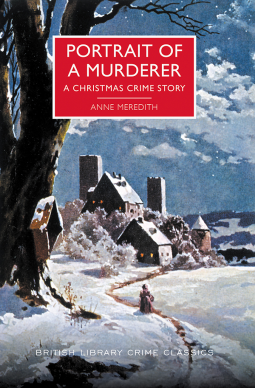
 

Portrait of a Murderer by Anne Meredith: A Christmas Crime Story (British Library Crime Classics)

Poisoned Pen Press|3 April 2018|240 pages|e-book |Review copy|4*

Portrait of a Murderer was first published in 1933. Anne Meredith is one of the pen names used by Lucy Beatrice Malleson (her other pen names are Anthony Gilbert and J Kilmeny Keith). This Poisoned Pen Press edition has an introduction by Martin Edwards. It is crime fiction where you know who the murderer is and the motive and how the victim was killed quite early on in the book.

On Christmas Eve 1931 Adrian Gray was violently murdered by one of his six adult children. The murderer had acted on impulse in a fit of rage. Adrian had not got on with any of his children and they all wanted him to lend them or rather give them money for one reason or another. From then on it is a character study of the family and of the murderer in particular, who works out a plan to put the blame on one of the other family members. The setting at Christmas seems to be purely because this family don’t get on and it was only at Christmas that they gathered together at the Gray family home.

It begins slowly and I was beginning to wonder if I wanted to finish the book, but I found I was thinking about it when I wasn’t reading and wondering whether the plan would work. As the suspense increased I realised that I was hooked and couldn’t wait to get back to the book to find out. Will the wrong person be convicted or will justice be done?It’s an excellent character study, told in the first person by the murderer and in the third person by the other characters.

I was also fascinated by the picture Meredith paints of the society and culture of the 1930s. It’s set in the Depression and the Grays had come down in the world, no longer the owners of a large landed property. This was accompanied by a steady deterioration in character as their point of view changed and they aspired to possessions and a place in society with authority, consumed by jealousy and criticism of others.They are an unlikeable set of characters and probably one of the reasons this book works so well is that each one is described with precision and insight, so that they come across as recognisable people and not as caricatures.

I also enjoyed reading about life in London in the 1930s, with descriptions of the River Thames, the traffic and the talk of electricity and speed, ‘the age’s God‘, and the desire for cars resulting in air pollution from the petrol fumes. The newly rich are financiers, such as Gray’s financial adviser and son-in-law, Eustace Moore. Although his appearance isn’t that of the traditional conception of a Jew, Meredith reveals the casual and nasty anti-semitism typical of the period in referring to his race. In addition she shows society’s attitude to women from the unmarried daughter expected to act as housekeeper and look after her father, to the scandal attached to divorce.

From a slow and unpromising start Portrait of a Murderer developed into a fascinating novel that I thoroughly enjoyed.

Many thanks to Poisoned Pen Press for a review copy via NetGalley.

Amazon UK link
Amazon US link

My Week in Books: 18 April 2018

This Week in Books is a weekly round-up hosted by Lypsyy Lost & Found, about what I’ve been reading Now, Then & Next.

IMG_1384-0

A similar meme,  WWW Wednesday is run by Taking on a World of Words.

The Three Ws are:

What are you currently reading?
What did you recently finish reading?
What do you think you’ll read next?

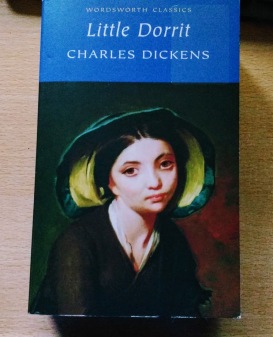
Currently reading: I’ve made some progress with Little Dorrit, my Classics Club spin book. I’ve met the Meagles family with their spoiled daughter, Pet and her maid and companion, the wonderfully named Tattycoram, and also Arthur Clennam, recently returning to England from China. Arthur goes to his family home, a dark decrepit house in London where his mother lives, his father having recently died. But I haven’t met Little Dorrit yet – still a long way to go in this book.

Little Dorrit

I’m also reading Portrait of a Murderer by Anne Meredith, which is what it says in the title. I’ve nearly finished this book, which is fascinating, even though it is so long winded.

Description:

‘Adrian Gray was born in May 1862 and met his death through violence, at the hands of one of his own children, at Christmas, 1931.’

Thus begins a classic crime novel published in 1933 that has been too long neglected – until now. It is a riveting portrait of the psychology of a murderer.

Each December, Adrian Gray invites his extended family to stay at his lonely house, Kings Poplars. None of Gray’s six surviving children is fond of him; several have cause to wish him dead. The family gathers on Christmas Eve – and by the following morning, their wish has been granted. 

This fascinating and unusual novel tells the story of what happened that dark Christmas night; and what the murderer did next.

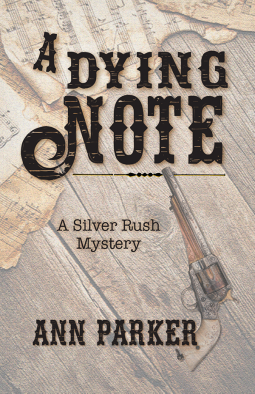
I’ve recently finished  A Dying Note by Ann Parker, her latest book in the Silver Rush Mysteries, which was published on 3 April 2018.

I loved this book, set in the autumn of 1881 in San Francisco, where Inez Stannert is making a new start in life, managing a music store. All is going well until the body of a young man, Jamie Monroe, is found washed up on the banks of Mission Creek canal.

I posted my review on Monday and gave it 4 stars.

What do you think you’ll read next:

Will it be Time is a Killer by Michel Bussi, which was published on 5 April 2018 and in last week’s post was the book I said I might read next? Or will it be something else? I still don’t know.

Description:

‘One of France’s most ingenious crime writers’ SUNDAY TIMES

‘Bussi breaks every rule in the book’ JOAN SMITH

It is summer 1989 and fifteen-year-old Clotilde is on holiday with her parents in Corsica. On a twisty mountain road, their car comes off at a curve and plunges into a ravine. Only Clotilde survives.

Twenty-seven years later, she returns to Corsica with her husband and their sulky teenage daughter. Clotilde wants the trip to do two things – to help exorcise her past, and to build a bridge between her and her daughter. But in the very place where she spent that summer all those years ago, she receives a letter. From her mother. As if she were still alive.

As fragments of memory come back, Clotilde begins to question the past. And yet it all seems impossible – she saw the corpses of her mother, her father, her brother. She has lived with their ghosts. But then who sent this letter – and why?

Have you read any of these books?  Do any of them tempt you? 

First Chapter First Paragraph: The Three Evangelists by Fred Vargas

Every Tuesday First Chapter, First Paragraph/Intros is hosted by Vicky of I’d Rather Be at the Beach sharing the first paragraph or two of a book she’s reading or plans to read soon.

This week I’m featuring The Three Evangelists by Fred Vargas, one of my favourite authors. I’ve read some of her Commissaire Adamsberg books and loved them. This one is the first in the Three Evangelists series.

The Three Evangelists (Three Evangelists, #1)

It begins:

‘Pierre, something’s wrong with the garden,’ said Sophia.

She opened the window and examined the patch of ground. She knew it by heart, every blade of grass. What she saw sent a shiver down her spine.

Blurb from the back cover:

The opera singer Sophia Siméonidis wakes up one morning to discover that a tree has appeared overnight in the garden of her Paris house. Intrigued and unnerved, she turns to her neighbours: Vandoosler, an ex-cop, and three impecunious historians, Mathias, Marc and Lucien – the three evangelists. They agree to dig around the tree and see if something has been buried there. They find nothing but soil.

A few weeks later, Sophia disappears and her body is found burned to ashes in a car. Who killed the opera singer? Her husband, her ex-lover, her best friend, her niece? They all seem to have a motive.

Vandoosler and the three evangelists set out to find the truth.

∼ ∼ ∼

This looks so different from her Adamsberg books – and yet at the same time so similar – quirky, with eccentric characters and with a mystery to solve.

What do you think – would you read on?

A Dying Note by Ann Parker

Poisoned Pen Press|3 April 2018|319 pages|e-book |Review copy|4*

The Fire Court by Andrew Taylor

Harper Collins UK|5 April 2018|448 p|e-book |Review copy|5*