Jacob’s Room is Full of Books by Susan Hill

Nine years ago I read Susan Hill’s Howards End is on the Landing: A Year of Reading, a book in which she wrote about the books from her own collection she’d read or re-read over the course of a year. Jacob’s Room is Full of Books is a similar book in that it follows month by month a year during which she reflects on the books she has read, reread, or returned to the shelves as well as her thoughts on a whole variety of topics.

Jacob's Room is Full of Books: A Year of Reading

It’s full of her observations on the weather, on nature – birds, flowers, trees, moles, eels, egrets and so on – on writers and writing, about religion and fairy tales and many more besides as well as on books. She also writes about herself and notes her obsessions with, for example, Virginia Woolf and the Bloomsbury Set, Marilyn Monroe, wood engravings, medieval monasticism, Elizabeth Bowen, Benjamin Britten and her collection of Ladybird Books. Some of her observations on other topics are short but conjure up vivid pictures, such as in November she recorded: ‘RAINING. Sky like the inside of a saucepan.‘ (page 208) And in October: ‘THIS GOLDEN OCTOBER continues to drift slowly down like a twirling leaf.’  (page 186)

One of the things I like about this book is the passion with which Susan Hill writes and her strong opinions about books, writers, literary prizes, what makes a good reader and so on and so forth, that she has no qualms about expressing (and why should she?) You are left in no doubt about what she does and does not like. For example she likes Robert Louis Stevenson (so do I) and the way he cleverly and cunningly creates a sense of sinister and evil in his creation of Mr Hyde. She thinks he’s the ‘perfect writer’ (page 188) and describes him thus: ‘Next to Dickens, I think RLS was the greatest writer of his time.’ (page 54) She didn’t like fairy tales as a child (I did), describing fairies as

Wispy, wafty, wish-washy things. Nowhere near on a par with sprites and goblins, witches, wizards, trolls. As a child I lapped up stories about any of these. I can understand why I did not, and do not, have any patience with fairies and their stories. They are so colourless (despite Andrew Lang’s best attempts). So dull. Yes. Just dull. (page 21)

And yet as a child she also liked the Flower Fairies books by Cecily Mary Baker (as did I) and pored over their illustrations, but followed that up by describing them as ‘just an excuse for pretty pastel pictures.‘

She doesn’t like fantasy and science fiction, although as a child she loved fantasy. She likes, amongst others, Thomas Hardy, Somerset Maugham, Raymond Chandler, Muriel Spark and Barbara Pym, to a certain extent, describing her books as ‘dated, but not dated enough’, but not Jane Austen – oh my, I love Jane Austen’s books:

I read most of the reissued novels [of Pym’s] at the time and never entirely saw the point of the praise, probably because everyone compared them to Jane Austen and that is never a good recommendation to me. (page 200)

She then goes on to change her mind about Pym after reading Shirley Hazzard’s review of Pym’s Quartet in Autumn, which I haven’t read, but after reading her description I think I would like.

She has no interest left in the First World War, particularly in fiction about it (I have) since she wrote Strange Meeting in 1971, but she admires Ford Madox Ford’s The Good Soldier, but has ‘not even tried Parade’s End‘. She seems to have more time for the Second World War novels, praising Olivia Manning’s novels, the Balkan and Levant trilogies, which reminds  me I still haven’t read the third book in the Balkan Trilogy.

She is scathing about creative writing courses: ‘I don’t suppose anything is obligatory for these courses, which are as thick as autumn leaves on the ground. Writing is the thing. Ye gods.’ (page 189)

There’s plenty more on the same lines about other authors and books – there are many, many more that I could mention – and I found it all fascinating, rambling and chatty, a bit repetitive in parts, but still fascinating. And there is a list of the books she refers to at the end of the book. It’s probably a book that could stand a second reading.

And as she says:

Reading is magic. Books are magic. It starts when we are shown picture books and realise there is another world beyond the everyday one we know. Once we can read ourselves, we live inside the magic. The only problem is that we have to emerge at the end of a book, and we don’t want to return to that dull domestic world we know. The only solution to that problem, of course, is that there is always the next book, and the next and there is bonus magic if it is another in a series we already love, so we are plunging back into a magic other world but one we already know. We feel a lift of the heart, a lurch of the stomach, when we find ourselves in it again. (pages 55 – 56)

Yes, reading is, indeed, magic!

  • Hardcover: 272 pages
  • Publisher: Profile Books (5 Oct. 2017)
  • Language: English
  • ISBN-10: 9781781250808
  • ISBN-13: 978-1781250808
  • ASIN: 1781250804
  • Source: a library book
  • My Rating: 5*

The Classics Club Spin Result

Classics Club

The spin number in The Classics Club Spin was announced today. It’s number …

1

which for me is Greenmantle by John Buchan. The rules of the Spin are that this is the book for me to read by January 31, 2019.

Greenmantle

Greenmantle is the second of five novels by John Buchan featuring the character of Richard Hannay, first published in 1916. I’ve read the first, The Thirty-Nine Steps.

Here’s the blurb from Amazon:

Richard Hannay is tasked to investigate rumours of an uprising in the Muslim world and takes off on a hair-raising journey through German-occupied Europe to meet up with his old friend Sandy Arbuthnot in Constantinople, where they must thwart the Germans’ plans to use religion to help them win the war. Set during World War I, Greenmantle is a contraversial meditation on the power of political Islam (it was pulled from Radio 4’s schedule at the time of the 7 July bombings).

I’m really pleased this book came up in the Spin for me as it will fit in with my reading about World War I.

Did you take part in the Classics Spin? What will you be reading?

Nonfiction November Week 5: Additions to my TBR

Week 5: (Nov. 26 to 30) – New to My TBR (Katie @ Doing Dewey): It’s been a month full of amazing nonfiction books! Which ones have made it onto your TBR? Be sure to link back to the original blogger who posted about that book!

I’ve had a great time doing these Nonfiction November posts, found yet more book bloggers and I’ve added these books to my TBR:

From the comments on my Ask the Expert post asking for recommendations about books on World War One:

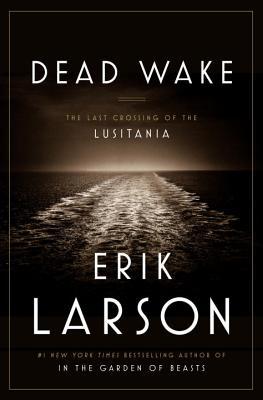
The War that Ended Peace: How Europe abandoned Peace for the First World WarThe Sleepwalkers: How Europe Went to War in 1914Rites of Spring: The Great War and the Birth of the Modern AgeDead Wake: The Last Crossing of the Lusitania

From posts on Nonfiction that reads like fiction:

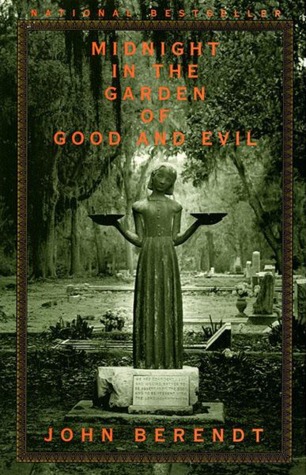
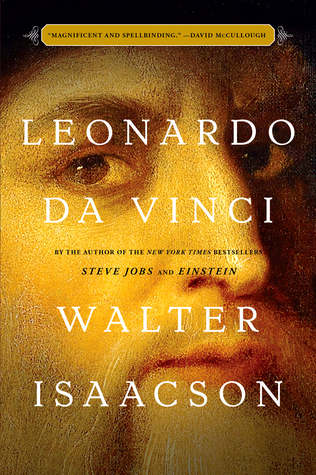
Midnight in the Garden of Good and EvilLeonardo da VinciThe Sound of a Wild Snail Eating

  • Midnight in the Garden of Good and Evil by John Berendt from Rennie of What’s Nonfiction. She writes ‘Berendt’s story begins with a murder in the old-fashioned, uniquely southern atmosphere of Savannah but develops into so much more.’
  • Leonardo da Vinci by Walter Isaacson from Deb Nance at Readerbuzz – ‘Walter Isaacson is not an art historian, he’s simply a lover of Leonardo, who manages to communicate the sheer joy of this remarkable man’ Books of the Year – The Times.
  • The Sound of a Wild Snail Eating by Elisabeth Tova Bailey from Brona’s Books, Brona writes, ‘Bailey uses examples from poetry, literature and science to bring forth the nature of her snail. Each little nugget is revealed with care and circumspection. Watching her snail, Bailey comes to terms with her own illness.’

Thanks everyone for your recommendations!

The Classics Club Spin

It’s time for another  Classics Club Spin. By 27 November compile a Spin List of twenty ‘chunkster’ books that remain “to be read” on your Classics Club list.

spinning book

On Tuesday 27th November, the Classics Club will post a number from 1 through 20. The challenge is to read whatever book falls under that number on your Spin List, by 31st January, 2019.

I have only 18 unread books left on my list – and not all of them are ‘chunksters’! So, I’ve repeated two titles (that are ‘chunksters’) to make the numbers up to 20 – Parade’s End and Little Dorrit.

  1. Greenmantle by John Buchan
  2. The Riddle of the Third Mile by Colin Dexter
  3. Little Dorrit by Charles Dickens
  4. Oliver Twist by Charles Dickens
  5. Birdsong by Sebastian Faulks
  6. Parade’s End by Ford Maddox Ford
  7. The Forsyte Saga (1) : The Man of Property by John Galsworthy
  8. Far from the Madding Crowd by Thomas Hardy
  9. The Return of the Native by Thomas Hardy
  10. Ruling Passion by Reginald Hill
  11. Three Man in a Boat by Jerome K Jerome
  12. Parade’s End by Ford Madox Ford
  13. Love in the Time of Cholera by Gabriel Garcia Marquez
  14. Little Dorrit by Charles Dickens
  15. All Quiet on the Western Front by Erich Maria Remarque
  16. Clouds of Witness by Dorothy L Sayers
  17. The Shadow Puppet by Georges Simenon
  18. The Saint- Fiacre Affair by Georges Simenon
  19. Sweet Thursday by John Steinbeck
  20. The Man in the Queue by Josephine Tey

I don’t mind which one I get especially as there is more time than usual for a Spin and I hope to read them all at some time.

In a Dark, Dark Wood by Ruth Ware

In a Dark, Dark Wood

Nora hasn’t seen Clare for ten years. Not since the day Nora walked out of her old life and never looked back.

Until, out of the blue, an invitation to Clare’s hen party arrives. A weekend in a remote cottage – the perfect opportunity for Nora to reconnect with her best friend, to put the past behind her.

But something goes wrong.

Very wrong.

And as secrets and lies unravel, out in the dark, dark wood the past will finally catch up with Nora.

I featured In a Dark, Dark Wood by Ruth Ware in this Friday Post on book Beginnings and said that I wasn’t sure I wanted to read it having been disappointed  by the only other book by her that I’ve read, The Woman in Cabin 10.  But as some people commented that they had enjoyed it and as it has good reviews on Amazon and Goodreads I decided to read on. It promises to be a psychological thriller – a scary book – but maybe I’ve read too many psychological thrillers as I didn’t find it thrilling or scary. It’s mystery novel that slowly reveals why Leonora, known either as Lee or Nora or Leo, and Clare haven’t seen  or even spoken to each other since they were 16, ten years ago. That was also when Nora’s heart was broken when her relationship with James came to an abrupt end. She had never come to terms with their break up.

I thought the setting was good – the hen party is held in a glass house in the middle of a wood in Northumberland. The mobile phone signal is practically nonexistent and they are cut off from the outside world and isolated when the snow sets, in cutting off the landline. But the characters are stereotypes – a new mother pining for her baby back home, a gay male actor, a gay female doctor (who is in my opinion the most sensible of the group), the dippy devoted friend of the bride who has organised this terrible hen party, the bride, self-obsessed, selfish and manipulative as well as Nora, who can’t move on from her past. The outcome is predictable when footprints appear in the snow, the backdoor that was supposed to be locked is found open and the hen party keep arguing and antagonising each other. It’s obvious from the start that something terrible had happened when Nora wakes up in a hospital bed and realises that she can’t remember what had happened … or what she had done.

In a Dark, Dark Wood is Ruth Ware’s debut novel and the film rights have been optioned  by New Line Cinema.  I can imagine that a film would be much more terrifying than the book – it should be, the potential is there. I don’t like being critical of a book, but I can’t recommend this book.


First Chapter First Paragraph: The Twilight Hour by Nicci Gerrard

Every Tuesday First Chapter, First Paragraph/Intros is hosted by Vicky of I’d Rather Be at the Beach sharing the first paragraph or two of a book she’s reading or plans to read soon.

This week I’m featuring The Twilight Hour by Nicci Gerrard, one of the books I’ve borrowed from the library.

The Twilight Hour

It begins:

Eleanor woke to what was not there. Outside, the wind still roared,dashing pellets of rain against the windows; inside it was too silent, not a breath or a heartbeat save hers. The darkness felt uninhabited. Before she reached out her hand, groping past the water jug and the vase of dying flowers to touch the bed and find it empty, the blanket thrown back and the pillow dislodged, she knew she was alone. She let fear seep through her, into every space in her body. She could taste the muddy, metal ache of it in her mouth; feel it in the palms of her hands and the base of her spine and in her throat like a rippling, oily snake; she could smell it on her skin, sour as spoilt milk.

That’s a terrifying feeling to wake up with – that image of a rippling, oily snake in her throat leaves me feeling sick –  and wondering why she is so scared.

Blurb:

Eleanor Lee has lived a fiercely independent existence for over ninety years, but now it’s time to tidy her life away – books, photographs, paintings, letters – a lifetime of possessions all neatly boxed up for the last time. But amongst them there are some things that must be kept hidden. And, nearing blindness, Eleanor needs help to uncover them before her children and grandchildren do.

Peter, a young man with a broken heart who feels as lost as Eleanor’s past, is employed to help with this task. And together they uncover traces of another life – words and photographs telling a story of forbidden love, betrayal, passion, grief and self-sacrifice, which Eleanor must visit one last time.

By speaking her memories out loud, and releasing the secrets of her past, Eleanor can finally lay them to rest. To honour them at last, and protect those who must never know.

What do you think? Would you keep reading?