Bookshelf Travelling: 13 June 2020

Judith at Reader in the Wilderness hosts Bookshelf Travelling for Insane Times. I’ve got several bookcases of unread novels and most of them are in alphabetical author order and are double shelved.

Today I’m focusing on a few of the books on the second shelf down in the photo, containing books beginning with Gone Girl by GilIan Flynn. These are the books that were at the back of the shelf. I’ve removed the front row of books and pulled these forward. They are books that I haven’t seen for some time and I’d forgotten about them.
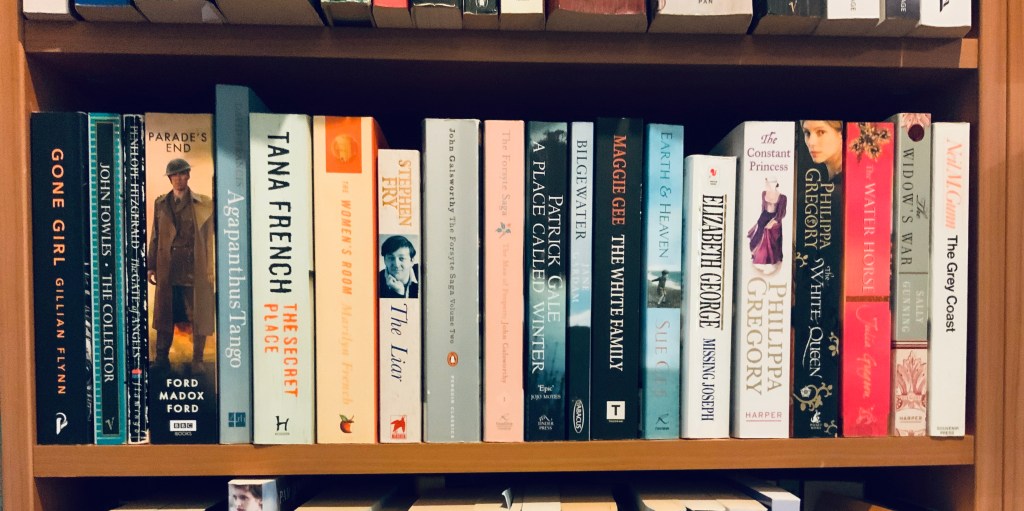
First of all, Gone Girl. This is a secondhand book I bought 6 years ago from the local village hall when I went there to vote. It’s a book that lots of book bloggers had written about and I thought I’d like to read it – but haven’t yet!

The blurb on the back describes it as ‘The addictive No.1 US bestseller that everyone is talking about’. Nick Dunn discovered on the morning of his fifth wedding anniversary that his wife Amy had disappeared. The police suspect Nick and friends reveal that Amy was frightened of him.

Parade End by Ford Madox Ford has been on my shelves for seven years. I bought it after watching the BBC series and the front cover shows Benedict Cumberbatch as English aristocrat Christopher Tietjens. This edition of the novel includes all four parts, originally published separately between 1924 and 1928. A novel about the First World War it was based on his personal experiences of war. I loved the TV series – and I’m hoping to love the book!

The next one is The Secret Place by Tana French. I bought this five years ago at Barter Books in Alnwick (a large secondhand book shop that is run on an exchange basis) because I’ve enjoyed a couple of her books in the past. It’s crime fiction set in an exclusive girls’ boarding school in Dublin. Detective Stephen Moran investigates the death of Christopher Harper, a boy from the neighbouring boys’ school, who was found murdered on the grounds. It’s a long book in a small font, which is probably why I haven’t read it yet.

And finally, Missing Joseph: An Inspector Lynley Novel by Elizabeth George is another book I bought from Barter Books in November last year. I haven’t read any of the Inspector Lynley novels, although I’ve watched the TV adaptations. This is the sixth in the series, telling the story of a woman’s quest to solve the mystery of the death of her friend, an Anglican priest. Deborah and her husband, Simon, turn to their old friend, Inspector Lynley.

I really like the look of this book, set mainly in Lancashire and in her Aknowledgements Elizabeth George refers to Mist Over Pendle by Robert Neill, one of my favourite books. But it is very long and yet again in a small font.

I’m going to keep these books on display (moving the books that were previously in front of them to the back of the shelf) so that I don’t forget about them again. And I might focus on some of the other books on this shelf in a future Bookshelf Travelling post.
Top Ten Tuesday: Recent Additions to My TBRs

Top Ten Tuesday is a weekly meme created by The Broke and the Bookish and now hosted by Jana at That Artsy Reader Girl. For the rules see her blog. This week’s topic is Books I’ve Added to my TBR and Forgotten Why, but instead I’ve listed ten of the e-books I’ve added to my TBRs since the lockdown.

They are:

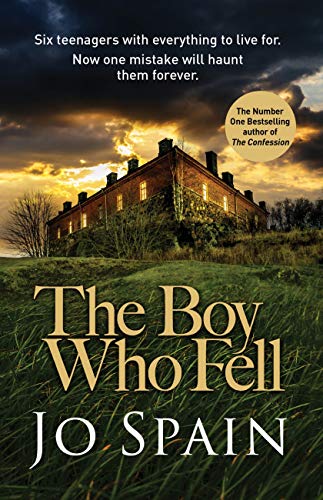
  • The Boy Who Fell by Jo Spain – An Inspector Tom Reynolds Mystery Book 5. Jo Spain is one of my favourite crime fiction writers. In this one Tom investigates the death of Luke Connolly who was found in the garden of an abandoned house.
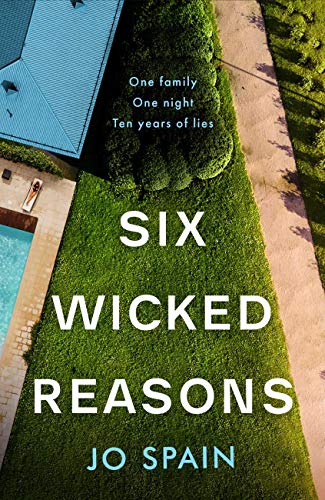
  • Six Wicked Reasons by Jo Spain – a standalone book, crime fiction, a thriller set in Wexford and Spanish Cove in Ireland about a dysfunctional family.
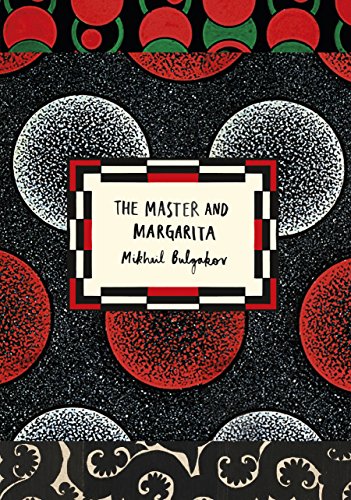
  • The Master and Margarita by Mikhail Bulgakov – a powerful picture of Stalin’s regime in this allegorical classic. I’ve seen favourable reviews on other blogs.
  • The Godfather by Mario Puzo – a story of the Mafia and the Corleone family. I’ve seen the film and want to read the book to see how it compares.
  • A Gentleman in Moscow by Amor Towles – another book other bloggers recommend. It’s historical fiction about a man who is sentenced to permanent house arrest in the luxurious Metropol Hotel in Moscow. 
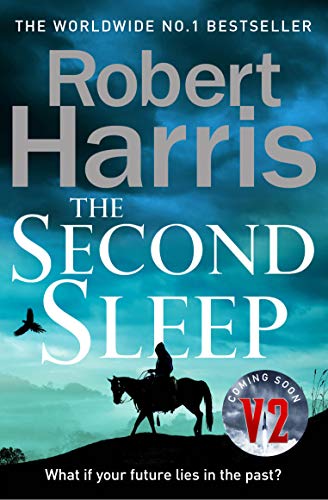
  • The Second Sleep by Robert Harris – another favourite author. 1468. A young priest, Christopher Fairfax, arrives in a remote Exmoor village to conduct the funeral of his predecessor.
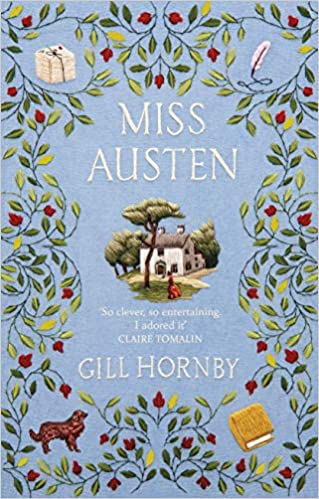
  • Miss Austen by Gill Hornby historical fiction that delves into why Cassandra burned a treasure trove of letters written by her sister, Jane Austen – an act of destruction that has troubled academics for centuries.
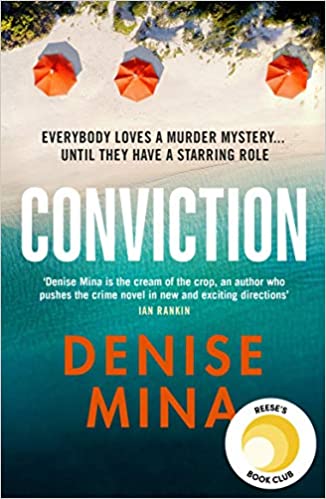
  • Conviction by Denise Mina – crime fiction, about a woman listening to a true crime podcast when she realises she knows the victim and is convinced she knows what really happened.
  • Blood Orange by Harriet Tyce – Obsession, revenge, lust and murder play out on the pages as a female barrister tries to hold her life together while her personality tries to tear it apart.
  • An Air That Kills by Andrew Taylor – the first book in the Lydmouth series. I’ve read this one already – here’s my post.

Sword by Bogdan Teodorescu

I haven’t read anything set in Romania before and so when fellow blogger Marina Sofia, who has translated Sword from Romanian, told me about this book by Bogdan Teodorescu, a journalist and political analyst, I was keen to read it. Unusually it is crime fiction in which a serial killer is on the loose, but with a difference – it’s a complex novel, a political thriller focusing on the political and social dimensions of the racial conflict between the Romanians and the Roma or ‘gypsies’. The killer is hunting down his victims from the minority Roma community. As the racial conflict continues the ethnic tension rises highlighting the corruption and manipulation by the politicians and by the mass media in particular.

The book opens with a scene in Bucharest’s Obor Market as The Fly, a con man, playing his card and shell games, is killed by a person who suddenly appeared, brandishing a sword which he then plunged into his throat. This is followed by more killings – all of them of gypsies. Despite the number and method of the murders it is not gory or too graphic.

Written in a clear, journalistic style, there is a large cast of characters, listed at the end of the book including politicians and their advisors, journalists and media moguls, victims and police. The narrative moves between them as they give speeches, discuss the situation in numerous meetings, phone calls and media broadcasts. It reveals how Romania had moved on since Ceaușescu‘s Communist reign overthrown by the 1989 Revolution. In places I found the amount of dialogue and speeches slowed the narrative down more than I preferred.

At 272 pages it is not long, but it is not a quick read, partly because of the large cast and partly because it took me a while to sort out the unfamiliar names and partly because of the number of speeches. That said, I throughly enjoyed Sword, especially the setting and the unique (for me at least) focus on the political and cultural scene in Romania – and the murder mystery.

  • Format: Kindle Edition
  • File Size: 908 KB
  • Print Length: 272 pages
  • Publisher: Corylus Books Ltd (8 May 2020)
  • Source: I bought my copy
  • My Rating: 4*

Bookshelf Travelling: 6 June 2020

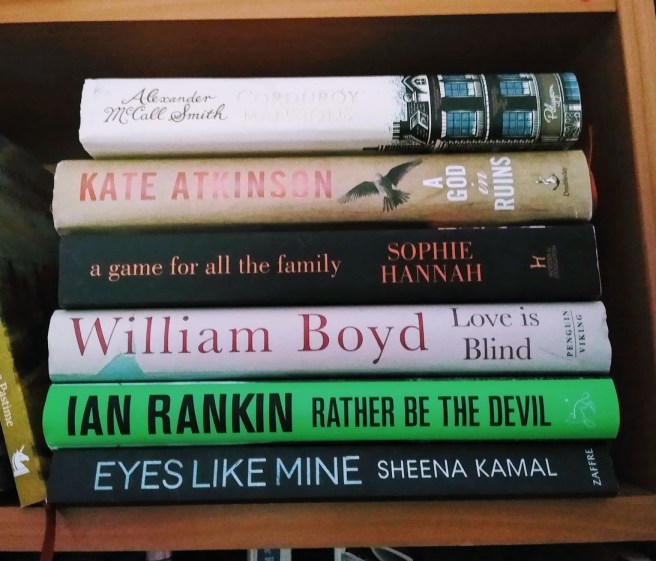
Judith at Reader in the Wilderness hosts Bookshelf Travelling for Insane Times. Today I’m showing part of one of my shelves of mixed books. This shelf contains fiction but not arranged in any order, other than that of size. I’ve read all of them except for the book at the top of the pile.

From the top down they are:

  1. Corduroy Mansions by Alexander McCall Smith. I saw this in a charity shop and liked the cover, which can be a dodgy way to choose a book! It’s set in a London mansion block, and tells the stories of its residents. It looks interesting but I haven’t actually started to read it.
  2. I loved Kate Atkinson’s A God in Ruins, about Teddy Todd (the younger brother of Ursula in Life After Life). Teddy is a would-be poet, pilot, husband, father and grandfather. It looks at war and the effect it has, not only on those who live through it, but on the lives of the subsequent generations.
  3. A Game for All The Family by Sophie Hannah was a bit disappointing for me. It’s a book about the truth – just who is telling the truth, just who is who they purport to be, and most of all about identity. Who is real, who is making it all up? I didn’t love this book, but it certainly filled my mind and made me think both whilst I was reading it and for days afterwards – and I like that about a book.
  4. Love is Blind by William Boyd. I bought this in a local bookshop, because I liked the description on the book flap. Set at the end of the 19th century it follows the fortunes of Brodie Moncur, a young Scottish musician. Since then I’ve seen it has had mixed reviews. I’v yet to read to find out what I think of it.
  5. Rather Be the Devil by Ian Rankin was a ‘must read’ for me. I love his books. It’s the 21st Rebus novel. Rebus is retired but gets involved in investigating an unsolved murder from forty years ago. I’m almost tempted to go back to the first book and read them all again.
  6. And finally another book I loved – Eyes Like Mine by Sheena Kamal. The main focus of the book is Nora, her traumatic background and her search for her daughter, Bonnie, now a teenager, who she gave away as a new-born baby. Nora is shocked by her reaction when she sees a photo of Bonnie – there is no doubt that she is her daughter, with her dark hair and golden skin.

Six Degrees of Separation: from Normal People to The Inheritance of Loss

It’s time again for Six Degrees of Separation, a monthly link-up hosted by Kate at Books Are My Favourite and Best. Each month a book is chosen as a starting point and linked to six other books to form a chain. A book doesn’t need to be connected to all the other books on the list, only to the one next to it in the chain.

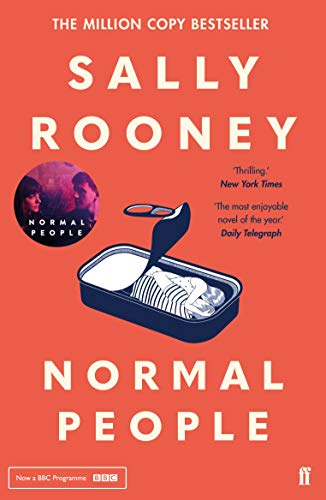
This month the chain begins with Normal People by Sally Rooney. This is one of my TBRs. I did begin it but it didn’t appeal to me. I’m in the minority, though, as I know it is very popular, many people love both the book and the TV series and it  has won several awards. It’s the story of two people who try to stay apart but find they can’t.

Normal People

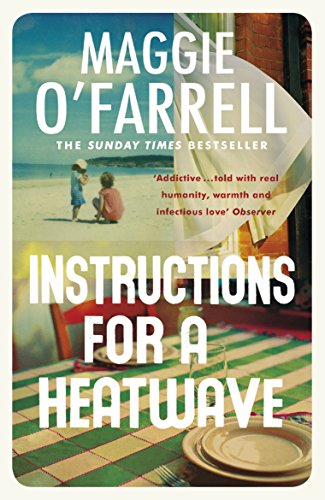
Sally Rooney is an Irish author, as is Maggie O’Farrell, whose book Instructions for a Heatwave was shortlisted for the 2013 Costa Novel Award. Robert Riordan tells his wife Gretta that he’s going round the corner to buy a newspaper. He doesn’t come back. The search for Robert brings Gretta’s children – two estranged sisters and a brother on the brink of divorce – back home, each with different ideas as to where their father might have gone.

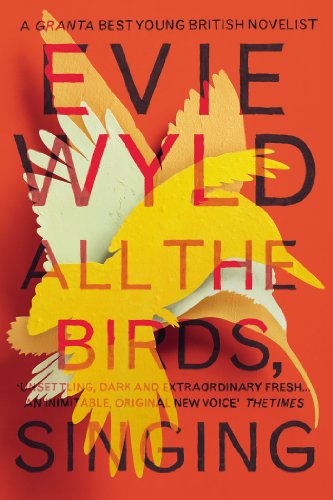
Also shortlisted for the 2013 Costa Novel Award was All the Birds, Singing by Australian author Evie Wyld, a book I would like to read. This is a novel, using reverse chronology techniques, telling the story of Jake Whyte who lives on an unnamed island off the coast of Britain, tending her flock of sheep with her dog, Dog. Someone, or something, is killing her sheep, and her investigations lead her and the reader back to her time in Australia to the ‘original sin’ that sets everything in motion.

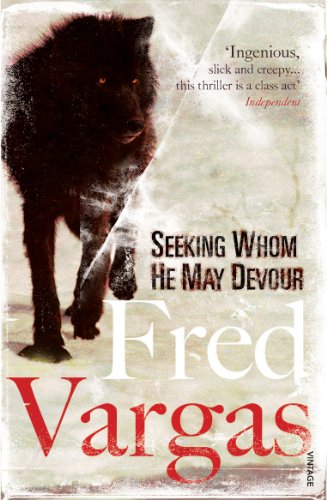
Another novel featuring the killing of sheep is Seeking Whom He May Devour by French author, Fred Vargas. It’s set in the French mountains. Johnstone, a Canadian is living there whilst he films a documentary about wolves. The problems start when more and more sheep are found with their throats torn out. This is the second in her Commissaire Adamsberg series. I thought it was quite quirky with touches of humour.

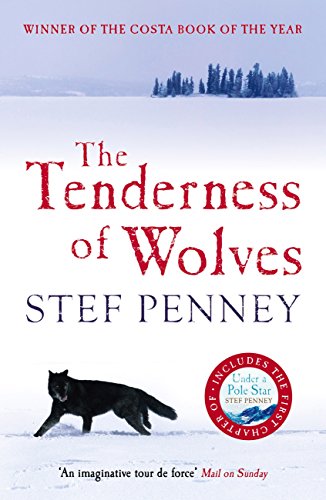
Thinking about wolves reminded me of Stef Penny’s novel, The Tenderness of Wolves, another Costa Award winning book. It’s set in Canada in 1867 beginning in a small place called Dove River on the north shore of Georgian Bay, narrated in part by Mrs Ross. It begins as she describes the last time she saw the French-Canadian trapper, Laurent Jammet alive.  He was the Ross’s closest neighbour and the next time she saw him was in his cabin, lying dead on his bed, his throat cut and he had been scalped.

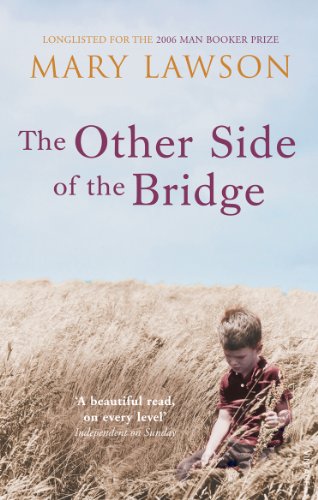
Next I thought of another book set in Canada, The Other Side of the Bridge by Mary Lawson. This is a beautiful book set in  in Northern Canada about two brothers, Arthur and Jake Dunn who grow up on a small farm near Struan (a fictional town) in the 1930s. Arthur is older, shy, dutiful, and set to inherit his father’s farm. Jake is younger and reckless, a dangerous to know. When Laura arrives in their 1930s rural community, an already uneasy relationship is driven to breaking point. It was longlisted for the Man Booker Prize in 2006.

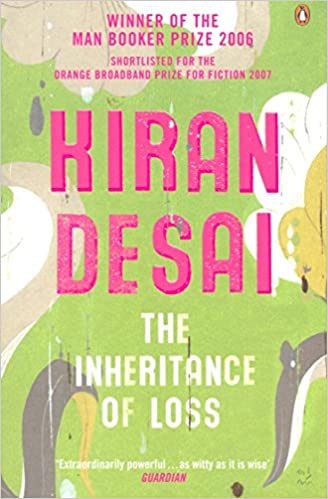
And that brings me to the last book in the chain – the winner of the Man Booker Prize in 2006 was Kiran Desai’s The Inheritance of Loss. This is set in the Himalayas where a judge and his granddaughter live in a dilapidated mansion. The judge, broken by a world too messy for justice, is haunted by his past. His orphan granddaughter has fallen in love with her handsome tutor, despite their different backgrounds and ideals. The cook’s heart is with his son, who is working in a New York restaurant, mingling with an underclass from all over the globe as he seeks somewhere to call home.

~~~

The books in my chain are linked either by the authors’ nationality, prize winning books and books about the killing of sheep! 

Next month (July 6, 2020), the chain begins with What I Loved by Siri Hustvedt – a book I loved!

My Friday Post: Cruel Acts by Jane Casey

Book Beginnings Button

Every Friday Book Beginnings on Friday is hosted by Gillion at Rose City Reader where you can share the first sentence (or so) of the book you are reading, along with your initial thoughts about the sentence, impressions of the book, or anything else the opener inspires.

Cruel Acts is the 8th book in Jane Carey’s Maeve Kerrigan series

The house was dark. PC Sandra West stared up at it and sighed. The neighbours had called the police – she checked her watch – getting on for an hour earlier, to complain about the noise.


Also every Friday there is The Friday 56, hosted by Freda at Freda’s Voice.

30879-friday2b56

These are the rules:

  1. Grab a book, any book.
  2. Turn to page 56, or 56% on your eReader. If you have to improvise, that is okay.
  3. Find any sentence (or a few, just don’t spoil it) that grabs you.
  4. Post it.
  5. Add the URL to your post in the link on Freda’s most recent Friday 56 post.

Page 56:

Freedom was within his grasp but it wasn’t his quite yet.

Blurb:

Guilty?
A year ago, Leo Stone was convicted of murdering two women and sentenced to life in prison. Now he’s been freed on a technicality, and he’s protesting his innocence.

Not guilty?
DS Maeve Kerrigan and DI Josh Derwent are determined to put Stone back behind bars where he belongs, but the more Maeve digs, the less convinced she is that he did it.
 
The wrong decision could be deadly…
Then another woman disappears in similar circumstances. Is there a copycat killer, or have they been wrong about Stone from the start?

~~~ 

I’ve read the earlier books, except for the novella, One in Custody, and enjoyed them all, so I have high expectations that I’ll enjoy this one too.