Six Degrees of Separation: from the End of the Affair by Graham Greene to Peril at End House

Six Degrees of Separation is a monthly link-up hosted by Kate at Books Are My Favourite and Best. Each month a book is chosen as a starting point and linked to six other books to form a chain. A book doesn’t need to be connected to all the other books on the list, only to the one next to it in the chain.
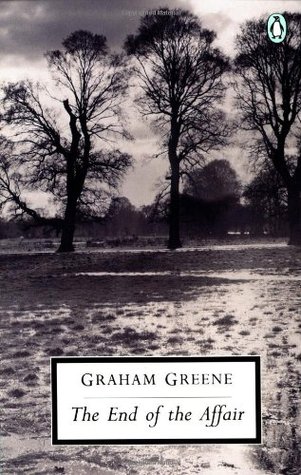
The chain this month begins with  The End of the Affair by Graham Greene, a book I have read. It is a study of love and hate, of desire, of jealousy, of pain, of faithfulness, and of the interaction between God and people. Maurice’s love affair with his friend’s wife, Sarah, had begun in 1944 during the London Blitz. They had met at a party held by Sarah’s husband, Henry. The affair had ended suddenly after his house had been bombed by a V1 and Sarah had not explained why. Two years later Maurice, still obsessed by Sarah employed Parkis, a private detective to find out the truth.
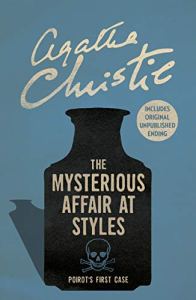
As usual I spent some time thinking about where to start my chain – and came up with several options. In the end I chose The Mysterious Affair at Styles by Agatha Christie, about a completely different affair – that of the murder of old Mrs Inglethorp. First published in 1920, this was the novel in which Agatha Christie created Hercule Poirot, the famous Belgian detective and introduced Captain Hastings and Inspector Japp. Mrs Inglethorp died from from strychnine poisoning.

My second link is to Peter Robinson’s crime novel Cold is the Grave in which Emily Riddle is also murdered by strychnine, mixed with cocaine. As Inspector Banks investigates her death, the case gets more complicated with blackmail, another death and a suicide.

Blackmail also features in my third link – The Big Sleep by Raymond Chandler in which millionaire General Stallwood is being blackmailed. This is a story of sex, drugs, blackmail and high society, set in Los Angeles.

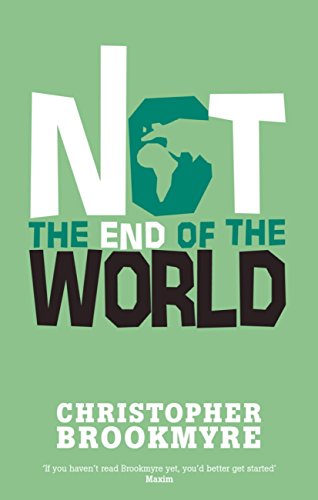
My fourth link: is Not the End of the World by Christopher Brookmyre, a crime thriller also set in Los Angeles. It’s at the end of the last century when people were in the grip of ‘1999 Syndrome’. Brookmyre is a Scottish novelist whose novels mix politics, social comment and action with a strong narrative. He has been referred to as a Tartan Noir author.

My fifth link is via the genre Noir, this time to Icelandic Noir in the The Legacy by Yrsa Sigurdardottir. This is the first book in her Children’s House thriller series. After seeing her mother brutally murdered, seven-year old Margrét is taken to the Children’s House where Freyja, a child psychologist is in charge. Freyja and the police officer Huldar in charge of the police investigation, try to get to the truth of what had happened.

My final link, brings the chain round to a full circle with the words ‘house’ and ‘end’ in the title of Agatha Christie’s Peril at End House. Poirot is on holiday in Cornwall where he meets Nick Buckley who lives at End House. She tells him of her “accidental brushes with death”. Convinced he is in grave danger, he just cannot resist investigating who is her would-be killer.

My chain is a circle and apart from the starter are all crime novels beginning and ending with books by Agatha Christie. They are a mix of Golden Age mysteries, modern detective stories ,hard-boiled. fiction and two types of ‘noir’ crime fiction.

Next month (April 2, 2022), we’ll start with a hot favourite to make the 2022 Women’s Prize for Fiction longlist, Our Wives Under the Sea by Julia Armfield, which I think looks very strange.

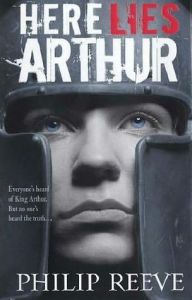
Throwback Thursday: Here Lies Arthur by Philip Reeve

Today I’m looking back at my post on Here Lies Arthur by Philip Reeve, historical fiction, retelling the life of the legendary King Arthur. I first reviewed it on February 5, 2008.

My review begins:

This was one of the best books I read in 2007. Philip Reeve is a new author to me. Here Lies Arthur is an adventure story, set in Britain in AD 500. I have always been fascinated by the legend of King Arthur and this book tells his story, casting a new and original slant on the ‘facts’. Very little historical evidence has survived to give concrete information about life in Britain from the fifth to the sixth centuries. The picture Reeve paints is of a turbulent and harsh world, with Arthur as a war-leader in a land where opposing war-bands fight for supremacy. Arthur is not the romantic hero of legend but a dangerous, quick-tempered man, ‘solid, big-boned with a thick neck and a fleshy face. ‘A bear of a man.’

Click here to read my full review

The next Throwback Thursday post is scheduled for March 31, 2022.

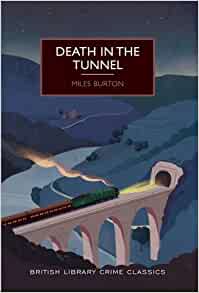
Death in the Tunnel by Miles Burton

Death in the Tunnel by Miles Burton – this is a British Library Crime Classic, first published in 1936, about the death of Sir Wilfred Saxonby who was found in a first class compartment of the 5 pm train from London to Stourford. He had been shot through the heart. Initially it was thought he had committed suicide while the train was passing through a long tunnel, but there seemed to be no reason why he should have wished to kill himself. Inspector Arnold of Scotland Yard became interested in the case when he heard of a strange incident that had taken place in the tunnel – a mysterious red light had caused the driver to slow down for a few moments. Unable to find out why this had happened and whether it had any relevance to Sir Wilfred’s death he consulted his friend Desmond Merrion, an amateur expert in criminology and between them they discovered what had happened.

It’s a complex mystery -a type of locked room puzzle. If Sir Wilfred hadn’t committed suicide, who had a motive for killing him? Because Sir Wilfred had asked to have the compartment to himself, the rear guard had locked the door and it was only opened when the train reached Stourford – so how could anyone have got in? A miniature automatic pistol with Sir Wilfred’s initials on it is found under his seat, but although he had a certificate for a revolver and a rifle he didn’t have one for an automatic pistol. Why is his train ticket was missing and what is the significance of his wallet and its contents. It puzzles Inspector Arnold and Merrion and it puzzled me too. First of all it is not at all clear, if it was murder, who was responsible – his family, his business employees or contacts, or was it because of his personality – who disliked him so much to want him dead. And on top of all that how had he been killed? This both a whodunnit and a howdunit – and it is most ingenious. If you, like me, enjoy this puzzle type of mystery you’ll enjoy this book.

Miles Burton is a pseudonym. His real name was Cecil John Charles Street (1884 – 1964) and he also wrote under the names of John Rhode and Cecil Way. In his Introduction to Death in the Tunnel Martin Edwards writes about Street’s career as a crime writer. He was a founder member of the elitist Detective Club and was and compiled an anthology of the work of the Club’s members, Detection Medley, and continued to publish crime novels until the 1960s. He was a prolific writer – see this list of his works on the Fantastic Fiction site.

  • Publisher ‏ : ‎ British Library Publishing (10 May 2016)
  • Language ‏ : ‎ English
  • Paperback ‏ : ‎ 256 pages
  • ISBN-10 ‏ : ‎ 071235641X
  • ISBN-13 ‏ : ‎ 978-0712356411
  • Source: my own book
  • My Rating: 3*

Ten Books I Haven’t Reviewed

Top Ten Tuesday is a weekly meme created by The Broke and the Bookish and now hosted by Jana at That Artsy Reader Girl. For the rules see her blog.

These are books I read before I started BooksPlease. They are all books I read in 2006 and although I may have mentioned them on my blog I’ve not reviewed them.

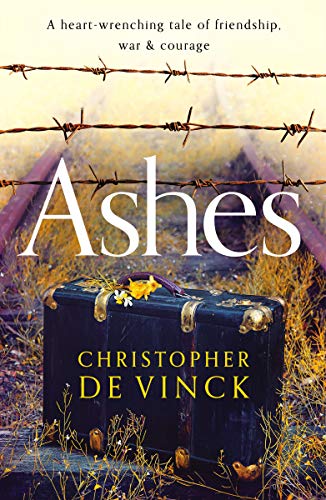
Ashes by Christopher de Vinck

Rating: 3 out of 5.

Harper Inspire| 18 August 2020| 332 pages| e-book| review copy via NetGalley| 3 stars

This is a book that has lingered on my NetGalley shelf for a while. There are some books that I find hard to review and this is one of them, mainly because I couldn’t get really involved in the story.

Synopsis:

Belgium, July 1939: Simone Lyon is the daughter of a Belgium national hero, the famous General Joseph Lyon. Her best friend Hava Daniels, is the eldest daughter of a devout Jewish family. Despite growing up in different worlds, they are inseparable.But when, in the spring of 1940, Nazi planes and tanks begin bombing Brussels, their resilience and strength are tested. Hava and Simone find themselves caught in the advancing onslaught and are forced to flee.

In an emotionally-charged race for survival, even the most harrowing horrors cannot break their bonds of love and friendship. The two teenage girls, will see their innocence fall, against the ugly backdrop of a war dictating that theirs was a friendship that should never have been.

Ashes by Christopher de Vinck is historical fiction set in World War Two in Belgium, following the lives of two eighteen year old girls. It’s a mix of fact and fiction, based on the evacuation of Belgian refugees trying to outrun the Nazi invasion of 10 May 1940. Each chapter begins with either a quotation in italics either from a speech by a country’s leader such as Woodrow Wilson, Churchill or Hitler, or information about the progress of the war or extracts or memories recorded in the war journal of Major General Joseph Henri Kestens, the author’s grandfather. I found these extracts, particularly from Hitler’s speeches that illustrated the hatred and horror that Hitler inflicted on the Jewish and Polish people, the most interesting and chilling parts of the novel.

It’s narrated by Simone in short chapters that kept the action moving quite quickly as the two girls react to the Nazi invasion of their country. The friendship between Simone and Hava is poignant in the context of the war, even though I found it hard to believe that they were eighteen years old. I thought they came across as younger and the novel has the feel of a YA novel. But that was only a minor distraction for me. I also appreciated the detail about the Jewish religion and traditions. I think that gives more depth to the novel, but overall, I think the storytelling aspect was a bit too matter of fact for me, which lessened its impact.

My thanks to Harper Inspire for a review copy via NetGalley.

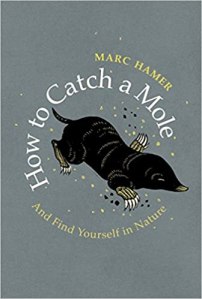
How to Catch a Mole by Marc Hamer

Longlisted for the Wainwright Book Prize 2019, How to Catch a Mole and Find Yourself in Nature is a beautiful book by Marc Hamer and illustrated by Joe McLaren. It is part memoir, part a nature study of the British Countryside, part poetry, and, of course, about moles. It is a mine of information. After leaving school Marc Hamer was homeless for a while, then worked on the railway, before returning to education and studying fine art in Manchester and Stoke-on-Trent. He has worked in art galleries, marketing, graphic design and taught creative writing in a prison before becoming a gardener. And before writing this book he had been a traditional molecatcher for years.

I read the book in January and have been wondering what to write about it, mulling it over in my mind. I’ve made several attempts to write this post as it’s not a straight forward non fiction book. He tells the story of his life intermingled with that of the mole, writing about what his life as a molecatcher was like, how it affected him and why eventually he decided to stop. The result is that this book is a mix of recollections and information about moles. He doesn’t write his recollections in chronological order – the harder he tries to remember, the more his memory seems to shift and change as though he is looking into a kaleidoscope where the colours remain the same and although the patterns are slightly different every time, the picture remains true to itself.

He no longer catches moles and says:

Molecatching is a traditional skill that has given me a good life but I am old and tired of hunting and it has taught me what I wanted to learn.

I’ve only seen a mole once when our cat caught what I think, sadly, was a baby one, and I know very little about them. Our garden has mole hills on the edges of it, piles of earth that the moles have turned over, and dug to a fine crumb – ‘the kind of damp rich earth that farmers and gardeners love for its texture and nutrients.’ So, I’m comfortable with having moles in the garden.

Not everybody is happy about them, however as Hamer points out:

Apparently sane people lose sleep over the chaos the moles create. We do not like to lose control of our property it makes us feel uncomfortable, impermanent, weak. Moles can ruin domestic lawns, and I have seen real hatred developing in homeowners as they lose control and ownership of their gardens. An obsession grows and an endless, unwinnable war can take over their lives. (pages 17-18)

Moles are small and powerful, moving at speed in their tunnels hunting worms and digging about 20 metres of tunnel in a day. They pack the soil into the roof and walls, pushing the soil ahead until there is too much to push and then make a diversion pushing the earth out onto the surface making a molehill. They go where the worms go. I was fascinated by this fact:

In times of plenty a mole will dig a little room in the wall of his tunnel, then gather lots of worms and bite their heads off, leaving them all knotted together in a section of tunnel. We call this the worm larder; it is a fairly common sight. A tunnel system could have any number of worm larders. (pages 202-203)

I was also interested in his thoughts on gardening. Here are a few extracts:

Gardening is not nature: it is using the laws of nature and science to impose our will on a place; and for some people this need for control goes to extremes. (page 19)

As a gardener I do not dig any more: I hoe off the weeds and top-dress the gardens in autumn with compost just as nature does with falling leaves and grasses. This keeps the moisture in and the weeds suppressed; it allows the worms to break up hard soil and increases microbial activity, allowing life to expand its range, and lets air and water into the soil. Moles do this for us. Some gardeners still double-dig, but more and more people are coming to understand the importance of microbes and fungi, and often see digging as destructive and prefer to stay off the soil to avoid compacting it. (pages 58-59)

And

A fine-looking garden is a sterile place. A perfect green lawn is only kept that way by continually dousing it with chemicals. A lawn that is not treated will naturally become home to a massive number of species of birds and worms and native wild plants, crane-fly larvae, beetles, invertebrates. (page 223)

I don’t usually include so many quotations and such lengthy ones, but I’ll end with one more quotation:

Having worked all my life, created a family, discovered a home, I feel as secure as a working-class man ever feels, and I feel a sense of equality again with the crow and the toad and the hawthorn, with the rain and wind. I am them and they are me. . . . I am just another animal, another tree, another wild flower in the meadow among billions of others. . . . There is something deeply magnificent in being just ordinary. (page 115)

  • Publisher ‏ : ‎ Harvill Secker; 1st edition (4 April 2019)
  • Language ‏ : ‎ English
  • Hardcover ‏ : ‎ 256 pages
  • ISBN-10 ‏ : ‎ 1787301249
  • ISBN-13 ‏ : ‎ 978-1787301245
  • Source: Borrowed from my son
  • My Rating: 5*