Walter Scott Prize for Historical Fiction 2022

The thirteenth longlist for the 2022 Walter Scott Prize for Historical Fiction was announced today and the shortlist will be announced in April.  The winner will be announced and awarded at the Borders Book Festival in Melrose, Scotland, in June 2022.

The Walter Scott Prize celebrates quality of writing in the English language, and is open to novels published in the previous year in the UK, Ireland or the Commonwealth. Reflecting the subtitle ‘Tis Sixty Years Since’ of Scott’s famous work Waverley, the majority of the storyline must have taken place at least 60 years ago.

As historical fiction is a favourite genre of mine I always look out for this award. These are the books on this year’s longlist:

I have started to read Mrs England and would also like to read The Magician, and maybe Rose Nicolson.

BLUE POSTCARDS Douglas Bruton – An experimental novella written in 500 postcard-sized paragraphs, set in post-WW2 Paris, interweaving three narrative strands and timelines, including the point of view of renowned French artist Yves Klein, whose obsession with the colour blue runs like silk thread motif throughout.  A meditation on the way memory reshapes itself over time and on the nature of truth and lies.

SNOW COUNTRY Sebastian Faulks – Set in Vienna, first during WW1, and then under the looming shadow of the rise of Fascism as WW2 approaches, the novel follows the lives of a small group of individuals trying to make their way in the new, terrifying world, whilst still mourning the loss of the old.  An epic novel about youth, hope, suffering and redemption.

ROSE NICOLSON Andrew Greig – Set in the late sixteenth century, during the troubled and violent years of James VI, the novel follows William Fowler as he embarks on his student life in St Andrews, and as he first encounters Rose, the woman who will prove to be the love and lodestar of his life.

MRS ENGLAND Stacey Halls – 1904, and Norland trainee nanny Ruby May is posted to a remote Yorkshire mansion, home of mill-owner Charles England and his wife, Lilian, to care for their four children.  But Lilian seems detached and lonely, and in the background remains the mystery of Ruby May’s own impoverished family in Birmingham, to whom she sends most of her wages each month.

THE BALLAD OF LORD EDWARD AND CITIZEN SMALL Neil Jordan – Follows the life of freed American slave Tony Small, who arrived in Ireland in the 1780s, and his relationship with Lord Edward FitzGerald, the parliamentarian aristocrat turned guerrilla republican, whose life Small had saved on the battlefields of the American War of Independence, and who rewards Small with his emancipation papers and lifelong employment.  But what will become of Small once his benefactor is no longer by his side?

THE SUNKEN ROAD Ciaràn McMenamin – Set during WW1 and the Irish Civil War, turning on two pivotal stories in Ireland’s history — the foundation of the State, and the Protestant memory of WW1 – the novel follows the story of a brutal IRA man, who now needs the help of his childhood sweetheart, and sister of his dead friend, to cross the border to safety.

THE FORTUNE MEN Nadifa Mohamed (Viking) – When a local shopkeeper in Cardiff’s Tiger Bay is murdered, Mahmood Mattan learns that 1952 Britain is not necessarily the haven of justice he thought it was, and must fight to clear his name, against conspiracy, prejudice and the inhumanity of a state where innocence is, sometimes, simply not enough.

NEWS OF THE DEAD James Robertson– Set in the fictitious Glen Conach in north-east Scotland, the stories of three different eras unfurl, linked by place and an ancient manuscript, but separated by centuries.  The narratives weave together to explore the space between the stories people tell of themselves — what is forgotten and what is invented — and the stories through which they may, or may not, be remembered.

CHINA ROOM Sunjeev Sahota – Entwines the stories of a young bride trying to discover the identity of her new husband in 1929 rural Pujab, and a young man battling heroin addiction in turn-of-the-twenty-first-century northern England, who takes enforced flight from Britain to spend a summer in Pujab with an uncle, armed only with whisky and a reading list that reflects his inner turmoil and preoccupations.

FORTUNE Amanda Smyth – Catches 1920s Trinidad at a moment of historical change, as the oil-rush begins and Eddie Wade happens upon a would-be investor who seems to have the power to make true Eddie’s dreams of sinking his own well.  But the partnership also brings the beautiful Ada, into the picture, and into Eddie’s life forever.  A thrilling Shakespearean tragedy of a story, about love, lust, ambition, destiny, and human frailty.

LEARWIFE JR Thorp – The story of the most famous woman ever written out of history, Shakespeare’s dead King Lear’s Queen, exiled to a nunnery, but now with a chance to tell her story, and to seek answers, despite her grief and rage, whilst grappling with her past and the terrible choice she must make and upon with her destiny rests.

THE MAGICIAN Colm Tóibín  – Through the life of Thomas Mann, Tóibín tells the awe-inspiring story of the twentieth century, in a novel about love, intimacy, family, exile, war and creativity, spanning three generations, and managing to secure itself as both epic and intimate in equal measure.

STILL LIFE Sarah Winman – A historical sweep of a novel, beginning in 1944 in the ruins of a wine cellar in Tuscany, as a young British soldier and a sixty-something art historian meet, bombs falling around them.  The connection they make will shape the young man’s life over the coming decades, as the novel moves between the hills of Tuscany, the grand piazzas of Florence and the East End of London, exploring themes of love, family, beauty and destiny.

Have you read any of these? Which one/s tempt you?

Six Degrees of Separation: from No One Is Talking About This by Patricia Lockwood to …

Six Degrees of Separation is a monthly link-up hosted by Kate at Books Are My Favourite and Best. Each month a book is chosen as a starting point and linked to six other books to form a chain. A book doesn’t need to be connected to all the other books on the list, only to the one next to it in the chain.

The chain this month begins with  No One is Talking About This by Patricia Lockwood, a book I haven’t read.Fragmentary and omniscient, incisive and sincere, No One Is Talking About This is at once a love letter to the endless scroll and a profound, modern meditation on love, language, and human connection from a singular voice in American literature.‘ Shortlisted for the Booker Prize 2021 and the Women’s Prize for Fiction 2021. I don’t think I’ll read it.

As usual I spent some time thinking about where to start my chain – and came up with several options. Maybe another novel shortlisted for the Book Prize of the Women’s Prize for fiction, but instead I came up with another book about talking –

Daniel Isn’t Talking by Marti Leimbach, a novel. Daniel is autistic, but at first Stephen his British father refuses to accept that there is anything wrong with him, whilst his American mother, Melanie, struggles to find out what is wrong with him and the best way of looking after him and helping him to talk, play and become as ‘normal’ as possible.

My second link is to another character called Daniel – Daniel Hawthorne in The Word is Murder by Anthony Horowitz. ex-policeman, Daniel Hawthorne, who had been an adviser for Horowitz’s Foyle’s War series. The police call on Hawthorne as a consultant on out-of-the ordinary cases and he is working on the Diana Cowper murder. He proposes that Horowitz writes a book about him and his investigations into the case.

Magpie Murders also by Anthony Horowitz is my third link. This s a brilliant book by a master story-teller, with a wonderfully intricate plot. It’s a prime example of a puzzle-type of crime fiction combining elements of the vintage-style golden age crime novel with word-play and cryptic clues and allusions to Agatha Christie and Arthur Conan Doyle. It’s also a novel within a novel, with mystery piled upon mystery.

My fourth link is to another book that contains a story within a story – Blind Assassin by Margaret Atwood. Beginning with Iris’s account of her sister’s tragic death, Atwood then introduces a novel-within-a-novel, entitled The Blind Assassin. It is a science fiction story, a pulp fantasy set on Planet Zycron.

My fifth link is to a novel also set on a planet – a real one, Mars, in The Martian by Andy Weir. I haven’t read this but I have watched the film , which I read is a faithful adaptation. An astronaut is stranded on Mars with no way to even signal Earth that he’s alive—and even if he could get word out, his supplies would be gone long before a rescue could arrive. Being a botanist, he creates a garden inside the ‘Hab’ using Martian soil fertilized with the crew’s bio-waste and manufactures water from leftover rocket fuel.

My sixth link: is to Stowaway to Mars by John Wyndham writing as John Beynon, was first published in 1936 as Planet Plane They claim Mars to be part of the British Commonwealth of Nations, a claim later disputed by the Russians when a second rocket lands.

My chain started with a book about living a life on social media to living a life on Mars, taking in books about autism, crime fiction and a novel within a novel.

Next month (March 5, 2022), we’ll start with a modern classic and a book that I have read, Graham Greene’s The End of the Affair.

Book Beginnings & The Friday 56: Death in the Tunnel by Miles Burton

Every Friday Book Beginnings on Friday is hosted by Gillion at Rose City Reader where you can share the first sentence (or so) of the book you are reading. You can also share from a book you want to highlight just because it caught your fancy.

This week I’m featuring one of the books I’m currently reading – Death in the Tunnel by Miles Burton, a Golden Age murder mystery. Miles Burton is one of the pen names of Cecil John Street, who also wrote under the names John Rhode and Cecil Waye. He was a prolific author who produced four detective novels a year for thirty-seven years!

The Book Begins:

The 5.0 pm train from Cannon Street runs fast as far as Stourford, where it is due at 6.07. On Thursday, November 14th, it was, as usual, fairly full, but not uncomfortably so.

A fairly dull opening paragraph to a very complicated murder mystery that is keeping me turning the pages as fast as I can and at the same time trying to take in all the detail.

Also every Friday there is The Friday 56, hosted by Freda at Freda’s Voice. *Grab a book, any book. *Turn to Page 56 or 56% on your  ereader . If you have to improvise, that is okay. *Find a snippet, short and sweet, but no spoilers!

The alternative to suicide can only be murder. I should naturally like to know who may be said to benefit by Sir Wilfred’s death?

Summary:

On a dark November evening, Sir Wilfred Saxonby is travelling alone in the 5 o’clock train from Cannon Street, in a locked compartment. The train slows and stops inside a tunnel; and by the time it emerges again minutes later, Sir Wilfred has been shot dead, his heart pierced by a single bullet.

Suicide seems to be the answer, even though no motive can be found. Inspector Arnold of Scotland Yard thinks again when learns that a mysterious red light in the tunnel caused the train to slow down.

Finding himself stumped by the puzzle, Arnold consults his friend Desmond Merrion, a wealthy amateur expert in criminology. Merrion quickly comes up with an ‘essential brainwave’ and helps to establish how Sir Wilfred met his end, but although it seems that the dead man fell victim to a complex conspiracy, the investigators are puzzled about the conspirators’ motives as well as their identities. Can there be a connection with Sir Wilfred’s seemingly troubled family life, his highly successful business, or his high-handed and unforgiving personality? And what is the significance of the wallet found on the corpse, and the bank notes that it contained? 

~~~

What have you been reading lately?

Top Ten Tuesdays: Books with Character Names In the Titles

Top Ten Tuesday is a weekly meme created by The Broke and the Bookish and now hosted by Jana at That Artsy Reader Girl. For the rules see her blog.

The topic this week is Books with Character Names In the Titles.

The Assassination of Margaret Thatcher & Other Stories by Hilary Mantel – I enjoyed this collection of stories,  which are brooding, somewhat melancholic, dark, disturbing and full of sharp and penetrating observations – brilliant!

Dracula by Bram Stoker. Stoker used a variety of sources in telling his tale – folklore, myths and legends and historical facts, all blended together with his own inventions. I enjoyed this more than I thought I would.

Ethan Frome by Edith Wharton – a beautifully told tale – a tragedy, signalled right from the beginning of the book, when the unnamed narrator first saw Ethan Frome and was told he had been disfigured and crippled in a ‘smash up’, twenty four years earlier. 

Harriet Said by Beryl Bainbridge – a dark story that turns child abuse on its head. It is an unsettling and chilling book, beginning as Harriet and her friend, an unnamed 13 year-old girl, run home screaming to tell their parents what had happened. 

The Mystery of Edwin Drood by Charles Dickens – Drood has disappeared and cannot be found. The mystery remains unsolved. What did happen to Edwin Drood? Was he killed and if so was it by John Jasper, his uncle, obsessed with his passion for Rosa? We will never know.

Macbeth by Jo Nesbo – This is a tragedy, like Shakespeare’s, a tale of political ambition and the destructive power it wields, a tale of love and guilt, and of enormous greed of all kinds. It had me completely enthralled and I loved it.

Oliver Twist by Charles Dickens. This is full of terrific descriptions of the state of society at the time – the grim conditions that the poor suffered, the shocking revelations of what went on in the workhouse, and the depiction of the criminal underworld – the contrast of good and evil. I found it shocking, fascinating and moving.

Rebecca by Daphne du Maurier. I’ve read this many times and each time I fall under its spell. Identity is a recurrent theme, just who was Rebecca, what was she really like and what lead to her death? It’s a novel where secrets are only just  suppressed, like a ticking bomb waiting to explode revealing the devastating truth.

Silas Marner by George Eliot. The story revolves around Silas Marner, a weaver living in Raveloe, a village on the brink of industrialisation. He was wrongly accused of theft and left his home town to live a lonely and embittered life in Raveloe where he became a miser, hoarding his gold and counting it each night. It has the touch of a fairytale about it, or of a folk myth, and it tells of the consequences of our actions. 

Tamburlaine Must Die by Louise Welsh – a tense, dramatic story of the last days of Christopher Marlowe, playwright, poet and spy. Accused of heresy and atheism, his death is a mystery, although conjecture and rumours abound. 

Library Books: February 2022

The mobile library service is back to normal now and I borrowed these books this week:

From top to bottom they are:

A Legacy of Spies by John Le Carré. It’s the 9th book in his George Smiley series. I’m not sure about reading this one yet as I’ve only read 2 of the series, The Spy Who Came in from the Cold and Tinker, Tailor, Soldier, Spy. But whilst it was there on the shelves I decided to borrow it and at least start it to see if it reads like a standalone. And according to this article on the Penguin website all five of novels in the Smiley series are easily read as standalones. You do not need to read them in order but they do suggest a reading order.

Book description: Peter Guillam, former disciple of George Smiley in the British Secret Service, has long retired to Brittany when a letter arrives, summoning him to London. The reason? Cold War ghosts have come back to haunt him. Intelligence operations that were once the toast of the Service are to be dissected by a generation with no memory of the Berlin Wall. Somebody must pay for innocent blood spilt in the name of the greater good . . .

The Doll-Master and Other Tales of Terror by Joyce Carol Oates. I’m not sure I want to read this book – it’s described on the back cover as ‘Six terrifying tales to chill the blood’.They may be too terrifying! But I have enjoyed her books before, so maybe this one will be OK.

Book description: .

In the title story, a young boy becomes obsessed with his cousin’s doll after she tragically passes away from leukemia. As he grows older, he begins to collect “found dolls” from the surrounding neighborhoods and stores his treasures in the abandoned carriage house on his family’s estate. But just what kind of dolls are they?

In “Gun Accident”, a teenage girl is thrilled when her favorite teacher asks her to house-sit, even on short notice. But when an intruder forces his way into the house while the girl is there, the fate of more than one life is changed forever.

In “Equatorial”, set in the exotic Galapagos, an affluent American wife experiences disorienting assaults on her sense of who her charismatic husband really is, and what his plans may be for her.

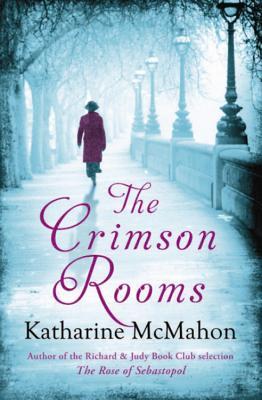
The Hour of Imagination by Katharine McMahon. I borrowed this because I’ve read two of her books and enjoyed them.

Book description: Estelle never really knew her mother, Fleur, but is haunted by her legacy. A legendary resistance heroine in the Great War, she had helped Allied soldiers escape from Belgium – and was not alone in paying a terrible price.

Christa’s father was one of those Fleur saved – but he returned home a ruined man. So, when Estelle arrives on Christa’s doorstep hungry for information about her mother, an intense and complex friendship is ignited.

In 1939, as conflict grips Europe once more, Estelle follows her mother’s destiny. Then Christa discovers that Fleur was betrayed by someone close to her and the truth may destroy them all…

Walden of Bermondsey by Peter Murphy. I’ve not read any of his books, so this is unknown territory for me. Peter Murphy spent a career in the law, as an advocate, teacher, and judge. He has worked both in England and the U.S., and served for several years as counsel at the Yugoslavian War Crimes Tribunal in The Hague. This book is the first in his Judge Walden series.

Book description: When Charlie Walden takes on the job of Resident Judge of the Bermondsey Crown Court, he is hoping for a quieter life. But he soon finds himself struggling to keep the peace between three feisty fellow judges who have very different views about how to do their jobs, and about how Charlie should do his. And as if that’s not enough, there’s the endless battle against the “Grey Smoothies”: the humorless grey-suited civil servants who seem determined to drown Charlie in paperwork and strip the court of its last vestiges of civilization. No hope of an easy life for Charlie then, and there are times when his real job – trying the challenging criminal cases that come before him – actually seems like light relief.

I’d love to know what you think – have you read any of these books, if so did you enjoy them? If not, do they tempt you?

Book Beginnings & The Friday 56: Tangerine by Christine Mangan

Every Friday Book Beginnings on Friday is hosted by Gillion at Rose City Reader where you can share the first sentence (or so) of the book you are reading. You can also share from a book you want to highlight just because it caught your fancy.

This week I’m featuring Tangerine by Christine Mangan. A few years ago I bought this book attracted by its cover, something I rarely do, but it was so eye-catching on the bookshop’s display table. Since then I’ve seen very mixed reviews, some severely criticising it and some heaping praise on it. I’m wondering what I’ll make of it – the blurb makes it sound a book I’d like. If you’ve read it please let me know what you thought.

The Book Begins:

Tuesdays were market days.

Not just for me, but for the entire city, the Rif women parading down from the mountains heralding the start, their baskets and carts overflowing with fruit and vegetables, their donkeys flanking them on either side.

Also every Friday there is The Friday 56, hosted by Freda at Freda’s Voice. *Grab a book, any book. *Turn to Page 56 or 56% on your  ereader . If you have to improvise, that is okay. *Find a snippet, short and sweet, but no spoilers!

These are the rules:

  1. Grab a book, any book.
  2. Turn to page 56, or 56% on your eReader. If you have to improvise, that is okay.
  3. Find any sentence (or a few, just don’t spoil it) that grabs you.
  4. Post it.
  5. Add the URL to your post in the link on Freda’s most recent Friday 56 post.

Page 56:

I noted again the strangeness in her sudden cheerfulness – such a change from the stoic calmness she had exhibited earlier that morning. It was almost frantic, as if at any moment it could all go horribly wrong.

Summary:

The perfect read for fans of Daphne du Maurier and Patricia Highsmith, set in 1950s Morocco, Tangerine is a gripping psychological literary thriller.

The last person Alice Shipley expected to see since arriving in Tangier with her new husband was Lucy Mason. After the horrific accident at Bennington, the two friends – once inseparable roommates – haven’t spoken in over a year. But Lucy is standing there, trying to make things right.

Perhaps Alice should be happy. She has not adjusted to life in Morocco, too afraid to venture out into the bustling medinas and oppressive heat. Lucy, always fearless and independent, helps Alice emerge from her flat and explore the country.

But soon a familiar feeling starts to overtake Alice – she feels controlled and stifled by Lucy at every turn. Then Alice’s husband, John, goes missing, and Alice starts to question everything around her: her relationship with her enigmatic friend, her decision to ever come to Tangier, and her very own state of mind.

Tangerine is an extraordinary debut, so tightly wound, so evocative of 1950s Tangier, and so cleverly plotted that it will leave you absolutely breathless.

~~~

What have you been reading lately?