Heart of Darkness by Joseph Conrad

Rating: 3 out of 5.

Heart of Darkness, a novella by Joseph Conrad, was originally a three-part series in Blackwood’s Magazine in 1899. Although a gripping story, this was not an enjoyable book for me. But then, I suppose, it is not meant to be. Conrad was writing about the inhumanity of the way the native population in Africa was treated; the greed and cruelty of the Europeans to gain property, business, trade and profit, draining Africa of its natural resources. It paints an appalling picture.

It is a story within a story and has an inner core of mystery. It relates the story told by Charlie Marlow to his friends on a cruising yawl on the Thames as the day ended and dusk fell. He began by saying ‘this also … has been one of the dark places of the earth.‘ He was referring to the Roman invasion of the British Isles centuries earlier, feeling the utter savagery that closed around them as they set out to conquer the land.

Then he went on to tell them about another ‘dark place‘ where he worked as the skipper of a river steamboat, travelling up and down an unnamed mighty African river (assumed to be the Congo) between the stations of an ivory trading business. He hears about the mysterious Mr Kurtz, the ivory trading company’s agent in the interior. He was said to have supernatural powers. What happened to Kurtz, or rather, what Kurtz did, and what he became, were the questions I pondered as I read on. Marlow set out to find Kurtz, which took him deep into the jungle, and also deeper into the heart of the ‘Dark Continent’ and into the darkness of the human soul. Nothing is what it seems, and the mystery surrounding Kurtz has a feverish and nightmare atmosphere. The ambiguity and the vagueness left me feeling puzzled as well as horrified at what was implied. I think it is all the more horrific for not being crystal clear.

It is an horrific tale that I think shows the darkest depths of human behaviour. In doing so Conrad highlights the prejudices and the cruelty and shows how it was at that time – the graphic reality of what happened. It is a powerful criticism of colonialism at its worst, and full of imagery, casting a spotlight on the barbarity of the so-called civilised Westerners. These few words, uttered by Kurtz concisely summarise the whole story: ‘The horror! The horror!’

The 1954 Club

The 1954 Club starts today, hosted by Karen and Simon, who ask everyone to read one or more books published in 1954 – in any language, format, or place – and share their reviews. Together, they will put together an overview of the year.

Books I’ve read and reviewed on this blog:

  1. Destination Unknown by Agatha Christie
  2. Sweet Thursday by John Steinbeck
  3. The Eagle of the Ninth by Rosemary Sutcliff

And these I read years ago before I began blogging, so no reviews:

  1. Mary Anne by Daphne du Maurier – fictional biography about one of du Maurier’s who was the mistress of  Frederick Augustus, the Duke of York and Albany (the ‘Grand old Duke of York’), a son of George III.
  2. Lord of the Flies by William Golding – a novel about a group of schoolboys stranded on an island and what happens when their behaviour descends into darkness.
  3. Under the Net by Iris Murdoch – the first book by her that I read when I was a teenager and I didn’t really understand it!
  4. The Fellowship of the Ring by J R R Tolkien – I’ve read all of the Lord of the Rings books more than once in the past and I was hoping to re-read this the first book for the 1954 Club, but have only just started it.
  5. The Two Towers by J R R Tolkien – the second book in the trilogy.
  6. Katherine by Anya Seton – this novel tells the true story of the love affair that changed history—that of Katherine Swynford and John of Gaunt, Duke of Lancaster, the ancestors of most of the British royal family.

I’ve decided to re-read the Lord of the Rings this year, but my review will not be ready this week!

Ten Authors I Haven’t Read, But Want To

Top Ten Tuesday is a weekly meme created by The Broke and the Bookish and now hosted by Jana at That Artsy Reader Girl. For the rules see her blog.

This week the topic is Authors I Haven’t Read, But I Want to Read Books by Them  My list is of some of these authors and the books by them that I own but haven’t read yet.

  1. Pat Barker – The Regeneration Trilogy
  2. William Boyd – Love is Blind
  3. Jessie Burton – The Miniaturist
  4. Alys Clare – The Enchanter’s Forest
  5. Patricia Highsmith – Strangers on a Train
  6. Robin Hobb – Assassin’s Apprentice
  7. Stieg Larsson – the Millenium series
  8. Michael Ondaatje – The English Patient
  9. Salman Rushdie – Quichotte
  10. Irving Stone – The Agony and the Ecstasy

Book Beginnings & The Friday 56: Rain by Melissa Harrison

Every Friday Book Beginnings on Friday is hosted by Gillion at Rose City Reader where you can share the first sentence (or so) of the book you are reading. You can also share from a book you want to highlight just because it caught your fancy.

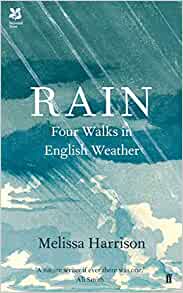
I’ve just started reading Rain: Four Walks in English Weather by Melissa Harrison, a ‘meditation on the English landscape in wet weather.’ She describes four walks in the rain over four seasons, across Wicken Fen, Shropshire, the Darent Valley and Dartmoor.

The Book begins with an Introduction:

What does rain mean to you? Do you see it as a dreadful inconvenience, a strange national obsession, or an agricultural necessity? We love to grumble about it, yet we invent dozens of terms to describe it and swap them gleefully; it trickles through our literature from Geoffrey Chaucer to Alice Oswald, and there are websites and apps that mimic its sound, soothing us while we work or sleep. Rain is what makes the English countryside so green and pleasant; it’s also what swells rivers, floods farms and villages and drives people out of their homes.

Also every Friday there is The Friday 56, hosted by Freda at Freda’s Voice, where you grab a book and turn to page 56 (or 56% of an eBook), find one or more interesting sentences (no spoilers), and post them.

Page 56 is in the chapter about her walk in the Darent Valley, in Kent, in August:

Behind the cumulonimbus currently discharging itself over the Darent Valley, more are forming; the afternoon will see thunder and lightning over much of the south-east of England, including London, less than twenty miles away.

Synopsis from Amazon UK:

Whenever rain falls, our countryside changes. Fields, farms, hills and hedgerows appear altered, the wildlife behaves differently, and over time the terrain itself is transformed.

In Rain, Melissa Harrison explores our relationship with the weather as she follows the course of four rain showers, in four seasons, across Wicken Fen, Shropshire, the Darent Valley and Dartmoor.

Blending these expeditions with reading, research, memory and imagination, she reveals how rain is not just an essential element of the world around us, but a key part of our own identity too.

I think I’m going to enjoy this book.

About the Author:

Melissa Harrison is a novelist, children’s author, journalist and nature writer. She contributes a monthly Nature Notebook column to The Times, and also writes regularly for the FT Weekend, the Guardian and the New Statesman. Her most recent novel, All Among the Barley, was the UK winner of the European Union Prize for Literature. It was a Waterstones Paperback of the Year and a Book of the Year in the Observer, the New Statesman and the Irish Times. At Hawthorn Time was shortlisted for the Costa Novel Award and longlisted for the Women’s Prize for Fiction, while Rain: Four Walks in English Weather was longlisted for the Wainwright Prize.

Ten Nature TBRs

Top Ten Tuesday is a weekly meme created by The Broke and the Bookish and now hosted by Jana at That Artsy Reader Girl. For the rules see her blog.

It’s a Freebie this week, so I’ve chosen to list ten books on various aspects of nature that I haven’t read yet. I got this idea a few weeks ago from Hopewell’s Public Library of Life’s blog when she listed some of her nature TBRs.

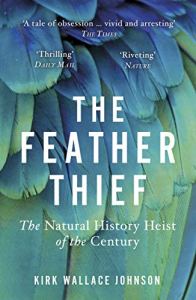
The Feather Thief: Beauty, Obsession, and the Natural History Heist of the Century by Kirk Wallace Johnson – this combines many genres – biography, true crime, ornithology, history, travel and memoir – to tell the story of an audacious heist of rare bird skins from the Natural History Museum at Tring in 2009. Chris Packham recommended this book on his lockdown programme the Self-Isolating Bird Club and I thought it sounded fascinating.

The Hidden Life of Trees Peter Wohlleben – I love trees but I never thought that trees had a ‘hidden life’ as described in this book. So, I was intrigued by the title – is it possible that trees are like human families as Wohlleben describes. I admit that I am sceptical, but as I haven’t read it yet I’m trying to keep an open mind. This book is described as drawing on groundbreaking scientific discoveries to describe how trees are like human families: tree parents live together with their children, communicate with them, support them as they grow, share nutrients with those who are sick or struggling, and even warn each other of impending dangers.

I have often wondered what animals are thinking and feeling – especially when I saw the reaction of Ben, our dog when Zoe, our other dog died. He was clearly devastated and howled. So, I want to read The Inner Life of Animals: Surprising Observations of a Hidden World  by Peter Wohlleben – stories about the emotions, feelings, and intelligence of animals around us. Animals are different from us in ways that amaze us – and they are also much closer to us than we ever would have thought. 

Rain: Four Walks in English Weather by Melissa Harrison – a ‘meditation on the English landscape in wet weather.’ She describes four walks in the rain over four seasons, across Wicken Fen, Shropshire, the Darent Valley and Dartmoor. I have to admit that I’m not keen on walking in the rain, so I’m hoping to find encouragement in this book.

 The Therapeutic Garden by Donald Norfolk is a book I’ve had for years. I’ve not read all of it – just dipped into a few chapters. It’s about the healing power of nature through gardening. I am not a keen gardener, I don’t know enough about it. This is not a practical ‘how-to’ gardening book, but uses gardening as an enjoyable means to bring wholeness, health and healing.

Another book about the value of gardening to relieve stress and help us look after our mental health is The Well Gardened Mind: Rediscovering Nature in the Modern World by Sue Stuart-Smith. It combines contemporary neuroscience, psychoanalysis and brilliant storytelling, to investigate the magic that many gardeners have known for years – working with nature can radically transform our health, wellbeing and confidence.

The Wild Remedy: How Nature Mends Us – A Diary by Emma Mitchell. This is another book Chris Packham recommended and Emma appeared several times on his Self Isolating Bird Club. The book is beautifully illustrated and is Emma’s diary of her walks along the paths and trails around her cottage and further afield, sharing her nature finds and tracking the lives of local flora and fauna over the course of a year. 

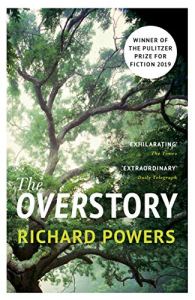
The Overstory by Richard Powers, a novel about nine strangers brought together by an unfolding natural catastropheA friend recommended this book, telling me how wonderful it is. It’s about trees and about protecting trees – and I love trees!

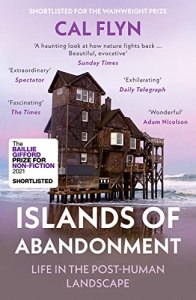
Islands of Abandonment: Life in the Post-Human Landscape by Cal Flyn, a book about what happens when humans leave and nature is allowed to reclaim its place. It looks at Chernobyl, uninhabited Scottish islands, volcanic regions of the Caribbean and the lush forests of Tanzanian mountains.

We have lots of books about birds, most of which are reference books to dip into to identify the birds we don’t recognise, but Garden Bird Songs and Calls by Geoff Sample is a bit different. It’s a short book – an audio guide, designed to help identify birds by their song with a CD of the sounds of 40 of the most common and vocal garden birds. There are also written descriptions of the songs. So far I’ve only tried to identify the robin’s song.

Six Degrees of Separation from Our Wives Under the Sea to Five Little Pigs

It’s time again for Six Degrees of Separation, a monthly link-up hosted by Kate at Books Are My Favourite and Best. Each month a book is chosen as a starting point and linked to six other books to form a chain. A book doesn’t need to be connected to all the other books on the list, only to the one next to it in the chain.

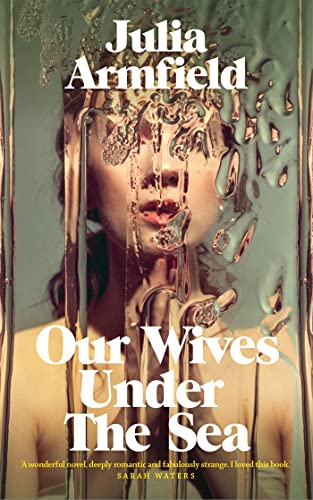
The starting book is Our Wives Under the Sea by Julia Armfield:

I haven’t read Our Wives Under the Sea. It’s about Leah and Miri, a married couple, whose relationship hits difficulties when Leah returns home after a three month absence on a deep sea mission and has changed. It seems to me like a variation on the mermaid folklore tales.

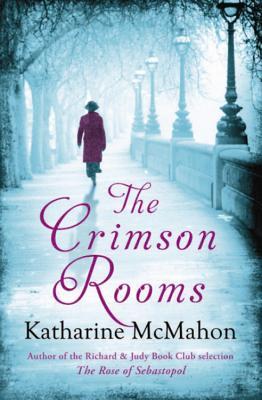
Leah is also a character in The Crimson Rooms by Katharine McMahon set in London in 1924, with Britain still coming to terms with the aftermath of the First World War. Evelyn Gifford, one of the few pioneer female lawyers takes on the case of Leah Marchant, whose children had been taken into care. It’s early days for women to be accepted as lawyers and Evelyn struggles to defend Leah who distrusts her and wants Daniel Breen, Evelyn’s boss to defend her.

Earth and Heaven by Sue Gee, a novel about a painter and his family is also set in the aftermath of the First World War. The back cover reveals that it is a ‘detailed portrayal of an era which refuses to become part of the past, even today.’ I bought this book because I’d read and enjoyed Sue Gee’s novel The Hours of the Night.

In The Hours of the Night, also by Sue Gee, Gillian Traherne and her mother Phoebe lead a remote existence in their grey, stone house on the Welsh borders. Gillian is a loner, an eccentric poet in her thirties, who has a difficult relationship with her very different mother: a well-known and expert gardener. Into their strange and secluded world, described with beautifully observed detail, come strangers from London to disrupt life as Gillian knows it.

Another author with the surname Gee is Maggie Gee.In her novel, My Cleaner, Vanessa, white, middle-class and totally self-absorbed asks Mary, black, and equally selfish, to return from Uganda to help look after Justin, Vanessa’s 22 year old son. Mary had worked as Vanessa’s cleaner 10 years earlier, but their relationship has changed and the balance of power between the two women shifts as the story reaches its climax. 

Another character who is also a cleaner called Mary is in Magpie Murders by Anthony Horowitz. Mary Blakiston was an unpleasant character, who lived in the village of Saxby-on-Avon. She was found dead at the bottom of the stairs at Pye Hall. Magpie Murders is a novel within a novel. The inner story is a whodunnit, a murder mystery and the chapter headings are taken from the rhyme One for Sorrow’ in the same way that Agatha Christie used rhymes for chapter headings in some of her books.

One of Agatha Christie’s books using lines from a nursery rhyme in some of the chapters and in its title is Five Little Pigs – ‘this little pig went to market, this little pig stayed at home …’. In it Poirot investigates a crime that had been committed sixteen years earlier. The convicted murderer’s daughter is convinced her mother was innocent.

My chain began with a novel about an underwater mission that went wrong and ended up with a murder mystery, in which it is claimed the wrong person was found guilty. The books are a mix of historical and crime fiction, and contemporary fiction.

Next month (May 7, 2022), we’ll start with Peter Carey’s True History of the Kelly Gang.