2021 was an odd year in many ways and the various events affected my reading. There were times when I didn’t want to read and several times when I certainly didn’t want to write about the books I did read. In total I read 80 books and didn’t write about 19 of them. I will write about two of them at least, a NetGalley book and also The Mirror and the Light by Hilary Mantel.
I began the year determined to read Mantel’s book as I’d bought it in March 2020, but as the months went by I kept reading other books instead. After a good start I just couldn’t get interested in it and I’d loved the other two books in the Wolf Hall trilogy, but this third book was just dragging along. I left it for a few months and finally finished it just before Christmas.
This challenge was hosted again for 2021 by Andrea at Carolina Book Nook. It ends tomorrow, 31st December 2021.
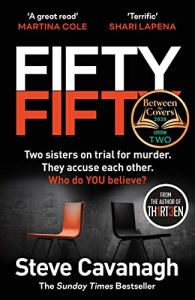
The idea of the challenge was to read a book in any format (hard copy, ebook, audio) with a title that fits into each category. I’ve managed to complete the challenge by finishing reading Fifty Fifty only the day before yesterday and have not had time yet to write my review.
These are the books I read, with links to my reviews
My thanks go to Andrea for hosting this challenge – it was not as easy as I thought it would be, but it was most enjoyable finding books to fit the category, especially for the ‘repeated word’.
Andrea is hosting this challenge again for 2022 – and I’ll be signing up for it in a later post.
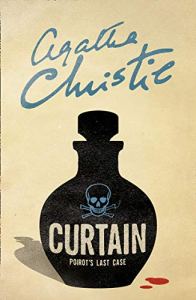
Today I’m looking back at my post on Curtain: Poirot’s Last Case by Agatha Christie, one of my favourite Agatha Christie books. I first reviewed it on December 2, 2010.
My review begins:
Curtain was first published in 1975, but it was written in the 1940s during the Second World War. Agatha Christie had written it with the intention that it be published after her death, but in 1975 her publishers persuaded her to release it so that it could appear in time for the Christmas season – a ‘Christie for Christmas’.
In this book Poirot and Hastings have come full circle, returning to Styles, the scene of their first case. Poirot is now an old man (just how old is not revealed – I think if you go by the chronology of the novels he must have been about 120, but there is no need to be too precise), and close to death. Hastings is the narrator of this mystery. He is saddened by the devastation age has had on Poirot
Top Ten Tuesday is a weekly meme created by The Broke and the Bookish and now hosted by Jana at That Artsy Reader Girl. For the rules see her blog.
The topic this week is Best Books I Read In 2021. I’ve read 18 books this year that I’ve rated 5* on Goodreads, so it’s difficult to choose the 10 ‘best ‘ books, but these are the ones that I enjoyed the most, in the order I read them:
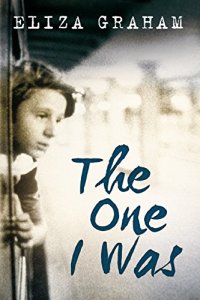
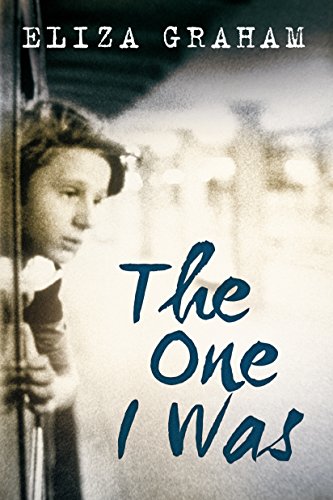
The One I Was by Eliza Graham – historical fiction split between the present and the past following the lives of Benny Gault and Rosamund Hunter. Benny first came to Fairfleet in 1939, having fled Nazi Germany on a Kindertransport train. As an adult he bought the house and now he is dying of cancer. Rosamund returns to Fairfleet, her childhood home, to nurse Benny. I was totally engrossed in both their life stories as the various strands of the story eventually combined.
English Pastoral by James Rebanks – nonfiction, inspirational as well as informative and it is beautifully written. I enjoyed his account of his childhood and his nostalgia at looking back at how his grandfather farmed the land. And I was enlightened about current farming practices and the effects they have on the land, depleting the soil of nutrients.
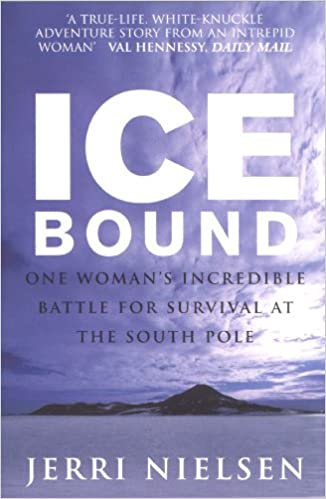
Ice Bound by Jerri Nielsen – nonfiction – Dr Jerri Nielsen was a forty-six year old doctor, who took a year’s sabbatical to work at the Amundsen-Scott South Pole Research Station in Antarctica, the most remote and perilous place on earth. In the dark Antarctic winter of 1999 she discovered a lump in her breast. Whilst the Pole was cut off from the rest of the world in total darkness she treated herself, taking biopsies and having chemotherapy, until she was rescued by the Air National Guard in October 1999.
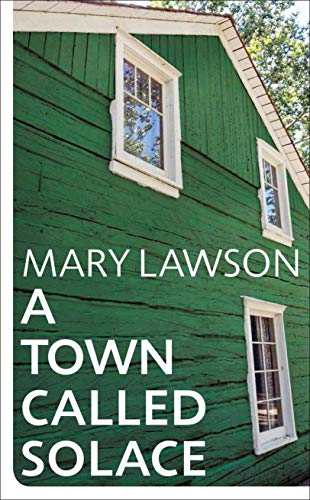
A Town Called Solace by Mary Lawson – a novel focused on three main characters, Elizabeth, Liam and Clara, each perfectly distinct and finely described. The setting in a small town in North Ontario in 1972 is excellent. It looks back to events thirty years earlier when Elizabeth Orchard first met Liam who was then a small boy of 3 when he and his family lived in the house next door and the events that followed.
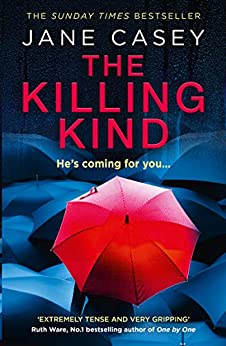
The Killing Kind by Jane Casey, a police procedural and a psychological thriller. It’s a mix of courtroom scenes, police interviews and terrifying action-packed scenes. I was totally engrossed in it right from its opening page all the way through to the end.
Coming Up for Air by Sarah Leipciger – a beautiful novel, a story of three people living in different countries and in different times. How their stories connect is gradually revealed as the novel progresses. As the author explains at the end of the novel it is a mix of fact and fiction and has its basis in truth.
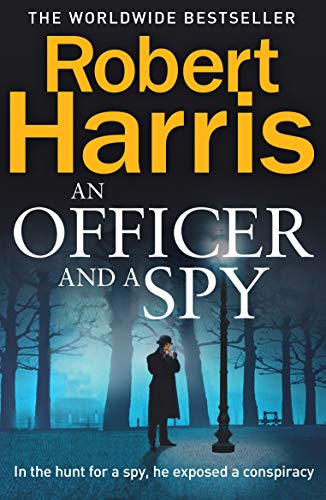
An Officer and a Spy by Robert Harris – historical fiction about the Dreyfus affair in 1890s France. Alfred Dreyfus, a young Jewish officer, was convicted of treason and sentenced to life imprisonment at Devil’s Island. It’s narrated by Colonel George Picquart, who became convinced that Dreyfus was innocent. Harris goes into meticulous detail in staying accurate to the actual events, but even so this is a gripping book and I was completely absorbed by it from start to finish.
A Corruption of Blood by Ambrose Parry – a combination of historical fact and fiction, a tale of murder and medical matters, with the social scene, historical and medical facts slotting perfectly into an intricate murder mystery. It’s an exceptionally excellent murder mystery and an informative historical novel, with great period detail and convincing characters.
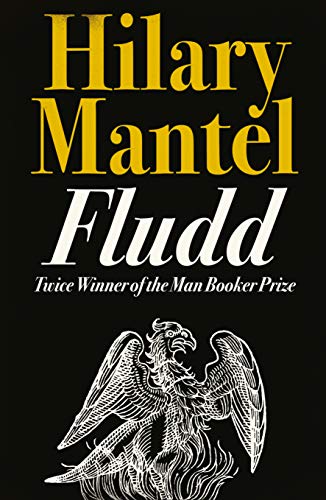
Fludd by Hilary Mantel –a dark fable of lost faith and awakening love amidst the moors.The story centres on Fludd, a young priest who comes to the Church of St Thomas Aquinas to help Father Angwin, a cynical priest who has lost his faith. I enjoyed it all immensely – partly about religion and superstition, but also a fantasy, a fairy tale, told with wit and humour with brilliant characterisation.
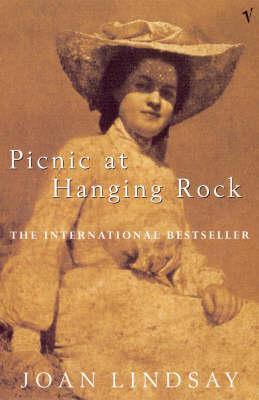
Picnic at Hanging Rock by Joan Lindsay – the story of a party of nineteen girls accompanied by two schoolmistresses who set off from the elite Appleyard College for Young Ladies, for a day’s outing at the spectacular volcanic mass called Hanging Rock. The picnic, which begins innocently and happily, ends in explicable terror, and some of the party never returned. I loved the detailed descriptions of the Australian countryside and the picture it paints of society in 1900, with the snobbery and class divisions of the period.
Have you read any of these books? What books have you enjoyed the most this year?
This is the first year I’ve joined the Back to the Classics Challenge, hosted by Karen’s @ Books and Chocolate. The books have to be 50 years old and fit in to twelve categories. I’ve completed just six of them. These are the books I read:
A 19th century classic: any book first published from 1800 to 1899 – Little Dorrit by Charles Dickens 1857, not my favourite Dickens but still enjoyable.
A 20th century classic: any book first published from 1900 to 1971 – Checkmate to Murder by E C R Lorac – 1944. What is fascinating in this book is the insight it gives into what life was like in wartime London, complete with the London fog and details of the blackout.
A classic by a woman author – Orlando by Virginia Woolf – 1928. The plot is extraordinary, beginning towards the end of Elizabeth I’s reign when Orlando is a young nobleman, and continuing for the next five hundred years to the start of the twentieth century.
A classic by BIPOC author; that is, a non-white author. The Count of Monte Cristo by Alexandre Dumas. I enjoyed this far more than I expected. It’s a great story, action-packed, and full of high drama and emotion.
A new-to-you classic by a favourite author — a new book by an author whose works you have already read. Framley Parsonageby Anthony Trollope. It’s the fourth book in Anthony Trollope’s series, the Chronicles of Barsetshire
A children’s classic – The Railway Children by Edith Nesbit. This is feel good’ book about a family living in a world long gone – in 1905. I enjoyed it, but would have loved it if I’d read it when I was a child.
I very much enjoyed this challenge. My favourite is The Mount of Monte Cristo. My thanks go to Karen for hosting this challenge!







 BooksPlease