Today I’m looking back at my post on The Ghosts of Altona by Craig Russell, which I first posted on 29 September 2015..
Here’s the first paragraph:
Last week I quoted the opening paragraphs and the description of The Ghosts of Altonaby Craig Russell, a novel, which won this year’s Bloody Scotland Crime Novel of the Year. It’s an outstanding book, one of the best I’ve read this year. I suppose it can be called a modern Gothic tale as well as being a crime thriller. Russell is a new author to me, but by no means is he a new author, The Ghosts of Altona being his 7th book featuring Jan Fabel, the head of Hamburg’s Murder Commission. However, it didn’t spoil my enjoyment that I’d jumped into the series right at the end. And in a way it didn’t matter at all as in the first chapter Jan has a near-death experience when he is shot by a suspected child killer, which has a profound effect on his life and the way he views death.
Top Ten Tuesday is a weekly meme created by The Broke and the Bookish and now hosted by Jana at That Artsy Reader Girl. For the rules see her blog.
This week’s topic is a Freebie and I have chosen a past TTT topic from October 2013 which was before I took part in TTT – Top Ten Books I was ‘Forced’ to Read. The definition of this topic was described thus: ‘Obviously, in most cases, you weren’t LITERALLY forced to read it but you know what we are getting at here. Those required reading books, book club picks, books for your job or those books that it simply feels like other readers were going to tie you down until you read it!!’
I’ve chosen books that were ones I read at my local book group. They are all books I would probably never have read if they hadn’t been for the book club – some of them I loved, some I disliked and some that I thought were OK, neither very good or very bad.
First the ones I loved:
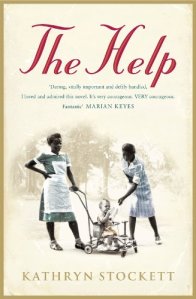
The Help by Kathryn Stockett, which I loved even more than the film. It takes place in Jackson, Mississippi in 1962 during the Civil Rights Movement. Aibileen, Minny and Skeeter are the three narrators and it is through their eyes that the book comes to life as they take turns telling their stories. It’s touching, poignant, funny, compelling and definitely thought-provoking. I loved the film too.
Little Boy Lostby Marghanita Laski – the story of Hilary Wainwright, who is searching for his son, lost five years earlier in the Second World War. Hilary had left France just after his wife, Lisa, had given birth to John. Lisa, unable to leave France, worked for the Resistance, but was killed by the Gestapo and her son disappeared. It is emotional, heart-wrenching and nerve-wracking, full of tension, but never sentimental.
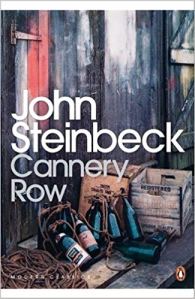
Cannery Rowby John Steinbeck – it has everything I like, rich descriptions of locations, wonderful characters and a storyline, that grabs my attention and makes me want to know more. There is humour and tragedy, meanness and generosity, life and death all within Cannery Row‘s 148 pages. After reading this I went on to read more of Steinbeck’s books, The Grapes of Wrath, East of Eden, Of Mice and Men and Sweet Thursday.
The Long Song by Andrea Levy. It’s brutal, savage, and unrelenting in depicting the lives of the slaves in Jamaica just as slavery was coming to an end and both the slaves and their former owners were adjusting to their freedom. The narrator is July, at the beginning a spirited young woman, born in a sugar-cane field, telling her story at her son’s suggestion. It’s beautifully written too.
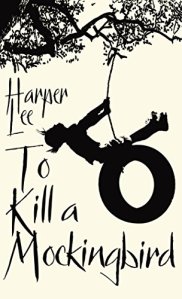
To Kill a Mockingbird by Harper Lee set in the Deep South of America in the 1930s. Scout (Jean Louise Finch) is the narrator, as she looks back as an adult to the Depression, the years when with her older brother, Jem, and their friend, Dill, she witnessed the trial of Tom Robinson, a black man accused of raping a white girl. Scout’s father, Atticus, a lawyer defends Tom. It’s also the story of Boo Radley, their neighbour, a man who is never seen, who is said to only come out at night.
Salmon Fishing in the Yemen by Paul Torday by Paul Torday. The conditions in the Yemen are completely wrong for salmon fishing and that is the conundrum that Dr Alfred Jones has to solve when Sheikh Muhammad wants scientific advice on how best to introduce it into the Yemen. The sheikh has an estate in Scotland where he pursues his great love of fly fishing. This a light comic novel, much of it complete but enjoyable nonsense and I was actually hoping the project would be successful and that salmon would run up the waters of the Wadi Aleyn in the heart of the mountains of Heraz. I haven’t seen the film of the book.
Then the books I enjoyed, although I didn’t actually love them:
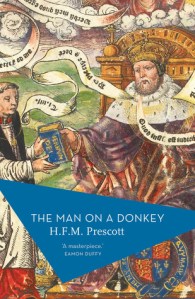
The Man on a Donkey by H F M Prescott, written in the form of a chronicle, from the various characters’ viewpoints. It’s as much about the ordinary people as the rich and powerful, and based on documentary evidence relating to the Pilgrimage of Grace in 1536 led by Robert Aske, a lawyer. It was a protest against Henry VIII‘s break with the Roman Catholic Church, the Dissolution of the Monasteries, and the policies of the King’s chief minister, Thomas Cromwell. It transported me back to that time, with lyrical descriptions of the settings, both of the countryside and of the towns, of Marrick Priory and of the king’s court, of the people, and the mood of the times, both religious and political.
I found Westwood by Stella Gibbons a slightly disappointing book. I liked it, but didn’t love it, as I’d hoped I would. I do enjoy descriptive writing, and there are some beautiful descriptive passages, particularly of London just after the Blitz. Margaret Steggles, a plain young woman finds a ration book on Hampstead Heath which provides her with an introduction into the lives of Gerard Challis and his family, his beautiful wife, Seraphina, his self-absorbed daughter Hebe and her spoilt children and Zita the family’s maid. Margaret idolises Gerard, who is a playwright. He in turn falls under the spell of her best friend, Hilda.
Full Tilt: Dunkirk to Delhi on a Bicycle, by Dervla Murphy, first published in 1965, this is an account of her journey in 1963, which took her through Europe, Persia (Iran), Afghanistan, over the Himalayas to Pakistan and into India. She travelled on her own, with a revolver in her saddle bag. It’s very much a personal account, but not so much about the actual cycling. I enjoyed it as much for her descriptions of the places she visited as for her thoughts along the way. I’m not sure that I would find her easy company though!
And finally a book that I disliked:
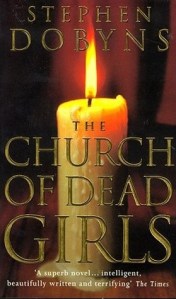
The Church of Dead Girls by Stephen Dobyns about the disappearance and murders of three young teenage girls. It’s far too detailed and drawn out. I had trouble with the narrator, wondering how he could possibly know all the detail of what other characters were thinking and doing. Described on Amazon thus ‘One after another, three girls disappear from a small American town. As the sleepy town awakens to a horrific nightmare, no one is safe from the rising epidemic of suspicion. Dobyn’s chilling novel is superbly written portrait of a little place seemingly at home with itself. The suspense builds to a magnificent climax.’ I did not like it at all.
Every Friday Book Beginnings on Friday is hosted by Gillion at Rose City Readerwhere you can share the first sentence (or so) of the book you are reading. You can also share from a book you want to highlight just because it caught your fancy.
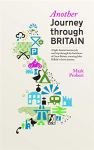
This week I’m featuring the latest book I’ve just started reading, Another Journey Through Britain by Mark Probert, which was free on Amazon UK, although it’s currently on offer for 99p.
In this book Mark Probert follows the route taken by John Hillaby in his 1960s book Journey through Britain, telling the story of his 1,100 mile walk from Land’s End in south-west England to the north-east coast of Scotland at John o’Groats. It had captured Probert’s imagination and when he entered semi-retirement in 2018 he decided to repeat Hillaby’s book, looking out for the things he wrote about in his original book and comparing how today’s Britain differed from that of fifty years earlier. He didn’t walk, though but he did it on a motor bike, a Royal Enfield Classic 500.
The Book Begins:
The visitor car park at Land’s End was almost empty and ghostly silent. It was just after 10 am on a chilly May morning.
Also every Friday there is The Friday 56, hosted by Freda at Freda’s Voice. *Grab a book, any book. *Turn to Page 56 or 56% on your ereader . If you have to improvise, that is okay. *Find a snippet, short and sweet, but no spoilers!
These are the rules:
Grab a book, any book.
Turn to page 56, or 56% on your eReader. If you have to improvise, that is okay.
Find any sentence (or a few, just don’t spoil it) that grabs you.
Post it.
Add the URL to your post in the link on Freda’s most recent Friday 56 post.
Pages 55-56:
Beside the National Parks there are thirty four Areas of Outstanding National Parks (AONB) in England and Wales, less than half of which were in existence in 1966. Being British, we have to make things complicated. In Scotland they have two National Parks, forty five National Nature Reserves, three UNESCO GeoParks and two UNESCO Biospheres. The original purpose of the Parks was to conserve and preserve, but also to open the areas up for people to enjoy. Nowadays, the National Parks cover approximately 10 percent of England, 20 percent of Wales and 7 percent of Scotland.
CanongateBooks| 19th August 2021| 405 pages| Review Copy| 5*
This is the third book in Ambrose Parry’s historical series starring Will Raven & Sarah Fisher, set in 19th century Edinburgh. I loved the other books, The Way of All Fleshand The Art of Dyingand A Corruption of Blood is equally as good, if not better.
Description
Edinburgh. This city will bleed you dry.
Dr Will Raven is a man seldom shocked by human remains, but even he is disturbed by the contents of a package washed up at the Port of Leith. Stranger still, a man Raven has long detested is pleading for his help to escape the hangman.
Back at 52 Queen Street, Sarah Fisher has set her sights on learning to practise medicine. Almost everyone seems intent on dissuading her from this ambition, but when word reaches her that a woman has recently obtained a medical degree despite her gender, Sarah decides to seek her out.
Raven’s efforts to prove his erstwhile adversary’s innocence are failing and he desperately needs Sarah’s help. Putting their feelings for one another aside, their investigations will take them to both extremes of Edinburgh’s social divide, where they discover that wealth and status cannot alter a fate written in the blood.
Ambrose Parry is the pseudonym of crime fiction author, Chris Brookmyre and Marisa Haetzman, a consultant anaesthetist. Will is a doctor working with Doctor James Young Simpson, a professor of midwifery, who discovered the anaesthetic properties of chloroform (a real historical character), and Sarah, is the Simpsons’ housemaid, but she now assists Professor Simpson and is studying medicine. The two of them have a complicated and somewhat spiky relationship, which continues in this novel.
The combination of a crime fiction writer and an anaesthetist works excellently in Ambrose Parry’s novels. The research into the history of medicine is extensive, making this book a combination of historical fact and fiction, a tale of murder and medical matters, with the social scene, historical and medical facts slotting perfectly into an intricate murder mystery.
The mystery begins when the body of a baby wrapped in a parcel, is found floating in the Forth. The child had been strangled with a length of white tape. Sarah meanwhile is involved in finding a missing child. When Sir Ainsley Douglas, a prominent and wealthy member of Edinburgh society is found dead from arsenic poisoning, Will reluctantly gets involved in the murder investigation. How the mysteries interlink gradually becomes clear and although I soon realised how Sir Ainsley had been murdered, I was puzzled about who did it and was completely taken by surprise when the culprit was revealed.
Like all good historical fiction, this book weaves together fact and fiction. The Historical Note at the end of the book sorts out what was real and what was invented. The subjects covered include details about infectious diseases, the difficulties women experienced in obtaining a medical degree, and crimes children suffered in the 19th century. I think A Corruption of Blood is an exceptionally excellent murder mystery and an informative historical novel, with great period detail and convincing characters. I look forward to reading more books by Ambrose Parry.
Top Ten Tuesday is a weekly meme created by The Broke and the Bookish and now hosted by Jana at That Artsy Reader Girl. For the rules see her blog. This week’s topic is Books on My Fall 2021 To-read List.
Not easy when I have so many books I want to read. These are the first ten that came to mind, but this is not a reading plan and I could just as easily read other books this autumn:
First two novellas:
Another Part of the Woodby Beryl Bainbridge – 159 pages -literary fiction set In a remote cottage in Wales where two urban couples are spending their holiday with the idealistic owner and his protege. The beginning is idyllic but catastrophe lurks behind every tree.
Picnic at Hanging Rockby Joan Lindsay 189 pages – a novel for the reader to decide if it’s fact or fiction. On St Valentine’s Day in 1900, nineteen girls and two schoolmistresses visit Hanging Rock. Some were never to return.
Two books from my NetGalley shelf:
Just Like the Other Girlsby Claire Douglas – standalone psychological thriller. Una Richardson’s heart is broken after the death of her mother. Seeking a place to heal, she responds to an advertisement and steps into the rich, comforting world of Elspeth McKenzie. But Elspeth’s home is not as safe as it seems.
The Girl Who Died by Ragnar Jónasson, a standalone novel. After the loss of her father, Una sees a chance to escape Reykjavík to tutor two girls in the tiny village of Skálar – population just ten – on Iceland’s storm-battered north coast. The creaky old house where they live is playing on her already fragile mind when she’s convinced she hears the ghostly sound of singing. Then, at midwinter, a young girl is found dead.
Two books from my TBR list:
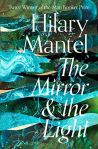
The Mirror and the Light by Hilary Mantel, the final novel in her Wolf Hall trilogy about Thomas Cromwell, tracing his final years. I wanted to read this so much when I bought it (in 2020) and it has sat around the house ever since, but it’s a hardback copy and I keep putting off reading it. If I don’t read this soon it will be 2022 before I get round to it.
The Unlikely Pilgrimage of Harold Fry by Rachel Joyce, which I bought in 2013! It’s about Harold’s journey on foot from one end of the country to the other – from South Devon to Berwick-upon-Tweed and I was intrigued. I wondered which places he went through. It’s definitely time I read this.
And finally two more recent acquisitions:
Another Journey Through Britain by Mark Gregory Probert. He follows the route taken by John Hillaby in his 1960s book Journey through Britain. The ride starts from rugged Land’s End in south-west England and ends up at the wild north-east coast of Scotland at John o’Groats. Buying this book is what made me remember I haven’t read Rachel Joyce’s novel, also about a journey through Britain.
The Bass Rock by Evie Wyld, a novel that weaves together the lives of three women in three different eras, linked by the Bass Rock, an island in the Firth of Forth, north-east of North Berwick. There’s Sarah in the 1700s accused of being a witch, Ruth, newly married in 1955 to a widower, Peter, and Viv, Peter’s granddaughter, in the present day.
I’ve collected together a selection of novellas in advance of Novellas in November, hosted by Cathy of 746 Books and Rebecca of BookishBeck. These are all books of under 200 pages.
From top to bottom they are (I’ve given the actual page numbers in my copies):
Another Part of the Wood by Beryl Bainbridge – 159 pages -literary fiction set In a remote cottage in Wales where two urban couples are spending their holiday with the idealistic owner and his protege. The beginning is idyllic but catastrophe lurks behind every tree.
The Great Divorce by C S Lewis – 118 pages – a fable and allegory in which the writer, in a dream, boards a bus on a drizzly afternoon and embarks on an incredible voyage through Heaven and Hell.
Rebus’s Scotland by Ian Rankin – 131 pages (not including the photographs). Ian Rankin’s guide to the places in Scotland that have provided inspiration for his bestselling Inspector Rebus novels.
The Sovereignty of Good by Iris Murdoch – 105 pages, philosophy – three essays, exploring questions of good and bad, and myth and morality.
Picnic at Hanging Rock by Joan Lindsay 189 pages – a novel for the reader to decide if it’s fact or fiction. On St Valentine’s Day in 1900, nineteen girls and two schoolmistresses visit Hanging Rock. Some were never to return.
On Chesil Beach 166 pages by Ian McEwan, It is July 1962. Edward and Florence, young innocents married that morning, arrive at a hotel on the Dorset coast. At dinner in their rooms they struggle to suppress their private fears of the wedding night to come. The events of that evening will haunt them for the rest of their lives. (This will be a re-read)
A Life of Walter Scott: The Laird of Abbotsford by A N Wilson 185 pages, ‘weaving together the life and the works, and discussing all Scott’s best-known books as well as many which are less familiar.
















 BooksPlease