This year (the 10th anniversary) the annual R.I.P event was hosted by Andi and Heather of The Estella Society. It ran from September 1st to October 31st.
It involved reading books that fitted into one or more of the following categories:
Mystery
Suspense
Thriller
Dark Fantasy
Gothic
Horror
Supernatural
There are several levels, depending on how many books you read. I initially thought I’d aim low with just one book. But I actually read eight, more than enough for –
Just two were from my initial list and the others just turned up, as it were! I still have these books I want to read/reread:
The Wasp Factory by Iain Banks
A Song of Stone by Iain Banks
Poirot Investigates by Agatha Christie
Northanger Abbey by Jane Austen ‘“ I read this so many years ago that it will be like reading it for the first time. It was one of the set books at school and I don’t think I appreciated it then.
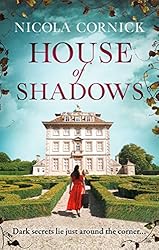
Nicola Cornick is a new-to-me author, but she is by no means a new author. She has written many books – see her website for more details. Not having read any of her books I wasn’t sure I’d like House of Shadows, her latest book due to be published on 5 November, but the publishers’ press release persuaded me to read and review an uncorrected proof copy. I’m glad I did as I thoroughly enjoyed House of Shadows.
Press Release synopsis:
One House, Three Women. And a lie that will change history.
February 1662
On the eve of her death Elizabeth Stuart hands her faithful cavalier William Craven an ancient pearl with magical properties to be kept safe for her rightful heir. Craven, distraught with grief, builds Ashdown Estate in Elizabeth’s memory and places the pearl at the centre.
February 1801
Notorious Regency courtesan Lavinia Flyte is brought to Ashdown House with her protector, Lord Evershot, who is intent on uncovering the Winter Queen’s treasures. Evershot’s greedy pillage of the ancient house will unleash a dark power which has lain dormant for a hundred and fifty years.
February 2014
Holly Ansell’s brother has gone missing. As Holly retraces his footsteps, she discovers that her brother was researching the mystery of Elizabeth Stuart and her alleged affair with William Craven. A battered mirror and the diary of a Regency courtesan are the only clues she has, but Holly is determined to discover the truth: Where is the fabled pearl that Elizabeth gave to William Craven? What happened to Lavinia Flyte? And who is the Winter Queen’s rightful heir?
My thoughts:
This is a successful time-slip novel as I had no difficulty in following each strand of the story. And each is set firmly in its historical context. It’s a fascinating mix of factual history combined with historical interpretation/imagination to fill in the gaps in the records. Elizabeth Stuart, known as the Winter Queen, the daughter of James I of England and VI of Scotland was married to Frederick V, briefly the King of Bohemia, before his lands were taken from him after the Battle of White Mountain in 1620. There are rumours from 1660 onwards, but no proof, that Elizabeth either had an affair or secretly married William, the first Earl of Craven.
Once I started reading the House of Shadows I didn’t want to stop as the history of crystal mirror and the Sistrin pearl, a jewel of rare beauty and price unfolds. Both were inherited by Elizabeth from her godmother Elizabeth I. They had previously belonged to Mary Queen of Scots, Elizabeth Stuart’s grandmother. They were said to hold great magic – the mirror was said to have the power to destroy its enemies by fire, whilst the ring was supposedly a talisman for good. It was reported that Frederick was involved with the Knights of the Rosy Cross and the legend is that the Knights used the mirror and the pearl together in their necromancy to create firewater in which they could both see and transform the future.
There is so much I loved in this book ‘“ the history, all the storylines, the characters, and the settings against the backdrop of years from the 16th to the 21st centuries. It has mystery, elements of the supernatural as well as being a love story, not just the story of Elizabeth and William in the 17th century, but also of Lavinia in the early 19th century and Holly in the 21st. I loved the details of each period and in particular of Ashdown House, a real house in Oxfordshire that was built by William Craven for Elizabeth. It’s now owned by the National Trust, where Nicola Cornick has been a volunteer guide and historian for the last fourteen years. She has certainly done her research very well and incorporated it seamlessly into her book. The house shown on the front cover is Ashdown House
I also loved the details of Holly’s family history which her brother Ben had been researching before he went missing and how it all linked in to each time line. It’s the sort of thing you hope you be able to would find if you did your own family history.
It is a fascinating book. There is so much packed into its pages, a real page turner in each timeline, making me eager to find out what happened next. If this is representative of Nicola Cornick’s books there are plenty of others that I’m going to enjoy.
Paperback: 448 pages
Publisher: MIRA; First edition edition (5 Nov. 2015)
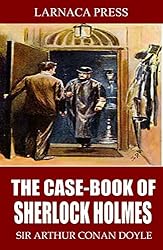
The Case-Book of Sherlock Holmes contains twelve short stories first published between 1921 and 1927. In the Preface Conan Doyle wrote that he hoped his Sherlock Holmes stories had provided
that distraction from the worries of life and stimulating change of thought that can only be found in the fairy kingdom of romance.
In this post I’m only writing about three of them for The 1924 Club; stories that were first published in 1924 (for more details about The I924 Club click on this link). They do indeed, provide both a distraction and a stimulating change of thought. The narrator in these three stories is Dr Watson.
The Adventure of the Sussex Vampire – this was first published in the January 1924 issues of The Strand Magazine in London and Hearst’s International Magazine in New York.
As Sherlock Holmes says when he first heard about a case concerning vampires,‘we seem to have been switched on to a Grimm’s fairy tale.‘ He tells Watson they cannot take it seriously:
Rubbish Watson, rubbish! What have we to do with walking corpses who can only be held in their grave by stakes driven through their hearts? It’s pure lunacy!
But he takes on the case for two reasons – one, he’s interested in the house in Essex belonging to Mr Ferguson where his wife is suspected of being a vampire, and two, Ferguson had known Watson when they played rugby together for Blackheath. His Peruvian wife had been seen attacking his son from a previous marriage and also leaning over her own baby and biting his neck. She refused to explain herself. Holmes solves the mystery, indeed he had reached his conclusion even before arrived in at the house, based on his conviction that the idea of a vampire was absurd. I enjoyed this tale, mainly because Holmes used logic and deduction in coming to his conclusion, overriding the supernatural.
I think this is a rather strange and artificial story, Dr Watson says it may have been a comedy or a tragedy. It led to him being shot in the leg and yet there was certainly an element of comedy. It’s about a man with the unusual name of Garridebs, ostensibly looking for two other men with the same name to inherit five million dollars each. Of course, that is not his real reason and the man is none other than a known murderer. It shows, however, the depth of Holmes’ feeling for Watson, as he says:
It was worth a wound – it was worth many wounds – to know the depth of loyalty and love which lay behind that cold mask. The clear, hard eyes were dimmed for a moment, and the firm lips were shaken. For the one and only time I caught a glimpse of a great heart as well as of a great brain. All my years of service culminated in that moment of revelation.
It’s in this story too that Watson reveals that Holmes had refused a knighthood.
At the request of an unnamed but illustrious client, Holmes and Watson investigate the case concerning Violet de Merville, young, rich and beautiful who has fallen under the spell of the notorious Baron Gruner. Her father, General de Merville wants to prevent them from marrying. Gruner is known as a violent murderer and Holmes is keen to meet a man who may be more dangerous even than the late Professor Moriarty. But he has to enlist the help of one of Gruner’s past mistresses to open Violet’s eyes to the true nature of the man she thought she loved.
I like the personal touches in this story, the opening scene for example shows Holmes and Watson in the drying-room of a Turkish Bath, lying in an isolated corner on two couches, side by side, smoking in a state of lassitude. Watson says that it is where he finds Holmes less reticent and more human than anywhere else. Watson knows that although he was nearer to Holmes than anyone else he was always conscious of the gap between them – Holmes leaves his closest friend guessing what his exact plans may be.
These three stories all illustrate Holmes’ deductive powers and seemingly cold nature but also reveal the depth of feeling between him and Watson. Bur I’m not sure that they reflect anything in particular about what was being published in 1924.
I shall write about the remaining stories in the Case-Book at a later date.
This is a short post giving the synopsis of Blue Mercy by Orna Ross and my thoughts about the book.
Synopsis from Amazon:
A literary family drama, with a murder at its heart, full of emotional twists and surprises
~~~
Will you side with mother or daughter? When Mercy Mulcahy was 40 years old, she was accused of killing her elderly and tyrannical father. Now, at the end of her life, she has written a book about what really happened on that fateful night of Christmas Eve, 1989. The tragic and beautiful Mercy has devoted her life to protecting Star, especially from the father whose behavior so blighted her own life. Yet Star vehemently resists reading her manuscript. Why? What is Mercy hiding? Was her father’s death, as many believe, an assisted suicide? Or something even more sinister?
In this book, nothing is what it seems on the surface and everywhere there are emotional twists and surprises. (“Breathtaking, and I mean literally — actual gasps will happen” said one reader review).
Set in Ireland and California, Blue Mercy is a compelling novel that combines lyrical description with a page-turning style to create an enthralling tale of love, loss and the ever-present possibility of redemption.
My thoughts:
Blue Mercy has had a lot of 4 and 5 star reviews on Amazon and on Goodreads, so I am definitely in the minority in not being swept away by it. I enjoyed some of it, thought some parts were OK and didn’t like other parts, but I didn’t find it compelling or enthralling and I certainly did not gasp at the revelation that Mercy had been lying to her daughter and to the reader. It confirmed my suspicion that she was not a reliable narrator in writing about her life.
I thought the setting in Ireland was vivid and came to life. However, although there is a mystery about how Mercy’s father died and what had happened to Star’s father, the plot is definitely secondary to the various themes running through this book – such as family relationships, particularly but not solely the mother/daughter relationship, abuse and assisted dying. But there is also so much detail about feelings, personal development, women’s studies, childhood and teenage problems, eating disorders, and exploration of Mercy and Star’s psyches and perceptions, that the characters and plot were almost drowned in emotion, pain and angst.
Note: I’ve found this hard to write about without giving away some spoilers.
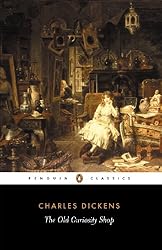
I’d listed The Old Curiosity Shop in my Classics Club Spin, but was really hoping to get one of Thomas Hardy’s books. Without this push from the Classics Club this book would have stayed on my TBR list for a long time because all I knew about it was that it’s the book in which Little Nell suffers a melodramatic death and I feared it would be too sentimental for my liking. And much to my surprise I have finished it in time for the deadline for reading our Spin book this Friday, even though it’s such a long book.
Well, it was and it wasn’t. It’s not just a sentimental, melodramatic story. It’s also full of weird, grotesque and comic characters, a mix of everyday people and characters of fantasy. It has elements of folklore and myth, as Nell and her grandfather, go on an epic journey, fleeing from the terrifying dwarf, Daniel Quilp and travelling through a variety of scenes, meeting different groups of people on their journey. There are numerous allusions to the Bible, Shakespeare and popular songs of the day. There are long passages where Nell doesn’t feature and is hardly mentioned, so it’s by no means a totally sentimental tale.
Several of the characters stand out for me, Quilp is an obvious choice. He takes delight in inflicting pain and suffering on others. He’s scarcely human, grossly wicked, hideous in appearance, full of lust, ferocious, cunning, and malicious. A fiend who
… ate hard eggs, shell and all, devoured gigantic prawns with heads and tails on, chewed tobacco and water-cresses at the same time and with extraordinary greediness, drank boiling tea without winking, bit his fork and spoon until they bent again, and in short performed so many horrifying and uncommon acts that the women were nearly frightened out of their wits, and began to doubt if he were really a human creature. (page 47)
Other characters who stood out are Dick Swiveller and the Marchioness. Dick at first appears as a profligate friend of Nell’s brother, Fred but takes on a larger role later in the book. Working in a law office for Mr Brass and his sister, Sally Brass, he befriends the small, half-starved girl who is a servant locked in the basement, calling her the Marchioness. He rescues her and also Kit, Nell’s friend, when he is wrongly accused of robbery.
There are many more I could mention, including the people Nell and her grandfather meet on their travels – wonderful scenes of the travelling Punch and Judy show; Mrs Jarley’s wax-work figures, over a hundred of them that she takes around the countryside in a caravan; the gypsies who take advantage of Nell’s grandfather’s addiction to gambling; the poor schoolteacher who take in Nell and her grandfather; and the Bachelor who they meet at the end of their journey.
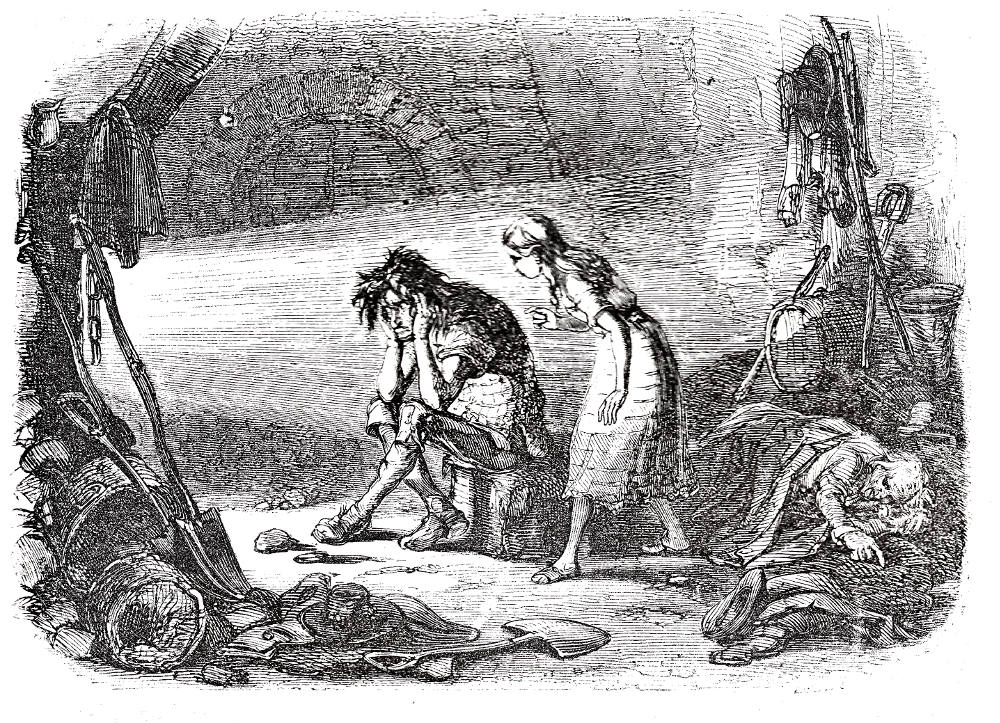
I also liked the description of the landscape as Nell leaves London, the change from town to countryside, then later through the industrial Midlands with its factories, furnaces and roaring steam-engines where people worked in terrible conditions. Nell and her grandfather spend a night in one of the furnaces, sleeping on a heap of ashes.
In a large and lofty building, supported by pillars of iron, with great black apertures in the upper walls, open to the external air; echoing to the roof with the beating of hammers and roar of furnaces, mingled with the hissing of red-hot metal plunged in water, and a hundred strange unearthly noises never heard elsewhere; in this gloomy place, moving like demons among the flame and smoke, dimly and fitfully seen, flushed and tormented by the burning fires, and wielding great weapons, a faulty blow from any one of which must have crushed some workman’s skull, a number of men laboured like giants. (pages 334-5)
Nell, herself, is a sweet, self-effacing and innocent character, who is left to look after her grandfather as he fails to overcome his gambling addiction. She goes into a decline and her slow death is, I suppose inevitable, although thankfully it is not described by Dickens. Child death is one of the themes of The Old Curiosity Shop as Nell’s death is not the only one.
The Old Curiosity Shop was written in 1840 – 1841 and serialised weekly in Master Humphrey’s Clock beginning on 4 April 1840 and ending on 6 February 1841. During this period the circulation of the periodical rose to a staggering figure of 100,000. It was Dickens’ fourth novel, influenced by the early death of his sister-in-law, Mary Hogarth, in 1837, which had profoundly shocked him. His work on The Old Curiosity Shop, particularly as he came to writing the end, revived the anguish he had experienced on her death.
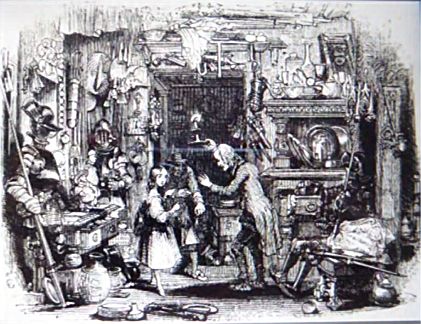
The Old Curiosity Shop
I read the Penguin Classics e-book which has the original illustrations by George Cattermole, Hablot K Browne (‘Phiz’), Daniel Maclise and Samuel Williams.
The furnace
Despite the sentimentality I did enjoy reading The Old Curiosity Shop andit has made me keen to read more of Dickens’ books.
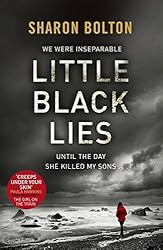
You can tell from the title what to expect from this book – lies, black lies, but they’re not little lies, they are whopping great big lies. The story is narrated by three of the main characters, Catrin, Callum and Rachel, all unreliable narrators either self deceptive, delusional or manipulative. They are all damaged characters.
Three years before the story begins Catrin’s two sons died in an accident caused by her then best friend Rachel. She has never got over it; they have haunted her ever since and she has not spoken to Rachel since then, determined to take revenge as the third anniversary of their death approaches. A year after their deaths Fred Harper went missing and was never found, then another boy, Jimmy Brown disappeared. As the story begins yet another boy, Archie West is missing. The nightmare continues with the disappearance of Peter, Rachel’s third and youngest son.
Little Black Lies is set in the Falkland Islands in 1994, twelve years after the war and Sharon Bolton’s descriptions of the islands paint a vivid picture of the isolation, the close knit community and war scarred landscape.
But there are a few things about this book that mean whilst I enjoyed the descriptive writing, the sense of place and the opening section very much I didn’t really like it. I began reading it with high expectations as it has received much praise and I’ve enjoyed everything else by Sharon Bolton that I’ve read. And although I was dismayed when I found it was written in the present tense (which is not my favourite style) I thought it was very promising and read on eagerly.
But when I finished it I gave it 3 stars on Goodreads, rounded up from 2.5 (Goodreads doesn’t have half marks!). I wasn’t keen on the focus on missing/dead children which so many books seem to have had recently. And it was a combination of the present tense and the way the plot descended into more of a farce with several twists and turns, particularly as the book draws to an end, one after the other that I just didn’t think was credible. The final twist at the end came out of the blue for me, although thinking back it shouldn’t have been such a surprise. But I felt a bit cheated. In fact I’m rather annoyed with myself as I’d totally forgotten FictionFan had reviewed this book and I’d thought then that it was one that didn’t appeal to me – at least I was right!


 Nicola Cornick is a new-to-me author, but she is by no means a new author. She has written many books – see
  The Case-Book of Sherlock Holmes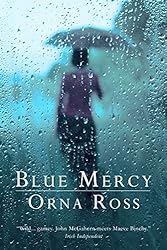
 You can tell from the title what to expect from
  BooksPlease