Book Beginnings

Last week I found another little secondhand bookshop – The Border Reader – a lovely little shop above a tea room near Melrose in the Scottish Borders. I browsed the bookshelves upstairs and had a cup of Earl Grey tea and a slice of Lavender and Lemon Drizzle Madeira cake downstairs – a most pleasurable afternoon.

And up the stairs I found in the bookcase to the right of the photo a book I’ve had on my wishlist for a while. It’s On the Black Hill by Bruce Chatwin.

The book begins:

For forty-two years, Lewis and Benjamin Jones slept side by side, in their parents’ bed, at their farm which was known as ‘The Vision’.

The bedstead, an oak four-poster, came from their mother’s home at Bryn-Draenog when she married in 1899. Its faded cretonne hangings, printed with a design of larkspur and roses shut out the mosquitoes of summer, and the draughts in winter. Calloused heels had worn holes in the linen sheets, and parts of the patchwork quilt had frayed. Under the goose-feather mattress, there was a second mattress, of horsehair, and this had sunk into two troughs, leaving a ridge between the sleepers. (page (9)
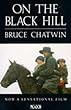
The Black Hill is not one of the Black Hills of Dakota – known to me only from the song, sung by Doris Day, but it is one of the Black Mountains on the border of England and Wales, although fictionalised in this book. The book was first published in 1982 and won the James Tait Black Memorial Prize that same year. It’s also been made into a film. It looks to be a gentle, richly descriptive book about lonely lives on a farm, largely untouched by the 20th century. A nice change from all the crime fiction I’ve been reading recently.

Book Beginnings on Friday is hosted by Katy, at  A Few More Pages.

The Tinder Box by Minette Walters: Book Review

I really enjoyed this novella by Minette Walters. Being a short mystery it is succinctly written and yet I could still imagine the characters and settings from the descriptions. The Tinder Box is aptly named – about a situation set to burst into flames at any moment.

Description from the book cover:

In the small Hampshire village of Sowerbridge, Irish labourer Patrick O’Riordan has been arrested for the brutal murder of elderly Lavinia Fanshaw and her live-in nurse, Dorothy Jenkins. As shock turns to fury, the village residents form a united front against Patrick’s parents and cousin, who report incidents of vicious threats and violence.

But friend and neighbour Siobhan Lavenham remains convinced that Patrick has fallen victim to a prejudiced investigation and, putting her own position within the bigoted community in serious jeopardy, stands firmly by his family in defence of the O’Riordan name.

Days before the trial, terrible secrets about the O’Riordans’ past are revealed to Siobhan, and the family’s only supporter is forced to question her loyalties. Could Patrick be capable of murder after all? Could his parents’ tales of attacks be devious fabrications? And if so, what other lies lurk beneath the surface of their world?

As the truth rapidly unfurls, it seems that Sowerbridge residents need to be very afraid. For beneath a cunning façade, someone’s chilling ambition is about to ignite . . .

My thoughts:

In some ways this is a theme-heavy book, dwelling as it does on prejudice, incitement to violence and vigilantism as the inhabitants of the village unite in their dislike of the O’Riordan family living in their midst. As the story unfolds it becomes clear that misunderstanding and ignorance are really the problem. I liked the way Minette Walters has structured The Tinder Box using flashbacks,  moving between events that lead up to Patrick’s arrest and the aftermath.

For such a short book it is remarkably complex and layered and the ending with its alternative scenarios is excellent. I think I enjoyed it so much because it is so condensed – it made a refreshing change from the long and detailed books I’ve been reading recently.

  • Hardcover: 128 pages
  • Publisher: Macmillan (14 Jun 2004)
  • Language English
  • ISBN-10: 1405048557
  • ISBN-13: 978-1405048552
  • Source: Library book


Crime Fiction Alphabet 2011: The List

Kerrie’s Crime Fiction Alphabet came to the end last week, which left me wondering what were its highlights for me. Before I began I decided that I would use it to read books from my to-be-read list and in the main that is what I did.

The rules of the meme are that you have to write a blog post about crime fiction related to the letter of the week and your post MUST be related to either the first letter of a book’s title, the first letter of an author’s first name, or the first letter of the author’s surname.

I thought that I would try to stick to the authors’ names (either first or last) rather than the title and in the main that is what I did, with 21 of the letters.The letters A, P, R and S relate both to the authors’ names and to the titles.

Some were books by old favourites, such as Agatha Christie and some by new-to-me authors, such as Anne Zouroudi.

The ones I enjoyed the most (in A – Z order) are:

  • Agatha Christie’s Autobiography reading it was like listening to Agatha Christie talk to me.
  • Colin Dexter – The Silent World of Nicholas QuinnI wanted to start it again as soon as I’d finished it.
  • P D James – The Private Patient – a thoughtful book, with precise descriptions of people and places and yet it is tense and dramatic.
  • Donna Leon – Drawing Conclusions – a book I didn’t want to end!
  • Dan Waddell – The Blood Detective – even though there are parts (not many) that were just a bit too graphic for me.

Here is the complete list:

My thanks go to Kerrie as I have thoroughly enjoyed reading through the Crime Fiction Alphabet and also reading what my fellow bloggers have read too – some of whom wrote about specific topics instead of sticking to the rules :) – I think they are most ingenious! Kerrie has listed a summary of the A- G posts, with the rest of the alphabet coming soon.

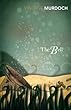
The Bell by Iris Murdoch: a Book Review

I first read The Bell years ago and it remained in my memory as an excellent book, but this time round I think my reading tastes have changed because, although I still liked it, I no longer found it so enchanting. Iris Murdoch wrote beautiful English, with detailed descriptions of the location – Imber Court, Imber Abbey and the lake and woods around them. But I just couldn’t work out the layout and that is actually relevant in this book. There was also too much detail about the thoughts and feelings of one of the characters – Michael Meade – for my liking, and yet for all the description he didn’t seem a real person, but more a mouthpiece for Murdoch’s philosophical thoughts. In fact most of the characters, with the exception of Dora, come across more as stereotypes than real people.

A lay community lives next to an enclosed order of nuns, a new bell is being installed and then the old bell, a legendary symbol of religion and magic  is retrieved from the bottom of the lake. The legend of the bell is that it fell into the lake after a 14th century Bishop had cursed the Abbey when a nun was discovered to have a lover and had drowned herself. The various characters include Dora Greenfield who is staying at Imber Court whilst her husband Paul is researching the Abbey archives. Paul is thirteen years older and is an art historian. Dora had left him six months earlier because she was afraid of him and was returning for the same reason. She is a young woman, a rather silly young woman who thinks one thing and immediately says the opposite, but Paul is probably the most obnoxious character in the book – he is a manipulative bully. The other residents at Imber Court are a mixed-up bunch, there for both religious and other reasons. As the date for the installation of the new bell approaches their weaknesses begin to be exposed.

Much of the book is taken up with discussions and examining the thoughts of the characters about the relationship of goodness to power. On the surface everything appeared to Dora to be peaceful, but underneath stresses and strains are causing the community to diverge into two parties. It’s not just a matter of organisation but also of morals and there is an impending sense of evil and menace.  Bearing in mind that The Bell was first published in 1958 this must have been quite a shocking book at the time – about the relationship between religion and sex and the angst and self-denial that it depicts.

  • Paperback: 352 pages
  • Publisher: Vintage Classics; New Ed edition (2 July 2009)
  • Language English
  • ISBN-10: 0099470489
  • ISBN-13: 978-0099470489
  • Source: I bought this book

For a rather more positive view of The Bell see The Senior Common Room.

Saturday Snapshot

We’ve had some lovely sunny, hot days recently, but today isn’t one of them.

It’s raining! It’s been raining all morning and looks set to rain for the rest of the day, so we won’t be sitting outside.

To participate in Alyce’s Saturday Snapshot meme post a photo (new or old) that you (or a friend or family member) have taken, but make sure it’s not one that you found online.