Top 5 Tuesday:Books set in Europe

Top 5 Tuesday was created by Shanah at Bionic Book Worm, and it is now being hosted by Meeghan at Meeghan Reads. For details of all of the latest prompts for April to June, see Meeghan’s post here

We’re continuing reading around the world this month and today the topic is Europe. The books I’ve chosen are crime fiction and historical fiction.
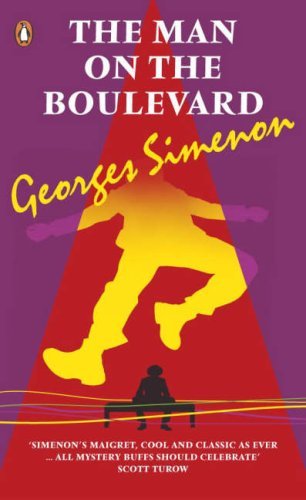
France: When I think of French crime fiction Georges Simenon’s Maigret immediately pops into my mind.  Simenon was actually Belgian, not French, but the Maigret books are set in France (mainly in Paris). Simenon wrote 75 novels and 28 short stories featuring Commissaire Jules Maigret and I first knew of them from a friend at school who loved the books. Then there were the numerous TV productions with Rupert Davies as Maigret and more recently Rowan Atkinson has played the role of Chief Inspector Maigret in the 2016 ITV series.

I’ve read several of the Maigret books. The Man on the Boulevard is the 41st book in the series. There were lots of things I liked in this book – the attention to detail, the descriptions of the weather (cold and wet), and the characters themselves.  It’s set in Paris and without knowing the location of the various boulevards I could still get a good impression of the city and its suburbs. 

It has a puzzling murder to solve – Louis Thouret is found stabbed in a little alleyway. Seemingly a perfectly ordinary man of regular habits who had left his home in the suburbs to go to his job as a storekeeper in Paris for the past twenty five years. It turns out that Louis had a double life that his wife knew nothing about. It appears he had been having an affair and for the past three years he had not had a job. I liked the theme of a man following a double life and the way Louis resolves his problem of keeping up appearances with his wife and family although I thought his method of maintaining his income was rather implausible.

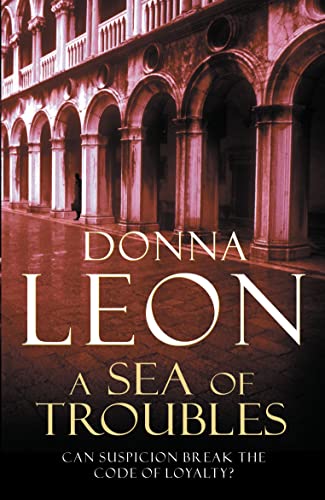
Italy: A Sea of Troubles by Donna Leon, whose books are crime fiction, but also discuss various social and cultural issues and A Sea of Troubles, the 10th Commissario Guido Brunetti novel, is no exception. Brunetti is one of my favourite detectives. He is happily married with two children. He doesn’t smoke or drink to excess and often goes home for lunch to his beautiful wife Paolo, who is a wonderful cook – in this book she treats him to a delicious apple cake made with lemon and apple juice and ‘enough Grand Marnier to permeate the whole thing and linger on the tongue for ever.’ (page 238)

I read it eagerly, keen to get to the bottom of the mystery surrounding the deaths of two clam fishermen, father and son, off the island of Pellestrina, south of the Lido on the Venetian lagoon, when their boat suddenly exploded. As well as the mystery the issues Leon highlights in this book are concerning pollution and the overfishing of clams that is destroying the clam beds.

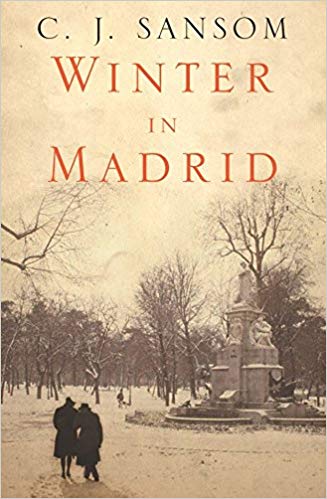
Spain:  C J Sansom’s Winter in Madrid, which I think is one of the best books I’ve read, a book that had me in tears as I was reading about the devastation, desolation and waste of war. It is an action packed thrilling war/spy story and also a moving love story and historical drama all rolled into this tense and gripping novel. Sansom vividly conveys the horror and fear of the realities of life in Spain during the Spanish Civil War and the first two years of the Second World War.

The opening chapter dramatically sets the tone for the book with the brutality of the Battle of Jarama in 1937 then leaps straight into the bombing of London in 1940. Then Harry Brett, traumatised by his injuries at Dunkirk is sent to Spain to spy for the British Secret Service. He is plunged into the terrible living conditions in Madrid where people are starving, children are left homeless to fend for themselves and wild dogs roam the rubble of bombed houses.

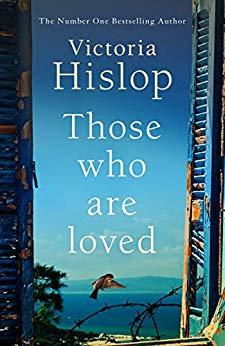
Greece: Those Who Are Loved by Victoria Hislop, one of the most moving novels I’ve read. It is historical fiction ‘set against the backdrop of the German occupation of Greece, the subsequent civil war and a military dictatorship, all of which left deep scars’. It begins slowly and it was only at about the halfway stage that it really took off for me. But then, the book sprang to life, the pace increased, and I was totally gripped and moved as history and fiction came together dramatically in glorious technicolor, telling the story of the characters personal lives and their parts in the action.

The main character is Themis Koralis/Stravidis (in Greek mythology Themis is the personification of fairness and natural law). In 2016 she is a great grandmother and realising that her grandchildren knew very little about Greek history she decided to tell them her life story, beginning from when she was a small child in the 1930s, through the German occupation of Greece during the Second World War, the civil war that followed, then the oppressive rule of the military junta and the abolition of the Greek monarchy, up to the present day.

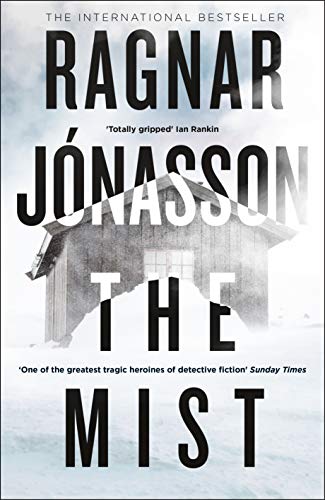
Iceland: The Mist by Ragnar Jonasson, the third novel in the Hidden Iceland series. Detective Inspector Hulda Hermannsdottir is worrying about her daughter, Dimma and her relationship with her husband, Jon. Alongside the story of what is happening in her personal life, she is also investigating the disappearance of a young woman and a suspected murder case, a particularly horrific one in an isolated farmhouse in the east, where Erla and her husband, Einar live. When a stranger, lost in a snowstorm arrives Erla invites him in and the nightmare begins.

I loved the setting, Jonasson’s writing bringing the scenery and the weather to life – you can feel the isolation and experience what it is like to be lost in a howling snowstorm. The emotional tension is brilliantly done too, the sense of despair, confusion and dread is almost unbearable. 

The Island by Victoria Hislop: A Short Post

I have been struggling to write posts recently. I haven’t been able to settle down to writing after finishing a book, either because I’m too eager to read the next book, or like Heavenali I’ve been so distracted and mithered by other things going on in my life, mostly minor that shouldn’t really bother me, but do, that I am finding it hard to concentrate on writing.

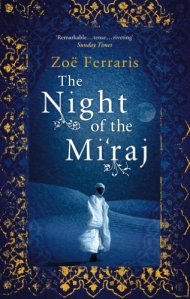
So, that is why I haven’t written about a number of books I read earlier this year. Some of them are books that qualify for the Wanderlust Bingo CardThe Island by Victoria Hislop, The Fellowship of the Ring by J R R Tolkien, The Night of the Mi’raj by Zoë Ferraris and Coffin Road by Peter May. These aren’t the only books I’ve read that need to write about, but it’s a start.

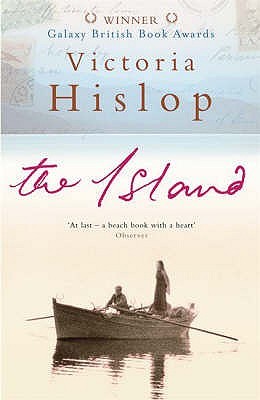
The first one I’m writing about is The Island by Victoria Hislop, her debut novel and one of my TBRs. It’s been on my bookshelves for years and I did start reading it soon after buying it, but I didn’t get very far and put it back on my bookshelves. Since then I’ve read three other books by Victoria Hislop and enjoyed them so I decided to try it again, especially as it fills the Island Square (set in Greece) on the Wanderlust Bingo card. I began reading it in August, when I took it away with me, visiting family, but didn’t find much time to read it and had to set it to one side. After I returned home I went on to read other books until October when I picked it up once more.

It is historical fiction set in Plaka on the island of Crete and in Spinalonga, a tiny, deserted island just off the coast of Plaka. I wasn’t very sure I would like it when I read the first chapter about Alexis Fielding longing to find out about her mother’s past. Sofia had never told her anything about it and all that Alexis knew was that Sofia had grown up in Plaka, a small Cretan village before moving to London. She gave Alexis a letter to take to an old friend, Fotini, promising that through her she will learn more. And once Fotini entered the story I was hooked as she told what had happened to Sophia’s grandmother, Eleni and her daughters, Anna and Maria after Eleni caught leprosy and was sent to live on Spinalonga.

Beginning before the Second World War the story moved between Plaka and Spinalonga and I loved all the details of Elena’s life on Spinalonga, but then when the narrative moved on to describing her daughters’ lives I began to lose interest. Instead of a fascinating historical novel about leprosy it changed into a historical romance, which I didn’t enjoy as much as the earlier part of the book. Overall, I think it’s too long and drawn out, and the ending is a bit too neat. So I’m giving this book 4*, combining 5* for Eleni’s story and 2-5* for both the beginning and the ending.

I’m hoping to write similar short posts for the other three books.

WWW Wednesday: 26 October 2022

WWW Wednesday is run by Taking on a World of Words.

The Three Ws are:

What are you currently reading?
What did you recently finish reading?
What do you think you’ll read next?

Currently I’m reading two books:

The Island by Victoria Hislop. I’d started reading this in the summer but put it on one side for a while. I’ve now picked it up again and am well into the story of the Petrakis’ family. All Alexis Fielding knows about her mother’s family is that Sophia grew up in a small Cretan village before moving to London. Eager to find out more she visits Plaka, a seaside village on Elounda Bay in eastern Crete which sits opposite Spinalonga Island, a former leper colony. There she finds Fotini, and at last hears the story that Sofia has buried all her life: the tale of her great-grandmother Eleni and her daughters and a family rent by tragedy, war and passion. It combines historical and romantic fiction.

I’m also reading The Night of the Mi’raj by Zoe Ferraris, crime fiction set in Saudi Arabia. Nouf ash-Shrawi, the sixteen-year-old daughter of a wealthy Saudi dynasty, has disappeared from her home in Jeddah just days before her arranged marriage, and when her battered body is found in the desert, it looks like she was murdered. But, for me, what is most fascinating in this book is the description of life in Saudi Arabia.

The last book I read is Another Part of the Wood by Beryl Bainbridge, my book for the Classics Club Spin. I’ll post my review in the next few days – on or before 31 October. It’s set at a holiday camp in a forest in Flintshire, Wales, where Joseph takes his mistress and son, together with a few friends, to stay in a cabin for the weekend – with absolutely disastrous results. It has a claustrophobic atmosphere as the tension between the characters builds to a climax.

Next I’ll be reading The Darkness Manifesto: How light pollution threatens the ancient rhythms of life by Johan Eklöf, one of my NetGalley books, which will be published on 3rd November 2022. He ‘encourages us to appreciate natural darkness and its unique benefits. He also writes passionately about the domino effect of damage we inflict by keeping the lights on: insects failing to reproduce; birds blinded and bewildered; bats starving as they wait in vain for insects that only come out in the dark. And humans can find that our hormones, weight and mental well-being are all impacted.’ (extract from the synopsis)

Johan Eklöf, PhD, is a Swedish bat scientist and writer, most known for his work on microbat vision and more recently, light pollution. He lives in the west of Sweden, where he works as a conservationist and copywriter. The Darkness Manifesto is his first book to be translated into English.

Although this is a weekly meme l’m taking part once a month at the moment.

Book Beginnings & The Friday 56: The Island by Victoria Hislop

Every Friday Book Beginnings on Friday is hosted by Gillion at Rose City Reader where you can share the first sentence (or so) of the book you are reading. You can also share from a book you want to highlight just because it caught your fancy.

I’m currently reading The Island by Victoria Hislop, a book I’ve had on my bookshelves for years. The Wanderlust Bingo challenge has given me a massive nudge to read it now as it is the perfect book for the Island category! It is historical fiction inspired by a visit to Spinalonga, the abandoned Greek leprosy colony, an island off the coast of Crete, a stone’s throw from Plaka. I’ve now read 25% of this book and am enjoying it so far.

Plaka, 1953

A cold wind whipped through the streets of Plaka and the chill of the autumnal air encircled the woman, paralysing her body and mind with a numbness that almost blocked her senses but could do nothing to alleviate her grief.

Also every Friday there is The Friday 56, hosted by Freda at Freda’s Voice, where you grab a book and turn to page 56 (or 56% of an eBook), find one or more interesting sentences (no spoilers), and post them.

Page 57 (page 56 is blank):

1939

Early May brings Crete its most perfect and heaven-sent days. On one such day, when the trees were heavy with blossom and the very last of the mountain snows had melted into crystal streams, Elena left the mainland for Spinalonga. In cruel contrast to this blackest of events, the sky was brilliant, a cloudless blue

Synopsis from Amazon:


On the brink of a life-changing decision, Alexis Fielding longs to find out about her mother’s past. But Sofia has never spoken of it. All she admits to is growing up in a small Cretan village before moving to London. When Alexis decides to visit Crete, however, Sofia gives her daughter a letter to take to an old friend, and promises that through her she will learn more.

Arriving in Plaka, Alexis is astonished to see that it lies a stone’s throw from the tiny, deserted island of Spinalonga – Greece’s former leper colony. Then she finds Fotini, and at last hears the story that Sofia has buried all her life: the tale of her great-grandmother Eleni and her daughters and a family rent by tragedy, war and passion.

She discovers how intimately she is connected with the island, and how secrecy holds them all in its powerful grip…

I’ve read three other books by Victoria Hislop and enjoyed them so I’m expecting this one to be good too.

What do you think? Have you read this book ?

Throwback Thursday: Those Who Are Loved by Victoria Hislop

Today I’m looking back at my post on Those Who Are Loved by Victoria Hislop. I first reviewed it on June 15, 2019.

My review begins:

Those Who Are Loved by Victoria Hislop is one of the most moving novels I’ve read for a long time. But it begins slowly and it was only at about the halfway stage that it really took off for me. And now I’ve come to write about it I’m finding it difficult to put into words just how exceptional I think it is. Whatever I write will not do it justice – it really is ‘an epic tale of an ordinary woman compelled to live an extraordinary life‘.

It is historical fiction ‘set against the backdrop of the German occupation of Greece, the subsequent civil war and a military dictatorship, all of which left deep scars.’

Click here to read my full review

~~~

~~~

The next Throwback Thursday post is scheduled for August 4, 2022.

Library Loans

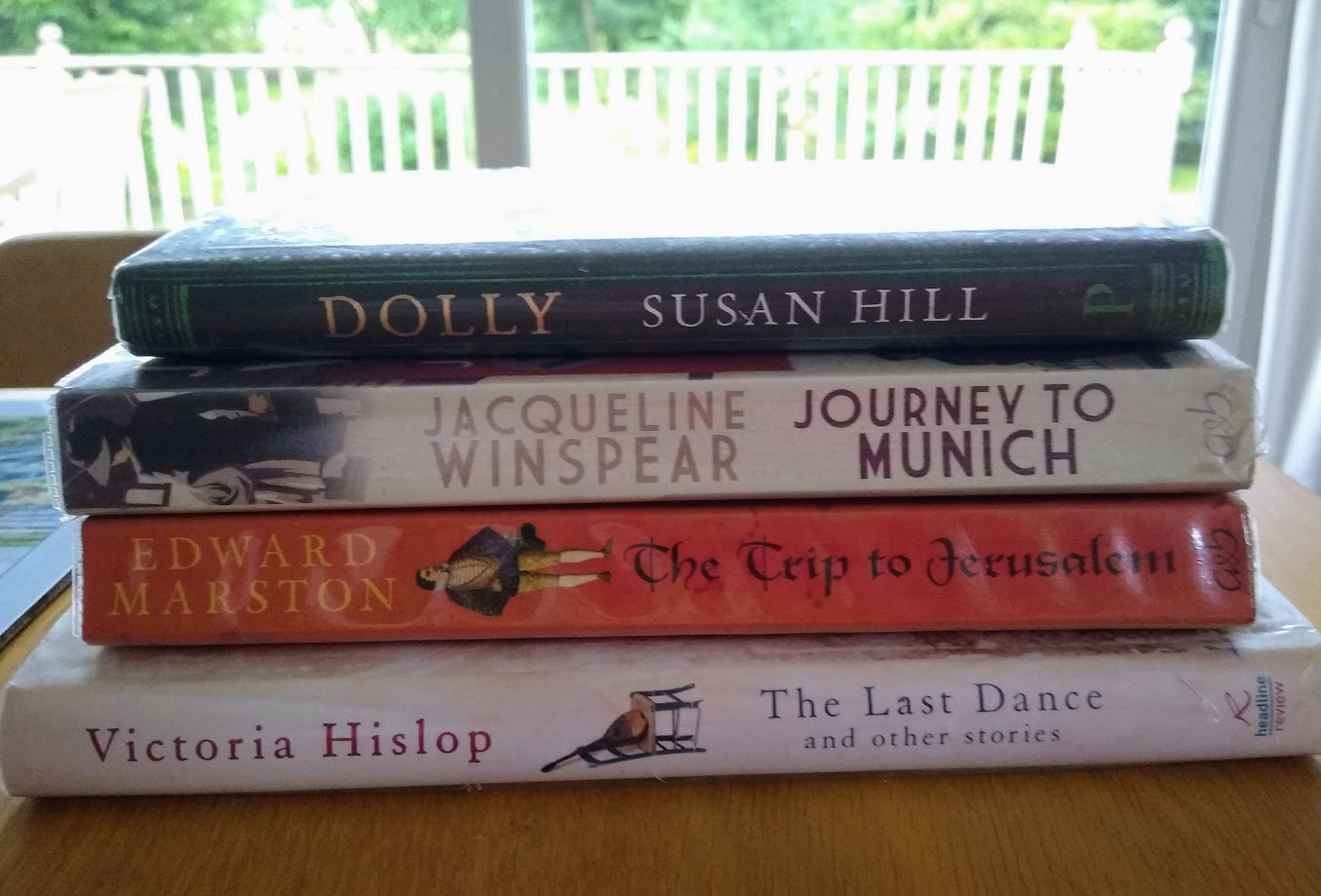
Here are some of my current library books

Lib bks July 2019

  • Dolly by Susan Hill, sub-titled ‘A Ghost Story’, a novella set in the Fens where two young cousins, Leonora and Edward spend a summer at Iyot Lock, a large decaying house, with their ageing aunt.  I’ll be writing more about this book soon.
  • Journey to Munich by Jacqueline Winspear, a Maisie Dobbs novel. This is no. 12 in the series (I’m not reading them in order). This one is set in 1938 when Molly travels into the heart of Nazi Germany.
  • The Trip to Jerusalem: an Elizabethan Mystery by Edward Marston, the 3rd book in the Nicholas Bracewell series about a troupe of players travelling England – not  to Jerusalem but to an ancient inn called The Trip to Jerusalem – whilst the Black Plague rages.
  • The Last Dance and other stories by Victoria Hislop. Ten stories set in Greece, described on the book cover as ‘bittersweet tales of love and loyalty, of separation and reconciliation’. I’ve recently enjoyed reading her latest book, Those Who Are Loved, also set in Greece, so my eye was drawn to this book.

The library van used to visit here once a fortnight, but now it only comes once a month. I hope it continues coming, but I fear that its days are numbered, so I make sure I use it whilst I still can.