Library Books

I reserved these books over the last few months and, wouldn’t you know it, they all arrived practically together!

IMG_20170925_190629502[1]

A Darker Domain by Val McDermid. This is the second Karen Pirie book. I’ve borrowed it because I loved the first one, The Distant Echo. In 1984, in Fife, heiress Catriona Maclennan Grant & her baby son are kidnapped. The ransom payoff goes horribly wrong. She is killed while her son disappears without trace. 2008, Tuscany. A jogger stumbles upon dramatic new evidence that re-opens the cold case. For Detective Sergeant Karen Pirie, it’s an opportunity to make her mark.

Conclave by Robert Harris – I’ve thoroughly enjoyed other books by Robert Harris, so I’m keen to read this one about how a new Pope is chosen as the cardinals meet in the Sistine chapel to cast their votes. This is a novel and Harris depicts the cardinals as holy men – but ambitious and rivals to become the most powerful spiritual figure on earth.

The Hidden Life of Trees:What They Feel, How They Communicate – Discoveries from a Secret World by Peter Wohlleben. I read Katrina’s review of this book and immediately thought it sounded an amazing book as I love trees. Wohlleben is a German forester and his book is about his love of trees and why they matter on a global scale. He makes the case that the forest is a social network – I like the idea that they communicate with each other – even if they don’t actually walk and talk like Tolkien’s ents.

Days Without End by Sebastian Barry – I loved his book, The Secret Scripture and am hoping I’ll like this one too. Thomas McNulty and John Coles signed up for the US army in the 1850s and fought in the Indian Wars and then in the American Civil War. The book was awarded the Costa Book Award 2016 and won the 2017 Walter Scott Prize. It was also longlisted for the Man Booker Prize 2017 – not that winning these awards automatically means that I’ll like it and I’m often not keen on books about war.

Favourite Books: August 2007 – 2010

I’ve been really enjoying looking back at some of my favourite books and this month I’m  looking back at some I read in August in each of the years 2007 ‘“ 2010. Click on the titles to see my original reviews.

Looking back at these books makes me want to re-read each one. I was enthralled by them all:

2007
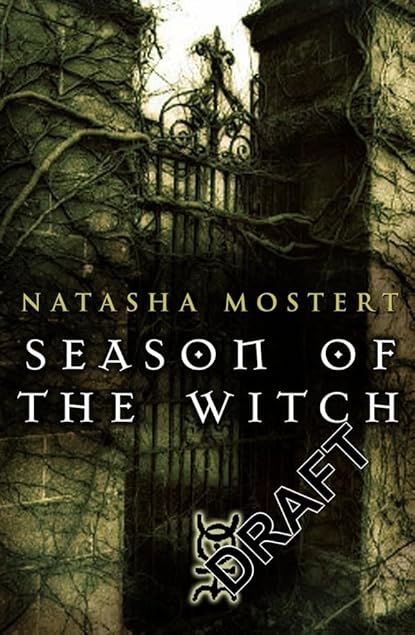
There is so much I loved in Season of the Witch by Natasha Mostert, a thrilling, spine tingling story of mystery, mysticism and magic, abounding with symbolism. It’s a modern day gothic epic, mixing computer technology with witchcraft, alchemy and the power of the human mind, in the search for enlightenment.

I raced through the book with that nervous tension anticipating danger that you feel watching a horror film build up, leaving me breathless as I read.

Gabriel Blackstone is a computer hacker by trade, and by inclination he is a remote viewer; someone whose unique gifts enable him to ‘˜slam rides’ through the thought processes of others. He is contacted by an ex-lover who begs him to use his gift to find Ronnie, her stepson, last seen months earlier in the company of two sisters, Minnaloushe and Morrighan Monk (wonderful names). The beautiful and mysterious sisters are descendants of Dr John Dee, a mathematical genius, alchemist and secret adviser to Queen Elizabeth I. Both of them bewitch Gabriel as he seeks to unravel the mystery behind Robbie’s disappearance.

2008

August 2008 found me reading a completely different genre – Pompeii by Robert Harris is historical fiction. The story begins in August AD 79 just two days before the eruption of Mount Vesuvius and builds up to a climax. Whilst most people are blissfully unaware of what is about to be unleashed upon them one man ‘“ the engineer Marius Attilius Primus realises the danger when the aqueduct Aqua Augusta fails to supply water to the people in the nine towns around the Bay of Naples. Then Vesuvius erupts destroying the town of Pompeii and killing its inhabitants as they tried to flee the pumice, ash and searing heat and flames.

The book brought history to life and I could feel the danger and fear as Vesuvius inevitably destroyed Pompeii. I particularly liked mixture of fictional and historical characters and the inclusion of Pliny, then the Admiral of the Fleet, as he watched and recorded the progress of the eruption and the account of his death.

2009

In August 2009 I read The Rebecca Notebook and Other Memories which gives a glimpse into the mind of Daphne Du Maurier. Rebecca has long been one of my favourite books, so I was fascinated to read the notes she made as she was writing the book. She began to write Rebecca in 1937 when she was thirty years old, living in Alexandria and feeling homesick for Cornwall. She jotted down chapter summaries in a notebook, setting the book in the mid 1920s ‘˜about a young wife and her slightly older husband, living in a beautiful house that had been in his family for generations.’

As she thought about it ideas sprang to her mind ‘“ a first wife ‘“ jealousy, something terrible would happen ‘“ a wreck at sea. She became immersed in the story, losing herself in the plot, as so many of us have done ever since.

I enjoyed the other short pieces in this book ‘“ her ‘˜memories’ of her family and her own life and beliefs. Some are about her family, some about her childhood and some about the house she loved, Menabilly.

2010

Finally in August 2010 I read Thirteen Hours by Deon Meyer, one of the best books I read that year. I was engrossed in it right from the start. It’s tense, taut and utterly enthralling. Moving at a fast pace the book follows the events during the thirteen hours from 05:36 when Rachel, a young American girl is running for her life up the steep slope of Lion’s Head in Capetown.

The body of another American girl is found outside the Lutheran church in Long Street and an hour or so later Alexandra Barnard, a former singing star and an alcoholic, wakes from a drunken stupor to find the dead body of her husband, a record producer, lying on the floor opposite her and his pistol lying next to her.

Meyer is a fantastic story teller and creates such wonderful characters. DI Benny Griessel is mentoring two inexperienced detectives who are investigating these crimes. I grew very fond of Benny, who is also an alcoholic and struggling to keep his marriage together.  The book also reflects the racial tension in the ‘˜new South Africa’ with its mix of white, coloured and black South Africans. There is a strong sense of location, not just from the cultural aspect but also geographical.

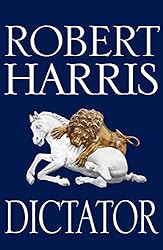
Lustrum and Dictator by Robert Harris

I’d enjoyed the first book in Robert Harris’ Cicero Trilogy, Imperium. So I’d been looking forward to reading Lustrum, the second in the trilogy (published as Conspirata in the US and Italy) . It didn’t fail to live up to my expectations – it surpassed them. I think it’s historical fiction at its best. I immediately went on to read Dictator, the third book in the trilogy, which I also enjoyed very much, but I think Lustrum is the outstanding book of the three.

I had intended to write a more detailed post about Lustrum and Dictator but life and medical issues decided otherwise, so this is just a short post on both books.

Lustrum begins where Imperium finished in 63 BC with a dramatic scene, as the body of a child is pulled from the River Tiber, a child who had been killed as a human sacrifice, grotesquely mutilated. What follows is an account of the five year period (a lustrum) of Cicero’s consulship and the battle for power between him, Julius Caesar, Pompey the republic’s greatest general, Crassus its richest man, Cato a political fanatic, Catilina a psychopath, and Clodius an ambitious playboy. It ends with his exile from Rome.

Once I began reading I was immediately drawn into the world of Cicero. The story is once again narrated by his secretary, the slave Tiro, giving access to Cicero’s thoughts and feelings. Tiro is an interesting character in his own right – he is reported to be the first man to record a speech in the senate verbatim and some of the symbols in his shorthand system are still in use today, such as &, etc, ie, and eg. As in Imperium and in the third book, Dictator, Harris has used Cicero’s actual words, adding to the books’ authenticity. Harris states that he hopes it is not necessary to read the books in order but I think it adds much to the enjoyment if you do.

Dictator covers the last 15 years of Cicero’s life when he was no longer a dominant political figure in Rome. The book begins with Cicero in exile, separated from his wife and children and in constant danger of losing his life. Apart from the first part of the book when Cicero is working towards returning to Rome, I didn’t find it as exciting or as compelling as the first two books. This is mainly because there is so much happening such as the civil war and the downfall of the republic from which Cicero is excluded first because on his return to Rome he is sidelined, and then retired.

All three books are based on extensive research but Harris is such a good story teller that they don’t read like text books. Roman history has always fascinated me and reading this trilogy has revived my interest, so much so that I am now reading Mary Beard’s book, SPQR: a History of Ancient Rome, that goes right back to the beginning describing how Rome grew and became such a dominant power.

When I saw Catilina’s Riddle by Steven Saylor sitting in the mobile library shelves I just had to borrow it. It’s historical crime fiction in which Gordianius the Finder gets involved in the Catilina conspiracy to overthrow the republic.

And I would also like to re-read Colleen McCullough’s Masters of Rome series to compare with Harris’ trilogy, or at least some of the books involving Cicero and Caesar. Oh for more time to read!

Lustrum is one of my Mount TBR Mountain Challenge 2016 books (ie books I’ve owned before 1 January 2016) .

First Chapter, First Paragraph: Dictator

First chapterEvery Tuesday Diane at Bibliophile by the Sea hosts First Chapter First Paragraph Tuesday Intros, where you can share the first paragraph, or a few, of a book you are reading or thinking about reading soon. I’m currently reading Dictator by Robert Harris, the third in his Cicero trilogy.

Dictator

It begins:

I remember the cries of Caesar’s war-horns chasing us over the darkened fields of Latium – their yearning, keening howls, like animals on heat – and how when they stopped there was only the slither of our shoes on the icy road and the urgent panting of our breath.

It was not enough for the immortal gods that Cicero should be spat at and reviled by his fellow citizens; not enough that in the middle of the night he be driven from the hearths and altars of his family and ancestors; not enough even that as we fled from Rome on foot he should look back and see his house in flames. To all these torments they deemed it necessary to add one further refinement: that he should be forced to hear his enemy’s army striking camp on the Field of Mars.

Blurb:

‘˜Laws are silent in times of war.’
Cicero

There was a time when Cicero held Caesar’s life in the palm of his hand. But now Caesar is the dominant figure and Cicero’s life is in ruins. Exiled, separated from his wife and children, his possessions confiscated, his life constantly in danger, Cicero is tormented by the knowledge that he has sacrificed power for the sake of his principles.

His comeback requires wit, skill and courage ‘“ and for a brief and glorious period, the legendary orator is once more the supreme senator in Rome. But politics is never static and no statesman, however cunning, can safeguard against the ambition and corruption of others.

Riveting and tumultuous, DICTATOR encompasses some of the most epic events in human history yet is also an intimate portrait of a brilliant, flawed, frequently fearful yet ultimately brave man ‘“ a hero for his time and for ours. This is an unforgettable tour de force from a master storyteller.

————————————————

I read in The Guardian that this last part of the trilogy marks the culmination of 12 years work. The trilogy as a whole has transported me back into the first century BC when Rome was engulfed in intrigue, conspiracies and civil war as the Roman Republic began to collapse and move into dictatorship and empire.  I’m loving the whole experience. Just as when I was reading the first two books, Imperium and Lustrum, I can’t wait to get back to it each time I have to stop reading.

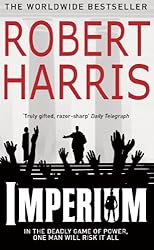
Imperium by Robert Harris

With not many days left until Christmas and the New Year I’ve just about got time to write a bit about two books I’ve read this month from my to-be-read books. I’ll be writing about the second book in a later post.

The first one is Imperium by Robert Harris, the first in his Cicero Trilogy.

I love historical fiction and over the years I’ve read quite a lot of it, including novels set in Ancient Rome, so I’m familiar with the characters in this book, but not about all the details that Robert Harris has packed into Imperium.

Beginning in 79 BC, this book set in the Republican era is a fictional biography of Marcus Tullius Cicero by Tiro, his slave secretary. Tiro was a real person who did write a biography of Cicero, which has since been lost in the collapse of the Roman Empire. Tiro is credited with the invention of shorthand. Harris has based Imperium on, among other sources, Cicero’s letters, which Tiro had recorded, successfully interweaving Cicero’s own words with his own imagination.  It is basically a political history, a story filled with intrigue, scheming and treachery in the search for political power as Cicero, a senator, works his way to power as one of Rome’s two consuls.

The first part of the book (and I think the best part) covers the trial of Verres, a corrupt governor of Sicily. I found this gripping as it was by no means obvious that Verres would be found guilty. Cicero builds the case against him and the resulting trial is a dramatic showdown.

After that the book dragged just a little bit for me as it moved on to describing a complicated struggle to change Rome’s government from a Republic to having an Emperor as absolute ruler. But it picked up again towards the end and overall I thought this was a very good book and I’m keen to read the second in the trilogy, Lustrum.

In such a short post as this is I cannot go into much detail – and the novel is very detailed. I marked many passages that struck me as interesting and felt much of the struggle for power applies as much today as it did in Ancient Rome. I’ll finish this post with one quotation (there are plenty of others I could have chosen):

You can always spot a fool, for he is the man who will tell you he knows who is going to win an election. But an election is a living thing – you might almost say, the most vigorously alive thing there is – with thousands upon thousands of brains and limbs and eyes and thoughts and desires, and it will wriggle and turn and run off in directions no one ever predicted, sometimes just for the joy of proving the wiseacres wrong. (page 471)

Crime Fiction Alphabet: F is for Fatherland

This week it’s the letter F in Kerrie’s Crime Fiction Alphabet. I’ve chosen Fatherland by Robert Harris.

It’s a fast-paced thriller set in Germany in 1964, but not the historical Germany of that date, because Hitler is approaching his 75th birthday, and Germany had won the Second World War ‘“ it’s historical fiction that never was ‘“ an alternative history. And yet many of the characters actually existed, their biographies are correct up to 1942 and Harris quotes from authentic documents in the book. The Berlin of the book is the Berlin that Albert Speer planned to build.

What is definite is that this is a murder mystery, beginning with the discovery of the naked body of an old man, lying half in the Havel, a lake on the outskirts of Berlin. The homicide investigator is Xavier March of the Kriminalpolizei (the Kripo) and the victim is Josef Buhler, one of the former leading members of the Nazi Party who had been instrumental in devising ‘˜the final solution’. As March digs deeper, despite being taken off the case by the Gestapo, he discovers  a larger conspiracy as more of the former leading Nazis are murdered.

March is in some ways a typical cop, disillusioned, sceptical and suspicious of authority. He’s also divorced and losing the respect of his son, with disastrous effects. He isn’t the only one investigating the deaths. Charlie Maguire, a female American journalist has her own reasons for wanting to uncover the murderer and together they travel to Zurich to inspect the private Swiss bank account of one of the victims.

It’s a complex book and leads March into a very dangerous situation as he discovers the truth. It’s a real page-turner, full of suspense and consequently I read it very quickly, eager to know what happened next and what lay behind the murders. The ending is suitably ambiguous – it’s not the sort of book where all the loose ends are neatly tied up. Neither is the alternative history element dominant, although I did find all the little details fascinating. For example Churchill and the Royal Family have gone to Canada and Joseph Kennedy is the US president. It is predominantly crime fiction, that makes you think about the nature of good and evil and about the ways in which society handles corruption.