Six Degrees of Separation from  Intermezzo by Sally Rooney to White Nights

It’s time again for Six Degrees of Separation, a monthly link-up hosted by Kate at Books Are My Favourite and Best. Each month a book is chosen as a starting point and linked to six other books to form a chain. A book doesn’t need to be connected to all the other books on the list, only to the one next to it in the chain.
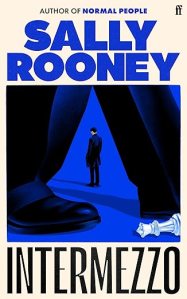
This month starts with Intermezzo by Sally Rooney. I haven’t read this book, so this is the description on Amazon UK:

Aside from the fact that they are brothers, Peter and Ivan Koubek seem to have little in common.

Peter is a Dublin lawyer in his thirties – successful, competent and apparently unassailable. But in the wake of their father’s death, he’s medicating himself to sleep and struggling to manage his relationships with two very different women – his enduring first love Sylvia, and Naomi, a college student for whom life is one long joke.

Ivan is a twenty-two-year-old competitive chess player. He has always seen himself as socially awkward, a loner, the antithesis of his glib elder brother. Now, in the early weeks of his bereavement, Ivan meets Margaret, an older woman emerging from her own turbulent past, and their lives become rapidly and intensely intertwined.

For two grieving brothers and the people they love, this is a new interlude – a period of desire, despair and possibility – a chance to find out how much one life might hold inside itself without breaking.
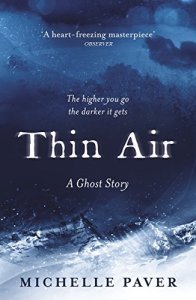
My first link is Thin Air, a novel by Michelle Paver also about two brothers. Kanchenjunga, the third highest mountain in the world, had claimed many lives and no one had reached the summit. Held to be a sacred mountain, it is one of the most dangerous mountains in the world – believed to be the haunt of demons and evil spirits. An unsuccessful attempt had been made in 1907, led by Edmund Lyell, when only two men had returned. The group in 1935, led by Major Cotterell, attempted to follow the 1907 route up the south-west face. Their story is narrated by medic, Dr. Stephen Pearce, accompanying his older brother, Kits. The brothers have always been rivals and this continues as they make their way up the mountain. Things start to go wrong almost straight away and Stephen is full of foreboding.
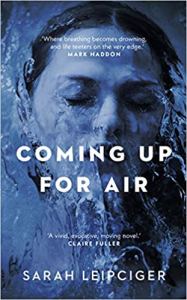
My second link is a book that also has ‘air’ in the title – Coming Up For Air, Sarah Leipciger’s second novel. It is a beautiful novel, a story of three people living in different countries and in different times. How their stories connect is gradually revealed as the novel progresses. As the author explains at the end of the novel it is a mix of fact and fiction and has its basis in truth. There is grief and loss and despair in each story, but above all, it is about love, and the desire to live. I think Sarah Leipciger is a great storyteller. It is an inspiring book, beautifully written, which emphasises the importance of the air we breathe and the desire to live. I read this book in June 2021.
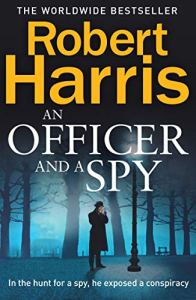
My third link is An Officer and a Spy, historical fiction by Robert Harris, another book I read in June 2021. It is a gripping book about the Dreyfus affair in 1890s France. Alfred Dreyfus, a young Jewish officer, was convicted of treason by passing secrets to the Germans in 1895 and sent to solitary confinement on Devil’s Island. It’s narrated by Colonel George Picquart, who became convinced that Dreyfus was innocent. Harris goes into meticulous detail in staying accurate to the actual events, but even so this is a gripping book and I was completely absorbed by it from start to finish.
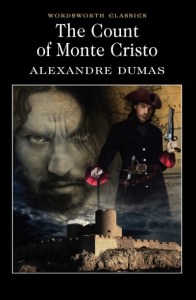
My fourth link is The Count of Monte Cristo, historical fiction by Alexandre Dumas, in which the main character is also wrongly imprisoned on an island. It begins in 1815 when Edmond Dantès, a sailor, having returned to Marseilles is wrongly accused of being a Bonapartist and imprisoned in the Chateau d’If on the Isle of Monte Cristo, for fourteen years. It’s a great story, action-packed, and full of high drama and emotion. Montecristo is a real island in the Tyrrhenian Sea, part of the Tuscan Archipelago, and administered by the municipality of Portoferraio in the province of Livorno.
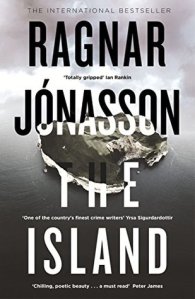
So My fifth link is also set on a real island, that of the isolated island of Elliðaey off the coast of Iceland in Ragnar Jónasson’s novel The Island, a murder mystery with elements of horror. Four friends visit the island ten years after the murder of a fifth friend, Katla, but only three of them return. One of them, Klara, fell to her death from a cliff – but did she jump or was she pushed? Detective Inspector Hulda Hermannsdóttir is sent to investigate. A suspect had been charged, but had committed suicide before the verdict was announced and the case had been closed. But are the two murders connected, even though they are ten years apart? This book is the second in Jónasson’s Hidden Iceland series.
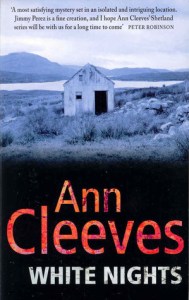
My final link is also the second book in a series, that is White Nights by Ann Cleeve, the second in her Shetland Quartet, featuring Detective Jimmy Perez. It’s set mainly in the village of Biddista, when Kenny Thomson finds a man’s body hanging in the hut where the boat owners of the village keep their lines and pots. At first it looks as though the man, his face covered by a clown’s mask, has committed suicide, but he’d been dead before he was strung up. As well as the mystery of who killed the man in the clown mask and why, there is also the disappearance 15 years earlier of Kenny’s older brother Lawrence. It was thought that he left the island after Bella had broken his heart. Kenny hadn’t heard from him since and at first thought the dead man could be him.

The books in my chain are mainly a mix of crime and historical fiction. And the chain has become a circle with the last book connecting to the starting book and the first book, all containing two brothers.

What is in your chain, I wonder?

Next month (December 7, 2024), we’ll start with a beach read – Sandwich by Catherine Newman.
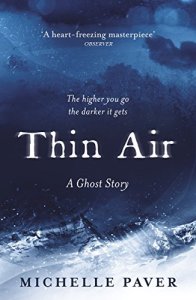
Thin Air by Michelle Paver

I read Thin Air: A Ghost Story by Michelle Paver in the summer, but it’s a good choice to read for Halloween. I didn’t find it as scary as Dark Matter, but even so it is very atmospheric and chilling – in more ways than one. The setting is Kangchenjunga in the Himalayas as a group of five men set out to climb the mountain in 1935.

Kanchenjunga, the third highest mountain in the world, had claimed many lives and no one had reached the summit. Held to be a sacred mountain, it is one of the most dangerous mountains in the world – believed to be the haunt of demons and evil spirits. An unsuccessful attempt had been made in 1907, led by Edmund Lyell, when only two men had returned. The group in 1935, led by Major Cotterell, attempted to follow the 1907 route up the south-west face.

Their story is narrated by medic, Dr. Stephen Pearce, accompanying his older brother, Kits. The brothers have always been rivals and this continues as they make their way up the mountain. Things start to go wrong almost straight away and Stephen is full of foreboding. He fears someone is following them and when he finds a rucksack left behind by the earlier climbers he fears he is loosing his mind. Under the most extreme weather conditions, the constant fear of an avalanche and the increasing effects of mountain sickness Stephen’s paranoia rises. More horrors keep piling on.

It’s not a long book, 240 pages, and almost half of it describes the mountain itself and the route the climbers took to get to the start of the climb and setting up their base camp. So it is only in the later part where the terror hinted at before sets in. The isolation, a sense of ‘otherness’, the extreme cold and the immense scale of the mountain with its towering pinnacles, deep crevasses, and above all the silence dominates. Were Stephen’s experiences the result of being at a high altitude, were they hallucinations – or was what he saw really there? I was never sure and that was part of the horror.

Thin Air is based on real events, although the 1907 and 1935 expeditions described in it are fictional. But the setting is real, the characterisation is excellent as is the feel of the 1930s, with its class snobbery, and racism and above all the creeping sense of dread that pervades the whole book.

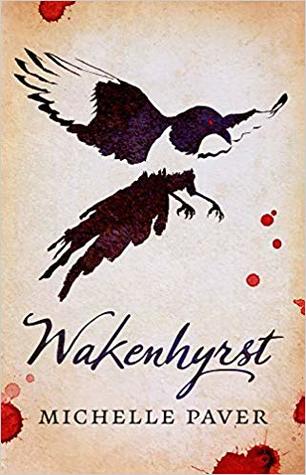
Wakenhyrst by Michelle Paver

A tale of mystery and imagination laced with terror. 

Wakenhyrst

Head of Zeus|4 April 2019|e-book 5683 KB|Review copy|4*

Wakenhyrst by Michelle Paver is a dark and sinister tale, full of menace and suspense. It’s a slow-burner, told through different points of view, that builds to a climax with a sad twist in the story right at the end – one I hadn’t seen coming. It’s set in a remote hamlet in the Suffolk Fens, an eerie waterlogged landscape where Edmund Stearn, a historian, and his family live in a large manor house, Wake’s End, on the edge of the Fens, said to be the oldest and most rotten of fens. It was a place of dread, haunted by spirits and the home of eels and other foul creatures.

The novel begins with a magazine report in 1966 on the events that took place at Wake’s End in 1913 when sixteen-year old Maud Stearne watched her father, Edmund, leave the house, armed with an ice-pick and a geological hammer and murder the first person he came across in the orchard. Maud was the only witness. She is now a recluse and in 1913 she had only spoken briefly at his trial. But now she needs money to repair the ancient manor house that is her home and has invited the journalist to Wake’s End. He believes Edmund was innocent and hopes to discover the truth – was Edmund mad and what did he write in his notebook that Maud has never confirmed even existed? Maud’s evidence was full of holes – did she commit the murder and frame her father, who took the blame?

 Edmund never explained why he did it, or how he ended up in the well, screaming with terror as he fought off a mass of eels. He spent the rest of his life in an asylum, where he created three paintings that astonished the world – grotesque paintings full of colour and tiny malevolent faces leering out of the canvas, the stuff of nightmares. 

What follows is a story of disintegrating madness, revealed in Edmund Stearne’s notebook as the reporter persuades Maud to tell her story, going back to her childhood, when her mother was still alive. Her mother got the same illness every year, or so Maud believed – an illness where her middle swelled, resulting in a period of ‘groaning’, as her middle would burst and ending with either ‘a bloody chamberpot’, or a dead baby. When she died Maud blamed her father and believed he was insane when he became obsessed with the medieval painting  of the Last Judgement, known as the Doom, that he found in the churchyard. He connects the Doom with the writings of Alice Pyett, a medieval mystic whose book he was transcribing.

There is a sense of impending disaster as the tale unfolds. Whilst the fens are a source of dread and fear for Edmund, they are a place of solace and beauty for Maud. The book is full of the folklore and customs of the local people and their belief in the spirits that haunt the fen – ferishes, Jack-o’-Lanterns and Black Shuck – Michelle Paver notes in her Author’s Note that she has not invented these. Maud’s childhood, her fear of her father and his violence towards her and her mother, are scenes that are based on the misogynist attitudes of the period.

Maud’s life was run by her father’s rules. She had no friends or companions apart from the servants, whose lives were ruled by superstitions, until she met Jubal Rede, the wild man who lived in the fen. He was kind to her and taught her the ways of the fen. But there is also Chatterpie, the magpie she rescued from the well and grew to love, and then Clem, the young under-gardener who she also grew to love.

It’s a compelling story, steeped in atmosphere, with characters typical of an earlier age whose lives were oppressed and isolated from the wider world. I loved the setting, the mysterious fenland, the horrific gothic and dark nature of the story, the mystery of the murder and most of all I loved Maud and her independent spirit that brought her through the nightmare.

My thanks to the publishers, Head of Zeus for my review copy via NetGalley.

Dark Matter: a Ghost Story by Michelle Paver

Dark Matter

My first book for the R.I.P. VII Challenge is a chilling book, very chilling, both in the setting in the High Arctic and in atmosphere. I was glad I wasn’t reading Dark Matter by Michelle Paver in the dead of winter, snowbound and alone, because then it would have been terrifying. The isolation of the long, dark Arctic winter is oppressive and unrelenting.

It’s a ghost story in the form of a diary – that of Jack Miller who in 1937 was part of an expedition to the High Arctic to study its biology, geology and ice dynamics and to carry out a meteorological survey. Jack’s role is as radio operator, transmitting observations three times a day to the Government forecasting system.

From the start Jack is very reluctant to go, put off by the other members of the expedition, four ex-public schoolboys. But he’s stuck in a boring job, after giving up his plans to be a scientist and realises this is the only chance he’ll ever get to change his life. Right from the start things begin to go wrong, but Jack remains enthusiastic. Later when they meet Skipper Eriksson, the part owner and captain of the ship taking them to Gruhuken, a remote uninhabited bay where they’re setting up camp, Jack begins to feel increasingly uneasy. Eriksson is reluctant to take them to Gruhuken, but he doesn’t explain why merely saying he doesn’t think it’s ‘right’ for a camp.

Not long after they have set up camp Jack feels oppressed by the isolation brought on by the thought of the men who had been there before them:

Suddenly, I felt desolate. It’s hard to describe. An oppression. A wild plummeting of the spirits. The romance of trapping peeled away, and what remained was this. Squalor. Loneliness. It’s as if the desperation of those poor men had soaked into the very timber, like the smell of blubber on the Isbjørn. (page 65)

The trappers had left behind a ruined mine, a hut ‘crouched among the boulders  in a blizzard of bones‘ and in front of the hut a ‘bear post’ for luring bears to the trappers’ gun. It all makes Jack’s spirits sink. As the ship is leaving the camp, Jack sees a man standing in front of the cabin by the bear post and is relieved when he leaves. Now the members of the expedition are alone with the huskies and Jack’s unease grows. He is disturbed by the change in the weather, the increasingly shorter days and irritated by the other members, in particular by Algie and his insensitivity and cruelty towards the dogs.

Jack’s unease turns into dread as he realises that Gruhuken may be haunted, but his rational mind explains his feeling as an echo:

An echo from the past. … it’s called ‘place memory’, a well-known idea, been around since the Victorians. If something happens in a place – something intensely emotional or violent – it imprints itself on that place; maybe by altering the atmosphere, like radio waves, or by affecting matter, so that rocks, for example, become in some way charged with what occurred. Then if a receptive person comes along, the place plays back the event, or snatches of it. … What I saw was only an echo. (pages 111-2)

As the darkness descends, Jack is left alone at the camp and his nightmare really begins. The book is well-paced, the tension mounts, and paranoia sets in … or is it real, even the dogs are scared. It really is a page-turner and a good old-fashioned ghost story. The relationships between the characters are well drawn, and especially Jack’s relationship with Isaak, one of the huskies. I was most concerned about Isaak!

Jack describes ‘dark matter‘ of the title, as that part of the universe that cannot be seen or detected, but is there. He finds this idea

‘… unsettling. Or rather, not the idea itself, that’s merely an odd notion about outer space. What I don’t like is the feeling I sometimes get that other things might exist around us, of which we know nothing.’ (pages 94-5)

I don’t like that either. It’s scary.

  • Hardcover: 256 pages
  • Publisher: Orion; First Edition edition (21 Oct 2010)
  • Language: English
  • ISBN-10: 1409123782
  • ISBN-13: 978-1409123781
  • Source: I bought the book
  • My Rating: 4/5