New Books

Over the last few months I’ve been lucky enough to receive copies of these books for review. I’ve finished some of them and am currently reading a few, with more yet to start:

Birdcage Walk by Helen Dunmore – first published 2 March 2017 – set in 1792, Europe is seized by political turmoil and violence. Lizzie Fawkes has grown up in Radical circles where each step of the French Revolution is followed with eager idealism. Weaving a deeply personal and moving story with a historical moment of critical and complex importance, Birdcage Walk is an unsettling and brilliantly tense drama of public and private violence, resistance and terror.

The Square and the Tower: Networks, Hierarchies and the Struggle for Global Power by Niall Ferguson – publication date 5 October 2017 – non fiction. Most history is hierarchical: it’s about popes, presidents, and prime ministers. But what if that’s simply because they create the historical archives? What if we are missing equally powerful but less visible networks – leaving them to the conspiracy theorists, with their dreams of all-powerful Illuminati? I’m currently reading this book.

Fair of Face by Christina James – publication 15 October 2017. This is set in the Fenlands of South Lincolnshire, where a double murder is discovered in Spalding. The victims are Tina Brackenbury and her baby daughter. Her 10 year-old foster daughter, Grace has escaped the killer because she was staying at her friend, Chloe Hebblethwaith’s house at the time. Four years earlier Chloe had escaped the massacre of her family. DI Yates and his team face a series of apparently impossible conundrums.

Katharina: Deliverance by Margaret Skea – publication 18 October 2017.   A compelling portrayal of Katharina von Bora, set against the turmoil of the Peasant’s War and the German Reformation … and of Martin Luther, the controversial priest at its heart. The consequences of their meeting in Wittenberg, on Easter Sunday 1523, has reverberated down the centuries and throughout the Christian world. I have finished reading this book – my review will follow in the next few days.

The Last Hours by Minette Walters – publication date 2 November 2017. Historical fiction set in 1348 about the Black Death. In the estate of Develish in Dorsetshire, Lady Anne quarantines the people, including two hundred bonded serfs, by bringing them with the walls.  Ignorant of what is happening in the world outside they fear starvation but they fear the pestilence more. Who amongst them has the courage to leave the security of the walls? I’m currently reading this book.

The Vanishing Box by Elly Griffiths – publication date 2 November 2017. The fourth book in the Stephens and Mephisto mystery series. It’s Christmas 1953, Max Mephisto and his daughter Ruby are headlining Brighton Hippodrome, an achievement only slightly marred by the less-than-savoury support act: a tableau show of naked ‘living statues’. This might appear to have nothing in common with DI Edgar Stephens’ investigation into the death of a quiet flowerseller, but if there’s one thing the old comrades have learned it’s that, in Brighton, the line between art and life – and death – is all too easily blurred… I have finished reading this book – my review will follow.

The Hanged Man by Simon Kernick – publication date 16 November 2017. This is the  second in The Bone Field series, featuring DI Ray Mason and PI Tina Boyd. A house deep in the countryside where the remains of seven unidentified women have just been discovered. A cop ready to risk everything in the hunt for their killers. A man who has seen the murders and is now on the run in fear of his life. So begins the race to track down this witness before the killers do.

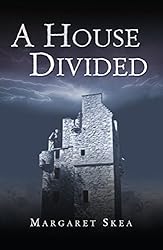
A House Divided by Margaret Skea

One of the best historical fiction books I read last year was Margaret Skea’s debut novel, Turn of the Tide, which captivated me completely transporting me  back in time to 16th century Scotland.  So I approached its sequel, A House Divided, hoping it would be just as good, and it is. Indeed it’s even better. Once more I was whisked back to the world of the feuding clans of Cunninghame and Montgomerie. It is the most gripping story of warring factions in Scotland, the French Wars of Religion, superstition and horrific witchcraft trials.

It’s now 1597, six years after the events in Turn of the Tide. The Munro family are believed to have died in a fire at their home, Broomelaw but Kate Munro and her three children are living at Braidstane in Ayrshire under the protection of the Montgomerie family. They have the assumed the name of ‘Grant’, in hiding from the Cunninghame family, particularly from William Cunninghame, the son of the Earl of Glencairn, head of the Cunninghame clan. Kate’s husband is in France, fighting with the Scots Gardes for the French Henri IV. Meanwhile William Cunninghame has taken possession of Broomelaw and is rebuilding the tower house. And it’s becoming more difficult and dangerous to keep their identity secret; the children are asking questions and the eldest, Robbie, wants to go to join his father in France.

Kate, who has gained a reputation as a ‘wise woman’ from her knowledge and skill in the use of herbs and plants for healing and as a midwife, is called to help Margaret Maxwell, the wife of Patrick, a Cunninghame supporter, with the birth of her baby. When Patrick meets Kate and her daughter, Maggie, he is suspicious. thinking they look familiar, reminding him of Munro’s wife, and so the danger begins. And it increases as Kate’s reputation grows and she is summoned to the Scottish court as Queen Anne (James VI’s wife), having heard of Kate’s expertise, needs her advice in carrying a baby to full-term.  She had been advised to try a number of methods to avoid a miscarriage:

I have eaten crushed orchid leaves, powdered fox’s lungs and crab’s eyes; drunk wolf oil and tincture of foxglove; been bled and leeched till I think I have little blood left; told to lie on my side and on my stomach, even upside down. Few treatments convenient and none effective. (location 3242)

It’s no wonder they failed and a wonder she survived!

There is so much I loved in this book – first of all the story itself, expertly narrated, full of tension and surprise, and then the characters, some based on real historical figures and others fictitious, such as the Munro family. The story is well grounded in research and based on facts – James VI, whilst waiting to inherit the English crown, wanted to bring peace to Scotland and to put an end to the wars between the clans. His interest in, or rather his obsession with witchcraft comes to the fore in this novel as Kate is accused as a witch and brought to trial as part of the Great Scottish Witch Hunt of 1597. Also historically accurate is the Scots involvement in France as under the terms of the ‘Auld Alliance’ they had citizenship rights in France as well as trading agreements and the Scots Gardes were an elite Scottish regiment whose duties included the provision of a personal bodyguard to the French King.

But it’s the personal touches that brought home to me what life was like in the 16th century, what their houses were like, the food they ate, the dangers that faced them in their daily lives, as well as the growing interest in science and medicine as opposed to superstition and religious bigotry and fervour.

This is an excellent book, one of the best I’ve read this year. Not only is the story absolutely fascinating, but it is also well written and well paced. The historical facts all blend seamlessly into the narrative, with beautiful descriptive passages not just of the landscape and the Scottish Court, but also of the grim details of warfare, of the horrors of the witch trials and of sickness, typhoid and plague, of wounds, of childbirth and of death. It’s strong, compelling reading, a book that made me keen to find out what would happen next and at the same time one I didn’t want to end.

  • Format: Kindle Edition – also available as a paperback
  • File Size: 1017 KB
  • Print Length: 480 pages
  • Publisher: Sanderling Books; 1 edition (15 Oct. 2015)
  • Author’s website: Margaret Skea, Writing yesterday, today

Margaret Skea is currently working on her third novel – I’m looking forward to reading it!

Reading Challenges: Read Scotland 2016

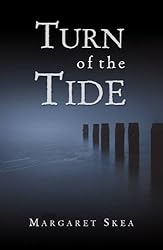
Turn of the Tide by Margaret Skea

I have read some wonderful debut novels this year –  Turn of the Tide by Margaret Skea is one of them. I loved it. It’s historical fiction and it captivated me completely transporting me  back in time to 16th century Scotland. If you have ever wondered,  as I have, what it must have been like to live in a Tower House in the Scottish Borders then this book spells it out so clearly. And it puts you firmly in the middle of the centuries old feud between the Cunninghames and the Montgomeries, with all the drama of their battles, ambushes and schemes to further their standing with the young King James VI. It’s a tale of love, loyalty, tragedy and betrayal.

It’s no wonder that the book was  the Historical Fiction Winner in the 2011 Harper Collins / Alan Titchmarsh People’s Novelist Competition and won the Beryl Bainbridge Award for Best First Time Author 2014.

There is a map setting the scene in Ayreshire on the west of Scotland between the Firth of Clyde and the Solway Firth, showing the major sites in the book. I found both the map and the list of main characters most useful whilst following the story. And to complete my understanding there is a Glossary of Scottish words at the back of the book, although the meaning of most of them was clear from the context.

It begins in 1586  with an ambush in which several of the Montgomerie Clan, on their way to James VI’s court at Stirling are killed, followed by the Clan’s reprisal on the Cunninghames. James, anxious to settle the feud between his nobles, asks them to swear to bring their feud to an end, which brings an uneasy peace between them – for a while.

Most of the characters are real historical figures, includingJames VI, the Cunninghames – William, the Master of Glencairn and the Montgomeries – Hugh, the Master of Braidstane and their families. The feud is also a matter of fact. It began in 1488 when James IV gave control of the Balliewick of Cunninghame to a Montgomerie! It didn’t come to an end until the beginning of the 17th century.

The main characters,  Munro and his wife Kate and a few of the others are fictional. Munro is a minor laird who whilst owing allegiance to the Cunninghames, has increasing sympathy and liking for the Montgomeries. His dilemma only increases throughout the book.

Margaret Skea has done her research well, not just the feud and battles but also the domestic settings are detailed down to descriptions of the clothing, the food and so on – even how the town house rooms were finished with limewash, which involved carrying bucket-load after bucket-load up four flights of stairs to rejuvenate the attic chamber where the children slept. But it slots seamlessly into the story, adding colour and life to the scenes.

It’s all fascinating  – the hunt arranged for the king, the account of his journey across the North Sea to bring home his bride, Anne of Denmark, the scenes as the royal party lands at Leith and the coronation in Edinburgh, as well as the jockeying for positions, and the battles all culminating in a tense and dramatic finale.

Not only is this riveting history it is also so well written, beautifully descriptive:

Across the valley the castle reared against the skyline, the town tumbling down the slope below, wisps of smoke beginning to unfurl, first one, then another, then too many to count, as Stirling awoke.

The countryside was spread out before him like a map; the distant hills to the south west smudged against the watery sky; the river a dark ribbon snaking through the marshland below, cradling Cambuskenneth in a giant u-shaped loop. (pages 98-99)

and this – such a startling image:

Daylight slipped into their bedchamber like wraith; grey and insubstantial, filtered through the grime and soot that coated the outside of the windowpanes. (page 247)

And I’m delighted that Margaret Skea is writing a sequel as I really want to know what happened next to Munro and his family. The working title is A House Divided, continuing the story in the late 1590s.

  • Paperback: 416 pages – also available on Kindle
  • Publisher: Capercaillie Books Limited; first edition (22 Nov. 2012)
  • Language: English
  • ISBN-10: 1909305065
  • ISBN-13: 978-1909305069
  • Source: I bought my copy
  • Author’s website: Margaret Skea, Writing yesterday, today