Spell the Month in Books – October 2025

Spell the Month in Books is a linkup hosted by Jana on Reviews From the Stacks on the first Saturday of each month. The goal is to spell the current month with the first letter of book titles, excluding articles such as ‘the’ and ‘a’ as needed. That’s all there is to it! Some months there are optional theme challenges, such as “books with an orange cover” or books of a particular genre, but for the most part, any book you want to use is fair game!
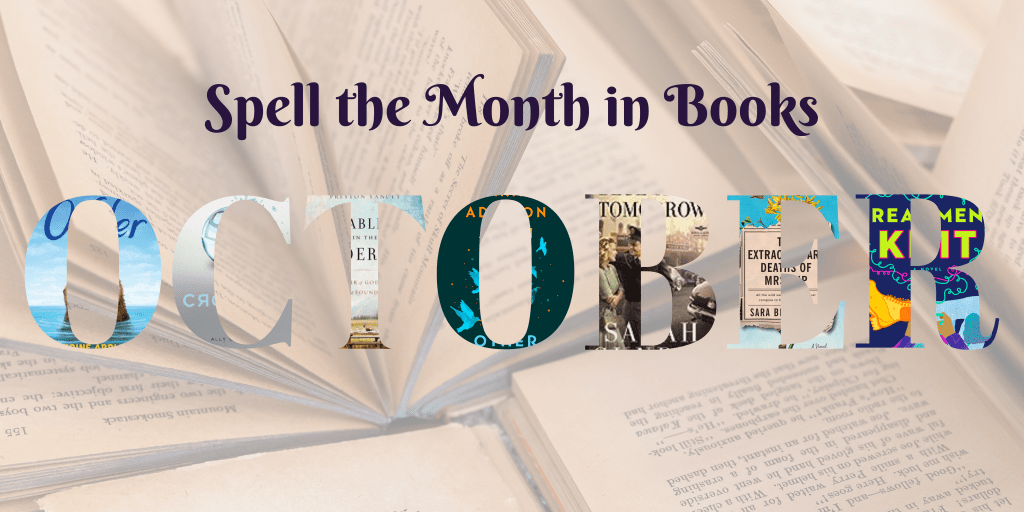
This month’s theme is Trick or Treat: books that you feel strongly about, whether positively or negatively.

I don’t like tricks so my books are all books I’ve enjoyed – real treats!
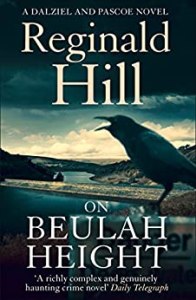
O is for On Beulah Height by Reginald Hill

Reginald Hill’s 17th Dalziel and Pascoe novel, set in a Yorkshire village, Dendale. Three little girls had gone missing from the village one summer. Their bodies were never found, and the best suspect, a strange lad named Benny Lightfoot, was held for a time, then released. Fifteen years later another little girl, Lorraine, aged seven went out for a walk one morning with her dog before her parents got up and didn’t return home, reviving memories of the missing children from fifteen years earlier. It was a case that has haunted Dalziel.

This book is tightly plotted with many twists that made me change my mind so many times I gave up trying to work out who the murderer was and just read for the pleasure of reading. Hill’s descriptive writing is rich and full of imagery. The main characters are fully rounded people and the supporting cast are believable personalities, often described with wry humour.
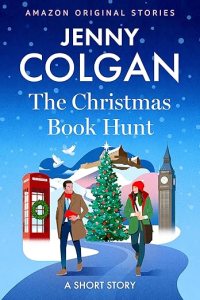
C is for The Christmas Book Hunt by Jenny Colgan.

Mirren is looking for a copy of A Child’s Garden of Verses by Robert Louis Stevenson, a particular one that had belonged to her Great Aunt Violet. It was a special edition, with hand-drawn plates by Aubrey Beardsley and now Great Aunt Violet, who is in hospital seriously ill would love to see the book for Christmas. I loved that book as a child, so this is what made the story irresistible for me. She went to the book town Hay-on-Wye, bookshops in Edinburgh and a secondhand bookshop in Northumberland that sounds very like Barter Books in Alnwick, my favourite bookshop. She bumps into mysterious, charming Theo, who, unbeknownst to her, is searching for the same book for reasons of his own…
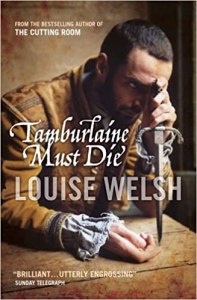

T is for Tamburlaine Must Die by Louise Welsh

It was a real treat to read Tamburlaine Must Die, a short book of only 140 pages, that I read in a day. Weaving together fact and fiction and set in 1593 this is a tense, dramatic story of the last days of Christopher Marlowe, playwright, poet and spy. Accused of heresy and atheism, his death is a mystery, although conjecture and rumours abound. It has an immediacy, that drew me into the late Elizabethan world.
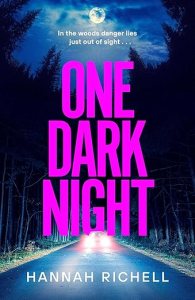
O is for One Dark Night by Hannah Richell

I loved the spooky, tense atmosphere and as soon as I started reading it knew I was going to enjoy this book. The settings are vividly described, the characters come across as real people, and the plot is amazing, multi- layered, with plenty of suspects for the murder and numerous twists and turns to throw me off the scent. For quite a while you don’t even know the name of the victim, who was found in the woods, called ‘Sally in the Wood’. It’s a police procedural centred on Ellie, a pupil at the private school, where her mother Rachel works as the school counsellor and her father, Ben, a detective sergeant who is on the investigation team
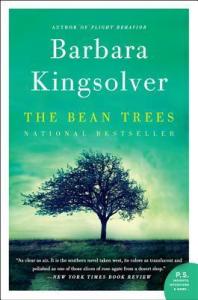
B is for The Bean Trees by Barbara Kingsolver

I loved this book. Barbara Kingsolver writes in such a way that I can easily visualise the scenes, beginning with the opening paragraph in which she describes a tractor tire blowing up, flinging a man up in the air and throwing him over the top of a Standard Oil sign. Taylor (originally called Marietta/Missy) grew up in rural Kentucky. She left home when she had saved enough to buy a car, an old VW. She changed her name to Taylor after the first place where she ran out of petrol, which just happened to be Taylorville. She drove on until the car broke down in the middle of nowhere, on land owned by the Cherokee tribe. And it was there at a garage that an Indian woman abandoned a baby girl in Taylor’s car – she called the baby, Turtle.
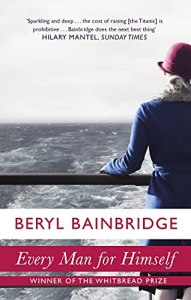
E is for Every Man For Himself by Beryl Bainbridge.

This the story of Morgan’s voyage on the Titanic, divided into four days as he tells it. It’s mainly about the young rich people as they drink and party their way across the Atlantic. Morgan is part of the crowd but he is not rich, and although he has connections, he’s a young American who has to earn his living. Day four is the day the Titanic sank. I could easily imagine what it was like to be a passenger, people rushing about the boat, trying to get on the lifeboats and being separated from friends and family. And the final scenes bring home the reality that it really was a case of every man for himself with the callous attitude towards the steerage passengers, the lack of lifeboats and the disregard of the ice warnings. And so the boat described as unsinkable, sank.
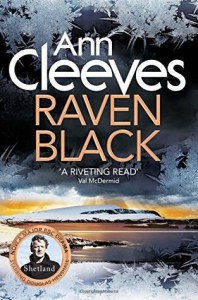
R is for Raven Black by Ann Cleeves, the first in her Shetland series, crime novels set in the Shetland Islands, to the north of mainland Scotland. This is a murder mystery investigated by Inspector Jimmy Perez.

It begins on New Year’s Eve as Magnus Tait is seeing the new year in on his own, until two teenage girls knock on his door to wish him a Happy New Year. A few days later one of the girls is found dead in the snow not far from Magnus’s house, strangled with her own scarf.

The book has a strong sense of location and a terrific atmosphere – the landscape, the sea, the weather, the circling ravens and the spectacle of Up Helly Aa (the Fire Festival), all anchor the story and bring the book to life.

Upcoming Themes

November 1: Nostalgia

December 6: Giftable – Books you would give or would like to receive as a gift

January 3, 2026: New Books – Ones you have received recently or are looking forward to reading or seeing published this year

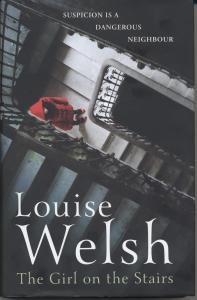
Throwback Thursday: The Girl on the Stairs by Louise Welsh

Today I’m looking back at my post on The Girl on the Stairs by Louise Welsh, a dark, psychological thriller, full of atmosphere and claustrophobic tension. I first reviewed it on August 29, 2012.

My review begins:

The Girl on the Stairs is Louise Welsh’s latest book. It’s a book that once I started reading it I just had to finish it. It’s full of suspense and increasing tension as Jane moves to an apartment in Berlin to join her partner, Petra. Everything is new to her, she only speaks a little German, she doesn’t know the area and has no friends there. And she’s pregnant.

Click here to read my full review

~~~

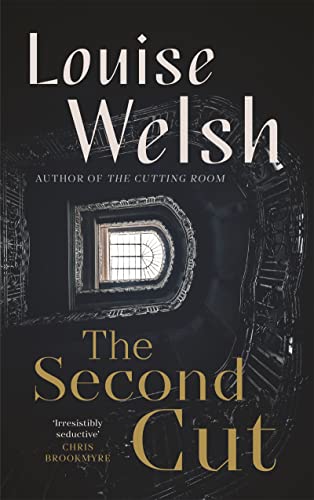
The Second Cut by Louise Welsh

Canongate Books| 27 January 2022| 372 pages| e-book| review copy via NetGalley| 3.5*

Synopsis:

Auctioneer Rilke has been trying to stay out of trouble, keeping his life more or less respectable. Business has been slow at Bowery Auctions, so when an old friend, Jojo, gives Rilke a tip-off for a house clearance, life seems to be looking up. The next day Jojo washes up dead.

Jojo liked Grindr hook-ups and recreational drugs – is that the reason the police won’t investigate? And if Rilke doesn’t find out what happened to Jojo, who will?

Thrilling and atmospheric, The Second Cut delves into the dark side of twenty-first century Glasgow. Twenty years on from his appearance in The Cutting Room, Rilke is still walking a moral tightrope between good and bad, saint and sinner.(Amazon UK)

I enjoyed reading Louise Welsh’s debut novel, The Cutting Room back in 2005, even though it was not the usual type of book that I read, and was way out of my comfort zone. I remember that its dark, edgy atmosphere made it compelling reading about Rilke an auctioneer who discovered a collection of violent and highly disturbing photographs. So when I saw that she’d written another novel, about, Rilke, The Second Cut I was keen to read it. I had forgotten most of the detail in The Cutting Room, but that didn’t matter as this book reads well as a standalone.

Twenty years have passed since the first book was published and much has changed in the world, but Rilke at forty seven years old, is now only four years older in this second book, still an auctioneer at Glasgow’s Bowery Auctions and ‘too tall, too thin and too cadaverous to look like anything other than a vampire on the make’. I found this somewhat confusing as The Second Cut is clearly set in the present day, with all the changes that have taken place in the last twenty years regarding the rights of LBGTQ+ people, and the references to Covid.

Just like The Cutting Room, I found this compelling reading, but not always comfortable reading, particularly about the darker side of Glasgow’s violent underworld and gay scene. The characters are vividly drawn and from start to end the pace is fast, and the details about the auction house are fascinating. There are two main threads – the first is Rilke’s determination to find out how and why his old acquaintance Jojo turned up dead on a doorstep.

Aand the second follows his suspicions about the truth behind the house clearance of Ballantyne House, a neglected Georgian house in Galloway, less than two hours from Glasgow. It was crammed with many valuable items along with the dross. It was owned by Mrs Forrest, an old lady who had been a concert pianist but was now suffering from dementia, so her son and nephew were dealing with the sale of the property and its contents. I read a lot of crime fiction, so I soon guessed what had happened to Mrs Forrest, and similarly I was immediately suspicious about what was going on in the polytunnels.

But it’s the gay scene that is the main focus of the book and in her Afterword Louise Welsh explains that she had written The Cutting Room twenty years ago in a white-hot rage about the intensity of the hostile environment against LBGTQ+ people. Although much has changed since then with equal marriages, increased visibility, access to hate laws, improved awareness of queer and trans rights, with a general consensus that violence and prejudice against LBGTQ+ people is wrong, outrages still occur. She writes that the Glasgow she inhabits is largely better, in terms of sexuality, than it was twenty years ago. I have to say that some of the scenes in The Second Cut seem to be stuck in the past – or have I got that wrong?

Many thanks to Canongate Books for a review copy via NetGalley

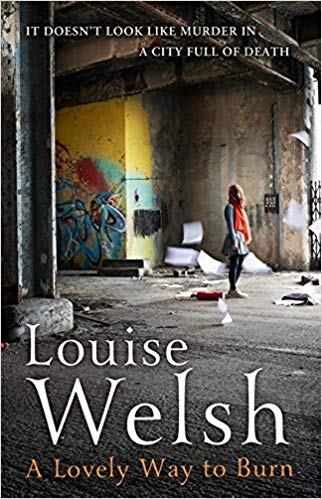
A Lovely Way to Burn by Louise Welsh: Mini Review

A Lovely Way to Burn

John Murray|2004|358 pages|Hardback| Library book|4*

I’ve read a few of Louise Welsh’s books and enjoyed each one so when I saw this on the library shelves I borrowed it. I agree with Val McDermid’s description of it on the back cover: ‘a terrifying journey into the possible, this is dystopia for today. Feral, frightening and fascinating, A Lovely Way to Burn gripped and chilled me in equal measure.

Once I started reading I just didn’t want to stop. I was gripped as Stevie Flint, a presenter on a TV show, Shop TV, finds her boyfriend, surgeon Simon Sharkey, lying dead in his apartment. At first it appeared that he had died of natural causes and then that he had killed himself. But he had left a hidden note for her with instructions to deliver his laptop to Malcolm Rhea, a colleague at St Thomas’s Hospital. Under no circumstances was she to take it to the police or to entrust it anyone except Rhea. Stevie is determined to find out what happened to him. Her search takes her into the most dangerous situations.

It is a horrifying vision of what could happen when a new and unidentified virus, known as ‘the sweats’ sweeps the globe. London quickly descends into chaos – supermarkets are looted, roads are gridlocked as people try to flee the infection, then society just crumbles as people look out only for themselves, rioting and eventually succumbing to the mysterious illness and dying. 

After quite a leisurely start the pace picks up, and the tension rises rapidly before reaching a nightmare scenario as decay and disintegration set in. It’s a mix of murder mystery and a surreal and frightening story of a plague. This is the first in Louise Welsh’s Plague Trilogy, but it is complete in itself. I have the second book, Death is a Welcome Guest and it looks as though it has a new set of characters – I’m looking forward to reading it!

First Chapter First Paragraph: A Lovely Way to Burn

eca8f-fistchapEvery Tuesday Diane at Bibliophile by the Sea hosts First Chapter First Paragraph Tuesday Intros to share the first paragraph sometimes two, of a book that she’s reading or is planning to read soon.

This week’s opening is from A Lovely Way to Burn by Louise Welsh.

A Lovely Way to Burn (Plague Times, #1)


It begins with a Prologue:

London witnessed three shootings that summer, by men who were part of the Establishment. The first  was the Right Honourable Terry Blackwell, Tory MP for Hove who, instead of going to his consistency as planned, sat in a deck chair on the balcony of his Thames-side apartment on sweltering Saturday in June and shot dead six holidaymakers.

Blurb:

It doesn’t look like murder in a city full of death.

A pandemic called ‘The Sweats’ is sweeping the globe. London is a city in crisis. Hospitals begin to fill with the dead and dying, but Stevie Flint is convinced that the sudden death of her boyfriend Dr Simon Sharkey was not from natural causes. As roads out of London become gridlocked with people fleeing infection, Stevie’s search for Simon’s killers takes her in the opposite direction, into the depths of the dying city and a race with death.

A Lovely Way to Burn is the first outbreak in the Plague Times trilogy. Chilling, tense and completely compelling, it’s Louise Welsh writing at the height of her powers.

I’ve borrowed this book from the library as I’ve read and enjoyed other books by Louise Welsh and I’m hoping it’ll be just as hypnotically compulsive reading as her other books.

What do you think – would you read on?

Tamburlaine Must Die by Louise Welsh

It was a treat to read Tamburlaine Must Die, a short book that I read in a day. I can’t remember when I last read a book in a day!

Sometimes novellas, such as this is with just 140 pages, can seem lacking, needing more depth of character or plot, leaving me feeling that it should really have been a full length novel, or an even shorter story. But Tamburlaine Must Die has an immediacy, that drew me in to the late Elizabethan world.

I wrote about the opening paragraph and synopsis on Tuesday and almost immediately after I began to read the book. Written in the first person and set in May 1593, it’s a tense, dramatic story of the last days of Christopher Marlowe, playwright, poet and spy. Accused of heresy and atheism, his death is a mystery, although conjecture and rumours abound. Louise Welsh has used several sources in writing this novella, but as she writes in the Author’s Note:

History has bequeathed us a tantalising framework of facts – the Elizabethans were as prolific as the Stasi when it came to official documents. Yet the facts can’t tell us the full tale and historian’s theories on Marlowe’s death are ultimately well informed, meticulously researched speculation.

We know that Marlowe dies in a house in Deptford. We know the date of his death and the three men present. We know the nature of the wound that killed him. Everything else is educated guesswork, or in this author’s case, a fiction.

Tamburlaine Must Die conveys the claustrophobic atmosphere of danger surrounding Marlowe; who can he trust, and who is behind the pseudonym of ‘Tamburlaine’, who posted a libellous handbill referencing Marlowe’s plays? He is very aware that death is just around the corner:

A dagger can find its way into a belly or a back before the victim spies it. I thought I felt the prickle of surveillance on my shoulders. And though I knew it was most likely the effect of my own blood running faster in my veins, I made my way from the crush of people, trying to keep note of who was around me, checking  if any faces lingered in the thinning crowd. (page 31)

As well as Marlowe, Louise Welsh throws in Dr Dee and Thomas Walsingham, Marlowe’s patron and refers to Walter Raleigh too. In such a brief book she has managed to convey the political and the seedy underworld of the Elizabethan period, the dishonesty and love of intrigue, the dangers of the plague and the threat of war. Has much changed since then, I wonder.