Library Books & Short Story September 2025

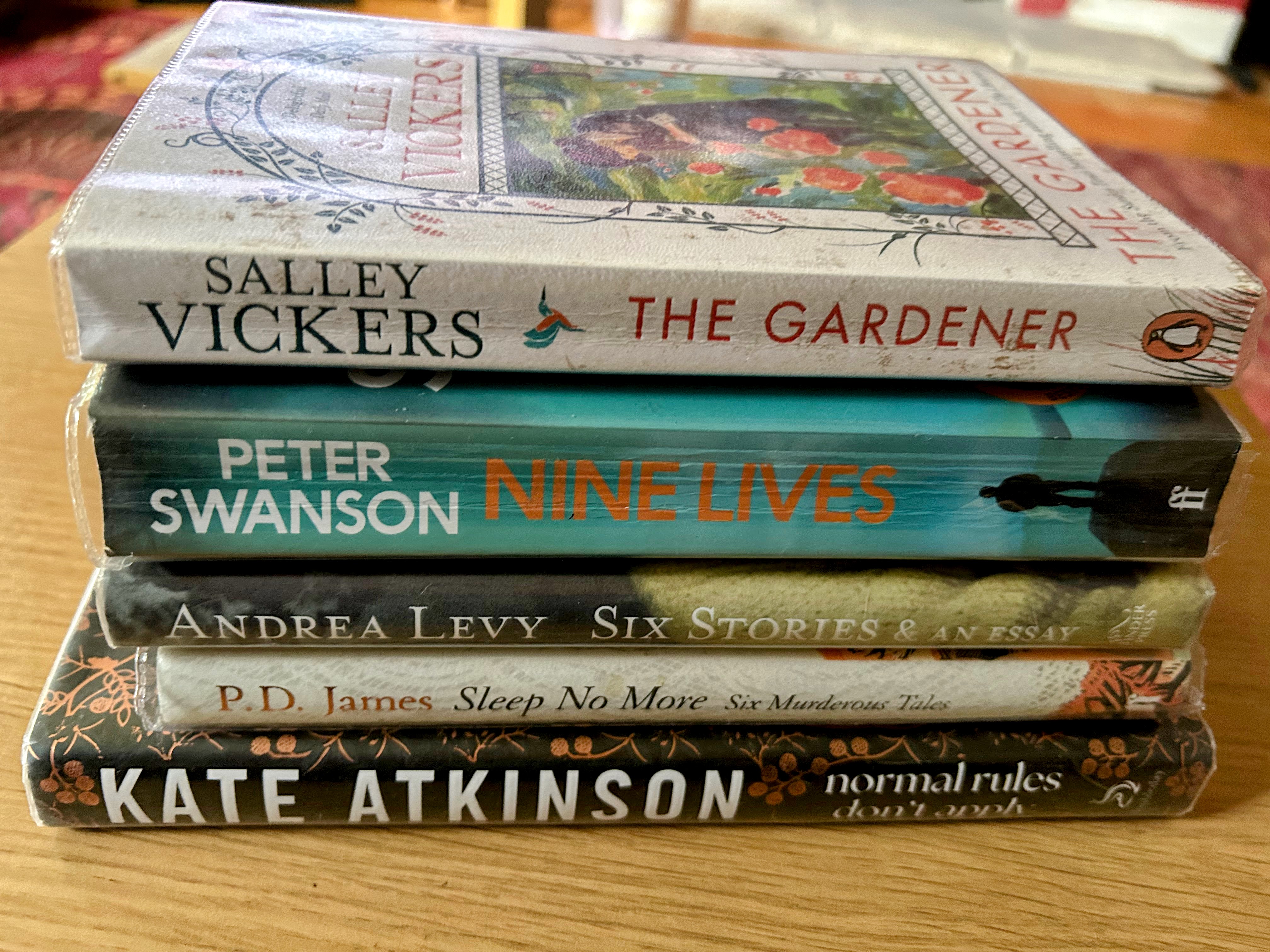
The mobile library van came yesterday and I borrowed three books of short stories to read for Short Story September 2025.

I’ve read books by each of the three following authors before:

Sleep No More: Six Murderous Tales by P D James – each one with the dark motive of revenge.

Normal Rules Don’t Apply by Kate Atkinson – Eleven interconnected stories, where everything is changing, where nothing is quite as it seems.

Six Stories and an Essay by Andrea Levy – This collection opens with an essay about how writing has helped Andrea Levy to explore and understand her heritage. She explains the context of each piece within the chronology of her career and finishes with a new story, written to mark the centenary of the outbreak of the Great War in 1914.

I also borrowed two other books:

The Gardener by Salley Vickers – Previously I’ve read five books by Vickers, and enjoyed them, especially Miss Garnet’s Angel and Mr Golightly’s Holiday. The last one I read was The Librarian, which I thought was rather underwhelming. I hope this one is better.

Nine Lives by Peter Swanson – I haven’t read any of Swanson’s books, but keep seeing them on book blogs and thought I’d see if I like this one.

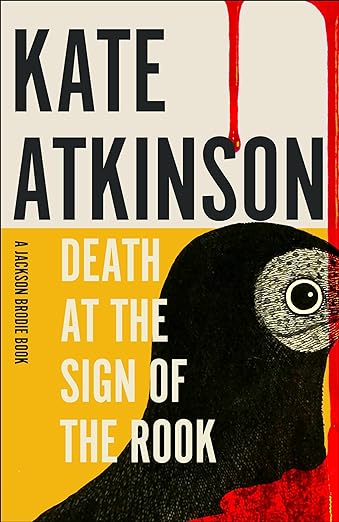
Death at the Sign of the Rook by Kate Atkinson

Random House UK| 22 August 2024 | 335 pages|e-book |Review copy| 2*

Description:

Ex-detective Jackson Brodie is staving off a bad case of midlife malaise when he is called to a sleepy Yorkshire town, and the seemingly tedious matter of a stolen painting. But one theft leads to another, including the disappearance of a valuable Turner from Burton Makepeace, home to Lady Milton and her family. Once a magnificent country house, Burton Makepeace has now partially been converted into a hotel, hosting Murder Mystery weekends.
As paying guests, a vicar, an ex-army officer, impecunious aristocrats, and old friends converge, we are treated a fiendishly clever mystery; one that pays homage to the masters of the genre―from Agatha Christie to Dorothy Sayers.

My thoughts:

Death at the Sign of the Rook by Kate Atkinson begins so well I thought that I was in for a treat. But sadly, as I read on I was disappointed. I was looking forward to reading more about Jackson Brodie, but he only has a minor role. It is amusing in parts. But there are so many other characters, and the story became far too long winded, the narrative jumping around from one set of characters to another, and then another, which made it confusing. The ending was just pure farce, which I’ve never liked, pushing it into the absurd.

Looking back at some of Kate Atkinson’s other books I’ve read I see I had the same reaction to her previous book, Shrines of Gaiety. My favourite books by her are Life After Life and A God in Ruins, both of which I loved.

My thanks to NetGalley and the publishers for my review copy.

WWW Wednesday: 19 June 2024

WWW Wednesday is run by Taking on a World of Words.

The Three Ws are:

What are you currently reading?
What did you recently finish reading?
What do you think you’ll read next?

The books in this post are all from my 20 Books of Summer list.

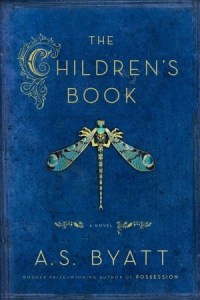
Currently I’m reading The Children’s Book by A S Byatt. I’ve started this book a few time before but now I am at last settled into reading it.

Description from Amazon UK:

‘Famous author Olive Wellwood writes a special private book, bound in different colours, for each of her children. In their rambling house near Romney Marsh they play in a story-book world – but their lives, and those of their rich cousins and their friends, the son and daughter of a curator at the new Victoria and Albert Museum, are already inscribed with mystery. Each family carries its own secrets. 

They grow up in the golden summers of Edwardian times, but as the sons rebel against their parents and the girls dream of independent futures, they are unaware that in the darkness ahead they will be betrayed unintentionally by the adults who love them. This is the children’s book.’

The last book I read was The Silence Between Breaths by Cath Staincliffeoner. I thoroughly enjoyed it. It’s about a group of people on the 10.35 train from Manchester Piccadilly to London Euston. It’s a story of s routine journey that takes a terrifying turn.

Next, I’m thinking of reading Death at the Sign of the Rook by Kate Atkinson

Synopsis from Amazon:

The stage is set. The players are ready. By night’s end, a murderer will be revealed. 
Ex-detective Jackson Brodie is staving off a bad case of midlife malaise when he is called to a sleepy Yorkshire town, and the seemingly tedious matter of a stolen painting. But one theft leads to another, including the disappearance of a valuable Turner from Burton Makepeace, home to Lady Milton and her family. Once a magnificent country house, Burton Makepeace has now partially been converted into a hotel, hosting Murder Mystery weekends.
As paying guests, a vicar, an ex-army officer, impecunious aristocrats, and old friends converge, we are treated a fiendishly clever mystery; one that pays homage to the masters of the genre—from Agatha Christie to Dorothy Sayers.

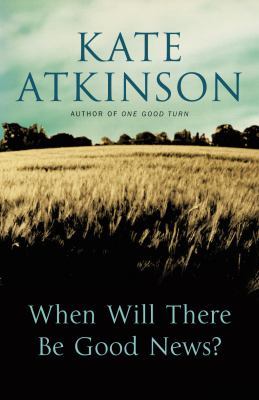
Throwback Thursday: When Will There Be Good News? by Kate Atkinson

Today I’m linking up with Davida @ The Chocolate Lady’s Book Review Blog for Throwback Thursday. It takes place on the Thursday before the first Saturday of every month (i.e., the Thursday before the monthly #6Degrees post). The idea is to highlight one of your previously published book reviews and then link back to Davida’s blog.

When Will There Be Good News by Kate Atkinson is probably my favourite of her books. I first reviewed it on February 18, 2009. I’d borrowed it from the library and at the time was thinking of re-reading it but I had to return the book before I had time to read it again. It’s the third novel in her Jackson Brodie series. I still haven’t read it again – I’d love to though.

My review begins:

Complex but so very satisfying!  This has had very mixed reviews on Amazon which just goes to show that you have to make up your own mind about a book. I read it very quickly because I loved it. I know I missed bits – just when did Jackson lose his jacket? I’ve tried to track it down but I can’t spot it, so I’m thinking of reading it again before I have to take it back to the library.

Click here to read my full review

The next ThrowbackThursday post is scheduled for March 1, 2023.

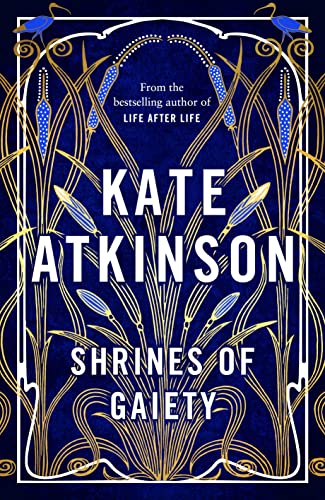
Shrines of Gaiety by Kate Atkinson

Random House UK| 27 September 2022| 440 pages| e-book Review Copy| 2.5*

Synopsis from Amazon

1926, and in a country still recovering from the Great War, London has become the focus for a delirious new nightlife. In the clubs of Soho, peers of the realm rub shoulders with starlets, foreign dignitaries with gangsters, and girls sell dances for a shilling a time.

At the heart of this glittering world is notorious Nellie Coker, ruthless but also ambitious to advance her six children, including the enigmatic eldest, Niven whose character has been forged in the crucible of the Somme. But success breeds enemies, and Nellie’s empire faces threats from without and within. For beneath the dazzle of Soho’s gaiety, there is a dark underbelly, a world in which it is all too easy to become lost.

With her unique Dickensian flair, Kate Atkinson brings together a glittering cast of characters in a truly mesmeric novel that captures the uncertainty and mutability of life; of a world in which nothing is quite as it seems.

My thoughts:

Kate Atkinson is one of my favourite authors, so I was expecting to enjoy Shrines of Gaiety. But it took me a while to settle into this book and for quite a while I wasn’t at all sure that I wanted to carry on reading. But I persevered and finished it, because I wanted to find out what happened.

The novel begins just before the General Strike in May 1926. What I liked about it is that it does give a good idea of life in the 1920s, the atmosphere and attitudes after the First World War. There’s the nightlife, the new nightclubs, gangsters, corrupt police, and missing girls, drugs, drinking, crime and murder. The ‘dark belly’ of Soho’s underworld was very dark indeed and the gaiety superficial.

However, my problem with it was I found it confusing, with several plot lines and lots of characters, in lots of different locations, and at different times, and the narration jumps around between all of them. I had to keep backtracking to work out who was who and how they interacted. It was hard work! And some of it was boring, with quite a lot of padding, making the book as a whole far too long. It’s a sprawling story that could probably have been better spread between two or even three books.

In her Author’s Note Atkinson explains that inspiration for her novel came from the life and times of Kate Meyrick, who for many years was the queen of Soho’s clubland. Many of the details for the novel are taken from her autobiography, Secrets of the 43 Club and Atkinson also cites Barbara Cartland’s autobiography, We Danced All Night and several other works as sources for the novel. But although based on fact and including real people this is very much a work of fiction and she lists several details that she has invented.

Shrines of Gaiety has all the ingredients I love in a novel, but for me it didn’t hold my interest. Sometimes timing is everything and this may be just a case of the wrong book at the wrong time for me.

My thanks to Random House for an ARC via NetGalley.
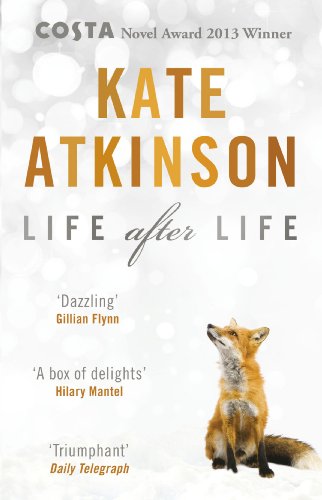
Life After Life by Kate Atkinson

Life After Life 1

Transworld Digital|March 2013|Print length 477 pages| e-book|5*

I am delighted to say that I loved Life After Life. I wasn’t at all sure that I would as I began reading it soon after I bought it (in 2013) and didn’t get very far before I decided to put it to one side for a while. A ‘while’ became years – and then at the end of 2016 I read A God in Ruins about Ursula’s brother Teddy, and loved it and decided to try Life After Life again. But, even so it has taken me until this September to get round to reading it. I can’t imagine what my problem with it was in 2013, because this time round once I’d started it I just knew I had to read it and I was immediately engrossed in the story.

Ursula Todd was born on 11 February 1910 at Fox Corner during a wild snowstorm. In the first version she was born before the doctor and the midwife arrived and she died, strangled by the umbilical cord around her neck. But in the second version the doctor had got there in time and saved her life, using a pair of small surgical scissors to snip the cord

During the book Ursula dies many deaths and there are several different versions that her life takes over the course of the twentieth century – through both World Wars and beyond. Each time as she approaches death she experiences a vague unease, before the darkness falls. As she grows older she experiences different outcomes to the events that lead up to that feeling of unease, and finds that sometimes she can prevent the darkness from falling. By the end of the book I had a complete picture of a life lived to the full. I loved the way she experiences the same circumstances but because one little thing is changed it completely changes the whole sequence of events.

There is a constant thread throughout the book – the Todd family, Ursula’s mother, Sylvie, her father, Hugh, her aunt, Izzie, and her brothers and sisters, plus the family servants and friends. They all play more or less significant roles throughout Ursula’s life. It’s a large cast of characters but I had no difficulty in distinguishing them – they all felt ‘real’, partly I think because Atkinson is so good at depicting family life and relationships.

I would love to know more about several of the characters – Izzie, for one – Hugh’s wild bohemian sister, who Sylvie called a ‘cuckoo’ and Mrs Glover described as a ‘Flibbertigibbet’. Then there is Sylvie herself, who I found quite a mysterious character – in particular one of the chapters describing Ursula’s birth very near the end of the book set my imagination working overtime- what had Sylvie known and how? There is more about Ursula’s youngest brother, Teddy in A God In Ruins and I think I’ll have to re-read it soon to see what further light it throws on all the characters.

In some ways it is a tragic book – particularly the parts set during the war years. They are brilliantly written bringing the full of horror of war into focus; some of the standout scenes  are those in London during the Blitz. And it’s interesting to speculate how different the history of the twentieth century could have been if Hitler had been assassinated in 1930. The whole book is full of ‘what ifs’ – what if this character had behaved differently, what if that had not happened, what if you’d made a different choice of subject to study or a different career, or married a different person?  

In fact I think the whole book is excellent, well researched and with such a different structure so well done that it kept me glued to the pages. I wish I’d read it earlier – but it obviously wasn’t the right time for me to read it then.

Reading challenges: Mount TBR