Six Degrees of Separation from Rapture to Persuasion

It’s time again for Six Degrees of Separation, a monthly link-up hosted by Kate at Books Are My Favourite and Best. Each month a book is chosen as a starting point and linked to six other books to form a chain. A book doesn’t need to be connected to all the other books on the list, only to the one next to it in the chain.
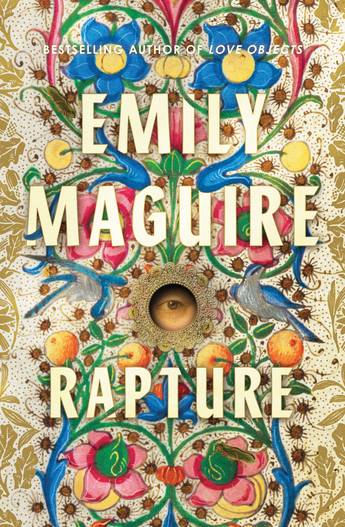
This month we start with Rapture by Emily Maguire. The motherless child of an English priest living in ninth-century Mainz, Agnes is a wild and brilliant girl with a deep, visceral love of God. At eighteen, to avoid a future as a wife or nun, Agnes enlists the help of a lovesick Benedictine monk to disguise herself as a man and secure a place at the revered Fulda monastery.

I haven’t read it and hadn’t heard of the author. According to a review in The Guardian she writes fiction and nonfiction and was shortlisted for the Stella prize, the Miles Franklin and book of the year at the Australian Book Industry awards for An Isolated Incident her 2016 novel. ‘In Rapture, her seventh novel, she turns her hand to historical fiction. Drawing inspiration from the life of Pope Joan, the woman who (according to legend) disguised herself as a man and served as pope for two years during the middle ages, Maguire examines questions of faith using the language of the body.’

I’ve had several false starts with this month’s chain, none of which I could complete. In the end I decided to start with another book about a pope, especially as the Roman Catholic Cardinals will start the procedure to elect a new pope on May 7.
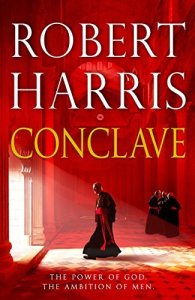
It’s Conclave by Robert Harris. I always learn a lot from reading Harris’s books. In this one he describes the procedure to elect a new pope. Cardinal Lomeli, the Dean of the College of Cardinals leads the 118 Cardinals through the voting stages. I felt as though I was a fly on the wall watching it throughout as the Cardinals are locked inside the Sistine Chapel, isolated from contact with the outside world. Harris has thoroughly researched the subject and seamlessly woven the facts into the novel. He visited the locations used during a Conclave that are permanently closed to the public and interviewed a number of prominent Catholics including a cardinal who had taken part in a Conclave, as well as consulting many reports and books.

The next book is another one by Robert Harris The Fear Index , a fast-paced story set in the world of high finance and computer technology, which is way out of my comfort zone. It’s about scientist Dr Alex Hoffman, who together with his partner Hugo Quarry, an investment banker, runs a hedge fund based in Geneva, that makes billions. Alex has developed a revolutionary form of artificial intelligence that tracks human emotions, enabling it to predict movements in the financial markets. It’s built around the standard measure of market volatility: the VIX or ‘Fear Index’. But I learnt a bit about hedge funds and how they operate, although I got lost in the computer technology details. 

My third link is A Climate of Fear by Fred Vargas, 9th Commissaire Adamsberg book. I like Adamsberg; he’s original, a thinker, who doesn’t like to express his feelings, but mulls things over. He’s an expert at untangling mysteries, an invaluable skill in this, one of the most complicated and intricate mysteries I’ve read, involving a woman found bleeding to death in her bath, having apparently committed suicide, a strange symbol that appears at subsequent death scenes, and a secretive society studying and re-enacting scenes from the French Revolution.
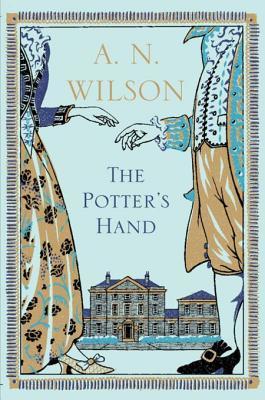
My fourth link is The Potter’s Hand by A N Wilson. it begins in 1768 and roughly follows the fortunes of the Wedgwood family until 1805, 10 years after the death of Josiah Wedgwood, an English potter and the founder of the Wedgwood company. For me it really did convey what it must have been like to live in that period – whilst the American War of Independence, and the French Revolution, were taking place. It’s full of ideas about colonialism, the abolition of slavery, working conditions, and women’s rights. There are many characters who come in and out of the narrative along the way, both fictional and historical, including Voltaire, George Stubbs (who painted the Wedgwood family portrait) and Samuel Taylor Coleridge.
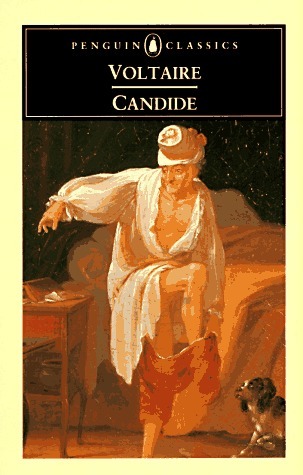
My fifth link is Voltaire’s Candide or Optimism, a small book I read many years ago. Candide was the most brilliant challenge to the idea endemic in Voltaire’s day, that ‘all is for the best in the best possible worlds‘.In Candide he whisks his young hero and friends through a ludicrious variety of tortures, tragedies and reversals of fortune, in the company of Pangloss, a ‘matapysico-theologo-cosmolo-nigologist’ of unflinching optimism. The result is one of the glories of the eighteenth-century satire. (Taken from the description on the back cover.)
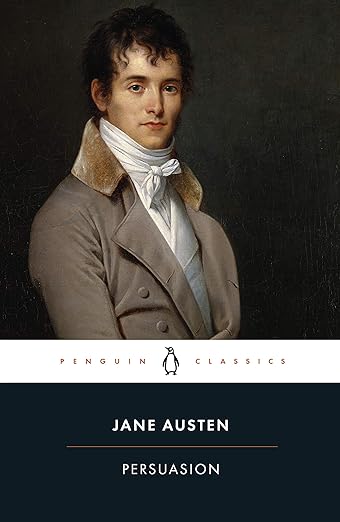
And my final link is Persuasion by Jane Austen. I read this first at school, when I was 17 for A Level GCE. It’s her last novel of missed opportunities and second chances centred on Anne Elliot, no longer young and with few romantic prospects. Eight years earlier, she was persuaded by others to break off her engagement to poor, handsome naval Captain Frederick Wentworth. ‘Set in the fashionable societies of Lyme Regis and Bath, Persuasion is a brilliant satire of vanity and pretension, and a mature, tender love story tinged with heartache.’ (Amazon) I’ll be re-reading it later in the year taking part with Brona at This Reading Life in her Austen 2025 project to reread her books, along with the Classics Club’s Sync Read (or readalong).

I certainly never thought I’d end my chain with Persuasion – but here it is! From Rapture to Persuasion in six moves. The links are the pope, books by Robert Harris, fear, the French Revolution, Voltaire and satire.

What is in your chain, I wonder?

Next month (June 7, 2025), we’ll start with Kate’s pick the 2025 Women’s Prize for Fiction All Fours by Miranda July.
Top Five Tuesday:Top 5 books I want to reread in 2025

Top 5 Tuesday was created by Shanah at Bionic Book Worm, and it is now being hosted by Meeghan at Meeghan Reads. For details of all of the latest prompts for January to March, see Meeghan’s post here.

Today the topic is Top 5 books I want to reread in 2025. Are you planning to reread some favourites in 2025? Maybe that classic you read back in school. Or maybe there’s a new book coming out in a series, and you want to remind yourself what happened in the last book. Whatever it is, let’s share all of our reread plans!!

I don’t often reread books, with the exception of Pride and Prejudice and A Christmas Carol both of which have reread many times.

This year is the 250th anniversary of Jane Austen’s birth and I’ve joined Brona at This Reading Life in her Austen 2025 project to reread her books, along with the Classics Club’s Sync Read (or readalong), so two of these books are by Austen.

The descriptions are from LibraryThing:

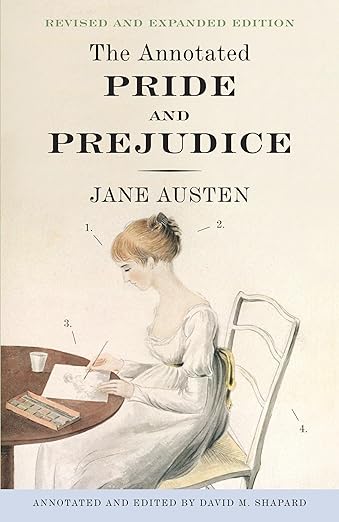
Pride and Prejudice by Jane Austen. I first read this when I was about 11 or 12 and have reread it many times since. It never fails to delight me. This time I’ll be reading The Annotated Pride and Prejudice edited by David M Shapard. In this classic 19th century story of love battling pride, we meet Elizabeth Bennet. Elizabeth is a smart, well-rounded woman, and she is one of five unmarried daughters of the country gentleman, Mr. Bennet, a country gentleman. Marriage is at the forefront Mrs. Bennet’s mind, especially since her elderly husband’s estate will not pass down to any of their daughters. The Bennets’ small town is in an uproar when two highborn, eligible gentlemen, Mr. Bingley and Mr. Darcy, come to stay. Mr. Bingley takes and instant liking to the eldest Bennet daughter, Jane. Elizabeth’s prideful self does not realize her life is about to change when she meets the intolerable Mr. Darcy, who will make her questions her sensibilities.

Emma by Jane Austen. I’ve only read this once. Emma is the story of a charmingly self-deluded heroine whose injudicious matchmaking schemes often lead to substantial mortification. Emma, “handsome, clever, and rich, with a comfortable home and happy disposition, seemed to unite some of the best blessings of existence; and had lived nearly twenty-one years in the world with very little to distress or vex her.” Her own great fortune has blinded Emma to the true feelings and motivations of others and leads her to some hilarious misjudgments. But it is through her mistakes that Emma finds humility, wisdom, and true love. Told with the shrewd wit and delicate irony which have made Jane Austen a master of the English novel, Emma is a comic masterpiece whose fanciful heroine has gained the affection of generations of readers.

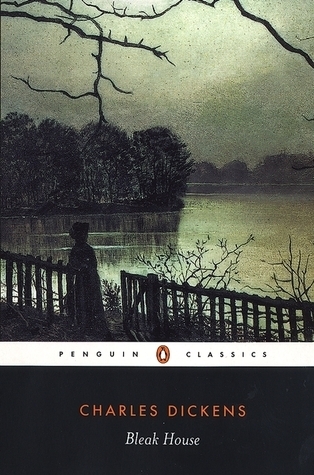
Bleak House by Charles Dickens. I first read this after watching the 2005 BBC adaptation with Gillian Anderson as Lady Dedlock and Charles Dance as lawyer Mr Tulkinghorn. A enthralling story about the inequalities of the 19th-century English legal system Bleak House is one of Charles Dicken’s most multifaceted novels. Bleak House deals with a multiplicity of characters, plots and subplots that all weave in and around the true story of the famous case of Jarndyce and Jarndyce, a case of litigation in England’s Court of Chancery, which starts as a problem of legacy and wills, but soon raises the question of murder.

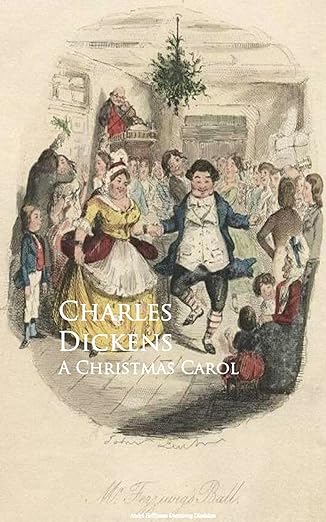
A Christmas Carol by Charles Dickens. I can’t remember how old I was when I first read this, but I think I was about 10. It was a Christmas present. Dickens wrote A Christmas Carol under financial duress, but it became one of his most popular and enduring stories. The old miser Ebenezer Scrooge cares nothing for family, friends, love or Christmas. All he cares about is money. Then one Christmas Eve he is visited by three ghosts: Christmas Past, Christmas Present and Christmas Yet To Come. These encounters leave Scrooge deeply moved and forever changed. Historians believe that A Christmas Carol contributed greatly to the modern sentimental Christmas.

Lark Rise to Candleford by Flora Thompson. I first read this many years ago, whilst I was recovering from flu (years before Covid). I loved this book, beautifully written and capturing a vanishing way of life as countryside farming turns to Victorian towns An autobiography of “Laura” – as the author calls herself – which describes in detail her delightful life in a country village. Her self-sufficient world of farm labourers and craftsmen working to the rhythms of the seasons and enjoying their traditional festivities is preserved for readers in this interesting and entertaining narrative.

Sense and Sensibility by Jane Austen

Summary from the Jane Austen shop:

It would be an excellent match for he was rich, and she was handsome” Sense & Sensibility, 1811

When Elinor and Marianne Dashwood’s father dies, they with their mother and younger sister are forced to leave their family home Norland Park and take up residence in a small rented cottage. There they experience love, romance, and heartbreak. Marianne falling madly in love with the dashing Mr. Willoughby while Elinor silently hides her own broken heart from those nearest to her. A story of very mixed fortunes in love.

Jane Austen is one of my favourite authors and I’ve read all of her novels, beginning with Pride and Prejudice, which I’ve reread over the years many times, and watched TV and film adaptations. This year is the 250th anniversary of Jane Austen’s birth, so this is an ideal time to reread some of her books and I’m joining Brona at This Reading Life in her Austen 2025 project to reread her books, along with the Classics Club’s Sync Read (or readalong).

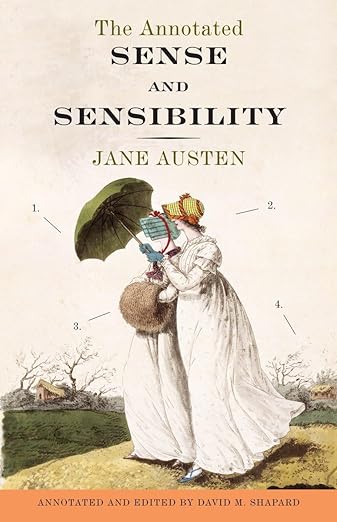
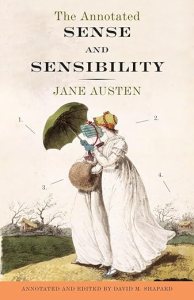
I first read Sense and Sensibility when I was at school but have never reread it. This time I read the annotated edition, edited by David M Shapard that gives explanations of historical context, citations from Austen’s life, letters, and other writings, definitions and clarifications, literary comments and analysis. There are multiple maps of England and London, an introduction, a bibliography, and a detailed chronology of events with more than 100 informative illustrations. I found I already knew some of the information given in some of these notes but others enhanced my understanding of the period. I particularly liked all the illustrations and the details about the cultural context, the social customs and conventions of the period.

Sense and Sensibility was Jane Austen’s first published novel. There was an earlier version, called Elinor and Marianne, that Jane Austen wrote in the form of letters probably in 1795 when she was nineteen. She returned to it after she began First Impressions, which later became Pride and Prejudice. Towards the end of 1797 she returned to Elinor and Marianne, modifying it and changing its name to Sense and Sensibility. It wasn’t until 1810 that she finished the book and it was published in 1811.

It focuses on the two Dashwood sisters, Elinor (aged 19) and Marianne (aged 16), who have contrasting temperaments. On the surface Elinor, the older sister represents sense or reason while Marianne represents sensibility or emotion. However as the story develops they both exhibit varying aspects of each characteristic. Marianne comes over at first as a rather silly teenager, emotional and passionate, who openly expresses her likes and dislikes, letting everyone know how much she is grieving for her father and how much she loves her new friend she met whilst living at Barton Cottage, John Willoughby. Elinor, however, is more restrained and discrete, controlling her emotions and reactions, even though she has strong feelings for her sister-in-law’s brother, Edward. Later in the book, however, both sisters display both ‘sense’ and ‘sensibility’, which I think makes them more believable as characters.

I’m not going into any more detail about the plot. A lot happens, there are misunderstandings and many secrets are exposed. I liked the way the story moves between the two sisters switching from one to another. At first I did feel more sympathetic towards Elinor, but Marianne did grow on me by the end of the book. They both grew in complexity as Jane Austen developed their characters. There are many other characters, some foolish or absurd providing comic relief and others who are nasty and selfish and cause both Elinor and Marianne much anguish and heartache.

I thoroughly enjoyed the book!

And now I’m looking forward to re-reading Pride and Prejudice.

Books Read in January 2025

I read 4 books in January, half the number I used to read. My reading has slowed down considerably over the last 2 years and I no longer write in much detail about them. But this year I’m hoping to get back to something more like normal and I’m aiming to write at least a paragraph or more about each of the books I’ve read each month.

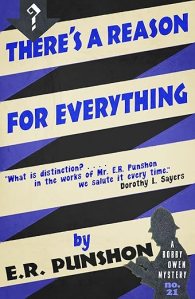
There’s a Reason for Everything (my review) by E R Punshon 4* – I began this book in December and finished reading it in early January. It was first published in 1945 and I read the e-book published by Dean Street Press. It’s the 21st in the Bobby Owen mystery series, in which Bobby has recently been promoted from Inspector to Deputy Chief Constable of Wychshire, a complicated novel with murders, a missing painting allegedly by Vermeer, dodgy fine art dealers and an abandoned country mansion called Nonpareil.

I was perplexed for quite some time until I began to see what was behind the bewildering confusion in Punshon’s narrative. I think this is a cleverly constructed plot, with ingenious puzzles to piece together before all the answers are revealed. I was quite pleased to find out at the end that I’d worked out one of the clues correctly.

Sense and Sensibility by Jane Austen 5* – It’s about the three Dashwood sisters and their widowed mother as they leave their family estate at Norland Park after their father’s death when their half-brother John inherited the estate. This year is the 250th anniversary of Jane Austen’s birth, so this is an ideal time to reread some of her books and I’m joining Brona at This Reading Life in her Austen 2025 project to reread her books, along with the Classics Club’s Sync Read (or readalong).

I read the annotated edition, edited by David M Shapard that gives Explanations of historical context, Citations from Austen’s life, letters, and other writings, Definitions and clarifications, Literary comments and analysis, Multiple maps of England and London, An introduction, bibliography, and detailed chronology of events and More than 100 informative illustrations.

I’ll write more about this book in a later post.

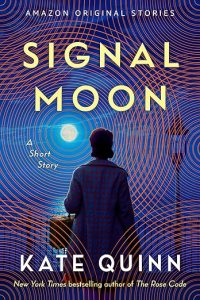
Signal Moon by Kate Quinn 5* – a short story. I’m not a big fan of short stories, often finding them too short and wanting to know more. But this one is good and it fascinated me. It’s sci-fi involving a type of time-travelling, a mix of historical fiction, links to the code breakers at Bletchley Park and WW2. I loved it. It is, of course, impossible, set in two time periods, 1943 during World War 2 and 2023, but I didn’t have to work hard to believe in it. Kate Quinn’s narrative just drew me in. In 1943, Lily Baines is a Wren working for a “Y” station, picking up signals from German intelligence that were then sent to Bletchley Park for translation. Then she picks up a signal apparently from 2023 – it’s a cry for help from Matt Jackson a young US officer. It’s about an American ship that is taking heavy fire in the North Atlantic. Together Lily and Matt have to work out how to help each other: Matt to convince her that the war she’s fighting can still be won, and Lily to help him stave off the war to come.

Kate Quinn wrote this story to feature the information about the Y stations that she had discovered whilst researching Bletchley Park and hadn’t included in The Rose Code.

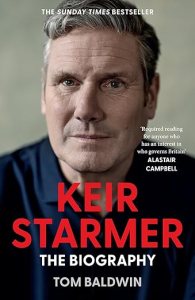
Keir Starmer: the Biography by Tom Baldwin 3.5* A Times Book of the Year; A Telegraph Book of the Year; A Daily Mail Book of the Year; A Waterstones Book of the Year

Dsecription from Amazon:

This authoritative – but not authorised – biography by Tom Baldwin provides answers by drawing deeply on many hours of interviews with Prime Minister himself, as well as unprecedented access to members of his family, his oldest friends and closest colleagues.Together, they tell an unexpectedly intimate story filled with feelings of grief and love that has driven him on more than any rigid ideology or loyalty to a particular faction.

The book tracks Starmer’s emergence from a troubled small town background and rebellious youth, through a storied legal career as a human rights barrister and the country’s chief prosecutor, to becoming an MP relatively late in life.Baldwin provides a vivid and compelling account of how this untypical politician then rose to be leader of his party in succession to Jeremy Corbyn, then transformed it with a ruthless rapidity that has enraged opponents from the left just as much as it has bewildered those on the right.

Above all, this is a book that should be read by anyone who wants to understand how someone who has too often been underestimated or dismissed as dull, now intends to change Britain.

My thoughts

This book was published in February 2024, five months before the General Election. I decided to watch the televised debates between him and Rishi Sunak, the then Prime Minister, and thought Starmer looked uncomfortable in most of them. All I knew about him was that he was the former Director of Public Prosecutions, and, as he often said in interviews, that growing up he lived in a pebble-dashed semi , that his ‘dad was a toolmaker‘ and his ‘mother was a nurse.’ So I hoped that Baldwin’s book would tell me more. Baldwin writes:

Starmer is a private man who has chosen to place himself in the white light of public scrutiny, while showing a determination that is itself exceptional to maintain a semblance of normality … often appearing uncomfortable at being a politician at all. (page xi)

He also describes him as ‘someone who is both extraordinary and very ordinary‘ (page xii). The biography is divided into five parts :

each of which begins by sketching a moment since he became a politician when this tension is most apparent. All of them also include descriptions of sometimes traumatic episodes that have wrenched him back to real life and away from the febrile – often fake – world of Westminster politics. (page xii).

In the first three parts he covers Starmer’s childhood and schooldays, his time as a student at Leeds University, where he was awarded a first-class law degree, and then at St Edmund Hall at Oxford University where he gained a postgraduate Bachelor of Civil Law degree. He then worked as a trainee barrister in London, eventually transitioning from a human rights lawyer into the country’s chief prosecutor. The fourth part describes how he became an MP, a member of the shadow cabinet and Leader of the Labour Party. The fifth part examines the leadership, before assessing what kind of prime minister he would make.

One friend said:

He’ll just turn up at the pub and be a totally normal and genuinely good bloke. But his public persona is very different, I almost don’t recognise him when I see him on TV.

And another said:

There is this enormous gap between Keir the human being and Keir the politician. At Jonny [Cooper]’s funeral, I saw the real one letting himself go – in the best way – to share his grief with his friends. But, when I watched him on TV at the party conference, he had seemed to be almost a different person, holding back and distant, almost wooden compared to the generous, humorous and empathetic man I’ve known for twenty years. (page 323)

It seems to me that he is a conscientious person who believes in working hard and playing hard. He is resilient and driven. He believes in fairness and social justice, putting the country before the party, a serious, clever man, who wants to get things done and change the country for the better.

Six Degrees of Separation from  Dangerous Liaisons by Pierre Choderlos de Laclos to Mansfield Park by Jane Austen

It’s time again for Six Degrees of Separation, a monthly link-up hosted by Kate at Books Are My Favourite and Best. Each month a book is chosen as a starting point and linked to six other books to form a chain. A book doesn’t need to be connected to all the other books on the list, only to the one next to it in the chain.

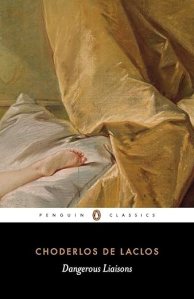
This month we start with Dangerous Liaisons by Pierre Choderlos de Laclos first published in 1782 as Les Liaisons Dangereuses. I read this many years ago when I was taking an Open University course and I’ve not reviewed this on my blog. It’s an epistolary novel, told through the letters written by different characters to one another. I loved it. The Goodreads summary describes it as a:

novel of moral and emotional depravity is a disturbing and ultimately damning portrayal of a decadent society. Aristocrats and ex-lovers Marquise de Merteuil and Vicomte de Valmont embark on a sophisticated game of seduction and manipulation to bring amusement to their jaded lives. While Merteuil challenges Valmont to seduce an innocent convent girl, he is also occupied with the conquest of a virtuous married woman. Eventually their human pawns respond, and the consequences prove to be more serious—and deadly—than the players could have ever predicted.

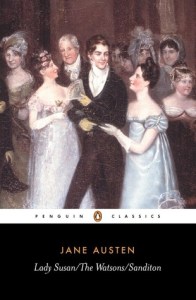
My first link is Lady Susan by Jane Austen, which see wrote between 1794 and 1795, adding a conclusion in 1805, but not published until James Edward Austen-Leigh, her nephew, published it in his Memoir of Jane Austen in 1871.

Lady Susan is about Lady Susan Vernon, told in a series of letters, just like Laclos’s Les Liaisons Dangereuses. Both have manipulative and evil characters without any moral scruples, who delight in their power to seduce others. It’s the  story of an unscrupulous widow who plans to force her daughter into a marriage against her wishes. Lady Susan is an attractive and entertaining and totally wicked character, who nevertheless almost manages to fool people for some of the time at least. She is also trying to captivate her sister-in-law’s brother, whilst still holding on to the affections of a previous lover.

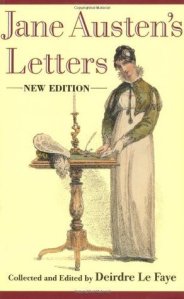
My second link is also a book of letters, but real letters, not fictional ones – Jane Austen’s Letters edited by Deirdre Le Faye, First published in 1932 in this edition Le Faye has added new material that has come to light since 1932, and reordered the letters into their correct chronological sequence. She provided new biographical, topographical and general indexes, annotation, and information on watermarks, postmarks and other physical details of the manuscripts. This gives a unique insight into the daily life of the novelist both intimate and gossipy, observant and informative. The letters bring Jane’s family and friends to life, as well as her surroundings and contemporary events. This is one of my TBRs, but I have dipped into it and read some of the letters.

For my third link I’m staying with Jane Austen with The Genius of Jane Austen: Her Love of Theatre and Why She Is a Hit in Hollywood by Paula Byrne, a radical look at Jane Austen as you’ve never seen her – as a lover of farce, comic theatre and juvenilia. It also looks at stage adaptations of Austen’s novels (including one called Miss Elizabeth Bennet by A. A. Milne) to modern classics, including the BBC Pride and Prejudice and Persuasion, Emma Thompson’s Sense and Sensibility, and Clueless, adapted from Emma.

This book explores Jane Austen’s love of the theatre — she acted in amateur productions, frequently attended the theatre, and even scripted several early works in play form. Austen’s letters show, says Byrne, that she was steeped in theatre and that was a keen theatregoer, watching actors like Dora Jordan.

My fourth link is the theatre and Dora Jordan in Mrs Jordan’s Profession by Claire Tomalin, the biography of Dora Jordan who was acclaimed as the greatest comic actress of her day. Dora and the third son of George III, William, the Duke of Clarence , who, although not legally married, lived together as Mr and Mrs Bland.  She was known as ‘Mrs Jordan’, although there was never a Mr Jordan. She made her stage debut in 1777 at the age of 15 and her first Drury Lane appearance in 1785. The two met and she became his mistress in 1790. The book is packed with information, brilliantly bringing the late 18th and early 19th centuries to life as she tells the story of Dora and her relationship with the Duke of Clarence, later King William IV.

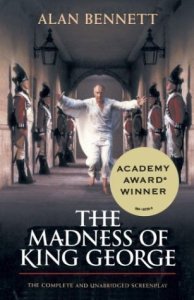
My fifth link is to George III in Alan Bennett’s The Madness of King George. This play premiered on 28 November 1991 and was made into a film in 1994. The introduction to the screenplay includes Bennett’s production diary, notes comparing his stage and screen versions, and the political background to the Court of George III. Also included are a selection of stills from the film. I’ve seen the 1994 film with Nigel Hawthorne as King George and Helen Mirren as Queen Charlotte, which I thought was excellent, but have not read the the book or the play itself.

My final link takes me back to Jane Austen’s books and also to Paula Byrne’s book The Genius of Jane Austen and the theatre. It’s Mansfield Park, which I read about 10 years ago. Fanny Price, as a child of 10 goes to live with her wealthy aunt and uncle, Sir Thomas and Lady Bertram at Mansfield Park. The younger members of the family, convert the library into a theatre and stage a risqué play called Lover’s Vows. I’ll be rereading Mansfield Park later on to refresh my memory and consider what it reveals about Jane Austen’s own views of the theatre in the light of Paula Byrne’s book.

The links in my chain are epistolary novels, Jane Austen’s letters and books, the theatre, and George III, using fiction and nonfiction.

What is in your chain, I wonder?

Next month (March 1, 2025), we’ll start with the 2023 Booker Prize winner, Prophet Song by Paul Lynch.

Spell the Month in Books June 2024

Spell the Month in Books is a linkup hosted by Jana on Reviews From the Stacks on the first Saturday of each month. The goal is to spell the current month with the first letter of book titles, excluding articles such as ‘the’ and ‘a’ as needed. That’s all there is to it! Some months there are optional theme challenges, such as “books with an orange cover” or books of a particular genre, but for the most part, any book you want to use is fair game!

This month’s theme is History. I don’t think that the books you choose have to be books that you’ve read, but where possible I like to do that, or at least choose books that I want to read and and this month I’ve managed to find enough nonfiction books about different aspects of history that I have read with titles beginning with each of the letters to spell JUNE.

J is for Jane Austen at Home by Lucy Worsley

I think it was a foregone conclusion that I would really enjoy historian Lucy Worsley’s Jane Austen at Home. I have loved Jane Austen’s books for many years, going back to when I was about 12 and read Pride and Prejudice for the first time. I’d previously read Carol Shields’s biography Jane Austen and Claire Tomalin’s Jane Austen: a Life so there was really very little I learned reading Jane Austen at Home that surprised me or that I hadn’t known before.

I suppose what was new to me was the emphasis on what home life was like during the period of Jane’s life and seeing photos of the houses and places that she had lived or stayed in as a visitor. And I think I gained a better understanding of the social history of Georgian England and of Jane’s wider family connections and what her family and friends thought of her both as a person and as an author.

Jane Austen at Home is both very readable and very detailed, which is not an easy thing to achieve. There is an extensive section at the end of the book, listing sources, a bibliography, notes on the text and an index. There are two sections of colour plates.

U is for Under the Tuscan Sun by Frances Mayes

In this book the author describes how she bought and renovated an abandoned villa. It’s full of the pleasures of living in Tuscany – the sun, the food, the wine and the local people. It makes me want to do the same! It’s nothing like the film they made of it – the book is much better. Bella Tuscany is the follow up book with more details about the restoration of the villa and its garden, plus recipes.

I read this book before I began blogging, so no review. And I no longer have my copy, which just shows the dangers of recycling books as I’d love to re-read it!

N is for Nagasaki: Life After Nuclear War by Susan Southard

The facts are horrendous – on August 9th 1945, two days after the atomic bombing of Hiroshima, a five-ton plutonium bomb was dropped on the small coastal town of Nagasaki. The effects were cataclysmic.

This must be one of the most devastatingly sad and depressing books I’ve read and yet also one of the most uplifting, detailing the dropping of the bomb, which killed 74,000 people and injured another 75,000. As the subtitle indicates this book is not just about the events of 9 August 1945 but it follows the lives of five of the survivors from then to the present day. And it is their accounts which make this such an emotive and uplifting book, as it shows their bravery, how they survived, and how they were eventually able to tell others about their experiences. Along with all the facts about the after effects of the bombing, the destruction, and radiation, it exposes the true horror of atomic warfare, making it an impressive and most compelling account of pain, fear, bravery and compassion.

E is for Elizabeth Macarthur: A Life at the Edge of the World by Michelle Scott Tucker

This is an excellent biography because it is thorough, well researched and it provides an insight into the early years of Australia’s colonial history. It is an extremely readable biography of a fascinating woman. Elizabeth was born on 14 August 1766 in Devon, England and she married John Macarthur in October 1788. In June 1789 they sailed with their first child, Edward, initially on the Neptune, and then on the convict ship Scarborough to New South Wales where John joined his regiment, the New South Wales Corps, in the recently established colony of New South Wales.

For sixty years, Elizabeth ran the family farm in Parramatta, west of Sydney town – on her own during her husband’s long absences abroad, four years during her husband’s first absence, and nine years during the second, when she was responsible for the care of their valuable merino flocks, as well as the Camden Park estate and the direction of its convict labourers.

The book is packed with detail about the landscape, the indigenous population, the disputes between various sections of the colony, about farming and the establishment of the wool industry, not forgetting the details of the Macarthur family members, illnesses, and the position of the women within the community.

The next link up will be on July 6, 2024 when the optional theme will be Stars/Sky