The Classics Spin

The Classics ClubIt’s time for another Classics Spin. I didn’t manage to read the book from the last Spin but as we have until 5th January to read the selected book, I’m hoping to do better this time.
The rules are the same as always:

  • Pick twenty unread books from your list.
  • Number them from one to twenty.
  • On Monday a number will be drawn.
  • That’s your book, to read by 5th January.

Here’s my list:

  1. Lady Susan/The Watsons/Sanditon by Jane Austen
  2. Lorna Doone: A Romance of Exmoor by R D Blackmore
  3. Out of Africa by Karen Blixen
  4. No Name by Wilkie Collins
  5. Little Dorrit by Charles Dickens
  6. Martin Chuzzlewit by Charles Dickens
  7. Nicholas Nickleby by Charles Dickens
  8. Oliver Twist by Charles Dickens
  9. The Mill on the Floss by George Eliot
  10. Parade’s End by Ford Maddox Ford
  11. Where Angels Fear to Tread by E M Forster
  12. The Man Who Would Be King by Rudyard Kipling
  13. The Call of the Wild by Jack London
  14. Love in the Time of Cholera by Gabriel Garcia Marquez
  15. One Hundred Years of Solitude by Gabriel Garcia Marquez
  16. Of Human Bondage by W. Somerset Maugham
  17. Black Beauty by Anna Sewell
  18. Barchester Towers (Barsetshire Chronicles, #2) by Anthony Trollope
  19. The Age of Innocence by Edith Wharton
  20. The Voyage Out by Virginia Woolf

These are all books from my TBR books which will help me reduce the numbers – books I’ve had for years in some cases!

It's Spin Time!

The Classics Club Spin, that is. I don’t mind which book comes up in the Spin as they are all books I’d like to read. I quite fancy reading one of Dickens’ books this summer and can’t decide which one! And that is why I’ve included five of his books in the list.

Here are the rules:

* List any twenty books you have left to read from your Classics Club list.The Classics Club
* Number them from 1 to 20.
* Next Monday (August 11th) the Classics Club will announce a number.
* This is the book you need to read by October 6th.

Here’s my list:

  1. Lady Susan/The Watsons/Sanditon by Jane Austen – her first full-length novel
  2. Lorna Doone: A Romance of Exmoor by R D Blackmore
  3. Out of Africa by Karen Blixen – I’ve been meaning to read this ever since I saw the film, which is only loosely based on the book.
  4. No Name by Wilkie Collins – because I liked The Moonstone and The Woman in White
  5. Little Dorrit by Charles Dickens
  6. Martin Chuzzlewit by Charles Dickens
  7. Nicholas Nickleby by Charles Dickens
  8. Oliver Twist by Charles Dickens
  9. Pickwick Papers by Charles Dickens
  10. Parade’s End by Ford Maddox Ford – I liked the TV series with Benedict Cumberbatch so much, I hope I like the book!
  11. Where Angels Fear to Tread by E M Forster
  12. The Man Who Would Be King by Rudyard Kipling
  13. The Call of the Wild by Jack London
  14. One Hundred Years of Solitude by Gabriel Garcia Marquez
  15. Of Human Bondage by W. Somerset Maugham
  16. Travels with a Donkey in the Cevennes by Robert Louis Stevenson
  17. Gulliver’s Travels by Jonathan Swift
  18. Barchester Towers (Barsetshire Chronicles, #2) by Anthony Trollope
  19. The Age of Innocence by Edith Wharton
  20. The Voyage Out by Virginia Woolf – her first novel

Classics Club Spin: Result

The Classics ClubYesterday the Classics Club announced the result of the latest spin – list 20 books from your Classics Club list and the number picked in the spin is the book you read by 7 July 2014. The number came out as number 1.

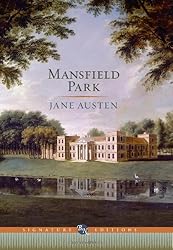
And for me that is Mansfield Park by Jane Austen.

I’d included this book in my list as a re-read. I thought I’d read this book before many years ago, but I couldn’t remember much (if anything about it) and I haven’t watched any of the TV adaptations. I thought I had a copy, but when I looked for it I couldn’t find one, so I downloaded a copy on Kindle and now I look at it I’m sure I haven’t read it before!! So I’m really looking forward to reading it.

If you’re taking part in the spin this time, which book did you get?

The Classics Club Spin for May/June

The Classics Club It’s time for another Classics Club spin!

Here are the rules:

* List any twenty books you have left to read from your Classics Club list.
* Number them from 1 to 20.
* Next Monday (May 12th) the Classics Club will announce a number.
* This is the book you need to read during May and June!

Here’s my list:

  1. Mansfield Park by Jane Austen
  2. Lorna Doone: A Romance of Exmoor by R D Blackmore
  3. Out of Africa by Karen Blixen
  4. Martin Chuzzlewit by Charles Dickens
  5. Oliver Twist by Charles Dickens
  6. The Mill on the Floss by George Eliot
  7. Parade’s End by Ford Maddox Ford
  8. Where Angels Fear to Tread by E M Forster
  9. Three Men in a Boat by Jerome K Jerome
  10. The Man Who Would Be King by Rudyard Kipling
  11. The Call of the Wild by Jack London
  12. One Hundred Years of Solitude by Gabriel Garcia Marquez
  13. Of Human Bondage by W. Somerset Maugham
  14. Travels with a Donkey in the Cevennes by Robert Louis Stevenson
  15. Uncle Tom’s Cabin by Harriet Beecher Stowe
  16. Gulliver’s Travels by Jonathan Swift
  17. Barchester Towers (Barsetshire Chronicles, #2) by Anthony Trollope
  18. The Color Purple by Alice Walker
  19. The Age of Innocence by Edith Wharton
  20. The Voyage Out by Virginia Woolf

Some of these books have been on my shelves for several years now, so it’s definitely time to read at least one of them soon. Two of them are re-reads (1 and 15) but as I read them so long ago I really want to read them again. At the moment I’m undecided about which one to read first (although I’m half hoping it will be Out of Africa) so a spin result is a good way of choosing!

The Classics Club Spin

The Classics ClubIt’s time for another Classics Spin. To take part in the Spin you:

  • List any twenty books you have left to read from your Classics Club list.
  • Number them from 1 to 20.
  • Next Monday the Classics Club will announce a number.
  • This is the book you need to read during February and March!

Here’s my list chosen by using a random number generator:

  1. North and South by Elizabeth Gaskell
  2. Uncle Tom’s Cabin by Harriet Beecher Stowe
  3. Oliver Twist by Charles Dickens
  4. The Old Wives Tale by Arnold Bennett
  5. Mansfield Park by Jane Austen
  6. The Adventures of Sherlock Holmes by Arthur Conan Doyle
  7. Anne of Green Gables by Lucy Maud Montgomery
  8. Little Dorrit by Charles Dickens
  9. The Man Who Would Be King by Rudyard Kipling
  10. Lord Jim by Joseph Conrad
  11. Parade’s End by Ford Maddox Ford
  12. Lorna Doone: A Romance of Exmoor by R D Blackmore
  13. Notre-Dame of Paris by Victor Hugo
  14. No Name by Wilkie Collins
  15. The Making of a Marchioness by Frances Hodgson Burnett
  16. Where Angels Fear to Tread by E M Forster
  17. Out of Africa by Karen Blixen
  18. Walden by Henry James Thoreau
  19. Moby Dick by Herman Melville
  20. Ethan Frome by Edith Wharton

I don’t really mind which one comes up in this Spin, although there are some I’d prefer over others. What would you chose off this list?

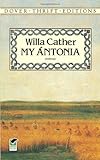
My Antonia by Willa Cather

I’d included My Antonia on my Classics Club list of books to read because I’d enjoyed reading A Lost Lady a few years ago (my post on that book is here). So when it popped up in the Classics Club Spin as the book to read in August/September I was pleased.

I liked it, but not as much as A Lost Lady. I think it’s because it’s a bit fragmented, made up of  a series of short stories. But it’s beautifully written with vivid descriptions of people and places. Published in 1918 it’s set in America at the beginning of the 20th century – the story of immigrant settlers and in particular that of Antonia Shimerda and her family as told by Jim Burden. Jim and Antonia meet as children, when he had come to live with his grandparents on their farm in Nebraska. Antonia’s family is from Bohemia, speaking very little English and living in a sort of shed, little more than a cave. They spend a lot of time together as Jim teaches Antonia to speak English.

Jim recounts various episodes as they grow up together. Gradually they drift apart and lose contact, as Jim left for college eventually becoming a lawyer, whilst Antonia stayed in Nebraska. They meet again years later. It’s a story of hardship and suffering, of poverty, people struggling to make a living from the land, and of the attitudes towards immigrants, women and children. It’s also about being an outsider and the importance of belonging, which makes it most poignant that to her father Antonia is ‘My Antonia’.

But the thing that stands out for me is the beauty of Cather’s descriptions of the countryside and as I read I highlighted many passages – this for example:

Presently we saw a curious thing: there were no clouds, the sun was going down in a limpid gold-washed sky. Just as the lower edge of the red disk rested on the high fields against the horizon, a great black figure suddenly appeared on the face of the sun. We sprang to our feet, straining our eyes toward it. In a moment we realized what it was. On some upland farm, a plough had been left standing in the field. The sun was sinking just behind it. Magnified across the distance by the horizontal light, it stood out against the sun, was exactly contained within the circle of the disk; the handles the tongue, the share black against the molten red. There it was, heroic in size, a picture writing on the sun.

Even while we whispered about it, our vision disappeared; the ball dropped and dropped until the red tip went beneath the earth. The fields below us were dark, the sky was growing pale, and that forgotten plough had sunk back to its own littleness somewhere on the prairie. (page 186)

But it’s not just descriptive, it conveys the timelessness of human nature, of how people interact and think, their prejudices, unreliability and of their love for each other. I was struck by this definition of happiness:

I was entirely happy. Perhaps we feel like that when we die and become part of something entire, whether it is sun and air, or goodness and knowledge. At any rate, that is happiness: to be dissolved into something complete and great. When it comes to one, it comes as naturally as sleep. (page 11)

Yet this is a sad book, full of nostalgia and poignancy. There’s such a contrast between the hardness of the life of the settlers and the loving gentle family life that Jim’s grandparents provide for him and their generosity towards their neighbours. Overall, though it is the character of Antonia that caught my attention and in the episodes that weren’t about her I lost interest somewhat. So, a mixed reaction – there are parts that I thought were outstanding and parts that left me rather unsatisfied.