Every Friday Book Beginnings on Friday is hosted by Gillion at Rose City Reader where you can share the first sentence (or so) of the book you are reading. You can also share from a book you want to highlight just because it caught your fancy.
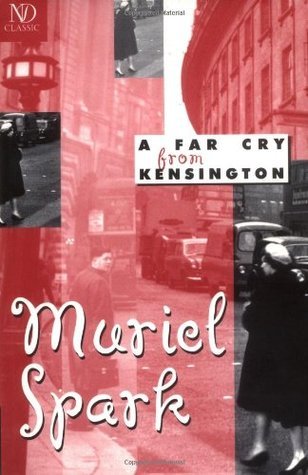
I’ve borrowed A Far Cry from Kensington by Muriel Spark from my local library. After reading Like a Cat Loves a Bird by James Bailey about Spark’s life and works, I wanted to read more of her books. In the introduction to this novel William Boyd states that her novels are very varied –
there are surreal novels, allegorical novels, some philosophical fables – but all are united by a tone of voice, a very dry sense of humour, and a particularly honed terse style … However, A Far Cry from Kensington … belongs in a loose group of novels in the Sparkian canon that has a recognisable footing in history and the real world – environments that Spark was familiar with and with a clear connection to her biography.( page xi)
The book begins:
So great was the noise during the day that I used to lie awake at night listening to the silence. I eventually fell asleep contented, filled with soundlessness but while I was awake I enjoyed the experience of darkness, thought, memory, sweet anticipations.

Also every Friday there is The Friday 56, hosted by Freda at Freda’s Voice, but she is taking a break and Anne at My Head is Full of Books has taken on hosting duties in her absence. You grab a book and turn to page 56 (or 56% of an eBook), find one or more interesting sentences (no spoilers), and post them.
Page 56:
Before we sent Wanda to bed I gave her a notebook and told her to write down as soon as possible everything she could remember about the voice and what it said. ‘I don’t want to write down things’, said Wanda. I think already she had an inkling of who the voice belonged to. Perhaps, already, she had started putting two and two together.
Description from Goodreads
Set on the crazier fringes of 1950s literary London, A Far Cry from Kensington is a delight, hilariously portraying love, fraud, death, evil, and transformation. Mrs. Hawkins, the majestic narrator, takes us well in hand and leads us back to her threadbare years in postwar London.
There, as a fat and much admired young war widow, she spent her days working for a mad, near-bankrupt publisher (“of very good books”) and her nights dispensing advice at her small South Kensington rooming house. At work and at home Mrs. Hawkins soon uncovered evil: shady literary doings and a deadly enemy; anonymous letters, blackmail, and suicide. With aplomb, however, Mrs. Hawkins confidently set about putting things to order, little imagining the mayhem that would ensue.
Now decades older, thin, successful, and delighted with life in Italy–quite a far cry from Kensington–Mrs. Hawkins looks back to all those dark doings and recounts how her own life changed forever. She still, however, loves to give advice: “It’s easy to get thin. You eat and drink the same as always, only half…I offer this advice without fee; it is included in the price of this book.”
If you have read this book, what did you think?
 BooksPlease