Lord of the Flies by William Golding: a Mini Review of a Short Classic

The first weekly theme for Novellas in November is short classics and I read Lord of the Flies, William Golding’s 1954 novel about a group of boys stranded on a desert island. It was his first novel and it certainly packs a punch. It was described as ‘A post-apocalyptic, dystopian survivor-fantasy … [A novel] for all time … A cult classic.’ Guardian. It’s a quick read of just 183 pages.

What are we? Humans? Or animals? Or savages? What’s grown-ups going to think? Going off-hunting pigs-letting fires out-and now!

A plane crashes on a desert island. The only survivors are a group of schoolboys. By day, they explore the dazzling beaches, gorging fruit, seeking shelter, and ripping off their uniforms to swim in the lagoon. At night, in the darkness of the jungle, they are haunted by nightmares of a primitive beast. Orphaned by society, they must forge their own; but it isn’t long before their innocent games devolve into a murderous hunt …

I thought I’d read this book years ago. But as soon as I began reading I realised I hadn’t read it – it’s one of those books you think you’ve read because you know the basic outline of what happens.

It is frighteningly believable. What at first seemed to the boys as a great adventure – stranded on a desert island, leaving them free to play all day without any annoying interference from adults, soon descended into a sinister nightmare scenario. They elected a leader, Ralph who initially made friends with Jack, the leader of a group of choirboys. But soon the two fell out as Jack, disappointed at not being chosen as leader, tried to take over – and a battle for power followed.

Ralph wanted to make sure they were seen if a ship passed the island and organised the boys to keep a fire going as a smoke signal. But when one of the younger boys thought he saw a beast in the jungle panic set in. Jack made himself the leader of the hunters, promising to hunt and kill the beast band the boys let the fire go out as they joined the hunt. Things got completely out of hand ending in chaos. It is absolutely gripping and very dark, showing the savage side of human nature.

Six Degrees of Separation from The Naked Chef to Broken Homes

It’s time again for Six Degrees of Separation, a monthly link-up hosted by Kate at Books Are My Favourite and Best. Each month a book is chosen as a starting point and linked to six other books to form a chain. A book doesn’t need to be connected to all the other books on the list, only to the one next to it in the chain.

The starting book this month is The Naked Chef by Jamie Oliver, his first book published in 1999. Just look how young he looked when he was 25. We bought the book and watched the TV programme and since then we’ve carried on watching and buying his books. Of course, he wasn’t naked but had stripped down his recipes to the basics.

My First link is to not any of Jamie Oliver’s book but to Neil Oliver’s book The Story of the British Isles in 100 Places – described on the book jacket inside cover as ‘a broad sweep of British history and landscape’. I’ve enjoyed watching Neil Oliver’s TV documentaries and his book looks just as informative, encompassing our earliest history, via Romans and Vikings, civil war, industrial revolution and two world wars, looking at the places that he considers to be the most characteristic of our history, with many colour photographs. The last one in his book is Dungeness, a place he describes as ‘the most unforgettable location in Britain‘.

My Second Link is The Birdwatcher by William Shaw. It’s set in Dungeness on the Kent coast, a wind-swept shingle beach close to the Nuclear Power Station and Romney. Sergeant William South is a birdwatcher a methodical and quiet man. Alternating with the present day story is the story of Billy, a thirteen year old living in Northern Ireland during the ‘Troubles’. 

Using the Troubles in Northern Ireland my Third Link is Turning for Home by Barney Norris. The narration is split between Robert and Kate interspersed with extracts from the Boston Tapes, an oral history of the Troubles in Northern Ireland recording the recollections of combatants on both sides. Robert’s day is interrupted by a phone call from Frank, a retired Oxford professor, whom he had known from his days as a civil servant working in Ireland.

My Fourth Link is to The Riddle of the Fourth Mile by Colin Dexter, a murder mystery involving two more Oxford professors. When a dismembered and headless corpse is found in the Oxford Canal it could have been that of Morse’s his old classics tutor, Browne-Smith or Browne-Smith’s hated rival, Westerby. This is a most complicated mystery, one of the ‘puzzle’ types.

My Fifth Link also has a headless corpse. It’s Rivers of London by Ben Aaranovich. In this book a headless corpse is found in front of the West Portico of St Paul’s at Convent Garden. Peter Grant is a Detective Constable and a trainee wizard in this urban fantasy novel – a fast-paced police procedural of a very different kind. He lives in the Folly in Russell Square with DCI Thomas Nightingale who is his mentor. Molly who is fae (a type of fairy) is the housekeeper, chef, and butler.

My Sixth Link – Molly is also in Broken Homes (the 4th book in the Rivers of London series). Her culinary skills are legendary but after Peter’s  arrival at the Folly Molly introduced more modern cuisine onto the menu, partially through their gifts of modern cookbooks and partially through her own hard work. Her current cooking and baking appears to be inspired by both Jamie Oliver and The Great British Bake Off.This then completes the circle linking back to the starting book, The Naked Chef.

My chain this month starts with Jamie Oliver’s cookery book and ends with a book in which one of the character’s cooking is inspired by Jamie Oliver, travelling through non-fiction, crime fiction and urban fantasy novels.

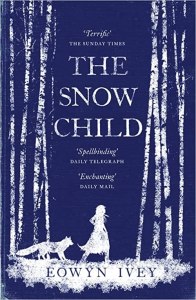
Next month (3 December, 2022), we’ll start with The Snow Child by Eowyn Ivey.

Throwback Thursday: They Came to Baghdad by Agatha Christie

Today I’m linking up with Davida @ The Chocolate Lady’s Book Review Blog for Throwback Thursday. It takes place on the Thursday before the first Saturday of every month (i.e., the Thursday before the monthly #6Degrees post). The idea is to highlight one of your previously published book reviews and then link back to Davida’s blog.

They Came to Baghdad by Agatha Christie is a standalone spy thriller. I first reviewed it on November 4, 2011.

My review begins:

I made copious notes as I read Agatha Christie’s They Came to Baghdad because it’s such a complex plot and there seemed to be so many significant events and people that I wanted to clarify what was happening. This is not one of Agatha Christie’s detective novels – no Miss Marple or Hercule Poirot,-  just Victoria Jones, a short-hand typist, a courageous girl with a ‘natural leaning towards adventure’ and a tendency to tell lies. Set in 1950 this is a story about international espionage and conspiracy. The heads of the ‘great powers‘ are secretly meeting in Baghdad, where if it all goes wrong ‘the balloon will go up with a vengeance.’ And an underground criminal organisation is out to make sure it does go wrong, aiming at ‘total war – total destruction. And then – the new Heaven and the new Earth.’

Click here to read my full review

The next ThrowbackThursday post is scheduled for December 1, 2022.

Another Part of the Wood by Beryl Bainbridge

Rating: 4 out of 5.

Synopsis from Amazon:

Joseph decides to take his mistress and son, together with a few friends, to stay in a cabin in deepest Wales for the weekend – with absolutely disastrous results. Beryl Bainbridge’s gift for deadpan dialogue and spare narrative, and her darkly comic vision of the world, are all in evidence in this early novel.

I read Another Part of the Wood because I’ve enjoyed other books by Beryl Bainbridge. It’s a novella, really, as it’s only 159 pages. I love her style, dark humour with clear, concise prose, and fully realised characters. It was her second book, first published in 1968. She revised the book and reissued it in 1979. My copy is a Fontana edition published in 1980. I read it at this time because it’s the novel that came up for me to read for the latest Classics Club Spin. It’s also one of my TBRs, a book that I’ve owned since 2016.

Like all of Beryl Bainbridge’s books that I’ve read it is well written and makes compulsive reading, with individual, mainly unlikable, characters who are mostly at odds with each other. I enjoyed the oddness, never really knowing what would happen next. The title has a theatrical feeling, pointing out the different scenes in the book as the action switches from one part of the wood to another, with one or more of the characters taking centre stage.

It’s set in Flintshire, Wales, in a holiday camp, which consists of huts in a wood at the foot of a mountain. There is George, the owner of the land, and Balfour who works in a factory during the week and helps him at the weekends. George, is obsessed with the Holocaust and Balfour, a shy, quiet man suffers from some sort of illness – he gets sick very suddenly with a high temperature and the shivers as though he’s turned to ice. All he can do is hide away and sleep it off.

The book begins as George’s friend, Joseph, a selfish, insensitive man, arrives for the weekend from London, with his young son, Roland, his girlfriend Dotty, and Kidney, a fat teenager who apparently has learning disabilities and a health problem (never explained), dependent on his pills. In addition Joseph has invited another couple to join them, Lionel and his wife, May, an unhappy couple with a dysfunctional and argumentative relationship. They are all townies, like fish out of water in the countryside and find the huts claustrophobic and too basic – May refuses to use either the chemical toilet or the bushes.

The atmosphere is tense right from the start and rises throughout the book as their relationships become increasingly fractious. Having promised Roland that he would take him for a walk up the mountain, Joseph leaves him to his own devices. He withholds Kidney’s pills and argues with Dotty. Dotty and Balfour walk off to the village where she buys a coat of many colours and Balfour falls ill. The wood, as in fairy tales, is not a safe place.

The world was a deep deceptive forest, full of promises and little glades and clearings, and in the dark depths roamed the wolves, savage, snapping their great teeth, waiting to spring on those who wandered from the path. (page 73)

There’s a sense of foreboding, the sense that something terrible is about to happen … but what, and who is in danger? I felt that more than one of these characters could come to a sticky end. And I was unsure, fearing the worst for one particular character – and sadly I was right. It was inevitable.

Book Beginnings & The Friday 56: Murder in the Afternoon by Frances Brody

Every Friday Book Beginnings on Friday is hosted by Gillion at Rose City Reader where you can share the first sentence (or so) of the book you are reading. You can also share from a book you want to highlight just because it caught your fancy.

Today I’m featuring one of my TBRs books Murder in the Afternoon by Frances Brody, the third Kate Shackleton Mystery set in the Yorkshire Dales in 1923.

My Book Beginning

Harriet held the cloth-covered basin in her thin hands, feeling the warmth. She and Austin trod the well-eorn path from their long strip of back garden on Nether End,

Mam wasn’t home. She’d hurried off to Town Street, to buy the Woodbines that Harriet accidentally on purpose forgot when she and Austin went to do the Saturday shop. Mam wanted a new house. She was sick to death of living in the back of beyond.

Also every Friday there is The Friday 56, hosted by Freda at Freda’s Voice, where you grab a book and turn to page 56 (or 56% of an eBook), find one or more interesting sentences (no spoilers), and post them.

Page 56:

‘Won’t you at least cordon off the mason’s hut, in case this does turn out to be a murder enquiry?’

His small eyes narrowed. I had overplayed my hand.

‘No, Mrs Shackleton, I will not.’

Synopsis:

Dead One Minute: Young Harriet and her brother, Austin, have always been scared of the quarry where their stonemason father works. So when they find him dead on the cold ground, they scarper quick smart and look for some help.

Alive the Next?: When help arrives, however, the quarry is deserted, and there is no sign of the body. Were the children mistaken? Is their father not dead? Did he simply get up and run away?

A Sinister Disappearing Act: It seems like another unusual case requiring the expertise of Kate Shackleton. But for Kate this is one case where surprising family ties makes it her most dangerous – and delicate – yet….

What do you think? Would you read it?

WWW Wednesday: 26 October 2022

WWW Wednesday is run by Taking on a World of Words.

The Three Ws are:

What are you currently reading?
What did you recently finish reading?
What do you think you’ll read next?

Currently I’m reading two books:

The Island by Victoria Hislop. I’d started reading this in the summer but put it on one side for a while. I’ve now picked it up again and am well into the story of the Petrakis’ family. All Alexis Fielding knows about her mother’s family is that Sophia grew up in a small Cretan village before moving to London. Eager to find out more she visits Plaka, a seaside village on Elounda Bay in eastern Crete which sits opposite Spinalonga Island, a former leper colony. There she finds Fotini, and at last hears the story that Sofia has buried all her life: the tale of her great-grandmother Eleni and her daughters and a family rent by tragedy, war and passion. It combines historical and romantic fiction.

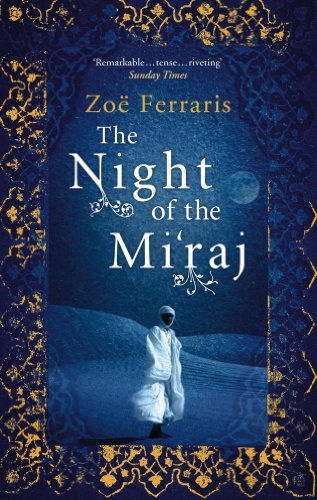
I’m also reading The Night of the Mi’raj by Zoe Ferraris, crime fiction set in Saudi Arabia. Nouf ash-Shrawi, the sixteen-year-old daughter of a wealthy Saudi dynasty, has disappeared from her home in Jeddah just days before her arranged marriage, and when her battered body is found in the desert, it looks like she was murdered. But, for me, what is most fascinating in this book is the description of life in Saudi Arabia.

The last book I read is Another Part of the Wood by Beryl Bainbridge, my book for the Classics Club Spin. I’ll post my review in the next few days – on or before 31 October. It’s set at a holiday camp in a forest in Flintshire, Wales, where Joseph takes his mistress and son, together with a few friends, to stay in a cabin for the weekend – with absolutely disastrous results. It has a claustrophobic atmosphere as the tension between the characters builds to a climax.

Next I’ll be reading The Darkness Manifesto: How light pollution threatens the ancient rhythms of life by Johan Eklöf, one of my NetGalley books, which will be published on 3rd November 2022. He ‘encourages us to appreciate natural darkness and its unique benefits. He also writes passionately about the domino effect of damage we inflict by keeping the lights on: insects failing to reproduce; birds blinded and bewildered; bats starving as they wait in vain for insects that only come out in the dark. And humans can find that our hormones, weight and mental well-being are all impacted.’ (extract from the synopsis)

Johan Eklöf, PhD, is a Swedish bat scientist and writer, most known for his work on microbat vision and more recently, light pollution. He lives in the west of Sweden, where he works as a conservationist and copywriter. The Darkness Manifesto is his first book to be translated into English.

Although this is a weekly meme l’m taking part once a month at the moment.