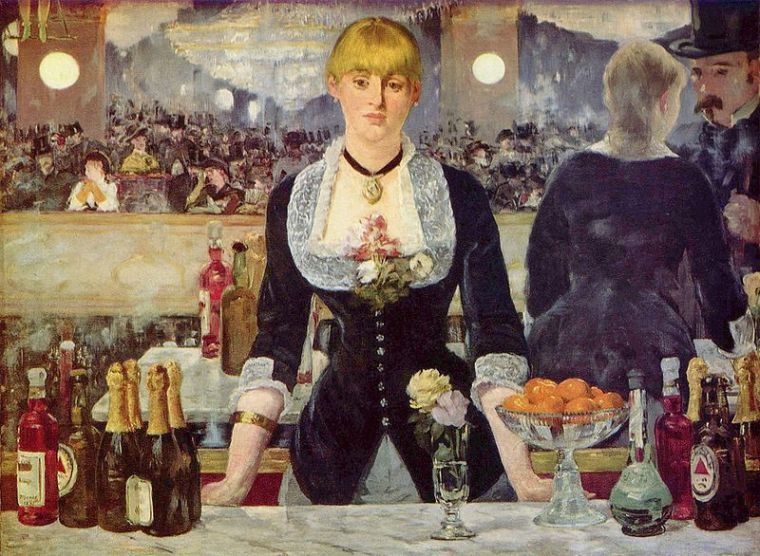
Weekend Cooking – from The Long Song

One of the books I’m currently reading is The Long Song, a novel about slavery set in 19th century Jamaica, by Andrea Levy. The narrator is July, now an old woman born as a slave, writing her memoirs.

This morning I read about the preparations for the Yuletide dinner of 1831. There were to be twelve people at the plantation owner’s table.  Caroline, the owner’s sister is giving Hannah, the cook, her orders for the food to be provided.

There was to be both turtle and vegetable soups, mutton, pigeon pies and guinea fowl, a boiled ham and a turkey or two, turtle served in the shell (but she would prefer beef), four stewed ducks, cheese, as many hogsheads as they could get and roasted pig.

There was also to be:

… malt liquor, wine, porter, cider, brandy and rum, watermelon, mango, pawpaw, naseberry, soursop, grandilla fruit. ‘And make sure the preserve has come from England. Strawberry or damson. Do not serve guava, ginger or that ghastly sorrel jelly. I’m so tired of Jamaican jams.’

Hannah had stopped listening, for the need to shout ‘And me to fix-up all this? You  a gut-fatty, cha!’ at her misssus was becoming overpowering in her. (pages 74 – 75)

And in case they were still hungry after this obscene amount of food, Hannah was told to make plum pudding. Hannah remembered how to make it –

A little fruit, a little molasses, some cornmeal, eggs, plenty rum. Mash it up a bit. Put this mess in that silly round mould the missus did give her the first Christmas she arrived, and boil it until the water does run dry. And when the thing is hard then it is done. (pages 75 – 76)

So far I think this book is beautifully written, vivid, lively and enthralling.

Weekend Cooking is hosted by Beth Fish Reads.

The Man in the Brown Suit by Agatha Christie: Book Review

The Man in the Brown Suit 001Agatha Christie wrote The Man in the Brown Suit whilst on a world tour with Archie Christie, her first husband, in 1922 and it was first published as a serial in The Evening News in 1923 in 50 instalments under the title of Anna the Adventurous. I think that’s an apt title as Anne Beddingfield, one of the two narrators of this book, longs for adventure, enjoying the cinema films of The Perils of Pauline. Agatha Christie, though thought it was ‘as silly a title as I had ever heard‘. But as The Evening News were prepared to pay her £500 for the serial rights she said nothing and bought a Morris Cowley with the proceeds.

She had the idea for the story from Major Belcher, a friend of Archie’s who had invited him to go with him on a grand tour of the British Empire to organise an Empire Exhibition. The Christies dined with Belcher at his house, the Mill House at Dorney and he had urged Agatha to write a detective story about it. He suggested the title The Mystery of the Mill House and wanted her to put him in it.

Agatha sketched the plot whilst she was in South Africa when there was a revolutionary crisis and decided that the book was to be more of a thriller than a detective story, with the heroine as ‘a gay, adventurous, young woman, an orphan, who started out to seek adventure.‘ But she found it hard to make the character she had chosen based on Belcher to come alive, until she hit upon the idea of writing it in the first person and making the Belcher character (Sir Eustace Pedler), Anne’s co-narrator.

I found this information in Agatha Christie’s An Autobiography, but I haven’t added the details she also added that give away who the murderer is (for of course there is a murder) – maybe she thought anyone reading her autobiography would have read all her books.

Anne’s adventure begins when she sees a man fall to his death on the live rails at Hyde Park tube station. He had a terrified look on his face and turning round Anne sees a man in a brown suit, who quickly becomes The Man in the Brown Suit both to her and the newspapers. He announced he was a medical man and that the man was dead, and as he left the station he dropped a piece of paper with some figures and words scrawled on it in pencil, which Anne picked up. A second death follows, this time a young woman is found strangled at Mill House, the home of Sir Eustace Pedler, MP. She was thought to be a foreigner. Anne decides to investigate and the trail takes her on board the Kilmorden Castle sailing to Cape Town.

The action takes place mainly on board ship and in South Africa which Agatha Christie describes so well from her own experiences.  Like Agatha, Anne suffers terribly from sea-sickness; both stayed in their cabins for three days until the ship reached Madeira and like Agatha, Anne just wanted to go ashore and be a parlourmaid. At that point in her life, Agatha had told Archie: ‘I would quite like to be a parlourmaid’. (An Autobiography page 300)

This book features the first appearance of Colonel Race, who appears in three more of Agatha Christie’s books. Anne describes him as ‘one of the strong, silent men of Rhodesia‘ and was very taken with him – ‘easily the best-looking man on board.‘ (page 54)

The novel is a mix of murder mystery and international crime organised by an arch-villain known as ‘the Colonel’, involving violence (but not graphic) and suspense. As usual there are a number of suspects and Anne has to work out who she can trust and who to believe. I found it a bit too drawn out for my liking, too many time lapses and coincidences to convince me of the plot’s credibility, but it held my interest to the end even though I knew the culprit’s identity.
ABC Wednesday – M is for Manet

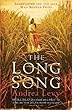
I love the paintings of Edouard Manet, one of the French Impressionists. It is so hard to pick just one painting to show his work, but I’ve chosen A Bar at the Folies Bergère, which to my mind is just marvellous.

I’ve seen this in the flesh, as it were, at the Courtauld Institute at Somerset House on The Strand in London. It’s a lot smaller than I imagined it would be. It’s an ambiguous painting as some see the barmaid as not just selling her wares but as a prostitute and the man reflected in the mirror as a potential client. It’s also intriguing because it’s difficult to tell if the scene in the background is a mirror reflecting what is in front of the barmaid, but then her reflection is not in the right place, nor are the bottles matched up.

I love all the details and colours of this painting as well as the overall effect. I love the atmosphere it creates , with the barmaid isolated, lost in her own thoughts in a crowded room. She is the still point in a busy, noisy place.

Manet A Bar at the Folies Bergeres

Manet painted this in 1882, oil on canvas.

An ABC Wednesday post.

Happy Birthday BooksPlease!

BooksPlease is 4 years old today!

I find it hard to believe that I’ve been writing this blog for 4 years. It seems like it was only yesterday I tentatively clicked on ‘publish’  for the first time.

Over these last 4 years I’ve read almost 400 books and have written about the  majority of them. I’ve also written about places I love to visit but my blog has stayed mainly about books.

The greatest change in my reading has come about gradually over the last two years or so, in that I now read a lot more crime fiction than I ever did before and that’s down to other bloggers, but also because I find crime fiction books are about so much more than crime. There is such variety in crime fiction – dealing with contemporary issues, historical crime (true and fictional), moral and ethical issues, personal and psychological crimes, and organised crime and so on. There are police procedurals, private detectives, amateur sleuths, serial killers and racial and political crime thrillers. And I love variety in my reading.

Books Please Me

I’ve also found that blogging isn’t a solitary pursuit, although it can be if you want. I’ve ‘met’ so many kindred spirits on book blogs and other blogs too. There are numerous reading challenges and memes to join and the opportunity to discuss books with people world wide. I’m very happy that I ventured into the book blogosphere. Thanks to everyone who reads my blog and especially to those who’ve taken the time and effort to make comments.

Crime Fiction Alphabet – Letter N

This week we’ve reached the letter N in Kerrie’s Crime Fiction Alphabet. My choice is a medley of ‘N‘s.

  • I had thought I would review Peter James’s Not Dead Enough, and I started it a while back but put it down to read other books. Not because I didn’t like it, but it’s a very long book – 610 pages of very small font, which is difficult for me to read, especially late at night when my eyes get tired quickly. From the back cover:

On the night Brian Bishop murdered his wife he was sixty miles away, asleep in bed at the time. At least that’s the way it looks to Detective Superintendent Roy Grace, who is called to investigate the kinky slaying of beautiful young Brighton socialite, Katie Bishop.

  • Another choice for the letter N that I considered is A Necessary End, an Inspector Banks mystery by Peter Robinson but I haven’t finished that book either. From the back cover:

In the usually peaceful town of Eastvale, a simmering tension has now reached breaking point. An anti-nuclear demonstration has ended in violence, leaving one policeman stabbed to death. Fired by professional outrage, Superintendent ‘Dirty Dick’ Burgess descends with vengeful fury on the inhabitants of ‘Maggie’s Farm’, an isolated house high on the daleside.

  • My third choice is Not the End of the World by Christopher Brookmyre. I started reading this after enjoying Quite Ugly One Morning. The bookmark shows I’m up to page 30. I think I didn’t finish this book because I was expecting it to be set in Scotland like Quite Ugly One Morning and was put off by it being in Los Angeles – silly I know!


  • Then there is Agatha Christie’s Nemesis, which is the last Miss Marple mystery. I only bought it recently and I’m itching to read it soon. Mr Rafiel, an old acquaintance (see A Caribbean Mystery), has died and left Miss Marple instructions for her to investigate a crime after his death.


  • And finally the book I’m currently reading is Janet Neel’s Ticket to Ride, which so far is making very interesting reading. But I don’t want to write much about it before I’ve finished it. Ticket to Ride features Jules Carlisle a newly qualified solicitor. She takes on the case of Mirko Dragunoviç, an illegal immigrant who claims that one of the eight dead bodies, found on the beach west of King’s Lynn, is that of his brother.

Janet Neel is the nom de plume of Baroness Cohen of Pimlico who sits as a Labour peer in the House of Lords. She started out as a solicitor, then went to the Board of Trade and then to Charterhouse Bank. She has written several crime fiction novels. The first, Death’s Bright Angel won the John Creasey Prize and both Death of a Partner and Death Among the Dons were shortlisted for the CWA Gold Dagger.

Weekend Cooking

Two Greedy Italians

I love Italian food, so Two Greedy Italians by Antonio Carluccio and Gennaro Contaldo looks like a book that I would love to have!

This book  accompanies a new series on BBC2 which starts on Wednesday 27 April 2011 at 8 pm.

Carluccio and Contaldo are old friends. They return to Italy to reconnect with their culinary heritage, explore past and current traditions and reveal the very soul of Italian gastronomy. Containing over 100 mouthwatering recipes, this  book goes beyond the clichés to reveal real Italian food, as cooked by real Italians. It includes an intriguing combination of classic dishes and ingredients as well as others showcasing the changes in style and influences that have become a part of the Italy of today.  (Description adapted from the Product Description on Amazon.)

  • Hardcover: 192 pages
  • Publisher: Quadrille Publishing Ltd (18 April 2011)
  • Language English
  • ISBN-10: 9781844009428
  • ISBN-13: 978-1844009428

We do have one of Antonio Carluccio’s books – Passion for Pasta, which is a beautiful book, full of recipes for making your own pasta and sauces. He writes:

… I would like you to forget about bottled sauces, ready-made pasta dishes, and pre-packed Parmesan cheese. Instead indulge yourself by trying the amazing soft texture of your own hand-made pasta, the bite of fresh Italian cheeses, the flavour of cured meats such as Parma ham, and anchovies and fresh basil. (page 7)

There are also lots photos of mouth-watering food, such as this which shows Pasta Per Tutte Stagioni – Pasta For All Seasons, made with fresh shitake mushrooms, fresh oyster mushrooms, chanterelles and small dried fusilli. It includes double cream, smoked ham, lemon juice, olive oil, garlic, parsley and truffle oil, which Carluccio says is very expensive and very sophisticated – a dish for special occasions!

  • Paperback: 192 pages
  • Publisher: BBC Books; 2nd Revised edition edition (24 July 2003)
  • Language English
  • ISBN-10: 9780563487616
  • ISBN-13: 978-0563487616
  • ASIN: 0563487615
  • Product Dimensions: 25.8 x 18.2 x 1.4 cm
  • Source: I bought it

This is my contribution to this week’s Weekend Cooking hosted by Beth Fish Reads

“Weekend Cooking is open to anyone who has any kind of food-related post to share: Book (novel, nonfiction) reviews, cookbook reviews, movie reviews, recipes, random thoughts, gadgets, fabulous quotations, photographs. If your post is even vaguely foodie, feel free to grab the button and link up anytime over the weekend.”