Saturday Snapshot: Cragside Again

Following on from last Saturday’s snapshots of Cragside here are a few more photos.

There were many other visitors when we were there and it was difficult sometimes to get a good photo and I had to be quick before someone moved in front of my camera. So, some of my photos are a bit out of focus and rather dark. (It’s amazing that you can take photos in National Trust properties – in the past it was strictly forbidden. I asked one of the room stewards why they allowed them now and he explained that because you can take photos on mobile phones it was impossible to stop people. It’s good to take your own photos, but actually there are much better ones than mine in the guidebook.)

The first room we saw was the kitchen. As you can see the area is fenced off. It’s not very big but there are also sculleries and larder and cellar storage beneath the kitchen, with a ‘dumb waiter’ to carry food and equipment up and down. The Butler, Housekeeper and Cook each had their own areas.

In the next photo you can see the spits with joints of meat in front of the range.

There is a dishwasher. Rather primitive compared to the modern models this dishwasher has wire compartments for crockery, a motor turned it whilst hot soapy water was squirted into it from a boiler. This had been invented in 1886 by a wealthy American, Josephine Cochrane whose servants had chipped her fine china.

None of the rooms at Cragside are very large, apart from the Drawing Room, and I could imagine being comfortable in most of them, such as the Dining Room. It has a lovely inglenook fireplace with stained glass windows designed by William Morris.

The windows either side represent the Four Seasons. the photo below shows two of the windows – Spring and Summer.

I still have more photos, but these are enough for one post. (Click the photos to see a larger view.)

Cragside is open to visitors from today. I  would really like to go there again this year, there is so much I didn’t take in and I only had a brief look at the grounds.

See more Saturday Snapshots on Alyce’s blog At Home With Books.

February’s Books: Little Boy Lost

February was a good reading month. I read 9 books. The full list is on my Books Read in 2012 page (see the tab above).

My Book of the Month is Little Boy Lost by Marghanita Laski. It is a beautiful book. Once I started reading I didn’t want to put it down; I just had to know what happened. It’s the story of Hilary Wainwright, who is searching for his son, lost five years earlier in the Second World War. Hilary had left France just after his wife, Lisa, had given birth to John. Lisa, unable to leave France, worked for the Resistance, but was killed by the Gestapo and her son disappeared.

After the war ended Hilary is contacted by Pierre, a friend of Lisa’s, who told him he may have found the boy, living in an orphanage in rural France and Hilary sets out to discover if the boy is really his son.

It’s written in such clear, straightforward language and yet at the same time it is emotional, heart-wrenching and nerve-wracking, full of tension, but never sentimental. The depiction of post-war France is chilling conveying the deprivations, suspicion and bitterness of the times. Hilary is a solitary person, a poet and an intellectual, who has difficulty with relationships. This makes it difficult for him to accept that the little boy is his without an instinctive feeling or conclusive evidence – looks, mannerisms or the child’s own recollections. Whilst he is longing to find his son, after he Lisa had died and he had lost the boy, he had closed himself off from feelings:

I couldn’t endure being hurt again: I’d sooner feel nothing. I don’t like children as such; they bore me. I used to think that a child of my own would make me happy, but I know that isn’t true any more. I’ve got nothing to offer a child … I just want to be left alone so that I can’t be hurt again. (page 75)

It’s not only the little boy who is lost, it is also his father.

He goes through mental agonies once he meets the child, unsure that he is his son, and in several minds about what he should do. The boy is adorable and by the end of the book I began to think it didn’t matter whether he was his son or not, I just wanted them to be happy together.

My rating: 5/5

  • Paperback: 240 pages
  • Publisher: Persephone Books Ltd (23 Oct 2008)
  • Language English
  • ISBN-10: 1906462054
  • ISBN-13: 978-1906462055
  • Source: I bought my copy

Kerrie at Mysteries in Paradise is collecting crime fiction ‘picks of the month’. During February I read 4 crime fiction and my Crime Fiction Pick of the Month is Sleeping Murder by Agatha Christie – Miss Marple’s last case.

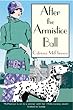
After the Armistice Ball by Catriona McPherson

After the Armistice Ball is the first book in the Dandy Gilver series. I’ve read a couple of the later books in the series and had to read this one in order to find out how Dandy (short for Dandelion) first became an amateur detective, or Society Sleuth, as she is called on the book cover.

It all began when there is an alleged theft of Lena Duffy’s jewels at Daisy Esslemont’s annual Armistice Ball in 1922 and Daisy asks Dandy to find out what really happened. Dandy is a bored wife, whose husband, Hugh is the ‘hunting, shooting and fishing’ type. The theft of the jewels is rapidly pushed to the sidelines after the death of Lena’s daughter, Cara in a lonely beach cottage in Galloway. Accompanied by Cara’s jilted fiancé, Alec Osborne, Dandy is faced with the puzzle of Cara’s death. Was she killed, or did she commit suicide? She had died in a fire, whilst on her own in the cottage – why was the cottage always kept so hot, so hot that the coal that was supposed to last all winter had been finished in one week?

The setting in the 1920s is convincing, the sense of dislocation after the First World War, the class divide and the contrast between the idle rich and the poor. The locations are beautifully described, and the characters are lively and come to life, particularly Dandy, although Hugh does seem to be a cardboard cut-out, but the book dragged in the middle as Dandy and Alec went over and over, and over the events and theorised about what had happened and why.

I too puzzled over the mystery and I did find the ending rather confusing, so much so that I had to re-read parts of the book to sort out what I thought had happened. I’m still not sure, but I think I know. Having said all that, I did enjoy the book, and apart from the middle section I raced through it and that’s probably where I missed some salient points.

My Rating: 3/5

I borrowed the book from my local library

Death Comes To Pemberley by P D James

I read Death Comes to Pemberley over the weekend and although I thought it was OK I was disappointed. I love Jane Austen’s Pride and Prejudice and I like PD James’s books, so this book should have been just right for me. But maybe it was just the wrong book for me because I have yet to read a sequel/spin-off by a different author that I have enjoyed. They never live up to the original and if this had been written by anyone except P D James I probably wouldn’t even have looked at it.

The book is set in 1803, when Elizabeth and Darcy have been married for six years. It begins with a rather lengthy Prologue in which P D James summarises the events told in Pride and Prejudice and tells what has happened in the intervening years. Eventually the mystery is revealed when Lydia arrives at Pemberley and shrieking hysterically tells how Wickham and Captain Denny had disappeared into the Pemberley woods, shots were fired and she is sure Wickham is dead. In fact it is Denny who is dead and a drunk, and distraught Wickham babbles that he has killed him.

It should have been good, but the characters were flat. Six years of marriage had changed Elizabeth beyond recognition, Darcy was a pale, ineffectual figure and Colonel Fitzwilliam was no longer the likeable character he is in Pride and Prejudice. It’s plodding and repetitive. P D James has done her research into the early 19th century murder investigations but it’s clumsily written as exchanges of conversation between the characters – for example would Darcy, a magistrate really need to be told how the system worked? As for the murder mystery, it just fizzled out with a less than convincing result.

On the plus side there are some good descriptive passages, mainly of the Pemberley Estate and a vignette where Mr Bennet is found by Darcy in his library reading the Edinburgh Review.

My rating: 2/5

I borrowed the book from my local library.

As a result of reading this I’ve now started a re-read of Pride and Prejudice and the first chapter convinces me that my recollection of Jane Austen’s sparkling writing is accurate. I shall never read another spin-off again. It was worth reading Death comes to Pemberley to be reminded of Jane Austen’s brilliance.

Saturday Snapshot

My photos this week are a few of Cragside in Northumberland, now owned by the National Trust. It was built in 1863, with further extensions over the next 15 or so years, by William Armstrong, who later became Lord Armstrong. Armstrong was a remarkable man – a scientist, an innovator and a successful industrialist.

We visited it last year. Here is the view of the house approaching from the public car park:

and the view from the gardens:

It has to be one of my favourite National Trust properties and it’s a very popular house with everyone else too – the place was packed when we were there last April. There is so much to see inside the house, too much for one post. The house was very modern for its times, with all the latest and advanced technical devices of the day.

One of my favourite rooms is the Library, with its  stained glass windows, comfy chairs, leather sofas and the latest lighting available. This was the first room in the world to be lit by hydro-electricity.

The light suspended from the ceiling has four bulbs within the ornate and fringed light shade. I tried very hard to get a photo without any of the other visitors, but gave up when there was just one person looking out of the window – anyway he gives scale to the room.

There are four more bulbs around the room, place in globes, sitting on vases:

The books are in oak bookcases around the room:

Note the library steps at the left-hand side of the photo.

Click on the photos to enlarge them.

At a later date I might post more photos – of the kitchen with its dishwasher, the lovely dining room with its William Morris stained glass windows and of the amazing Gallery, with its collection of paintings and sculptures. As for the Drawing Room, this was not to my taste at all with its huge marble chimney piece.

See more Saturday Snapshots on Alyce’s blog At Home With Books.
Book Beginnings on Friday

I’ve just finished reading Standing Water by Terri Armstrong, which I greatly enjoyed and will write more about it in another post. But for now here are the opening lines:

On the way to the funeral Hester started to cry. Neal, driving the ute, glanced at her. He reached over and squeezed her hand, too tightly. The tears wouldn’t stop. She pulled in jagged breaths and held a tissue to her face. Without warning, Neal swerved the ute into a gravel siding, throwing her against the door. He kept the engine idling.

‘For Christ’s sake, Hester. We’ll be there in five minutes.’

‘I know. Sorry.’ She had to pull herself together. She turned her head to look at the roadside scrub, focused on the pale, thin limbs of a top-heavy mallee tree.

‘Wasn’t even your bloody mother,’ Neal muttered.

These lines caught my imagination – I assumed that Neal and Hester were an apparently unemotional son and a very upset daughter-in-law. They drew me into the story and also very definitely set the scene for me, in Western Australia – what I wondered is a ‘mallee tree’. (I thought maybe a eucalyptus, and was pleased to discover that it is.)

Standing Water is Terri Armstrong’s first novel and is the winner of the 2010 Yeovil Literary Prize (pre-publication). It is to be published by Pewter Rose Press on 28 February. (My copy was sent to me by the publishers.)

Book Beginnings is hosted by Katy at A Few More Pages every Friday.